
Reviewed · LOUVRE MUSEUM TICKETS
Guided tour of the Louvre Museum with tickets included
Skip the Louvre chaos and get the good stuff.
This guided visit turns the museum into a clear, story-led route, with skip-the-line entry and art history context you normally only get from a deep guidebook. I like that it moves across eras quickly, so you see why the Louvre matters, not just what is inside.
Two things I really like: I love how the route hits major fan favorites efficiently, including Venus de Milo and Victory of Samothrace, then lands you at the Mona Lisa area without wasting hours. And I love the guide style. Matteo Allavena is praised for turning big names into understandable stories, pacing the tour well, and answering questions, even from kids.
One possible drawback: two hours is perfect for highlights, but it is not enough to linger everywhere. Also, the meeting point can be crowded, so you will want to arrive a bit early and double-check messages so you do not spend your first minutes hunting.
In This Review
- Key things worth knowing before you go
- Louvre in Two Hours: what you’re really buying
- Meeting at Le Café Marly: logistics that can make or break your start
- Medieval Louvre walls and the Tanis Sphinx: start with the museum’s backbone
- Greek department highlights: Athena, Venus de Milo, and Victory of Samothrace
- Venus de Milo and why a guide helps
- Victory of Samothrace: don’t rush this one
- Galerie Apollon and the Grande Galerie: the route to the Mona Lisa
- Giotto and Italian painting: why Saint Francis receiving the stigmata lands
- Classicism and Romanticism rooms: Napoleon, Medusa, and Liberty
- Classicism room: David and the disciplined drama
- Romanticism room: emotion, shock, and protest
- How the guide keeps it from feeling overwhelming
- What to do after the tour: plan your next hour wisely
- Value for your money: who this tour fits best
- Should you book this Louvre guided tour with Matteo?
Key things worth knowing before you go

- Skip-the-line entrance so you start seeing art faster, not queuing.
- Small group size (max 6) keeps the tour from feeling like a moving stampede.
- English guided route built around key rooms and landmark works.
- A smart sweep through eras, from medieval walls to Classicism and Romanticism.
- Included ticket price (28 euros) means fewer costs to juggle on arrival.
- Back at the meeting point at the end, which makes planning your next stop easier.
More routes through the Louvre:
- Paris: Louvre Guided Tour with Reserved Access & Boat Cruise
★ 4.3 · 16,353 reviews - Louvre Museum Masterpieces Guided Tour with Access
★ 4.5 · 12,023 reviews - Paris: Louvre Overview, Exploration tour and Reserved Entry
★ 4.1 · 10,145 reviews - Paris: Louvre Museum Entry Ticket With Host and River Cruise
★ 4.6 · 9,926 reviews
Louvre in Two Hours: what you’re really buying
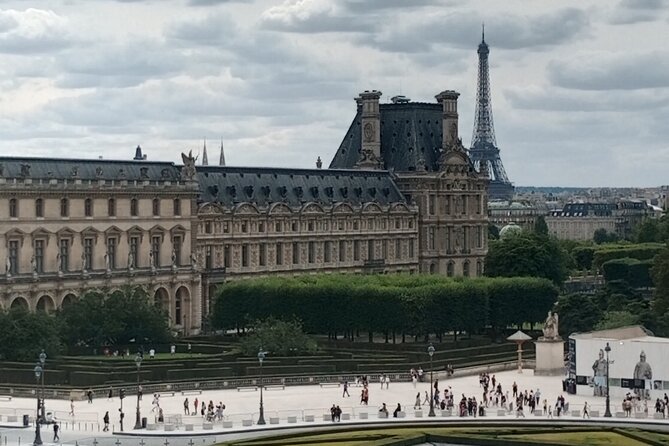
The Louvre is huge. Left on your own, you can end up doing a lot of walking and not much learning. This tour fixes that with a focused route, about 2 hours long, that steers you toward the museum’s most important landmarks.
The best value here is not only the sights. It is the time saved and the order you see things in. When you start by understanding how the Louvre’s building and collections connect across centuries, the museum stops feeling random. You start to notice patterns. Why this room exists. Why this style matters. Why certain works became famous.
And yes, the skip-the-line element is a big deal. The Louvre’s lines can eat half your energy. Getting in smoothly lets you spend your visit on looking, not waiting.
Pricing check: at $114.93 per person, you are paying for guide time plus an included entrance fee (28 euros) plus the skip-the-line benefit. If you were to buy tickets and then lose hours to the queue, this is often the cheaper option in total experience value, especially for first-timers.
Meeting at Le Café Marly: logistics that can make or break your start
Your tour begins at Le Café Marly, 93 Rue de Rivoli, 75001 Paris. It ends back at the same meeting point. That round-trip setup is practical. You can plan your lunch, a Seine walk, or a nearby café without building your whole day around crossing town again.
This start location is also a common area, so the key is simple: get there early enough to spot your guide. One review noted it can be tough to find the guide in a crowd. Another mentioned Matteo used messaging to coordinate. So bring your phone, keep an eye on any updates, and do not assume the meeting spot will be quiet.
A few other practical notes from the tour details:
- Service animals are allowed.
- It is near public transportation.
- Most people can participate.
- Transfers are not included, so plan your own way to Rue de Rivoli.
Medieval Louvre walls and the Tanis Sphinx: start with the museum’s backbone
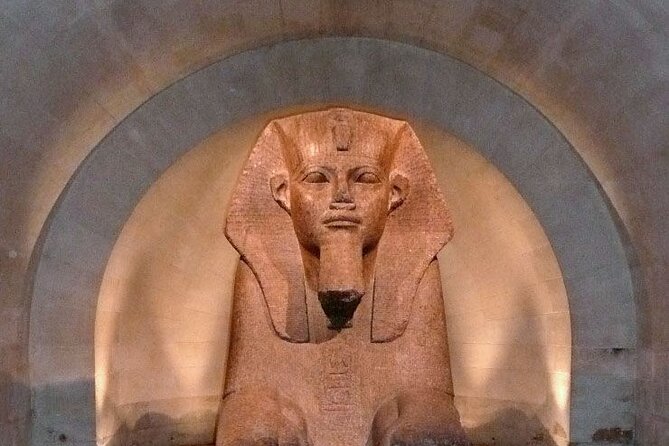
The tour kicks off with the Medieval Louvre, including a look at 13th-century walls. This matters more than it sounds. The Louvre you see today is not just a building that holds art. It is a site with a long life, and its older structure shapes how the museum feels.
From there you move to the Tanis Sphinx, a 4000-year-old piece. This is a great early moment because it gives you a contrast right away. You are not just jumping from one painting to another. You’re stepping through time, literally, with objects that predate much of what you associate with Europe.
What to watch for here:
- Look at scale and surface. Old stone works can look different in person than in photos.
- Notice how the museum frames these antiquities, because it hints at what the Louvre wants you to understand: power, myth, and empire.
Greek department highlights: Athena, Venus de Milo, and Victory of Samothrace
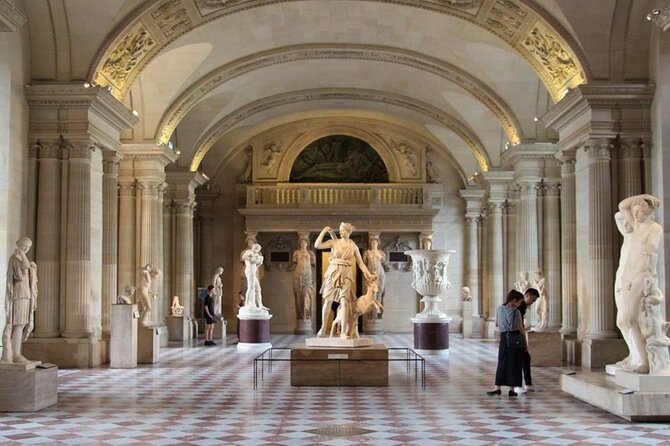
Then the tour turns to the Greek department, with stops that include:
- Athena of Velletrie
- Venus de Milo
- Victory of Samothrace
This part is often where the Louvre magic clicks for first-timers. These works are famous for a reason, but the guided context helps you see past the postcard image. You begin to understand pose, symbolism, and why these sculptures became cultural shorthand for classic ideals.
Other Paris galleries with a shorter queue:
- Paris: Orsay Museum Entry Ticket★ 4.7 · 25,647 reviews
- Les Invalides: Napoleon’s Tomb & Army Museum Entry★ 4.6 · 9,185 reviews
- Louvre Museum – Exclusive Guided Tour (Entry Included)★ 5.0 · 6,296 reviews
- Paris: Louvre Museum Hosted Entry and Mona Lisa Audioguide★ 4.6 · 5,235 reviews
Venus de Milo and why a guide helps
Yes, you have probably seen Venus de Milo. But without context, it is easy to treat it like a statue you admire from a distance. A good guide route makes you pay attention to details you would likely skip, like how the museum presents her and how her fame grew over time.
Victory of Samothrace: don’t rush this one
Victory of Samothrace is a sculptural showstopper. Even if you think you know her, slow down. The pose and the sense of movement are the entire point. In a guided group, you can usually spend more real viewing time than you would wandering alone.
Galerie Apollon and the Grande Galerie: the route to the Mona Lisa

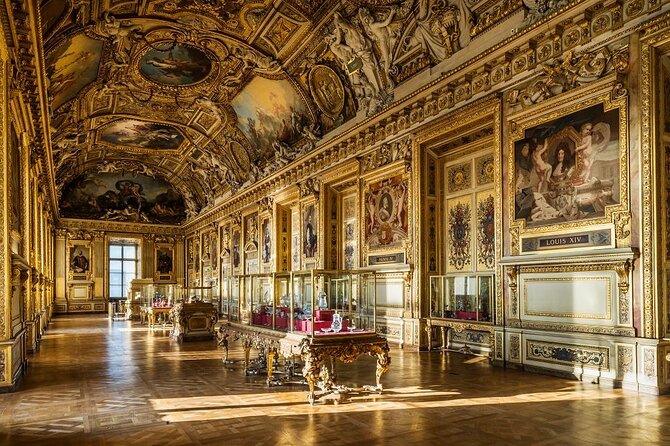
After the Greek highlights, you hit the Galerie Apollon, described as inspired the spirit behind Versailles. That is a key idea. The Louvre is not just a museum. It is part of a chain of French artistic and political identity.
The tour then moves into the Grande Galerie, where you get a big sweep through the Louvre’s most cinematic rooms. Included highlights here mention works like:
- Guirlandao’s L’enfant et l’ancien
- Veronese’s Les noces de Cana
- Leonardo da Vinci’s Mona Lisa
This is where the skip-the-line benefit pays off again. If you arrive too late or too frazzled, the Mona Lisa moment can feel like you are just trying to get your photo. With a planned route, you are more likely to actually look, even if it is not long.
Practical tip for this stage: manage expectations. The Mona Lisa area is always busy, and you may not be the only person trying to see it. What you can control is your pace and your attention. A guide route helps you focus on what to notice, not just where to stand.
Also, this is one of the tour’s best “aha” moments: you see how the Louvre uses architecture and layout to guide your attention across styles.
Giotto and Italian painting: why Saint Francis receiving the stigmata lands
Next comes the Italian painting of the Middle Ages, including an explanation of Giotto’s Saint Francis receiving the stigmata.
This section is valuable for a simple reason. A lot of people miss medieval religious art because it feels distant or complicated. A guided explanation turns it into a narrative you can follow. You start to understand why the story mattered and how painting was used to teach belief, emotion, and meaning to audiences who might not read.
If you love learning how art tells stories, this stop is a strong payoff. If you usually skip anything that seems too old, this is also the moment where you might realize medieval works are not static. They are dramatic.
Classicism and Romanticism rooms: Napoleon, Medusa, and Liberty
The tour finishes by moving through two contrasting modes of European art: Classicism and Romanticism.
Classicism room: David and the disciplined drama
You see:
- The Coronation of Napoleon
- Leonidas at Thermopylae, by Jacques Louis David
Classicism is about structure, clarity, and ideals. David is a perfect choice for that. The guide context helps you understand why these works look the way they do, and how art supported power and public image.
If you have ever wondered why Napoleon is everywhere in Paris, this is a good on-ramp. You connect the political storyline to the artistic language.
Romanticism room: emotion, shock, and protest
Then the tour transitions to Romanticism, including:
- Raft of the Medusa, by Géricault
- Liberty Guiding the People, by Eugène Delacroix
This is a dramatic contrast to Classicism. Romantic art often feels louder, more emotional, more urgent. Liberty Guiding the People especially benefits from guided framing, because its symbols can be easy to miss if you only glance at the surface.
By the end, the Louvre feels less like a random storage space and more like a timeline of ideas.
How the guide keeps it from feeling overwhelming
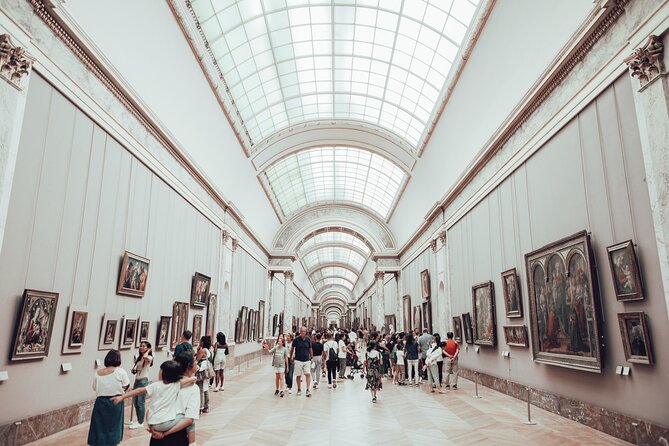
One theme shows up in the feedback again and again: the tour makes the Louvre easier to handle. That is not small. The museum can overwhelm you fast because it is so big and so easy to get turned around.
Matteo Allavena is repeatedly praised for:
- organizing the visit around the highlights,
- giving art history context that you do not usually get on a quick pass,
- keeping a good pace so you still have time to look,
- being friendly and patient with questions.
This is also a helpful style if you have kids or a mixed group. Some reviews mention the guide kept children interested and answered their questions. If your group includes non-art people, that flexibility matters.
And if something goes wrong, you learn a lot from how it is handled. One review described a ticket-related snafu that the guide handled on the spot, even offering a refund for part of the tour. That kind of problem-solving is not something you should count on, but it is reassuring.
What to do after the tour: plan your next hour wisely
Because the tour is about 2 hours, you should think of it as setup, not a full museum day. After you finish, you will have a clearer sense of what you want to see next.
I suggest this approach:
- Take a quick look at anything you are excited about, but do not try to “catch up” on everything.
- Pick one or two extra areas you care about, then stop. The Louvre punishes over-planning.
If you are someone who can’t resist going deeper, you may want to return later in your trip. That way you can see additional wings without feeling like you missed the chance to cover everything.
Also, remember food and coffee are not included. Build in time for a break. The Louvre can be physically tiring, especially in warm weather.
Value for your money: who this tour fits best
This tour is a strong fit if:
- You want Louvre highlights without turning your day into a navigation puzzle.
- You care about meaning and context, not only famous names.
- You prefer a small group experience rather than a big crowd.
It is also a good option for families. The pacing and question-friendly approach helps keep the visit from becoming a silent museum marathon.
It might be less ideal if:
- You want a long, slow museum day. This is time-efficient by design.
- You already have a deep art history background and only want a longer independent route. In that case, you might want a full self-guided plan plus optional add-on tours.
Should you book this Louvre guided tour with Matteo?
Yes, if you are doing the Louvre for the first time and you want a smart path through the museum’s best-known works and key art movements. The skip-the-line entry plus the focused 2-hour route is a practical combo, especially if you dislike waiting around or guessing where to go next.
Book it even if you are only moderately interested in art history. The way the stops are arranged makes the museum easier to understand fast, and the guide style is built for real questions, not just a lecture.
If your schedule allows, consider adding extra museum time later, because you will likely want to linger once you know what matters most.
Newest write-ups from Paris






Louvre Museum Tickets, compared.

Louvre Guided Tour with Reserved Access & Boat Cruise
Read our review →
Louvre Museum Masterpieces Guided Tour with Access
Read our review →
Louvre Overview, Exploration tour and Reserved Entry
Read our review →
Louvre Museum Entry Ticket With Host and River Cruise
Read our review →
Mona Lisa & Louvre Masterpieces Tour with Reserved Access
Read our review →
Louvre Museum – Exclusive Guided Tour (Entry Included)
Read our review →
Louvre Museum Hosted Entry and Mona Lisa Audioguide
Read our review →
Louvre Access with Mona Lisa Escort or Guided Option
Read our review →Browse the lists this tour appears in