
Reviewed · PASTRY AND MACARON CLASSES
Hands-on Eclair and Choux Making with a Pastry Chef
One of the best ways to understand French pastry is to make it. This hands-on Paris class teaches you pâte à choux and builds it into classic éclairs you can eat and take home. You start with the dough, then pipe, bake, fill, and finish with chocolate glaze, all in about 2.5 hours. The payoff is real skills, not just watching.
I especially like the small group size (max 8) and the beginner-friendly setup, where you can learn technique without prior pastry experience. You will get guidance step by step, including how to get the dough to the right texture and how to thicken pastry cream. One possible drawback: a few people reported pairing off or turning by turn work, so if you want total solo focus at every station, go in with flexible expectations.
In This Review
- Key Things to Know Before You Go
- A Paris Choux Class With Real Technique, Not Just Assembly
- Where It Starts: Maison Fleuret Near Rue de Béarn
- How You Make Choux Pastry: Water, Butter, Salt, and Eggs
- Piping the Dough: Plain Tip, Clean Shapes, and Useful Practice
- Baking at 200°C: When Golden Crunch Triggers the Next Step
- Making Pastry Cream: Thick, Smooth, and Surprisingly Straightforward
- Filling and Glazing: From Cut Eclair to Chocolate Finish
- What You Actually Leave With: Count on More Than One Bite
- Value for $132.75: Why It Feels Worth It
- The Main Tradeoffs: Pairing, Room Energy, and Occasional Disruption
- Which Instructors Might You Get, and What to Expect From Them
- Is This Class for You? Beginner-Friendly, Hands-On, and Social
- Should You Book This Eclair and Choux Class?
- FAQ
- How long is the eclair and choux making class in Paris?
- How much does it cost per person?
- Is the class offered in English?
- What is the maximum group size?
- What will I make during the class?
- Is coffee or tea included?
- Where do I meet for the class?
- Does the class end where it starts?
- Can I cancel for a full refund?
- Are service animals allowed?
Key Things to Know Before You Go
- Hands-on from dough to final glaze, so you leave with finished éclairs, not just baked goods you watched someone else make.
- Max 8 people means more time with your pastry chef and less time waiting.
- Beginner-friendly approach, with premeasured ingredients so you can focus on technique.
- You’ll pipe and bake at 200°C for about 20 to 25 minutes, learning how shell shape affects crispness.
- Coffee and/or tea is included, but the class setup may not be set up like a sit-down tasting.
- Metric recipe format is part of the deal, and paper versus digital access has been a small point of friction for some.
Other kitchens for macarons and pastry:
- Paris: Montmartre Cheese, Wine & Pastry Guided Walking Tour
★ 4.8 · 2,255 reviews - Paris: Macaron Class at Galeries Lafayette
★ 4.2 · 1,196 reviews - Award-Winning Paris French Bakery Experience — Le Marais, 4th Arr
★ 4.5 · 1,186 reviews - Private Montmartre Food Tour with Wine, Cheese & Pastries
★ 5.0 · 1,027 reviews
A Paris Choux Class With Real Technique, Not Just Assembly
If you like eating French pastries, you will enjoy learning what makes them work. Pâte à choux looks simple on a menu, but the method is all about timing and texture. In this class, you do the steps yourself, from cooking the dough to piping and baking, then filling with pastry cream and finishing with chocolate glaze.
The format is practical. You are not just making one component in isolation. You connect the dots: what you do to the dough changes how it bakes, what you do to the cream changes how the filling behaves, and what you do to the glaze affects the final bite.
Where It Starts: Maison Fleuret Near Rue de Béarn
You meet at 7 Rue de Béarn, 75003 Paris, and the class ends back at the meeting point. That matters because you can plan your day without a complicated commute or a mystery return trip.
This is also an easy one to reach with public transportation. It’s described as a short walk from the nearest metro station, so you can fit it into a busy Paris itinerary. The experience runs in English, so you get pastry instructions without guessing what the terms mean.
How You Make Choux Pastry: Water, Butter, Salt, and Eggs
The class begins with the core choux pastry technique, pâte à choux. You heat water, butter, and salt in a saucepan until the butter melts. Then you add flour and mix until the dough comes away from the sides of the pan. That moment is a key checkpoint in choux.
Next comes the part that scares people, but is totally learnable: adding eggs. You transfer the dough into a bowl and then add eggs one at a time, mixing well between each addition. The goal is a smooth, pipeable dough that holds its shape. When you do it right, the éclairs will puff and form those crisp shells that can hold filling without turning soggy right away.
What makes this class feel beginner-friendly is that the ingredients are handled in a way that lets you focus on technique. Some learners noted ingredients are premeasured, which helps you concentrate on the “how,” not the “math.”
Piping the Dough: Plain Tip, Clean Shapes, and Useful Practice
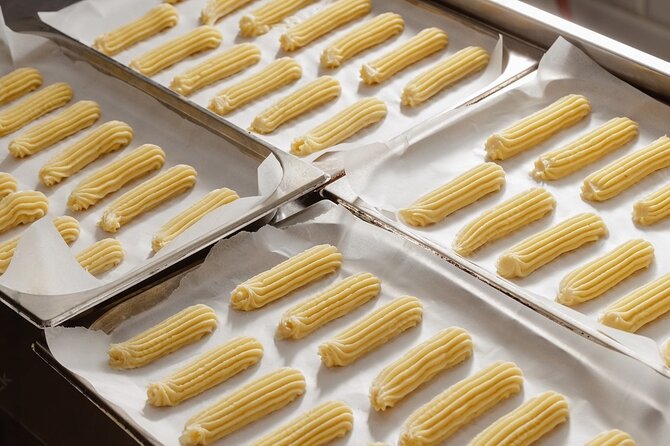
Once the choux pastry is ready, you move to piping. You transfer the dough to a piping bag fitted with a plain tip and pipe sticks onto a baking sheet lined with parchment paper.
Here’s what I like about this step for real life. Piping is where you can ruin the shape, but it’s also where you can improve fast because you have feedback immediately. Your teacher can show how to pipe with consistent pressure and how to aim for sticks that bake evenly.
A few people mentioned some piping mishaps, and the good news is that those don’t stop you from ending with something delicious. Even “imperfect” piping can turn into tasty éclairs once baking and filling happen correctly. This is a class designed to get you producing results, not to grade you.
Other Paris ateliers to spend an afternoon in:
- Fragonard Paris: Mini Perfume Workshop★ 4.5 · 1,924 reviews
- Paris Cooking Class and Lunch with Wine plus Market Visit Option★ 5.0 · 1,024 reviews
- Paris Croissant Small-Group Baking Class with a Chef★ 5.0 · 910 reviews
- Paris: 2-Hour Perfume Creation Workshop★ 4.8 · 731 reviews
Baking at 200°C: When Golden Crunch Triggers the Next Step
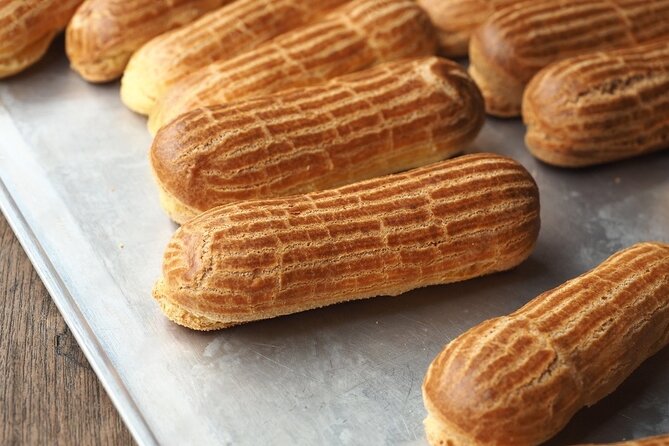
Now you bake. The oven is preheated to 200°C, and you bake for about 20 to 25 minutes, until the choux is golden and crisp.
This part teaches you an important French pastry principle: structure matters. If the choux shell is underbaked, it can collapse or turn chewy. If it bakes properly, it stays crisp enough to handle the pastry cream filling.
Also, timing is not just about eating fresh. Cooling later is part of the workflow. You need the éclairs to cool before you cut and fill, otherwise the pastry cream and warm shells can become a messy mix.
Making Pastry Cream: Thick, Smooth, and Surprisingly Straightforward
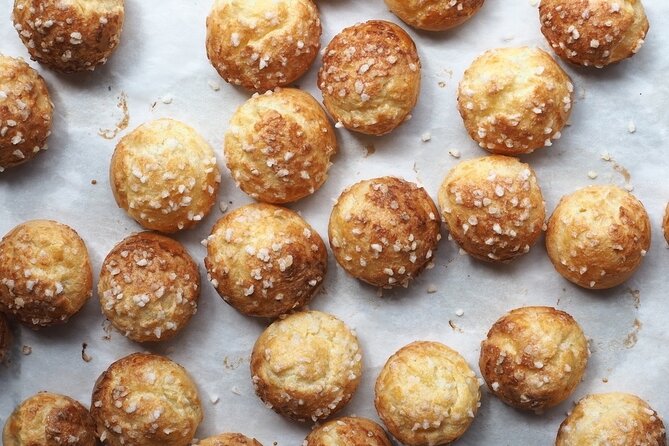
After the choux bakes, you shift to the filling: pastry cream (crème pâtissière). You heat the milk in a saucepan. In a bowl, you whisk egg yolks, sugar, flour, and cornstarch. Then you pour hot milk over the egg mixture while stirring constantly.
You return the mixture to the saucepan and cook over low heat until the cream thickens. This step is a classic “custard logic” lesson. If you keep stirring, you help prevent lumps and guide the thickening process. Low heat is key because it lets the custard thicken without rushing it into scrambled-egg territory.
Depending on the class version, the filling options can include chocolate, vanilla, or coffee. One learner specifically noted a dark chocolate version rather than a sweeter icing style, and that made the final result feel more balanced.
Filling and Glazing: From Cut Eclair to Chocolate Finish
When the éclairs are cool, you cut them in half and fill them using a piping bag with your choice of pastry cream. Then you make the glaze.
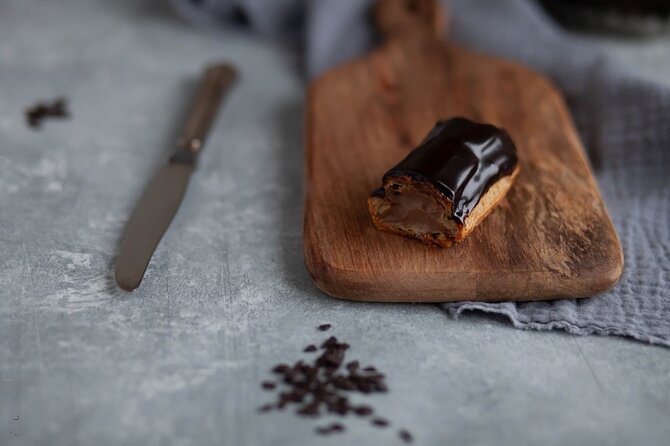
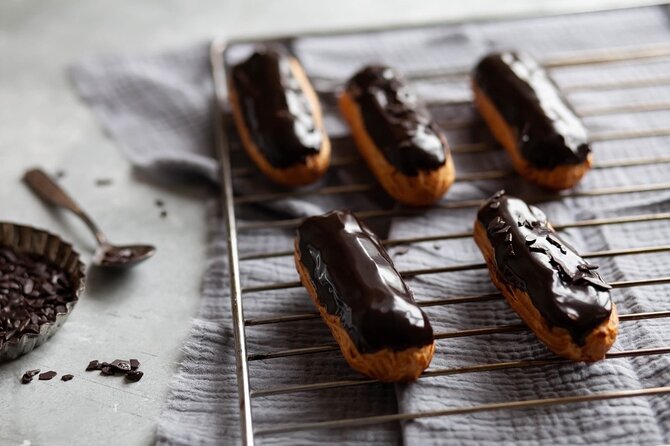
The glaze is simple and glossy: melt dark chocolate, add melted butter, and mix until smooth. To finish, you dip the top of the éclairs into the chocolate glaze.
This is the moment where the class feels like a celebration. The steps are technical, but the outcome is pure pastry joy: crisp shells, creamy center, and a chocolate cap. You end with something you can actually bring home and share, which is one reason people talk about this as a memorable Paris food experience.
What You Actually Leave With: Count on More Than One Bite
One review detail that helps you plan expectations: you may receive three regular-size éclairs to take home. So it’s not just a tiny tasting portion.
There’s also coffee and/or tea included. Some learners expected to sit down and eat with the group, but the setup may be more “make and pack” than a formal sit-down tasting. In other words, if you want a café-style pastry break, plan to do the relaxing part nearby after class ends.
Value for $132.75: Why It Feels Worth It
At $132.75 per person for roughly 2 hours 30 minutes, you are paying for more than ingredients. You’re paying for guided technique, small-group attention, and a full workflow that covers multiple French pastry components.
This class tends to feel like good value if you meet it on its own terms:
- You want to learn how pâte à choux works, not just eat one.
- You’re happy practicing piping, because that’s where your technique improves quickly.
- You like the reward of taking home finished éclairs.
Even if you are not an expert, the class is structured so you can produce results you recognize as proper French pastry. That’s a big part of why the overall rating is strong.
The Main Tradeoffs: Pairing, Room Energy, and Occasional Disruption
Most people loved this experience for hands-on learning and strong teaching. But you should know the potential downsides so you can choose wisely.
First, some learners reported being paired off, meaning you might take turns rather than work at a fully separate station the whole time. That can be fine if you enjoy sharing the experience, but it may feel like less individualized attention than you imagined.
Second, a couple of reviews mentioned room size and atmosphere. The space may feel small, and one person described the mood as a bit dull despite good instructions. That’s not a dealbreaker if your focus is baking, but it’s worth noting.
Third, like any real-world activity, cancellations can happen. At least one review described last-minute cancellation and refund frustration due to a chef falling ill and schedule changes. The provider response indicated rebooking nearly everyone else, but it’s still smart to build in flexibility if your schedule is tight.
Which Instructors Might You Get, and What to Expect From Them
Instructors vary by date, but the names showing up in past sessions include Clara, Mathieu, Millie, Matteo, Alyssa, Julie, and Manel. Across these mentions, the common thread is patience, clear step-by-step guidance, and encouragement.
If you’re a first-timer, that matters. Choux pastry can seem intimidating if someone just says mix until smooth. You get technique cues, like when the dough should come away from the sides, and how to handle the eggs one at a time.
Is This Class for You? Beginner-Friendly, Hands-On, and Social
This is a great fit if you:
- Want a beginner-friendly French pastry class that teaches real technique.
- Prefer learning by doing, especially when it ends in a dessert you made.
- Like a small-group format where you can chat, ask questions, and work with others at your pace.
It may be less ideal if you:
- Want complete solo control at every station.
- Need a calm, quiet atmosphere above all else.
- Are only interested in eating pastries, not learning baking steps.
It also works well for families and mixed-age groups. One parent described bringing a 9-year-old who enjoyed the class, with the chef guiding clearly.
Should You Book This Eclair and Choux Class?
I think you should book it if you want a hands-on Paris food experience that teaches you skills you can use at home. The combination of pâte à choux, structured pastry cream, and a chocolate glaze finish gives you a complete outcome, not a single “component demo.”
Book it soon too. On average, this type of class is booked about 45 days in advance, and small group size means popular time slots can disappear.
Finally, go in with realistic expectations about the class flow. You may pack up and take your creations away, and you might share workspace with others. If you can accept that, you’ll likely leave with both memories and a useful recipe you can try again.
FAQ
How long is the eclair and choux making class in Paris?
The experience runs about 2 hours 30 minutes (approx.).
How much does it cost per person?
The price is $132.75 per person.
Is the class offered in English?
Yes, the class is offered in English.
What is the maximum group size?
The experience has a maximum of 8 travelers.
What will I make during the class?
You will make choux pastry (piped and baked), prepare pastry cream, then cut and fill éclairs and glaze them with dark chocolate.
Is coffee or tea included?
Yes. Coffee and/or tea is included.
Where do I meet for the class?
You meet at 7 Rue de Béarn, 75003 Paris, France.
Does the class end where it starts?
Yes, the activity ends back at the meeting point.
Can I cancel for a full refund?
Yes, you can cancel up to 24 hours in advance of the experience start time for a full refund.
Are service animals allowed?
Yes, service animals are allowed.
Newest write-ups from Paris



Pastry and Macaron Classes, compared.
Montmartre Cheese, Wine & Pastry Guided Walking Tour
Read our review →
Award-Winning Paris French Bakery Experience — Le Marais, 4th Arr
Read our review →
Private Montmartre Food Tour with Wine, Cheese & Pastries
Read our review →
Paris French Sweets Tasting Tour with Pastries and Chocolates
Read our review →
Paris Croissant Small-Group Baking Class with a Chef
Read our review →
Browse the lists this tour appears in