
Reviewed · LE MARAIS WALKING TOURS
Le Marais District & Jewish Quarter Guided Walking Tour 12ppl Max
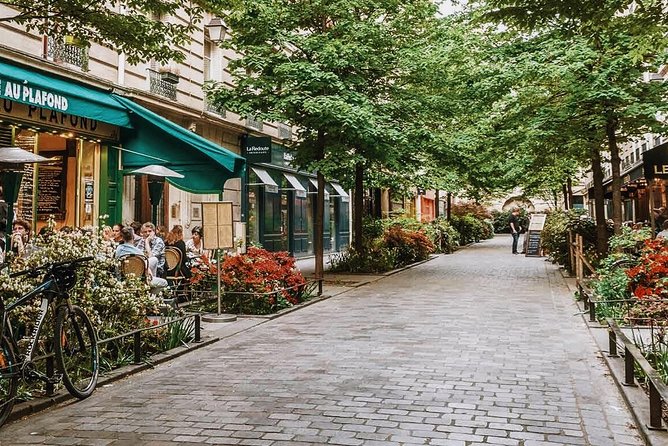
The Marais is Paris in walking distance. This semi-private guided walk strings together the Marais’ best stops with real community history, all with an English-speaking guide and a group capped at 12. You will also get a route that works in rain, since it runs rain or shine.
I especially love two things: the way a strong guide makes Paris architecture click, and the focus on the Jewish Quarter without turning it into a textbook. Guides named in past groups like Hugo, Eden, Adrien, and Tamari come through with lively storytelling and plenty of room for questions, plus practical tips like where to eat afterward. I also like that you move from grand squares to small streets fast, so you get context, not just photos.
One thing to weigh: you do not tour inside synagogues, and some big sights on the route do not include tickets. If you are hoping for synagogue interiors, this is the wrong fit, even though the neighborhood stops are still meaningful and well planned.
In This Review
- Key things to know before you go
- Why the Marais District feels like the whole city
- Semi-private group size and a 2.5-hour pace that actually works
- Saint-Paul-Saint-Louis church to Hotel de Sully courtyard
- Place des Vosges: the square you can’t skip
- Rue des Francs Bourgeois and the Marais shopping spine
- Into the Jewish Quarter: Pletzl life, Rue des Rosiers, and what you can see
- The Jardin des Rosiers Joseph-Migneret memorial stop
- Musée Carnavalet and Centre Pompidou: learning without paying for every door
- Hôtel de Ville and Saint-Gervais-Saint-Protais: finishing with Paris government and baroque
- Price and value: what $59.69 buys you
- How to get the most out of the walk
- Who this tour suits best, and who should choose something else
- Should you book this Marais and Jewish Quarter walking tour?
- FAQ
- How long is the Le Marais District & Jewish Quarter guided walking tour?
- What is the maximum group size?
- Is the tour offered in English?
- Are synagogues included in the tour?
- Which attractions have tickets not included?
- Does the tour run in bad weather?
- Where does the tour start and do you pick up from hotels?
- Do you need to provide a mobile phone number?
- What is the cancellation window for a full refund?
Key things to know before you go
- Max 12 people means the guide can actually answer your questions.
- English-speaking guide keeps the history clear, including the Marais’ layered timeline.
- A tight “best of Marais” loop covers Place des Vosges, major churches, and city landmarks.
- Jewish Quarter streets and memorial garden include Rue des Rosiers and the Jardin des Rosiers Joseph-Migneret.
- Most stops are free to view, but Musée Carnavalet and Centre Pompidou have tickets not included.
Other walks through the Marais:
- Award-Winning Paris French Bakery Experience — Le Marais, 4th Arr
★ 4.5 · 1,186 reviews - Paris Le Marais Food Tour With 10+ Tastings, Cheese, Wine & More
★ 5.0 · 985 reviews - Paris Le Marais District Original Food and Wine Tasting Tour
★ 4.5 · 880 reviews - Paris Bike Tour Hidden Secrets in the Latin Quarter & Le Marais neighborhoods
★ 5.0 · 766 reviews
Why the Marais District feels like the whole city
The Marais used to sit beyond central Paris, and it shows. Today it reads like a compact museum of old money, religious life, and political change, all squeezed into walkable blocks. On this kind of route, you stop looking at buildings and start seeing why they were built, who lived there, and what changed over time.
The tour is also a smart shortcut for your first visit. Instead of bouncing around randomly, you get a storyline that runs from 17th-century religion, to Renaissance-era grandeur, to 18th and 19th-century Jewish community life, and then to modern Paris at the end.
Semi-private group size and a 2.5-hour pace that actually works
This is a 2.5-hour walking tour with a group size that never tops 12. That matters more than it sounds. In small groups, you get more stop-by-stop explanation, and you spend less time waiting for the whole group to regroup at every corner.
It runs rain or shine, so dress like a Parisian adult: bring a jacket, and have a plan for damp sidewalks. The route is described for moderate physical fitness, and it is not recommended for people using wheelchairs or who need accessibility accommodations.
Also note the practical stuff that can make or break a walking day. There is no hotel pickup or drop-off, and you should plan to get to the meeting area on your own by transit or taxi. Keep your load light too, since large bags or suitcases are not allowed.
Saint-Paul-Saint-Louis church to Hotel de Sully courtyard
Your route starts by getting your bearings in the historic core. You begin with the 17th-century Saint-Paul-Saint-Louis church, built by the Jesuits and designed with inspiration from the famous Gesù in Rome. Even if you are not a church architecture nerd, the guide’s framing helps you notice details you would normally walk past.
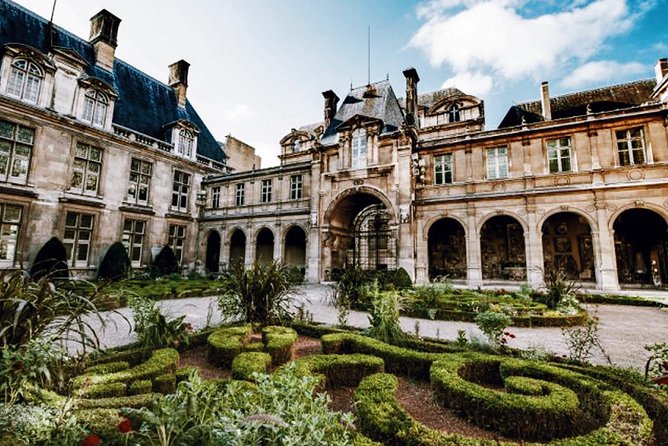
From there, you pass the courtyard and garden area of Hotel de Sully, a Renaissance-style grand residence built between 1624 and 1630. This part of the walk is all about “how Paris grew rich.” You see how monumental building activity shaped the Marais into a place of status, not just narrow streets and small lives.
One nice thing here is pacing. These early stops are short, so you do not feel like you are stuck in a single spot while the group waits. You get an idea of what you are looking at, then you move.
Place des Vosges: the square you can’t skip
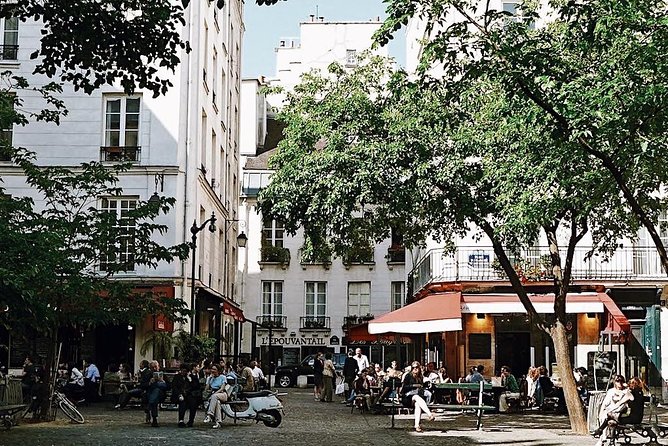
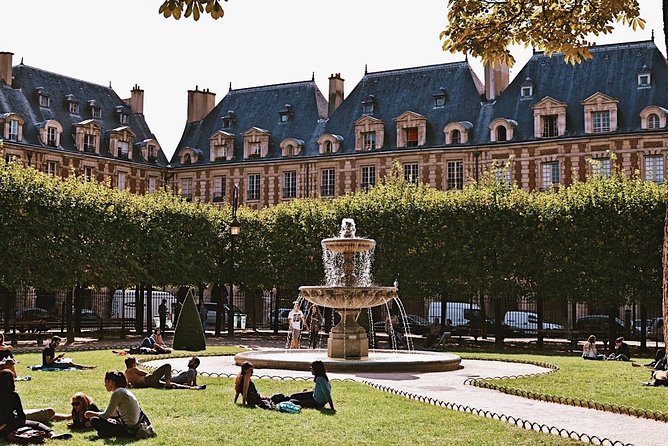
Next comes Place des Vosges, the oldest planned square in Paris. It is one of those places where your brain starts saying, Yes, this is the postcard everyone loves, but then the guide gives you the “why” behind it.
You also learn how the Marais’ “royal history” connects to the surrounding neighborhoods. The square is not just pretty stone. It is a window into how the city organized space and power, and why this district became a magnet for influential residents.
After this stop, the tour shifts tone and period. That transition is where the walk starts to feel special, because you are not just seeing pretty locations, you are watching Paris time travel.
Other arrondissements taken at walking pace:
- Paris Top Sights Half Day Walking Tour with a Fun Guide★ 5.0 · 2,893 reviews
- Montmartre Hidden Gems and Scenic Highlights Walking Tour★ 5.0 · 2,684 reviews
- Montmartre Hill French Gourmet Food and Wine Tasting Walking Tour★ 5.0 · 2,588 reviews
- Paris: Montmartre Highlights Walking Tour with a Local Guide★ 4.9 · 2,318 reviews
Rue des Francs Bourgeois and the Marais shopping spine

You then walk along Rue des Francs Bourgeois, a long street known for fashion boutiques and a trendy vibe. The practical value of this stop is simple: you learn how to read the Marais on your own later.
You are also reminded that the Marais is not frozen in the past. It keeps evolving, and the guide’s explanation helps you understand why certain streets became hotspots. When you later wander on your own, you will know what kind of street you are on and why it developed a certain identity.
Into the Jewish Quarter: Pletzl life, Rue des Rosiers, and what you can see
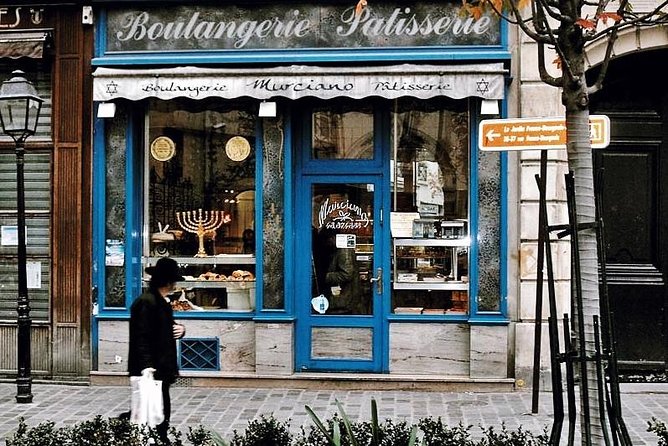
This is the heart of the experience. The guide explains how the Jewish community put the Marais on the map during the 18th and 19th centuries, and you walk through the Pletzl area, including the bakery and boutique zone.
A key detail I like for planning: the tour is focused on the neighborhood experience, not synagogue interiors. Access to synagogues is restricted to worshippers for security reasons, so you do not enter synagogues. You still get meaningful street-level context, including the story of the community and the way it shaped the district.
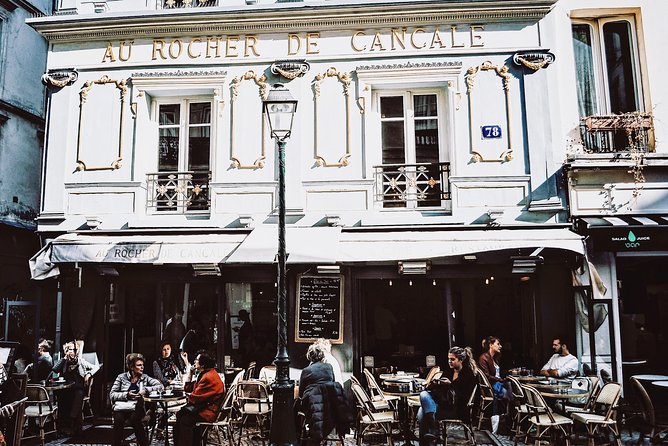
You also pass Rue des Rosiers, a small street right in the center of the Jewish Quarter. This is one of the best places to connect history to present-day life, because the street feels active and real rather than museum-like.
The Jardin des Rosiers Joseph-Migneret memorial stop
One of the most moving moments on the route is the Jardin des Rosiers – Joseph-Migneret. It is tucked between hotels and hidden behind boutiques, which is exactly why a guided walk matters. You might spot the shops, but you would likely miss this small green space without help.
The guide explains why it is named Joseph Migneret, a school principal who helped students during World War II by hiding them, and who was eventually arrested and killed. It is a short stop, but the emotional weight lands fast, especially after you have been talking about community life in the Marais.
This is also a useful reminder for travelers. Paris has many memorials that are small and quiet. Having context as you walk helps the meaning stick, not just the photo.
Musée Carnavalet and Centre Pompidou: learning without paying for every door
As you move toward the “big Paris institutions” part of the route, you see the Hôtel Carnavalet and hear how the Musée Carnavalet – Histoire de Paris fits into the area. The museum itself is not included, meaning the ticket is not part of your tour price, but the stop sets you up to decide if you want to visit on your own.
The museum is known for highlighting the city’s past, and the building is described as a rare Renaissance example in Paris. Even without entering, you get a strong sense of what you would be walking into if you add it later.
Then you reach the Centre Pompidou. You do not have to love contemporary art to appreciate why this stop works in a Marais walk. The tour frames it as the famous high-tech style museum with an exterior you can spot easily. Like Musée Carnavalet, the ticket is not included, so you decide whether to go inside after you see it from the outside.
This is a smart approach for value. The tour keeps momentum, and you keep control over paid museum time.
Hôtel de Ville and Saint-Gervais-Saint-Protais: finishing with Paris government and baroque
You end at Hôtel de Ville, Paris city hall, which has served as the municipality’s headquarters since 1357. It is a dramatic place to close a walk about layers of Paris life, because it ties history to power and civic identity.
Right nearby, you catch a glimpse of Église Saint-Gervais-Saint-Protais, described as the first example of French baroque style in Paris. The tour notes it was a parish church until 1975, and it is now connected to the Monastic Fraternities of Jerusalem.
Ending here also gives you an easy “what next” moment. If you want more walking, this is a good anchor point. If you want a break, you are in the center of transit and options.
Price and value: what $59.69 buys you
At $59.69 per person for about 2.5 hours, you are paying for two things: an English-speaking guide and a route that lines up high-impact stops. The value improves because many sights on the route are listed as admission ticket free for viewing on the walk, with only a couple exceptions not included.
You also get small-group attention. With a max of 12 people, you are not stuck behind a crowd. That matters when a guide points out the things you would normally miss, like architectural details at Hotel de Sully or the historical meaning behind small streets.
If you were doing this as a DIY walk, you could cover a lot of ground, but you would likely lose the timeline and connections that make the Marais feel understandable. Here, you walk it with structure, and you can still choose to go inside the ticketed stops later.
Another planning point: this tour is commonly booked about 35 days in advance on average. If your dates are tight, grab it early.
How to get the most out of the walk
This is a walking tour, so treat it like one. Wear comfortable shoes that handle stone streets, and bring water. The tour advises an umbrella for rain and a hat during summer, so follow that guidance.
I also recommend you come with a couple questions ready. The best moments in this tour style are usually when the guide connects something you see on the street to something bigger, like why the Marais evolved the way it did, or how the Jewish Quarter’s story fits into wider European history.
Finally, expect minor route adjustments. The route may be affected by national celebrations, and in those cases an alternative route is provided so the highlights still show up. In those cases, refunds or discounts are not mentioned, so just plan on staying flexible.
Who this tour suits best, and who should choose something else
This walk is a great fit if you want a first-time Marais overview plus focused time in the Jewish Quarter. It is also ideal if you like architecture, public squares, and street-level history rather than long museum sessions.
It is not a great fit if walking is a major challenge, since it is not recommended for wheelchairs or those with walking disabilities. It is also not the best choice if you specifically want to enter synagogues. The tour does not include synagogue entry, and access is restricted.
If you are a group traveler, the small max of 12 is a plus. If you are a solo traveler, you still get the personal guide attention that people talk about when they rave about guides like Hugo and Eden.
Should you book this Marais and Jewish Quarter walking tour?
Book it if you want your Marais visit to feel organized and meaningful. You get a compact route with major Paris landmarks, plus real focus on the Jewish Quarter streets and the Joseph-Migneret garden stop. The small-group size and the high guide energy show up in how long you stay engaged, even when the stops are brief.
Skip it if you need wheelchair-friendly access, or if your top priority is entering synagogues. In that case, you will likely feel frustrated by the “view-only” limitation.
If you are deciding between wandering on your own and taking a guide, I think this is one of the better guided options. You pay for structure and context, then you still have the rest of the day to eat, shop, and explore the Marais at your own speed.
FAQ
How long is the Le Marais District & Jewish Quarter guided walking tour?
It is about 2 hours 30 minutes.
What is the maximum group size?
The tour allows a maximum of 12 travelers.
Is the tour offered in English?
Yes, it is offered in English.
Are synagogues included in the tour?
No. The tour does not include entry into synagogues, because access is restricted to worshippers for security reasons.
Which attractions have tickets not included?
Musée Carnavalet – Histoire de Paris and Centre Pompidou are listed as admission ticket not included.
Does the tour run in bad weather?
Yes, the tour will run rain or shine.
Where does the tour start and do you pick up from hotels?
It starts at Saint-Paul 75004 Paris, France, and there is no hotel pickup or drop-off. You should use Uber or a taxi if needed.
Do you need to provide a mobile phone number?
Yes. You must provide a mobile phone number, including the country code.
What is the cancellation window for a full refund?
You can cancel for a full refund up to 24 hours in advance of the experience start time.
Newest write-ups from Paris






Le Marais Walking Tours, compared.

Award-Winning Paris French Bakery Experience — Le Marais, 4th Arr
Read our review →
Paris Le Marais Food Tour With 10+ Tastings, Cheese, Wine & More
Read our review →
Paris Le Marais District Original Food and Wine Tasting Tour
Read our review →
Paris Bike Tour Hidden Secrets in the Latin Quarter & Le Marais neighborhoods
Read our review →
Paris Culinary Tour: 11 Tastings & 2 Wines in Le Marais
Read our review →

Le Marais District Food Tour with 10+ Tastings & Wine
Read our review →
Browse the lists this tour appears in