
Reviewed · LE MARAIS WALKING TOURS
Paris: Marais without crowds. Guided Tour.
Marais without crowds feels like finding a shortcut to the real city. This 90-minute, English-guided walk connects big landmarks like Place des Vosges with quieter threads like the Pletzl Jewish quarter. I especially like the small-group feel and the guide’s story-led pacing, but a quick heads-up: you do not go inside every building.
What you get is equal parts postcard Paris and lived-in neighborhood Paris. You’ll look at aristocratic mansions, art galleries, and designer workshops, then shift into WWII-era realities and how the Marais culture evolved into today’s scene, including LGBT history that took off in the early 1980s. The tour also leans into people-watching, which is fun, but it means the focus is less about museums and more about what you see on the street.
The route ends at Hôtel de Ville, and the whole thing is designed to be doable rain or shine. In the guide pool, you’ll hear a lot of enthusiasm from different locals, with names that come up often like Max, Josephine (often called the pink lady), Achille, Laura, Philippe, and Garrett. If you want maximum photos of interiors, this might feel like too much exterior time, but if you want context, it’s a strong fit.
In This Review
- Key points at a glance
- Why Le Marais feels like Parisian life, not a photo set
- 90 minutes, rain or shine, and what a small group changes
- Meeting at Saint-Paul: the start that gets you oriented fast
- Rue du Figuier and Le Village Saint-Paul: tiny streets, big clues
- Place des Vosges and Victor Hugo: aristocrats, revolution energy, and architecture
- Hôtel de Sully: mansions and the feeling of private space
- Rue des Rosiers and l’as du falafel area: the Jewish Marais in everyday form
- The Pletzl: WWII memory and how culture survives
- Hôtel de Sens: style, scale, and the medieval-to-modern bridge
- Hôtel de Ville finish: where the walk leaves you positioned
- The people-watching angle is not just a gimmick
- Who this tour fits best (and who might want something else)
- Value at about $17: what you’re really paying for
- Should you book? My straight answer
- FAQ
- How long is the Marais guided tour?
- What size are the small groups?
- Where do we meet, and which metro station is closest?
- How will I recognize the guide?
- Is the tour canceled if it rains?
- Is the tour wheelchair accessible?
- Can I cancel, and is there a pay-later option?
Key points at a glance
- Small groups, about 12 people, with a second guide if the group grows to around 20
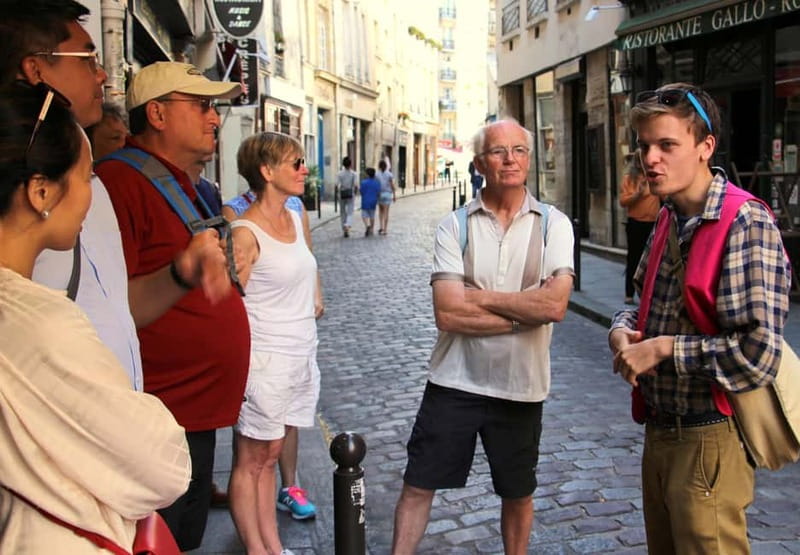
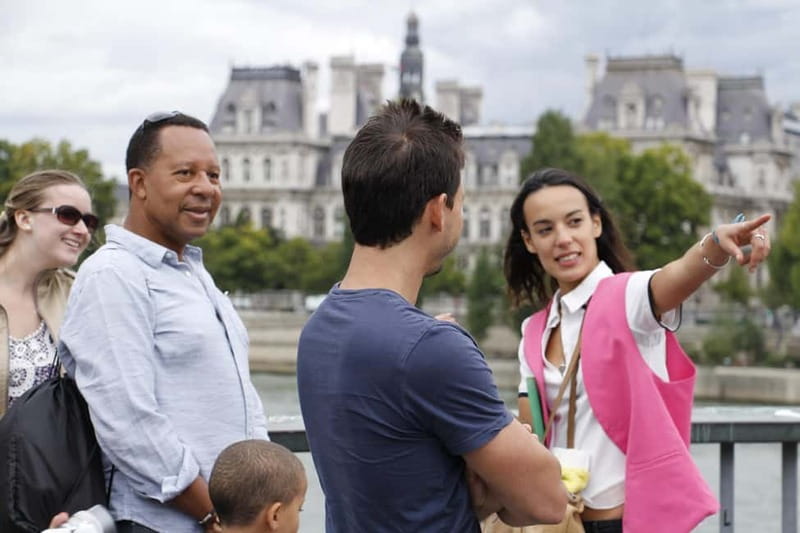
- English guide in a pink vest, starting right on time for a smooth flow
- WWII and the Pletzl story, tied directly to how the Marais works today
- Place des Vosges to Hôtel de Ville route, built for orientation plus character
- Rain or shine walking, so you keep moving even when the weather shifts
Other walks through the Marais:
- Award-Winning Paris French Bakery Experience — Le Marais, 4th Arr
★ 4.5 · 1,186 reviews - Paris Le Marais Food Tour With 10+ Tastings, Cheese, Wine & More
★ 5.0 · 985 reviews - Paris Le Marais District Original Food and Wine Tasting Tour
★ 4.5 · 880 reviews - Paris Bike Tour Hidden Secrets in the Latin Quarter & Le Marais neighborhoods
★ 5.0 · 766 reviews
Why Le Marais feels like Parisian life, not a photo set
Le Marais has always been more than a pretty neighborhood. It’s a patchwork of eras, from medieval pockets to aristocratic grandeur, then into modern creative culture you can still read on the streets.
That’s what this walk does well. Instead of treating the Marais like a list of sights, it shows how the neighborhood attracts different kinds of Parisians and different kinds of visitors. You’ll notice the fashionable crowd, the curious folks who ask questions, and the clueless ones who look lost with maps in hand. The guide basically turns that into a game, because people-watching is one of the best ways to understand the place.
90 minutes, rain or shine, and what a small group changes
This is a 90-minute walking tour, and that time matters. With the pace kept lively, you get enough stops to build a real sense of place, but not so long that you feel stuck in one neighborhood corner all day.
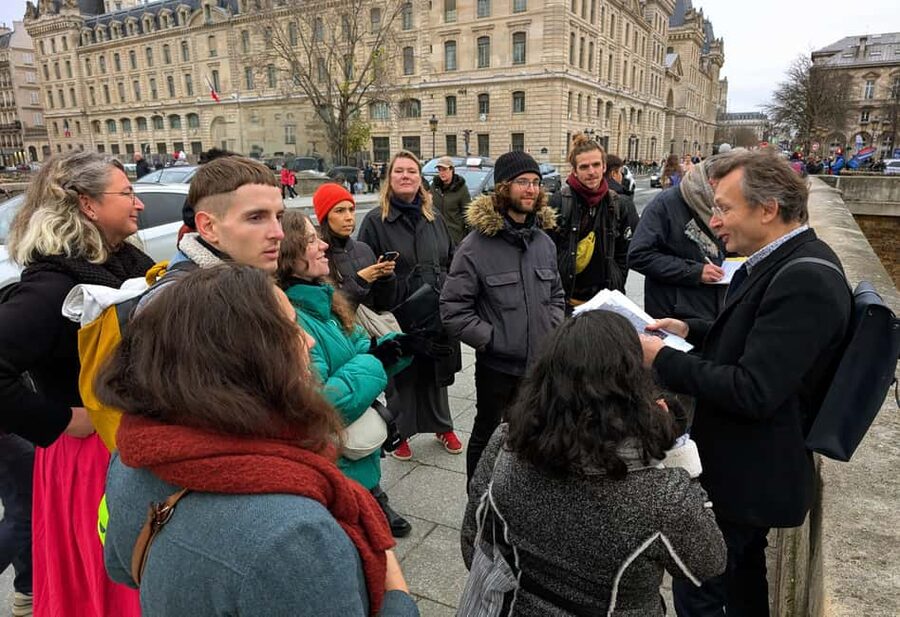
Small groups are the big quality upgrade here. Expect around 12 people, and if it gets up to about 20, you’ll add a second guide to keep things from turning chaotic. That’s why questions work, and why you can actually hear details without fighting the crowd.
You also walk rain or shine, so wear shoes that can handle slick sidewalks. The upside is you do not lose the day to weather, and the Marais atmosphere still works when the skies are gray.
Meeting at Saint-Paul: the start that gets you oriented fast
You meet at 10 Rue des Nonnains d’Hyères, near metro Saint-Paul. The “local first” strategy starts immediately. You’re not shuttled in late or dumped at a landmark after the important orientation already happened.
If you miss the start, the guide may be at 1 Rue du Figuier. Build in a few minutes of buffer when you navigate to the meeting point, since the guide starts right on time.
This tour begins close to the neighborhood’s pulse, so by the time you hit the major squares and cultural stops, you’re already learning how the Marais spaces “read” visually: narrow lanes, sudden courtyards, and the way older buildings sit beside modern storefront life.
Rue du Figuier and Le Village Saint-Paul: tiny streets, big clues
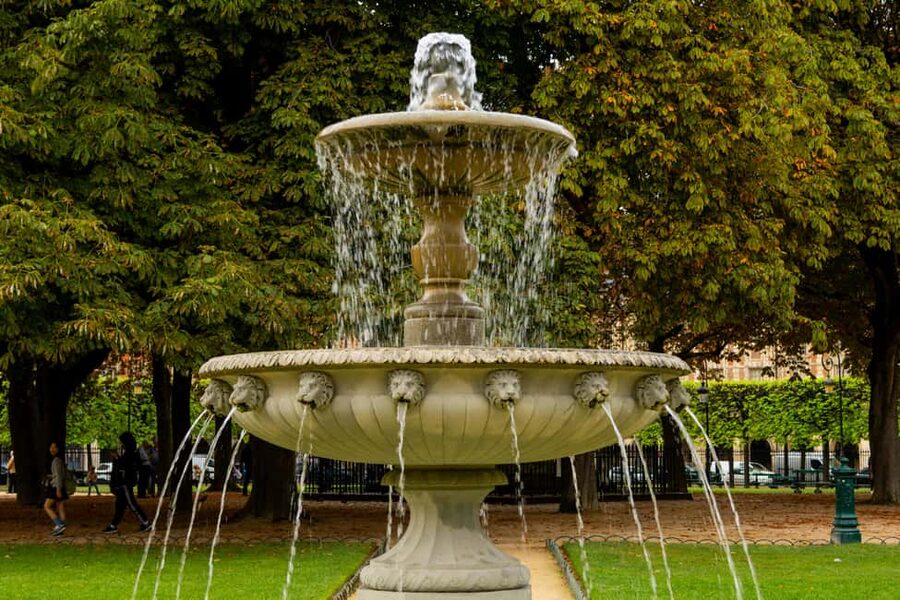
One early stop takes you toward 1 Rue du Figuier and then Le Village Saint-Paul. These are the kinds of places many first-time visitors walk past without understanding what they’re seeing. The guide helps you spot the pattern, like why some corners feel tucked away while others feel instantly social.
In practical terms, this early segment helps you do something useful: get your bearings fast. When later you reach Place des Vosges or the Jewish quarter, you’ll understand the transitions instead of only recognizing the names.
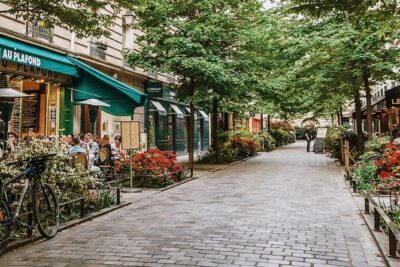
You also get that street-level Paris detail that guidebooks rarely capture. The Marais can feel “designed” from far away, but up close it’s about how people move through small passages, how shops sit at street level, and where you can pause without blocking everyone.
A handful more Paris options to weigh up
- Paris: Louvre Guided Tour with Reserved Access & Boat Cruise★ 4.3 · 16,353 reviews
- Louvre Museum Masterpieces Guided Tour with Access★ 4.5 · 12,023 reviews
- Louvre Museum – Exclusive Guided Tour (Entry Included)★ 5.0 · 6,296 reviews
- Versailles: Skip-the-Line Guided Palace Tour and Full Access★ 4.6 · 5,214 reviews
Place des Vosges and Victor Hugo: aristocrats, revolution energy, and architecture
At Place des Vosges, you’ll get one of the Marais’ most recognizable settings. This square is tied to the neighborhood’s aristocratic past, and you’ll also connect it to Victor Hugo’s house, which makes the area feel more human, not just decorative.
The tour frames this spot as a kind of timeline. Before the French Revolution, aristocratic life shaped how spaces were built and used. Then the story turns, showing how later events and changing populations reshaped what the neighborhood became.
If you like historical context that you can point to in the environment, this is where the tour clicks. The square gives you clean sightlines to understand the style, while the guide adds the “why,” like what the buildings were built to signal and how those signals carried forward in different forms.
Possible drawback: because this is a street tour, you’re mostly reading the architecture from the outside. If you’re hoping to spend time inside major historic sites, you’ll need another museum-style stop later.
Hôtel de Sully: mansions and the feeling of private space
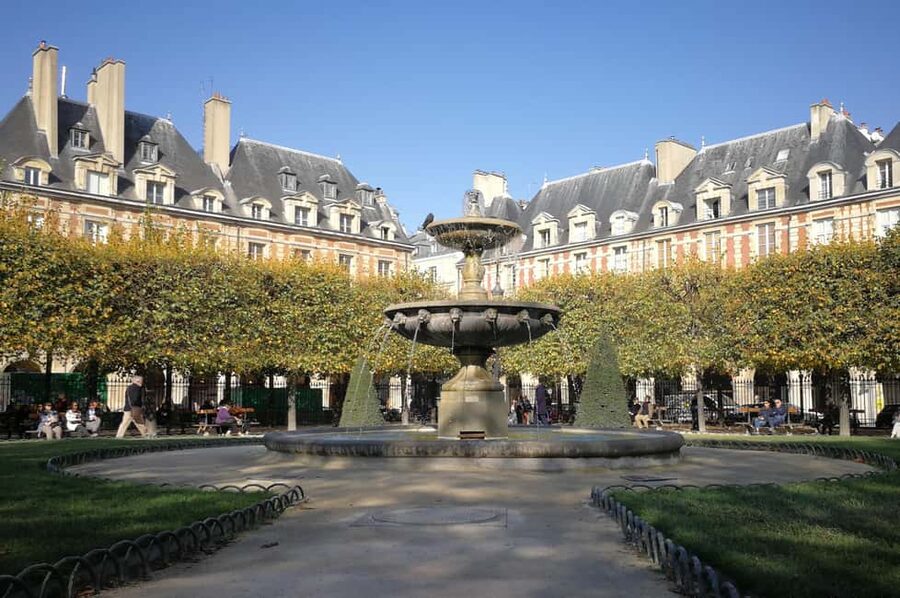
Next is Hôtel de Sully. Even when you’re just viewing from the street, the idea lands: this is how aristocratic mansions protected status and privacy.
The guide keeps the focus on how these spaces worked socially. Who belonged, how neighborhoods shifted, and why certain parts of Le Marais always feel a little more sheltered than others.
This stop also supports the tour’s main theme of transformation. Le Marais didn’t just stay “old.” It kept changing owners, uses, and cultural identities, but you can still spot the leftover structure of earlier eras.
Rue des Rosiers and l’as du falafel area: the Jewish Marais in everyday form
Then you head into Rue des Rosiers, a street that carries modern energy and older identity at the same time. This is where you’ll run into the Jewish Paris thread in a way that feels concrete, not abstract.
The tour connects you to the Pletzl, the Jewish quarter, and includes stories tied to Nazi persecutions during WWII. It also touches on Jewish cultural breadth, including Ashkenazi and Sephardic influences, so you don’t end up with a single-note version of the community’s story.
You’ll also get pointed toward the food culture of the area, including well-known places like l’as du falafel. Even if you do not eat during the walk, having the guide name key spots gives you an easy way to return later with a plan.
The Pletzl: WWII memory and how culture survives
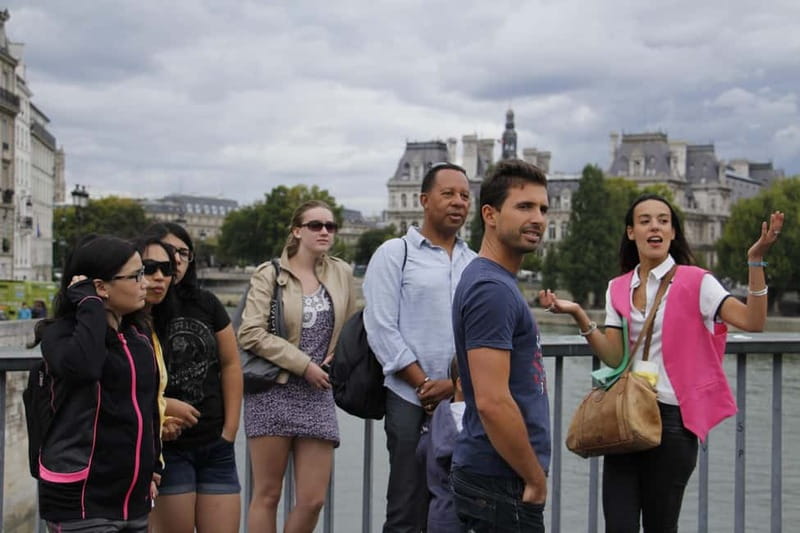
The Pletzl stop is one of the tour’s emotional center points. This is where you learn how the neighborhood’s Jewish life intersected with the darkest parts of the 20th century, and then how the area remained culturally alive afterward.
What I like about the way this is handled is balance. The tour does not treat WWII as a disconnected chapter that ends and disappears. Instead, it builds the story into the present-day atmosphere of the Marais, where different cultural communities continue shaping street life.
If you want history that you can walk away thinking about, this segment does the job. You’ll be more likely to notice details like who gathers where, and why certain streets feel like they belong to the same ongoing story.
Hôtel de Sens: style, scale, and the medieval-to-modern bridge
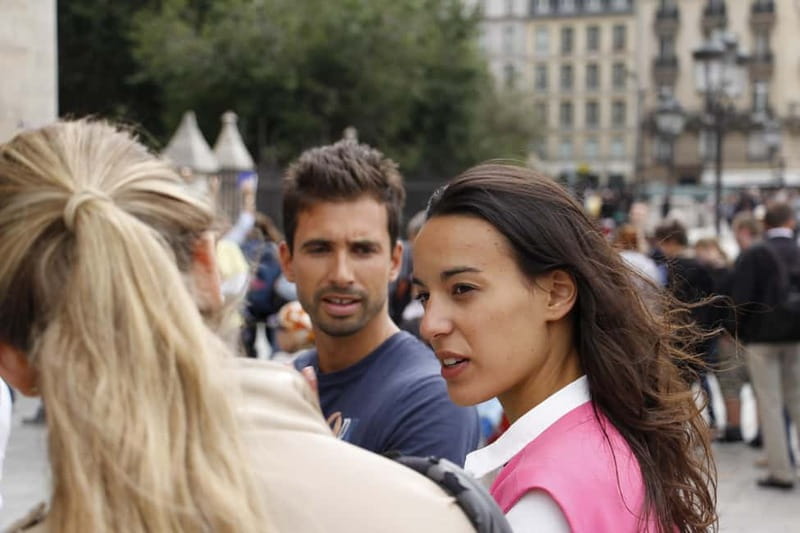
You’ll also stop at Hôtel de Sens, which helps finish the “architecture as narrative” idea. Mansions like this make the neighborhood feel layered, as if you’re standing at the edge of one era and looking into the next.
This part also supports a key Marais concept mentioned in the tour theme: the way medieval pockets coexist with later developments. The guide helps you see those pockets as practical geography, not just romantic wording.
It’s a good transition into the final area of the walk, because by the time you head toward Hôtel de Ville, you’ve already learned how to read the neighborhood’s shifts.
Hôtel de Ville finish: where the walk leaves you positioned
The tour wraps at Hôtel de Ville. That end point is useful because it gives you an easy anchor for the rest of your day. From here you can keep walking toward other parts of central Paris or switch to transit with less guesswork.
More importantly, ending at a major civic landmark underlines a theme you’ve been hearing throughout the walk. Le Marais is not only a “cool district.” It’s a neighborhood that has repeatedly reinvented itself, from medieval roots to aristocratic influence to WWII memory, and then into today’s fashion, art, and nightlife culture.
The guide also brings in one of the tour’s most intriguing cultural threads: the Marais as the starting point for LGBT culture that took off in the early 1980s. That adds another kind of transformation, one that’s not just about buildings, but about people claiming space.
The people-watching angle is not just a gimmick
A lot of neighborhood tours say they’ll show you “the real Paris.” This one does something more specific. The guide actively encourages you to watch how people behave in Le Marais, including which kinds of visitors move fast with maps and which kinds of locals linger and ask questions.
That sounds casual, but it changes what you notice. You start seeing the street like a local: where people pause, how they choose side streets, and how the neighborhood shifts depending on time of day and social mood.
And if you’re the kind of traveler who enjoys a bit of humor while learning, this tour tends to land well because many guides are described as funny and upbeat while still covering serious material with care.
Who this tour fits best (and who might want something else)
I’d point you to this tour if you want:
- a short, structured walk that gives context quickly
- a neighborhood story with both beauty and difficult WWII-era realities
- small-group attention in English
- a practical way to explore without map fatigue
You might choose a different option if:
- you want lots of interior museum time
- you prefer self-guided stops where you control every minute
- you’re traveling with mobility limits that make steady walking hard, even though the tour is wheelchair accessible
Value at about $17: what you’re really paying for
At $17 per person for 90 minutes, the math works because you’re buying more than “a walk.” You’re paying for a local guide who connects architecture, culture, and history into something you can actually remember while you’re standing on the street.
The small-group size, around 12 people, is a big part of why the price feels fair. When groups are smaller, you get more face time. You can ask questions, and the guide’s explanations land better.
Also, this is “rain or shine” planning. When the weather changes, your itinerary stays intact, and you still get a guided experience instead of a cancelled day.
Should you book? My straight answer
Book it if you want Le Marais to feel like a living neighborhood with layers, not just a checklist of famous spots. You’ll start near Saint-Paul, hit Place des Vosges, learn the Pletzl and WWII story, and end in a place that makes the rest of your day easier.
Skip it if you only care about interiors and museum tickets, since the tour focuses on sights from the outside and doesn’t go inside all landmarks. If that’s you, plan a museum visit separately and take this walk for the streets and the meaning.
If you’re on a first trip and want a “Paris beyond the big hits” angle, this is one of the best ways to do it in a tight time window.
FAQ
How long is the Marais guided tour?
The tour runs for 90 minutes, rain or shine.
What size are the small groups?
Small groups are usually around 12 people. If group size reaches up to about 20, a second guide is added to keep the experience smooth.
Where do we meet, and which metro station is closest?
You meet at 10 Rue des Nonnains d’Hyères, with the closest metro station being Saint-Paul.
How will I recognize the guide?
Your guide will be wearing a pink vest, and they start right on time.
Is the tour canceled if it rains?
No. The tour walks rain or shine.
Is the tour wheelchair accessible?
Yes, the tour is wheelchair accessible.
Can I cancel, and is there a pay-later option?
Yes. You can cancel up to 24 hours in advance for a full refund, and you can reserve now and pay later (you pay nothing today).
Newest write-ups from Paris



Le Marais Walking Tours, compared.

Award-Winning Paris French Bakery Experience — Le Marais, 4th Arr
Read our review →
Paris Le Marais Food Tour With 10+ Tastings, Cheese, Wine & More
Read our review →
Paris Le Marais District Original Food and Wine Tasting Tour
Read our review →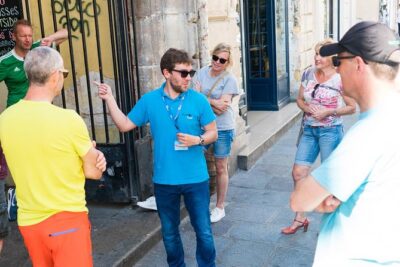
Paris Bike Tour Hidden Secrets in the Latin Quarter & Le Marais neighborhoods
Read our review →
Paris Culinary Tour: 11 Tastings & 2 Wines in Le Marais
Read our review →
Le Marais District Food Tour with 10+ Tastings & Wine
Read our review →
Le Marais District & Jewish Quarter Guided Walking Tour 12ppl Max
Read our review →Browse the lists this tour appears in