
Reviewed · LE MARAIS WALKING TOURS
Le Marais in the French Revolution: Private Paris Walking tour
Le Marais teaches the Revolution in layers. On this private Paris walking tour, you walk the streets where the Revolution left physical clues, from the remains of Bastille prison to other walls tied to older regimes, and even later graffiti you can still spot today. In accounts of this tour, guides like Florence are highlighted for making the timeline click, not just reciting dates.
I love how much personal attention you get on a private route, and how the guide can connect big events across time, even toward Napoleon and the wider political ripple effects. The tour also gives you time to stop for photos and take breaks without feeling rushed. One drawback to plan for: the pace can feel brisk, so bring comfortable shoes and be ready to keep moving at a steady walk.
In This Review
- Key things I’d circle before you book
- Why Le Marais is the right classroom for French Revolution history
- Price and logistics for a private 2.5-hour walking tour
- Stop 1 in Le Marais: Bastille and La Force traces, plus church graffiti
- Rue Saint-Antoine: the first exclusively female political club
- Place des Vosges: Victor Hugo’s home and why it belongs on a Revolution walk
- What the guide does for you, and where you should pay attention
- How to plan the rest of your free day after 2.5 hours
- Who this private French Revolution walk is best for
- Should you book the Le Marais in the French Revolution private tour?
- FAQ
- How long is the Le Marais in the French Revolution private walking tour?
- What language is the tour offered in?
- Is this a private tour or a shared group tour?
- Where does the tour start?
- Where does the tour end?
- What is included in the price?
- Are there any admission fees mentioned for the stops?
- Is cancellation free, and does weather affect the tour?
- How fit do you need to be for this tour?
Key things I’d circle before you book
- Bastille prison remains inside Le Marais: You see the Revolution through places, not just stories.
- Graffiti from the Commune of 1871: A still-standing church carries marks from a later political upheaval.
- Rue Saint-Antoine and early women’s politics: You hear about the first exclusively female political club.
- Place des Vosges plus Victor Hugo: You stop where Hugo lived, and his famous works are part of the conversation.
- Private guiding with photo time: You get attention tailored to your group, plus plenty of chances to pause and shoot pictures.
- About 2.5 hours, then freedom: You should plan on a focused morning or afternoon walk, and the rest of your day is yours.
Other walks through the Marais:
- Award-Winning Paris French Bakery Experience — Le Marais, 4th Arr
★ 4.5 · 1,186 reviews - Paris Le Marais Food Tour With 10+ Tastings, Cheese, Wine & More
★ 5.0 · 985 reviews - Paris Le Marais District Original Food and Wine Tasting Tour
★ 4.5 · 880 reviews - Paris Bike Tour Hidden Secrets in the Latin Quarter & Le Marais neighborhoods
★ 5.0 · 766 reviews
Why Le Marais is the right classroom for French Revolution history
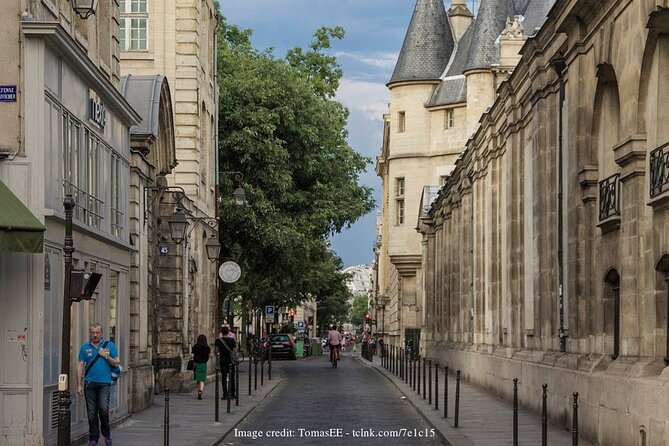
Le Marais is one of the places in Paris where history stays visible. You are not just looking at monuments from a distance. You are walking along walls, church façades, and street segments where different centuries overlap, sometimes in the same view.
That matters because the French Revolution did not happen in a vacuum. It grew out of older social tensions, then changed the political rules so fast that later events kept building on the fallout. On this tour, the physical traces help you understand how that change felt on the ground.
You also get a “compressed but clear” route. Three stops, about 2.5 hours total, with short sections that add up to a focused storyline. For first-time visitors, that is often a better deal than trying to master everything on your own while juggling tickets, long museum lines, and decision fatigue.
Price and logistics for a private 2.5-hour walking tour
At $210 per person for a private 2.5-hour experience, this is not a budget tour. The value is in paying for a guide’s time and a route designed to make connections fast. If you are traveling as a small group and you want context on the streets, the per-person price can start to feel more reasonable than a larger-group option.
You’ll meet at Banque de France, 3 bis Pl. de la Bastille CS 41834, 75183 Paris. The finish is near Hôtel de Ville, close to public transport and taxi links, and your guide will help advise your way. That end location is practical. It means you can keep moving afterward instead of feeling stuck at the middle of nowhere.
A few other logistics points to keep in mind:
- It’s in English and operates as a private activity, meaning only your group participates.
- The tour is best with good weather, so have a flexible mindset if rain shows up.
- The walking requires moderate physical fitness, which usually means steady walking on city surfaces rather than a long hike.
Also, you get a mobile ticket. It’s one less thing to print, and it helps you start quickly once you find your guide.
Stop 1 in Le Marais: Bastille and La Force traces, plus church graffiti
Stop 1 is the heart of the walk, and it’s where you shift from “knowing the Revolution” to seeing it in place. You begin in Le Marais with an introduction to pre-Revolution France, then move through areas tied to the remains of the famous Bastille prison.
What makes this stop powerful is that it treats the Bastille as more than a symbol. You are learning how prisons and power structures shaped daily life and political fear. Even when the physical pieces are partial, they still communicate something big: the Revolution wasn’t only speeches and pamphlets. It was also confinement, control, and the struggle over who had authority.
You’ll also encounter a section of wall remaining from the prison de La Force. That detail matters because it adds another layer to the story. The Revolution changed the political system, but the struggle over legitimacy and punishment had roots in earlier institutions. Seeing both places in the same stop helps you recognize patterns, not just separate events.
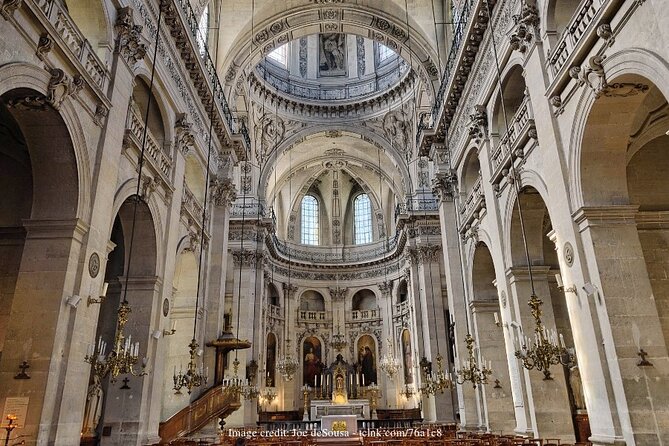
Then comes one of the most memorable visual moments: you step into the largest church in Le Marais, and you can still spot graffiti on its walls from the Commune of 1871. This is a great reminder that political conflict in France did not stop after 1789. The same streets kept absorbing upheaval, and people left marks as history unfolded.
Practical tip: since this is an indoor stop plus outdoor walking, wear layers. Paris weather can swing, and you’ll likely go from bright sun into cooler shade or interior air.
Rue Saint-Antoine: the first exclusively female political club
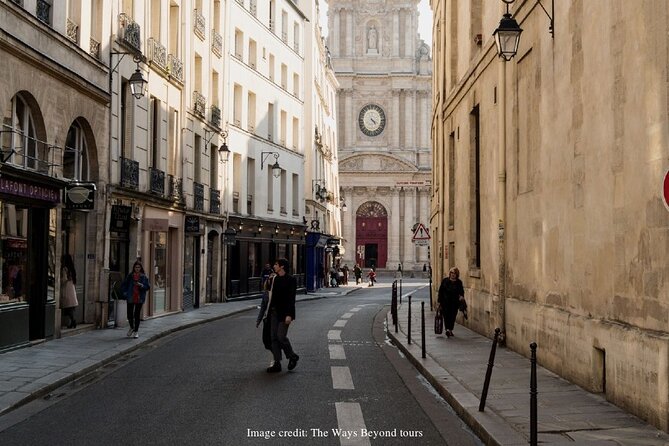
After the heavier institutional story at Stop 1, Stop 2 shifts the mood. You stroll down Rue Saint-Antoine and hear about the first exclusively female political club.
This is one of those moments where a walking tour does what a book can struggle to do. The street itself becomes part of the lesson. As you walk, the guide can point out the scale and layout of the neighborhood, which helps you picture how political activity might have felt in everyday public space.
Also, this stop is short, about 30 minutes, so it works as a reset. You get the emotional payoff of learning something specific and surprising, without dragging on for hours. It’s a good match for groups who want variety: prisons and power, then politics and participation.
If you like history that focuses on people and choices, this is the stop you’ll remember later. Female political activism in that era is often under-taught, and putting it on a street like this makes it harder to forget.
Other arrondissements taken at walking pace:
- Paris Top Sights Half Day Walking Tour with a Fun Guide★ 5.0 · 2,893 reviews
- Montmartre Hidden Gems and Scenic Highlights Walking Tour★ 5.0 · 2,684 reviews
- Montmartre Hill French Gourmet Food and Wine Tasting Walking Tour★ 5.0 · 2,588 reviews
- Paris: Montmartre Highlights Walking Tour with a Local Guide★ 4.9 · 2,318 reviews
Place des Vosges: Victor Hugo’s home and why it belongs on a Revolution walk
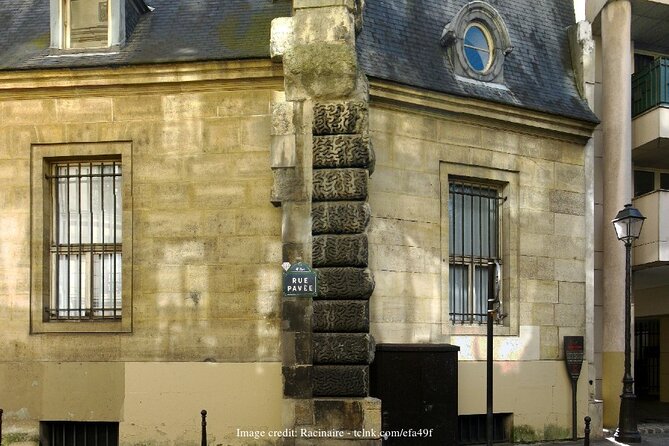
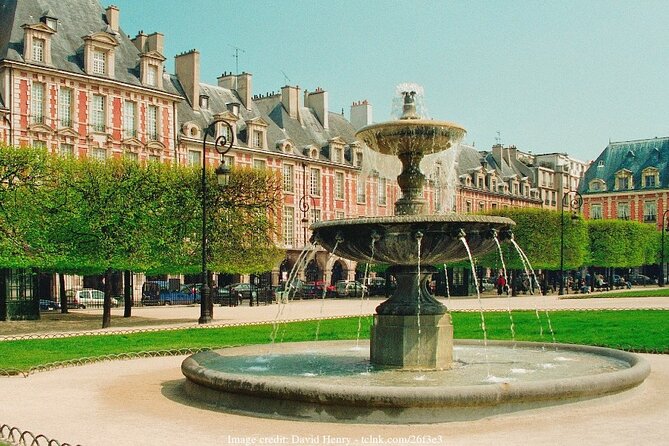
Stop 3 gives you a breather at Place des Vosges, one of Paris’s most atmospheric squares. You’ll pause inside this space and connect it to Victor Hugo, who lived here.
Why does Hugo belong on a French Revolution theme? Because he represents how later generations processed the moral and political shock of earlier years. Hugo’s famous works, Les Misérables and The Hunchback of Notre Dame, are often discussed in terms of justice, society, and human dignity. So even if this square isn’t a revolutionary site in the same way as Bastille, it still fits the larger story: ideas travel forward, and writers often serve as translators between eras.
This stop is about 30 minutes, so it feels like a punctuation mark at the end of the route. You get space to look around, take photos, and let the ideas settle.
Practical tip: if you are photographing, this is a great time to slow down. The square gives you clean backgrounds and classic angles, and it’s one of the easiest places on the route to enjoy without feeling rushed.
What the guide does for you, and where you should pay attention
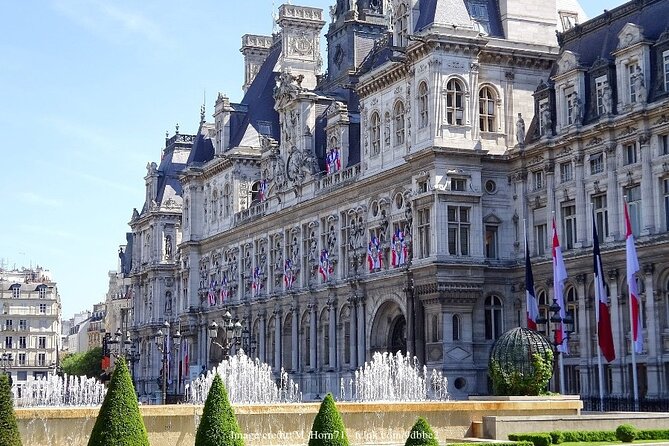
This kind of tour lives or dies by the guide. The best guides do two things at once: they teach you specific facts, and they help you connect them without turning it into a lecture.
In accounts tied to this experience, guides such as Florence and Chris are repeatedly associated with strong command of detail and the ability to tie different periods together. That comes through in how the walk is structured. You start with institutional sites, then you widen to politics, then you finish with literature and how society remembers.
One thing to note from the experience pattern: the pace can be brisk. Chris is described as maintaining a quick tempo. That can be great if you like learning while moving. It can also wear you out if you prefer a slow wander.
My advice: treat this as a guided history walk, not a casual stroll. Choose shoes you can walk in for 2.5 hours. And if you need extra time for questions or photos, ask your guide early. Since it’s a private tour, you have more flexibility than on a large group departure.
How to plan the rest of your free day after 2.5 hours
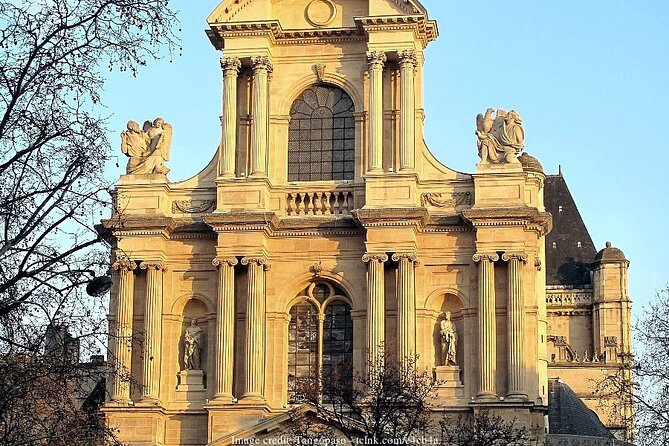
The tour is designed so you finish with the rest of your day free. That’s not a throwaway detail, it’s part of the value.
Once you leave, you’re in the middle of neighborhoods that reward follow-up wandering. You already have the roadmap of what to notice. You can go back to a street and look for the kind of clues your guide explained, like how buildings and street layouts relate to older institutions.
Use the free time for two things:
- Slow browsing in Le Marais without worrying about where to start.
- One intentional stop you choose based on what you found most interesting on the tour, prisons and power, women’s political clubs, or Hugo and the literary echo.
If you’re the type who likes to compare what you heard to what you see later, this is a strong format. You get the framework first, then you explore at your own speed.
Who this private French Revolution walk is best for
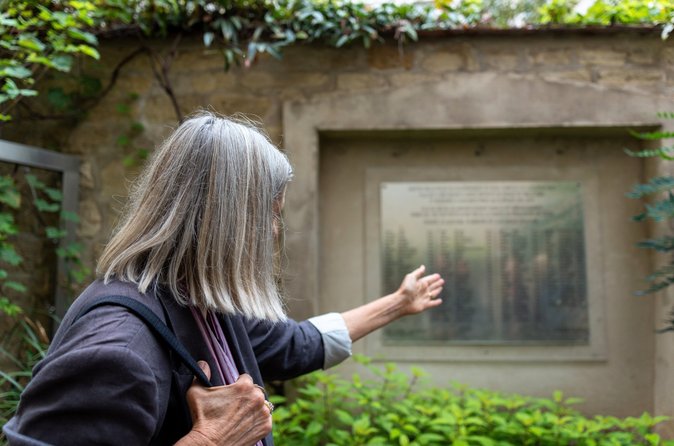
This tour is a good fit if you want:
- A guided route through key sites in and around Le Marais
- A clear narrative that links different time periods
- Plenty of photo stops without turning it into a photo-only trip
- English guidance and a private setup where you can ask questions
It’s also a good choice if you like history that shows up physically in the city. Bastille prison remains, a wall segment from La Force, and even church graffiti from the Commune of 1871 are the kind of details you can’t easily get just by reading a sign at street level.
If you dislike walking, or if long indoor museum pacing wears you out, keep in mind this is mostly on the streets plus a church stop. It’s moderate fitness, so it’s not a wheelchair-friendly story on the data provided.
Should you book the Le Marais in the French Revolution private tour?
Book it if you want a focused, street-level way to understand the French Revolution, and you enjoy learning through places you can point to later. The $210 per person price is easier to justify when you’re choosing a private experience that gives you personal attention, a tight route with standout stops, and time to photograph what you care about.
Skip it or consider an alternative if:
- You know you struggle with a brisk walking pace.
- You want a slower, purely scenic tour with minimal historical context.
- You’re traveling with someone who needs frequent long breaks, since the structure is built around short, specific segments.
If you fall in the first group, you’re likely to enjoy how the walk turns the Revolution from distant textbook material into street-level reality, from Bastille and La Force traces to the Commune of 1871 graffiti and the political stories you hear along Rue Saint-Antoine.
FAQ
How long is the Le Marais in the French Revolution private walking tour?
It lasts about 2 hours 30 minutes.
What language is the tour offered in?
The tour is offered in English.
Is this a private tour or a shared group tour?
This is a private tour/activity. Only your group will participate.
Where does the tour start?
The meeting point is Banque de France, 3 bis Pl. de la Bastille CS 41834, 75183 Paris, France.
Where does the tour end?
The tour ends in Paris near Hôtel de Ville. The guide will help advise your journey, and the finish point is close to public transport and taxi links.
What is included in the price?
A friendly, professional tour guide is included, plus plenty of time to take photos of your favorite places.
Are there any admission fees mentioned for the stops?
The tour notes that admission tickets are free for the listed parts of the experience.
Is cancellation free, and does weather affect the tour?
Cancellation is free, and you can cancel up to 24 hours in advance for a full refund. The experience requires good weather, and if it’s canceled due to poor weather you will be offered a different date or a full refund.
How fit do you need to be for this tour?
You should have a moderate physical fitness level, since it involves walking through the area.
Newest write-ups from Paris





Le Marais Walking Tours, compared.

Award-Winning Paris French Bakery Experience — Le Marais, 4th Arr
Read our review →
Paris Le Marais Food Tour With 10+ Tastings, Cheese, Wine & More
Read our review →
Paris Le Marais District Original Food and Wine Tasting Tour
Read our review →
Paris Bike Tour Hidden Secrets in the Latin Quarter & Le Marais neighborhoods
Read our review →
Paris Culinary Tour: 11 Tastings & 2 Wines in Le Marais
Read our review →

Le Marais District Food Tour with 10+ Tastings & Wine
Read our review →
Browse the lists this tour appears in