
Reviewed · MONTMARTRE HILL TOURS
Montmartre: Picasso, Renoir and the Birth of Bohemian Paris
Montmartre feels like a living sketch, and this 2-hour walk makes it easy to read. I love the way the guide uses clear stories instead of a list of dates, and you get real places tied to Picasso, Renoir, and Toulouse-Lautrec. It is also a smart way to understand how Belle Époque Paris went from artists arriving broke to legends leaving famous.
One thing to consider: the tour includes scandalous love stories and darker topics, plus the route has stairs and uneven streets. Comfortable shoes matter, and it is not suitable for kids under 10.
In This Review
- Key Things You’ll Notice
- Starting at Le Relais de la Butte, Finding the Real Montmartre Fast
- Bateau-Lavoir: The Brief Stop That Explains the Big Idea
- Moulin de la Galette: Where Art Meets the Night Life
- La Maison Rose: Love, Reputation, and the Artists Who Could Not Stop
- Lapin Agile: Chanson and Rebellion at the Same Time
- Place du Tertre: The Myth-Maker’s Square and the Street-Level Reality
- Finishing at Sacre-Coeur: A Last Look with a Cleaner Map
- What Makes This Tour Feel Different (And Worth Your Time)
- You’ll likely appreciate it most if:
- You might want to skip if:
- Practical Tips Before You Go
- Value for 2 Hours: How This Length Actually Helps
- Should You Book Montmartre: Picasso, Renoir, and the Birth of Bohemian Paris?
- FAQ
- How long is the Montmartre walking tour?
- Where does the tour meet?
- Which stops are included?
- What languages are available?
- Is the tour suitable for young children?
- Does the route have stairs or uneven ground?
- Can I record audio during the tour?
- Are alcohol and drugs allowed?
- Is food included?
- What is the cancellation option?
Key Things You’ll Notice
- Bateau-Lavoir’s cold-studio reality, and why poverty mattered to the art scene
- Belle Époque Montmartre culture, where chanson, cabarets, and rebellion overlap
- Exact streets tied to famous works, so you are not just seeing monuments
- Muses, scandal, and the rough side of the neighborhood, presented as context for the artists
- A viewpoint ending at Sacre-Coeur, so you finish with the bigger map in your head
Other climbs up the Butte:
- Montmartre Hidden Gems and Scenic Highlights Walking Tour
★ 5.0 · 2,684 reviews - Montmartre Hill French Gourmet Food and Wine Tasting Walking Tour
★ 5.0 · 2,588 reviews - Paris: Montmartre Highlights Walking Tour with a Local Guide
★ 4.9 · 2,318 reviews - Paris: Montmartre Cheese, Wine & Pastry Guided Walking Tour
★ 4.8 · 2,255 reviews
Starting at Le Relais de la Butte, Finding the Real Montmartre Fast
The tour begins near Le Relais de la Butte, on a small square right in front of the restaurant. Your guide will be waiting there with a sign, often reading Ksenia Walking Tour or GetYourGuide Tour, so you do not have to hunt around. In practice, that first minute matters. If you start on solid footing, the rest of the walk feels effortless, like someone is guiding you through a movie set you did not know existed.
This is also where you get the tone. The guide, Ksenia Porshneva, keeps things lively and personal, with stories that stick. It is not a museum lecture. You are walking, looking up at buildings, and hearing why these streets shaped what artists painted, wrote, and performed.
If you are deciding whether to do a Montmartre tour at all, this approach helps. You will leave with a mental layout, not just photos.
Bateau-Lavoir: The Brief Stop That Explains the Big Idea
Your first major stop is Le Bateau-Lavoir, with a guided segment around 10 minutes. The name matters because it points to the contrast that defined early Montmartre: ambitious artists arriving unknown and poor, working in cramped conditions, often in cold studios. From here, the story becomes less romantic and more real, which is exactly why it works.
You learn what that kind of environment does. When people are struggling, they do not just create art. They create community, rivalry, and new ways of seeing. That is one reason Montmartre becomes such a birthplace for changing styles. You will hear how the neighborhood helped fuel movements like Impressionism and Cubism, and how artists kept pushing even when life was hard.
Practical tip: take a moment to look around before your guide starts speaking in detail. The area’s layout helps you understand why artists would gather, cross paths, and share ideas.
Moulin de la Galette: Where Art Meets the Night Life
Next comes Moulin de la Galette, a classic Montmartre landmark tied to the Belle Époque. On this walk, it is not treated like a postcard. You hear how cabarets, chanson, and nightlife culture shaped the neighborhood’s creative energy. This is where Montmartre starts to feel less like an art district and more like a cultural engine.
The real value of this stop is context. If you only know famous paintings, you miss the social atmosphere behind them. Montmartre was full of artists, musicians, performers, and patrons circling the same streets. That constant exchange shows up in the way art was made and talked about.
Even if Moulin de la Galette is familiar to you from photos, you will likely notice new details by the time the story connects it to the artists you are learning about.
La Maison Rose: Love, Reputation, and the Artists Who Could Not Stop
Then you move to La Maison Rose. This part of the tour leans into the emotional side of the Montmartre legend, including muses and the infamous figures who could change an artist’s life fast. The tour also brings up the darker atmosphere of the early 20th century, when scandals, rough street conditions, and even local gangs were part of the background.
This is where you have to choose your comfort level. The tour includes scandalous love stories and heavier themes, so it will not feel neutral if you prefer purely positive art history. But it is also useful. Those emotions were not separate from the art. They influenced subject matter, moods, and the pace of life in these working communities.
For me, the balance here is that the stories are framed as context, not shock value. You are learning how human drama shaped artistic output.
If this one is booked out, Paris has these too:
- Paris: 1-Hour Seine Cruise departing from the Eiffel Tower★ 4.4 · 77,472 reviews
- Disneyland® Paris 1-Day Ticket★ 4.6 · 49,412 reviews
- Paris: Versailles Palace and Gardens Full Access Ticket★ 4.6 · 41,579 reviews
- Paris: Arc de Triomphe Rooftop Tickets★ 4.6 · 34,264 reviews
Lapin Agile: Chanson and Rebellion at the Same Time
At Lapin Agile, you get one of the most Montmartre-flavored experiences on the route: the connection between art and song. The tour sets this stop inside the birth of French chanson and the cabaret culture that gave Montmartre its unique sound.
Why this matters: painting was not the only creative outlet. Many artists were surrounded by performance culture, and the same people who painted also listened, sang, wrote, argued, and flirted. When you understand that, art history starts to feel like a living system rather than a timeline.
Lapin Agile also helps you understand why Montmartre’s reputation spread. The neighborhood had a rough edge and a theatrical one at the same time, and that blend shaped the stories told about it.
If you love culture that mixes creativity with messy real life, you will enjoy this stop a lot.
Place du Tertre: The Myth-Maker’s Square and the Street-Level Reality
Place du Tertre is your next guided stop, and it works as a turning point. Here, you see how Montmartre became famous for its artists and how that fame can reshape a neighborhood. You get stories about famous figures and the kind of atmosphere that attracted both supporters and trouble.
You may also hear about vanished neighborhoods, the idea of ghost quarters that disappeared, and how some older buildings were saved from destruction. That is an important reminder for you as a visitor. Paris keeps changing, and these streets survived in part because people fought to preserve them, at least in some form.
So even though Place du Tertre is busy and photographic, the tour approach makes it more than a viewpoint stop. It becomes a place where you understand what was lost and what survived.
Finishing at Sacre-Coeur: A Last Look with a Cleaner Map
The tour ends at the Sacre-Coeur basilica. This ending point is practical because it sits above the neighborhood, so the streets you just walked can feel clearer in your head. You get a satisfying finish: art stories down below, then a big visual check of the area from higher ground.
Even if you are not a church person, Sacre-Coeur helps you process what you learned. When you see the slope and street patterns, the idea of artists moving between studios, cabarets, and meeting points makes more sense.
Use the last moments to orient yourself for independent exploring afterward, especially if you want to go back to one or two streets you liked most.
What Makes This Tour Feel Different (And Worth Your Time)
A lot of walking tours cover sights. This one focuses on why those sights mattered.
I especially like how Ksenia tells stories with emotion, not just facts. One of the consistent strengths is that the pacing avoids long academic lectures. Instead, you get vivid scenes that help you connect the neighborhood’s physical layout to the art and personalities behind it. It feels like you are watching events unfold, then turning the page to the next location.
Another big plus is the match between theme and walking route. The tour moves through key art-linked places, then keeps explaining how Belle Époque culture supported the creative explosion. The result is that you start to understand Montmartre as more than a collection of buildings. It becomes a social ecosystem.
You’ll likely appreciate it most if:
- You like art history that includes relationships, not just masterpieces
- You want a neighborhood narrative instead of a checklist
- You enjoy chanson, cabaret culture, and the darker side of creative life
- You prefer a guide who tells stories clearly in English or Russian
You might want to skip if:
- You want a strictly family-friendly, light tone
- You have mobility challenges, since the walk includes stairs and uneven paths
- You need photo-free or audio-free experiences that allow recording, because audio recording is not allowed
Practical Tips Before You Go
This tour is built around walking historical streets, so plan like it. Wear comfortable shoes, because Montmartre streets can be uneven and the route includes stairs. If you are traveling with a wheelchair, the guidance says you should have an assistant, due to the route conditions.
Also note the tour rules. Alcohol and drugs are not allowed, and audio recording is not allowed. If you want to remember details, bring a notebook or plan to type notes right after each stop.
For families, the age limit is clear: it is not suitable for children under 10, largely because of the scandalous and darker themes.
Value for 2 Hours: How This Length Actually Helps
A 2-hour walk is long enough to connect the dots, short enough to stay energetic. You do not get stuck in one place for too long, but you still get brief guided time at key points like Bateau-Lavoir. That pacing matters because Montmartre is steep and a bit physical. You keep moving, and the story keeps your brain engaged.
There is no food stop included, so bring your hunger plan. If you want a snack or drink, plan it before or after the tour on your own.
Should You Book Montmartre: Picasso, Renoir, and the Birth of Bohemian Paris?
If you want Montmartre to feel like art history with human stakes, I think you will like this tour. It uses Picasso, Renoir, and Toulouse-Lautrec as anchors, then fills in the atmosphere that shaped them, including poverty, love, scandal, and chanson. Ending at Sacre-Coeur also gives you a satisfying wrap-up view.
I would only hesitate if you are sensitive to darker romantic stories or you are visiting with younger kids. The walking demands comfortable shoes, and the rules do not allow audio recording.
If those points fit your style, book it. You will leave with a clearer map of Montmartre and a stronger sense of why this neighborhood produced new art styles in the first place.
FAQ
How long is the Montmartre walking tour?
The tour duration is 2 hours.
Where does the tour meet?
The meeting point is near the restaurant Le Relais de la Butte, on the small square in front of it. Your guide will be waiting with a sign.
Which stops are included?
The tour includes stops at Le Bateau-Lavoir, Moulin de la Galette, La Maison Rose, Lapin Agile, Place du Tertre, and it finishes at Sacre-Coeur.
What languages are available?
The live guide offers tours in English and Russian.
Is the tour suitable for young children?
No. It is not suitable for children under 10 due to scandalous love stories and darker historical themes.
Does the route have stairs or uneven ground?
Yes. The route includes stairs and uneven paths, so comfortable shoes are recommended. Wheelchair users should be accompanied by an assistant.
Can I record audio during the tour?
No. Audio recording is not allowed.
Are alcohol and drugs allowed?
No. Alcohol and drugs are not allowed.
Is food included?
No. Food and drinks are not included.
What is the cancellation option?
Free cancellation is available up to 24 hours in advance for a full refund.
Newest write-ups from Paris







Montmartre Hill Tours, compared.

Montmartre Hidden Gems and Scenic Highlights Walking Tour
Read our review →
Montmartre Hill French Gourmet Food and Wine Tasting Walking Tour
Read our review →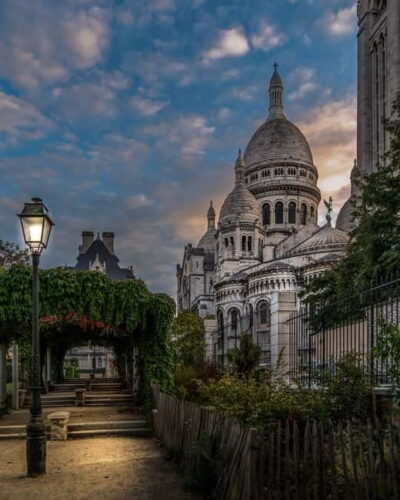
Montmartre Highlights Walking Tour with a Local Guide
Read our review →
Montmartre Cheese, Wine & Pastry Guided Walking Tour
Read our review →
Sacré-Coeur and Montmartre Tour with Expert Guide
Read our review →
Private Montmartre Food Tour with Wine, Cheese & Pastries
Read our review →
Paris Montmartre Food Tour – A Full French Meal by Do Eat Better
Read our review →Browse the lists this tour appears in