
Reviewed · MONTMARTRE HILL TOURS
Montmartre Sacre Coeur Tour with Local guide
Montmartre rewards your good shoes and sharp stories. I like that this tour is built for efficiency on a steep, twisty hill, so you see the big moments without wasting hours wandering. I also like the mix of art stops and neighborhood details, including Van Gogh and the I love you wall, then a final payoff at Sacré-Cœur with real city views. One possible drawback is weather, since the experience depends on good conditions and there have been rare reports of a guide not showing on cold, rainy days.
This is a 90-minute, English-language walk that stays focused on key spots plus a few locals-only recommendations. The group cap is 25, and some guides are known for making the route feel personal, including guide names like Salome, Niko, Denise, and Pierre from past tours.
In This Review
- Quick hits before you go
- Entering Montmartre: why this walk works
- Price and what you actually get for $30.04
- Meeting point to finish line: the 2:00 pm flow
- From Moulin Rouge to Montmartre’s vibe: Stop 1
- Van Gogh’s address on foot: Stop 2
- The love wall: Le Mur des Je t’aime at Stop 3
- Le Bateau-Lavoir: Stop 4 and why it matters
- Moulin de la Galette: Stop 5 and the artist hangout idea
- Dalida’s square: the Stop you might not expect
- La Maison Rose of Montmartre: Stop 6
- Clos Montmartre vineyard: Stop 7
- Place du Tertre: the painters’ square at Stop 8
- Sacré-Cœur on the hill: Stop 9 and the big view payoff
- The guides and what makes them worth your attention
- How long it really feels, and what to wear
- Who should book this Montmartre to Sacré-Cœur tour
- Should you book?
- FAQ
- How long is the Montmartre Sacré-Cœur tour with a local guide?
- What time does the tour start, and where does it begin?
- Does the tour include admission tickets?
- Is the tour offered in English?
- How many people are in the group?
- What happens if weather is poor?
Quick hits before you go
- Small-group size (max 25) keeps the walk from feeling like a conveyor belt.
- A hill-to-hill route links Moulin Rouge, artist sites, and then Sacré-Cœur in about 90 minutes.
- A guide-first value: most stops listed are free, so you’re paying for context and direction.
- Stops that go beyond postcards, like Le Bateau-Lavoir and Le Mur des Je t’aime.
- Montmartre extras appear in the route, including Place Dalida, La Maison Rose, and the vineyard of Clos Montmartre.
- English mobile ticket means less hassle when you meet up.
Other climbs up the Butte:
- Montmartre Hidden Gems and Scenic Highlights Walking Tour
★ 5.0 · 2,684 reviews - Montmartre Hill French Gourmet Food and Wine Tasting Walking Tour
★ 5.0 · 2,588 reviews - Paris: Montmartre Highlights Walking Tour with a Local Guide
★ 4.9 · 2,318 reviews - Paris: Montmartre Cheese, Wine & Pastry Guided Walking Tour
★ 4.8 · 2,255 reviews
Entering Montmartre: why this walk works
Montmartre can feel chaotic at street level, with artists working, crowds forming around viewpoints, and postcard lines creeping in. What I like about this tour is that it’s designed to move with purpose, not just check boxes. You get a local guide to translate what you’re looking at and why it mattered, so the hill feels less like walking in circles and more like following a story.
The route is also a practical win for a short visit. At 1 hour 30 minutes, you get the “core Montmartre” highlights, then you’re free afterward to keep exploring at your own pace. You do not need extra tickets for most of the sights listed, which keeps the cost from ballooning.
Price and what you actually get for $30.04
At about $30.04 per person, this feels like good value because the main inclusion is the guide service. Many of the named stops are listed as free (Van Gogh’s house address, Le Mur des Je t’aime, Le Bateau-Lavoir, Le Moulin de la Galette, Place du Tertre, Sacré-Cœur from the outside hill area, and more).
So your money is mostly buying:
- a smart route through Montmartre
- context for art and legends
- recommendations you can use after the tour (restaurants, shopping, and where to go next)
The one thing you should know up front is that the Moulin Rouge show is not included. This matters because Moulin Rouge is part of the opening stop, but you are not buying a ticket to a performance.
Meeting point to finish line: the 2:00 pm flow
The tour starts at 59 Bd de Clichy, 75009 Paris, at 2:00 pm. It ends in front of the Basilique du Sacré-Cœur de Montmartre, at 35 Rue du Chevalier de la Barre, 75018 Paris.
That end point is the real payoff. You’re not wrapping up somewhere random in the neighborhood. You’re finishing where most people aim their feet anyway, with the hilltop view and the basilica right there.
Practical note: this is a walking tour with a climb. Wear shoes you can handle on uneven sidewalks and steps, especially if it’s damp.
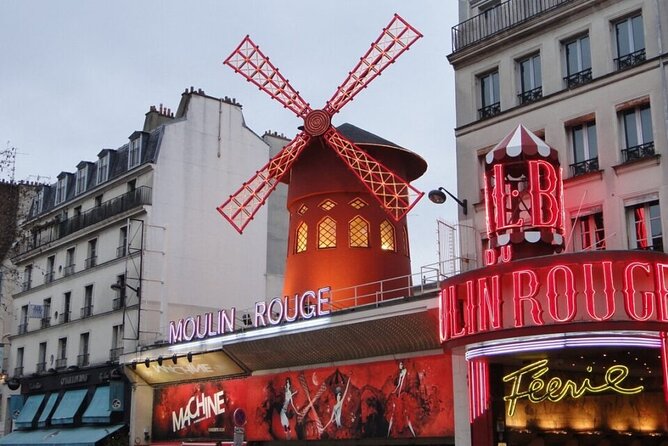
From Moulin Rouge to Montmartre’s vibe: Stop 1
Your first stop is Moulin Rouge. The guide covers the history of extravagant cabaret shows and high-energy performances, then uses that as the launchpad into Montmartre’s wider culture.
Why this works: Moulin Rouge is often treated like a simple photo stop from the outside. Here, you get the background first, so the neighborhood becomes more than glitter and costumes. It also helps you understand why Montmartre attracted artists, performers, and visitors looking for a different kind of Paris.
What to watch for: admission tickets are not included for any show element. You’ll be there for explanation, photos if you want, and then you move on.
A handful more Paris options to weigh up
- Paris: Louvre Guided Tour with Reserved Access & Boat Cruise★ 4.3 · 16,353 reviews
- Louvre Museum Masterpieces Guided Tour with Access★ 4.5 · 12,023 reviews
- Louvre Museum – Exclusive Guided Tour (Entry Included)★ 5.0 · 6,296 reviews
- Versailles: Skip-the-Line Guided Palace Tour and Full Access★ 4.6 · 5,214 reviews
Van Gogh’s address on foot: Stop 2
Next you’ll see Van Gogh’s one of the notable addresses in Paris. This stop is listed as free, and the guide ties his life to the influence Paris had on his work.
Even if you already know Van Gogh’s name, I love stops like this because they ground the artist in place. You start to notice how cities shape style, subjects, and mood. Montmartre is the perfect setting for this kind of storytelling because it’s packed with artistic references without needing a museum ticket.
Tip for photos: don’t just snap and move. Pause long enough to let the guide’s story sink in, then look at the surroundings. That’s where the “aha” moments happen.
The love wall: Le Mur des Je t’aime at Stop 3
Le Mur des Je t’aime is one of Montmartre’s most famous artistic messages. The tour includes the wall, described as a symbol of love and unity, with “I love you” written in multiple languages.
This stop is short (about 10 minutes), so I treat it like a quick reset. It’s emotional, not academic, and it breaks up the heavier art and history talking points. If you’re traveling with someone who wants both meaning and photos, this is a strong match.
Consideration: it can be crowded depending on the time of day. If you want the cleanest pictures, pay attention to the flow around you and take your shot when people move along.
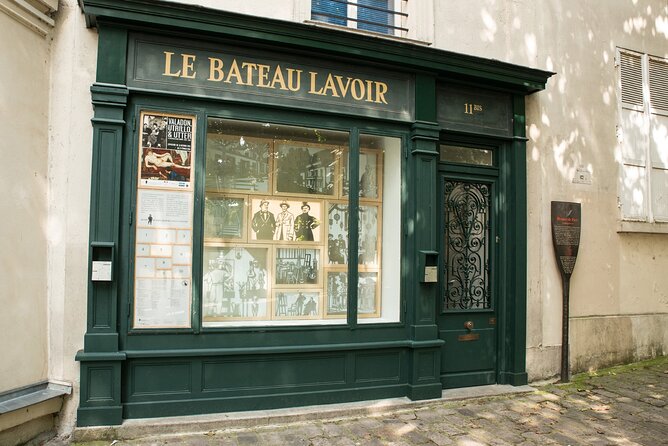
Le Bateau-Lavoir: Stop 4 and why it matters
Then you move to Le Bateau-Lavoir. The guide shares the history of this iconic building and how it witnessed early 20th century revolutionary artistic movements. The point here is not just that it’s famous, it’s that it explains why Montmartre became a magnet.
If you’ve ever wondered why so many styles emerged from the same area, stops like this help connect the dots. Artists needed space, they needed community, and they needed places where experimenting was normal. Le Bateau-Lavoir is the kind of location you can walk past without realizing what happened there, unless someone points it out.
Moulin de la Galette: Stop 5 and the artist hangout idea
Your next stop is Le Moulin de la Galette. The guide explains how it became a gathering place for artists, bohemians, and locals who wanted a lively atmosphere. It’s also linked to art, including works by Pierre-Auguste Renoir.
Why I like this stop: it turns Montmartre from “romantic hill with views” into “a working creative scene.” The story makes sense of what you see later around Place du Tertre, where painting is part of everyday street life.
Quick expectation check: this is still a walking tour, so you’re not touring inside anything at length. You’re getting the context and moving.
Dalida’s square: the Stop you might not expect
During the walk, the guide also talks about Dalida and shows Place Dalida, a square dedicated to her in Montmartre. The description includes a bust of Dalida and a setting with cafes and boutiques nearby, which makes it feel more like a local pause than a hard stop.
Why this is a smart add: Montmartre isn’t only painters. It’s also singers, performers, and modern legends who shaped the neighborhood’s story in different decades. This stop helps you see the district as layered, not stuck in one era.
If you like a side of pop culture with your art tour, this one lands well.
La Maison Rose of Montmartre: Stop 6
Next comes La Petite Maison Rose de Montmartre (since 1920). You’ll hear the story of this pink facade and the kind of creative crowd it hosted over the years: artists, writers, and bohemians. There’s also a little time for pictures.
I always find it useful when a tour gives you actual time for photos. A lot of walking tours rush that part, and then your pictures look like you were late for the bus. Here, the built-in pause helps.
One thing to remember: the building and area are best enjoyed slowly. Look up at the facade, then look around at how the street frames it.
Clos Montmartre vineyard: Stop 7
Then you get something that feels different from the usual art stops: Vigne du Clos Montmartre, a vineyard on the edge of the neighborhood. You’ll stroll through this unique spot and hear about winemaking here.
Why this matters: Montmartre often gets sold as purely urban and artistic, but a vineyard reminds you that the hill was not always just a backdrop. It adds texture to the district and helps you think about the practical side of life on the hill, not only the artistic side.
Place du Tertre: the painters’ square at Stop 8
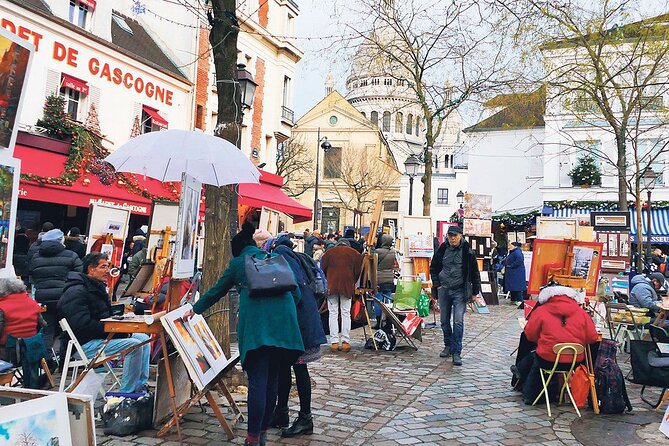
At Place du Tertre, you’ll see the artists’ square, known for painters and paintings. The tour keeps it to about 10 minutes, but it’s time enough to grasp the vibe and decide what you want to do after the guide moves you on.
What I suggest: treat this as a scouting stop. If you want to buy art, decide here rather than wandering later. If you just want to watch, take a seat nearby and people-watch for a few minutes. The guide’s earlier stories make this square more meaningful, because you now know how the artist scene connects to the rest of Montmartre.
Sacré-Cœur on the hill: Stop 9 and the big view payoff
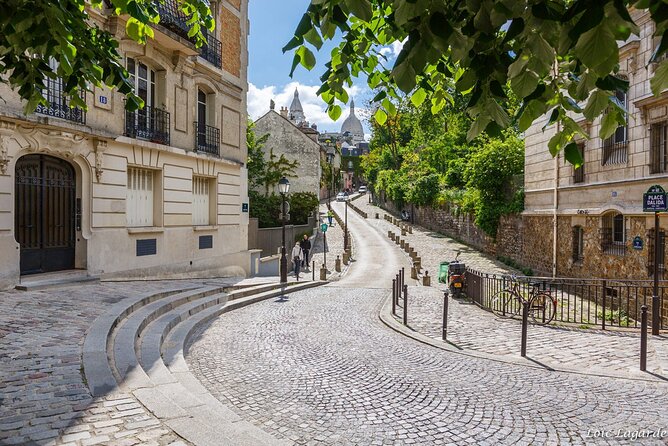
Finally, you reach Basilique du Sacré-Cœur de Montmartre. This is the main attraction, perched at the top with incredible views from the hill. The tour ends in front of the basilica.
This is where the whole route pays off. When you finish at the top, the earlier stops make sense. You understand why the hill became important and why people keep coming for those views. In past guides’ stories, you might even hear references to the basilica’s Romano-Byzantine look, and you’ll see the domes clearly against the sky.
A practical tip: plan your phone storage and battery, especially on clear days. Views here can tempt you into extra photos and extra time, which is great if your legs still feel good.
The guides and what makes them worth your attention
A walking tour succeeds or fails based on the guide. The strongest feedback I saw was about guides who keep things moving while staying patient, and who weave present-day Montmartre into the older stories.
Some names that stood out from past experiences include:
- Niko, praised for knowledge and patient pacing, including time for the view and letting people enjoy it
- Salome, praised for both enthusiastic storytelling and handling rain so the route still felt complete
- Denise and Pierre, praised for accommodation, professionalism, and adding helpful suggestions for where to go next
What I’d take from that for your decision: if you care about turning sights into understanding, this tour is built for that. The guide is the product.
How long it really feels, and what to wear
The schedule is about 10 minutes per stop, plus the movement between them, so 90 minutes overall. That’s not a leisurely stroll. Montmartre has stairs and gradients, and even when the guide calls out points of interest quickly, you are still walking.
If it’s chilly, dress in layers. If it’s rainy, bring a small packable rain jacket. One reason people get frustrated on this kind of tour is simple: the climb plus weather equals discomfort. The tour also has a weather requirement, so if conditions are poor you may see a change in plans.
Who should book this Montmartre to Sacré-Cœur tour
This is a great fit if you:
- want a short Montmartre overview that hits the major landmarks
- like art and neighborhood stories, not just photo stops
- enjoy English narration from a local guide
- value guidance that also points you toward what to do next in Paris
You might prefer something else if you want a full museum day, because this is a walking, outside-focused experience. Also, if you hate crowds and weather swings, keep a close eye on forecast and plan flexible timing.
Should you book?
Yes, I’d book it if you want a smart, story-driven Montmartre walk with good value for the price, especially because many of the featured stops are free and the big cost is the guide. The route is also well structured for first-timers who want the Sacré-Cœur view without losing half a day to wrong turns.
The only strong reason to hesitate is weather sensitivity. If it looks cold and rainy, you should weigh your tolerance for wet pavement and a hill climb. If you can travel with that in mind, this is one of the better ways to see Montmartre in a compact amount of time.
FAQ
How long is the Montmartre Sacré-Cœur tour with a local guide?
It runs about 1 hour 30 minutes.
What time does the tour start, and where does it begin?
It starts at 2:00 pm. The meeting point is 59 Bd de Clichy, 75009 Paris.
Does the tour include admission tickets?
Admission tickets are not included for the Moulin Rouge show. For the other listed stops, the tour notes free admission at those locations.
Is the tour offered in English?
Yes, the tour is offered in English.
How many people are in the group?
There is a maximum of 25 travelers.
What happens if weather is poor?
The experience requires good weather. If it is canceled due to poor weather, you will be offered a different date or a full refund.
Newest write-ups from Paris




Montmartre Hill Tours, compared.

Montmartre Hidden Gems and Scenic Highlights Walking Tour
Read our review →
Montmartre Hill French Gourmet Food and Wine Tasting Walking Tour
Read our review →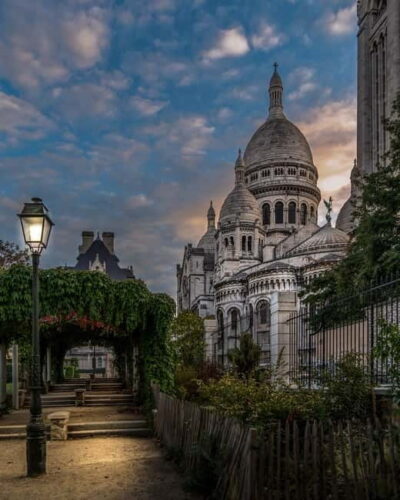
Montmartre Highlights Walking Tour with a Local Guide
Read our review →
Montmartre Cheese, Wine & Pastry Guided Walking Tour
Read our review →
Private Montmartre Food Tour with Wine, Cheese & Pastries
Read our review →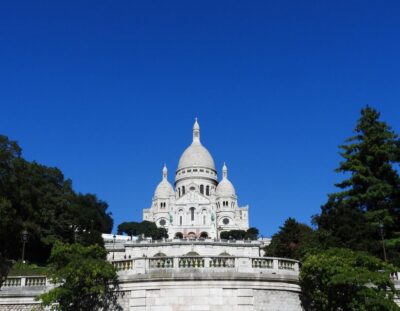
Sacré-Coeur and Montmartre Tour with Expert Guide
Read our review →
Paris Montmartre Food Tour – A Full French Meal by Do Eat Better
Read our review →Browse the lists this tour appears in