
Reviewed · PASTRY AND MACARON CLASSES
Paris: 2.5-Hour French Pastry Cooking Class
Paris learns fast when flour flies. This 2.5-hour French pastry cooking class in a private loft gives you real technique, not just watching. I especially liked Chef Noémie’s step-by-step teaching, and I loved that you sit down afterward to taste what you made with tea or coffee, plus time to ask questions.
One thing to consider: with a small group (up to 8), you may not be hands-on every single minute, because everyone rotates tasks. Still, the experience is built for personal guidance, so you are not left guessing.
In This Review
- Key takeaways before you go
- Chef Noémie’s loft at 92 rue Nollet, right in Paris
- How 150 minutes moves in a group of up to 8
- What you’ll learn: the real pastry mechanics behind French classics
- The desserts you may make, and why they’re chosen
- After baking: tea, coffee, and eating your results in the same space
- What $141 buys you, and when it feels like a steal
- Who should book this class, and who might not love it
- Practical tips so you bake better on day one
- Should you book Chef Noémie’s pastry class?
Key takeaways before you go
- Chef Noémie (Lenôtre Culinary Institute graduate) teaches classic French pastry secrets step by step.
- Small group of max 8 means you get more attention than in big tour groups.
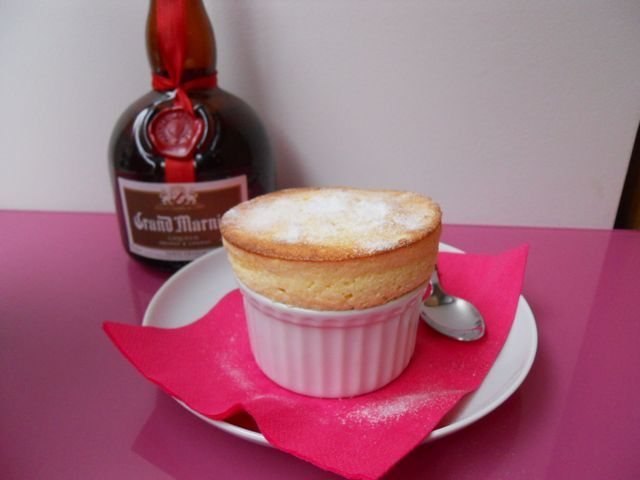
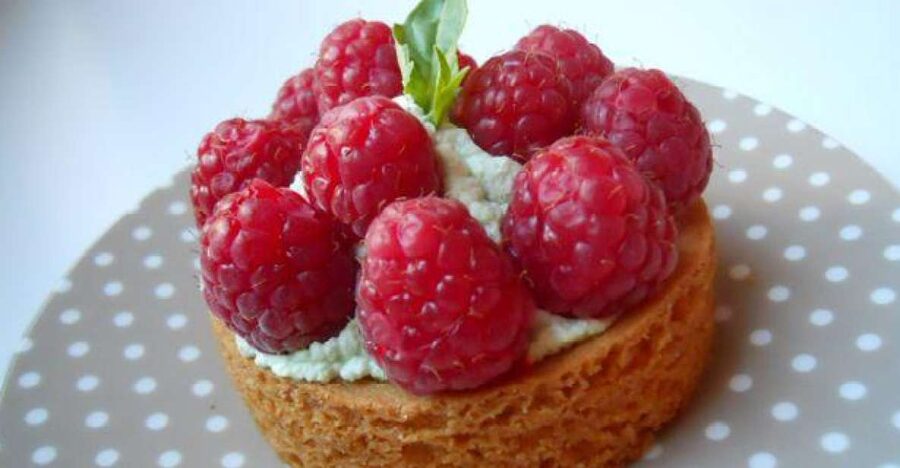
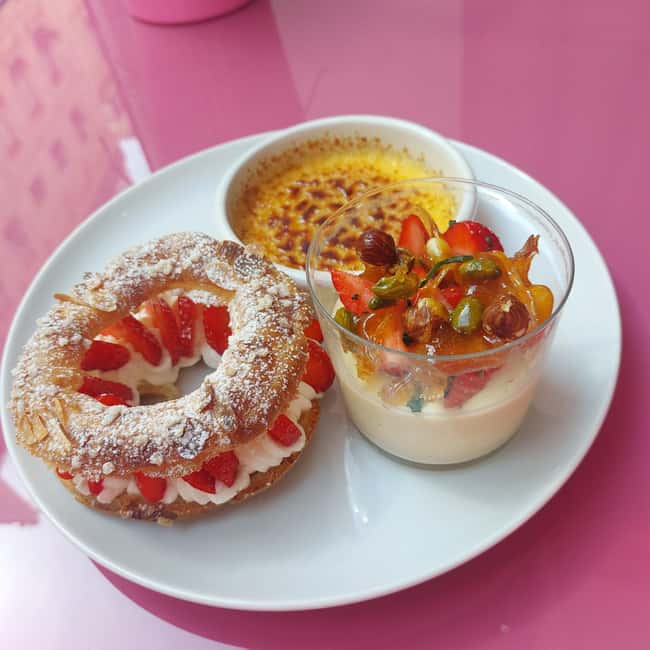
- You bake 2 or 3 desserts such as Paris-Brest, molten chocolate cake, and Grand Marnier soufflés (varies by season).
- Receipe copy in English plus an apron, so you can actually repeat the results at home.
- Tea or coffee tasting after class turns your baking session into a relaxed sit-down moment.
Other kitchens for macarons and pastry:
- Paris: Montmartre Cheese, Wine & Pastry Guided Walking Tour
★ 4.8 · 2,255 reviews - Paris: Macaron Class at Galeries Lafayette
★ 4.2 · 1,196 reviews - Award-Winning Paris French Bakery Experience — Le Marais, 4th Arr
★ 4.5 · 1,186 reviews - Private Montmartre Food Tour with Wine, Cheese & Pastries
★ 5.0 · 1,027 reviews
Chef Noémie’s loft at 92 rue Nollet, right in Paris
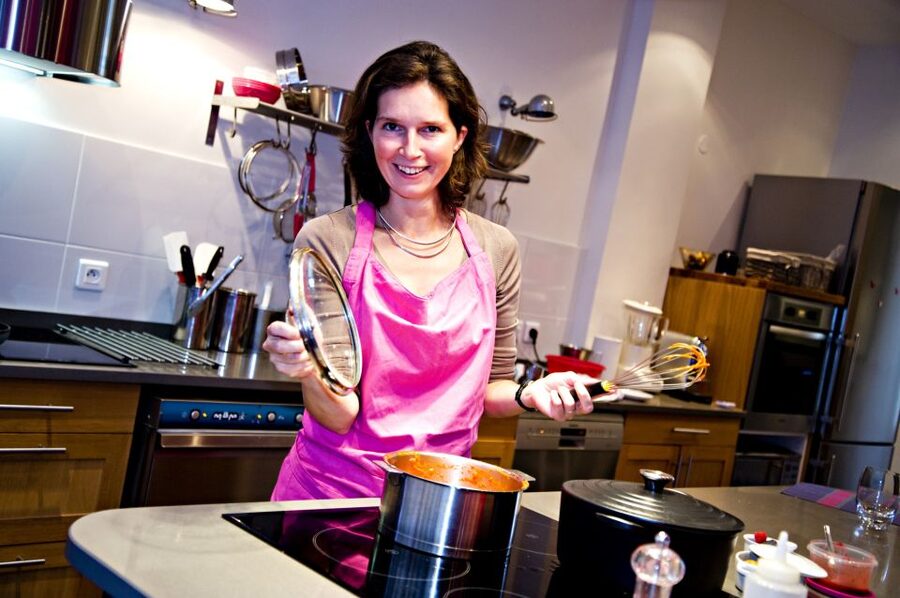
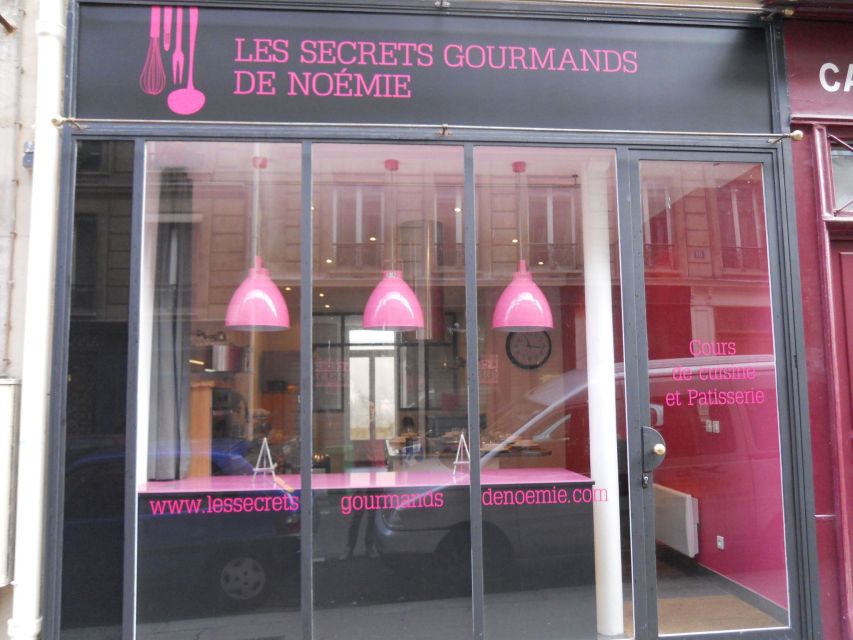
This class takes place at Chef Noémie’s cooking school in a private loft-style atelier in Paris, at 92 rue Nollet, 75017. The setting matters. A loft classroom feels like a real workspace, not a demo studio, so you can pay attention to details like texture, consistency, and how the dough behaves while you work.
Getting there is straightforward with multiple transit options. If you use the Metro, take Line 13 to either Brochant or La Fourche. By bus, you can use 66, 54, 74 and get off at Legendre, or 31 at Parc Martin Luther King. There is also a “rainway” option listed as Navette Péreire Pont Cardinet, with the Pont Cardinet stop.
For your visit, wear clothes you can stand getting a little flour on. You get an apron, but you still want comfortable shoes and a ready-to-focus mindset. Also, since the class is English-language and includes an English recipe copy, you can follow the steps without struggling through French instructions.
How 150 minutes moves in a group of up to 8
The class runs 150 minutes, which is a good sweet spot. Long enough to learn real technique and produce results you can taste, but not so long that your attention turns into a blur.
Because the group is limited to 8 participants, Chef Noémie can give personal feedback while still keeping the pace moving. You should expect a rhythm of instruction, hands-on work, and quick troubleshooting. In the past, people have rotated through tasks like measuring, mixing, and piping, so if you are a first-timer, you will still get meaningful practice.
A small group also changes the vibe. You can ask questions when you get stuck, and you can hear other people’s questions, which often helps you fix your own process faster. One person even attended solo when others canceled, and the chef used that moment to explain and answer questions without rushing.
What you’ll learn: the real pastry mechanics behind French classics
This is not a “name the dessert and walk away” class. Chef Noémie walks you through techniques and the why behind them, so your results are more repeatable later. The info you are given is tied to classic French pastry methods, and you learn “secrets” in the practical sense, meaning specific habits that affect final texture and shape.
Even when you are not doing every step yourself, you are still learning how the pastry should look and feel. You will get guidance on things like consistency, timing, and how to handle the pastry tools. One recurring detail in the experience is choux pastry, which shows up in many French desserts and can feel tricky at home if you have never worked with it. Here, you practice with the tools, including piping, and you get coaching on how to pipe cleanly.
You also get some context. Chef Noémie is known for blending technique with explanation, including what each step does and where the dessert fits into French pastry tradition. That is useful because it turns your effort into understanding, not just following a recipe.
The desserts you may make, and why they’re chosen
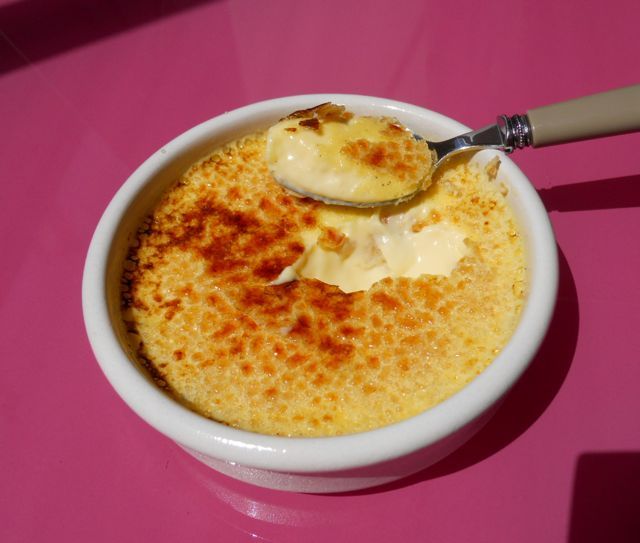
The class typically focuses on 2 or 3 famous French desserts. The exact lineup can shift depending on the season, but you can expect options from this set:
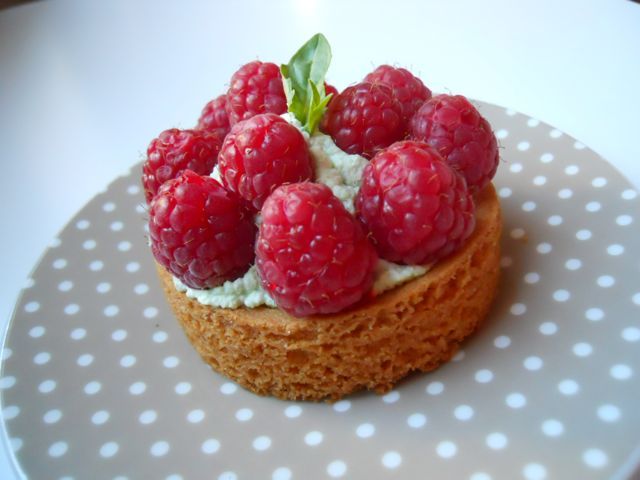
- Paris-Brest: a beloved classic that often depends on careful pastry handling and piping technique.
- Molten chocolate cake: timing and bake precision matter, because the goal is that warm, soft center.
- Grand Marnier soufflés: a classic that rewards attention to process and careful handling.
Some past sessions have included crème brûlée, and the course has also been described as working with piping tools and classic methods that show up across French sweets. If you want variety, this is a good sign: you are not only doing one style of pastry.
Why these desserts are a smart choice for a learning class: they represent different challenges. Chocolate cake teaches baking control. Soufflés teach process discipline. Paris-Brest teaches shaping and pastry structure. When you try more than one, you see how French pastry skills connect, even though the desserts look totally different.
Also, because Chef Noémie selects what makes sense for the season, you are less likely to end up in a situation where the chef is teaching one dessert simply because it is popular online.
Other Paris ateliers to spend an afternoon in:
- Fragonard Paris: Mini Perfume Workshop★ 4.5 · 1,924 reviews
- Paris Cooking Class and Lunch with Wine plus Market Visit Option★ 5.0 · 1,024 reviews
- Paris Croissant Small-Group Baking Class with a Chef★ 5.0 · 910 reviews
- Paris: 2-Hour Perfume Creation Workshop★ 4.8 · 731 reviews
After baking: tea, coffee, and eating your results in the same space
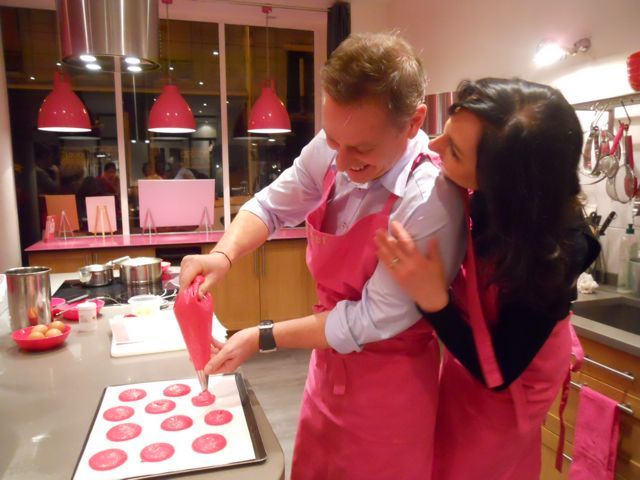
The best part of many food classes is not the recipe. It is the moment you taste what you made and realize you pulled it off. Here, you do that in a beautiful loft-style atelier, right after class, with tea or coffee.
You sit down and sample all the desserts you created. That matters because French pastry can be finicky. One batch can look perfect but taste off if the process got rushed or the texture was off. Eating your final products closes the loop. You see what the “right” version should feel like, and you get a clear target for what to aim for at home.
It is also a social moment. People tend to loosen up after the hard work, and you get time to chat with Chef Noémie. That informal Q and A can be more valuable than a lecture, because you are asking about the exact thing you just made, not some abstract technique.
What $141 buys you, and when it feels like a steal
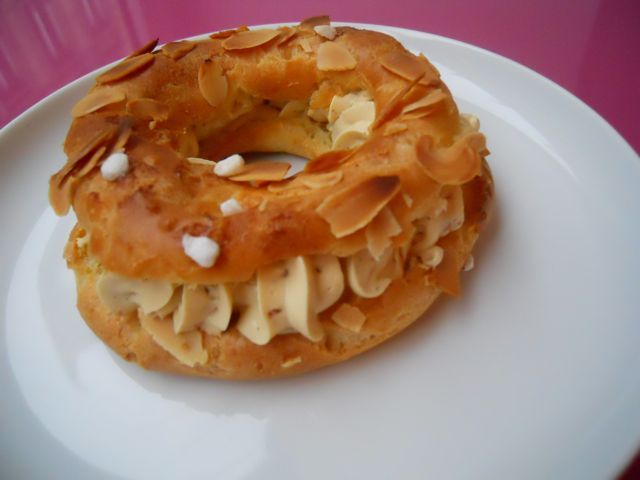
At $141 per person, you are paying for time with a trained chef in a small setting, plus real instruction and take-home support. Here is how I think about the value.
First, you get a Lenôtre Culinary Institute background through Chef Noémie. That kind of training typically shows up in how the class is structured, how techniques are explained, and how feedback is delivered. Second, you get English recipes and an apron, which sounds small until you realize it makes home practice more realistic.
Third, the group size stays tight at 8 participants, which means more personal attention. In Paris, that matters. A lot of “food experiences” end up feeling like a busy crowd with a chef talking from the front. This one is designed for participation and adjustment.
You might feel the cost is high if you only want a casual snack or if you are not interested in baking. But if you like learning and you want to leave with skills you can actually use, the price is easier to justify. You are paying for a real workshop, not just a tasting.
Who should book this class, and who might not love it
This is a strong fit for:
- Beginners who want step-by-step coaching and an English recipe guide.
- Food lovers who want more than sightseeing, especially if you like hands-on learning.
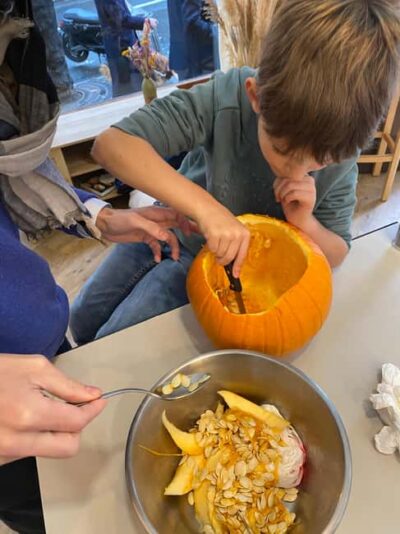
- Families, including kids, because the teaching style is patient and works across ages. Some previous groups included children as young as 10, and it was described as a highlight.
It may be less ideal for you if:
- You expect nonstop hands-on action for every minute. With a group of eight, you may rotate tasks, and there can be moments where you observe and learn while others work.
- You dislike baking mess. Even with an apron, you will be working with dough and chocolate. That is part of the point.
The class also works well if you are traveling solo. A solo participant described the chef as friendly and quick to answer questions, which suggests the experience adapts to your pace.
Practical tips so you bake better on day one
Before you go, set yourself up for success. Wear comfortable clothes and closed-toe shoes. Tie back hair if it is long, and bring a phone you are willing to use for quick notes, since the class includes an English recipe copy for reference.
During class, focus on the “check points” Chef Noémie emphasizes. If the chef tells you the mixture should look or feel a certain way, treat that as a measuring tool, not a suggestion. French pastry is all about subtle cues, and that is where your results improve fastest.
After you bake, take advantage of the post-class time with tea or coffee. Ask the practical questions you actually care about, like what went right, what to watch next time, and what would be the first change you would make if you were repeating the dessert at home.
Should you book Chef Noémie’s pastry class?
If you want a genuinely hands-on French experience with real technique, this is an easy recommendation. The combination of a small group, a Lenôtre-trained chef, and the fact that you make and eat multiple classic desserts gives you a full learning arc in 150 minutes.
I would book it if you like cooking, want to improve your baking confidence, or you want a memorable activity that feels personal rather than touristy. I would think twice only if you are looking for a mostly passive demonstration, or if you are so short on time that 2.5 hours feels like too much in your schedule.
French Kitchens to Cook In
- Paris: French Croissant Baking Class with a Chef
★ 4.9 · 712 reviews - Paris Cooking Class: Learn How to Make Macarons
★ 5.0 · 634 reviews - Paris Culinary Tour: 11 Tastings & 2 Wines in Le Marais
★ 4.8 · 625 reviews - Paris: French Macaron Culinary Class with a Chef
★ 4.9 · 591 reviews
Newest write-ups from Paris


Pastry and Macaron Classes, compared.
Montmartre Cheese, Wine & Pastry Guided Walking Tour
Read our review →
Award-Winning Paris French Bakery Experience — Le Marais, 4th Arr
Read our review →
Private Montmartre Food Tour with Wine, Cheese & Pastries
Read our review →
Paris French Sweets Tasting Tour with Pastries and Chocolates
Read our review →
Paris Croissant Small-Group Baking Class with a Chef
Read our review →
Browse the lists this tour appears in