
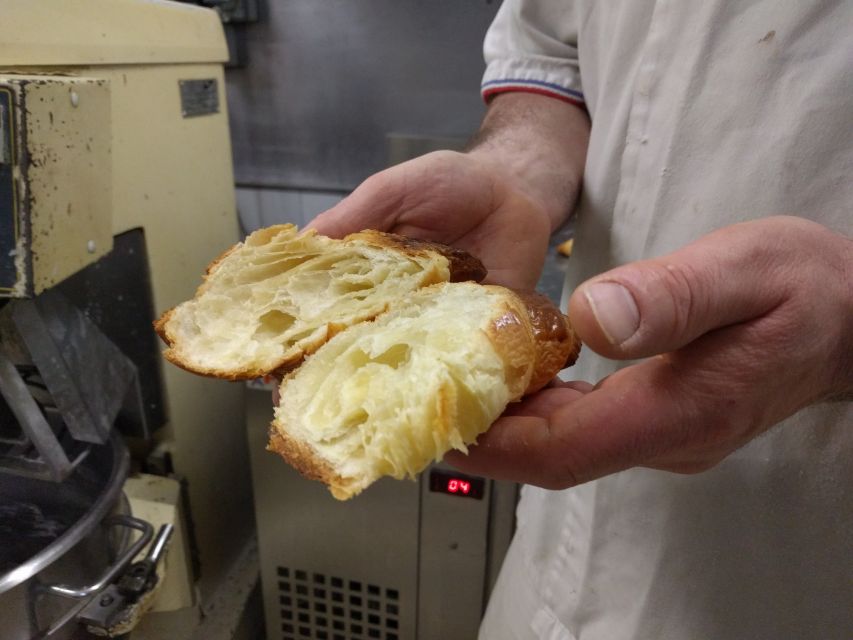
Reviewed · PASTRY AND MACARON CLASSES
Paris: Bread and Croissant-Making Class
Baguette magic starts with flour on your hands. In Paris, you’ll step behind the counter of a family bakery and learn how a classic baguette gets its golden crust and soft interior, then shape croissants with guidance from the baker.
I especially liked how the teaching feels rooted in real craft, not just a demo. You get specific technique talk from the master baker (often Chef Didier) and clear interpretation from guides like Luis, Elsa, or Luce, so you understand what you’re doing as you do it.
One consideration: at $258 for 2 hours, this is a hands-on workshop where you’ll get the basics and practice, but not the hours-long repetition you might want if you’re already a serious bread maker. Also, it’s not suitable for children under 6.
In This Review
- Key highlights you’ll remember
- Enter Le Petit Mitron and learn how Paris bread is really made
- Classic baguette and La Parisse: the two breads you bake
- Croissant shaping: practice the feel, not just the idea
- Why the interpreters matter: Luis, Elsa, and Luce keep it flowing
- What the class feels like in real time (2 hours, small group, lots of doing)
- Take-home rewards: breads you made and recipes emailed after
- Price and value: is $258 for a 2-hour Paris baking class worth it?
- Who should book this Paris bread and croissant class?
- Simple tips to get the most out of your class
- Should you book this bread and croissant making class?
- FAQ
- How long is the Paris bread and croissant-making class?
- Where is the meeting point?
- What is the group size limit?
- What languages are available?
- Is the class suitable for children?
- What do I take home?
Key highlights you’ll remember
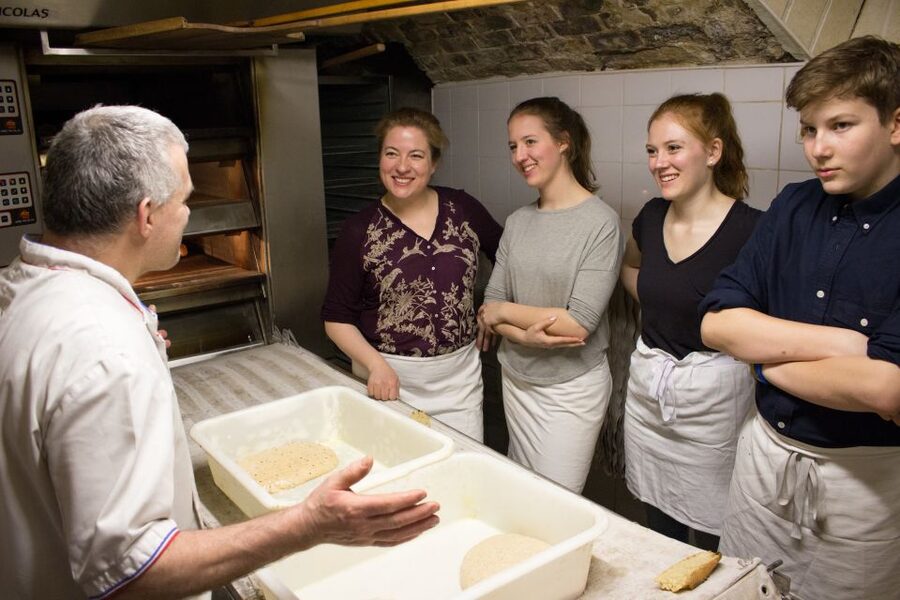
- Behind-the-counter access at a family-run bakery, right in the shop space
- Classic baguette plus La Parisse, including the special bakery version
- Croissant making and shaping in a small group with step-by-step coaching
- Clear multi-language support through interpreters like Luis, Elsa, or Luce
- Take-home payoff, including breads you made and recipes emailed after
Other kitchens for macarons and pastry:
- Paris: Montmartre Cheese, Wine & Pastry Guided Walking Tour
★ 4.8 · 2,255 reviews - Paris: Macaron Class at Galeries Lafayette
★ 4.2 · 1,196 reviews - Award-Winning Paris French Bakery Experience — Le Marais, 4th Arr
★ 4.5 · 1,186 reviews - Private Montmartre Food Tour with Wine, Cheese & Pastries
★ 5.0 · 1,027 reviews
Enter Le Petit Mitron and learn how Paris bread is really made
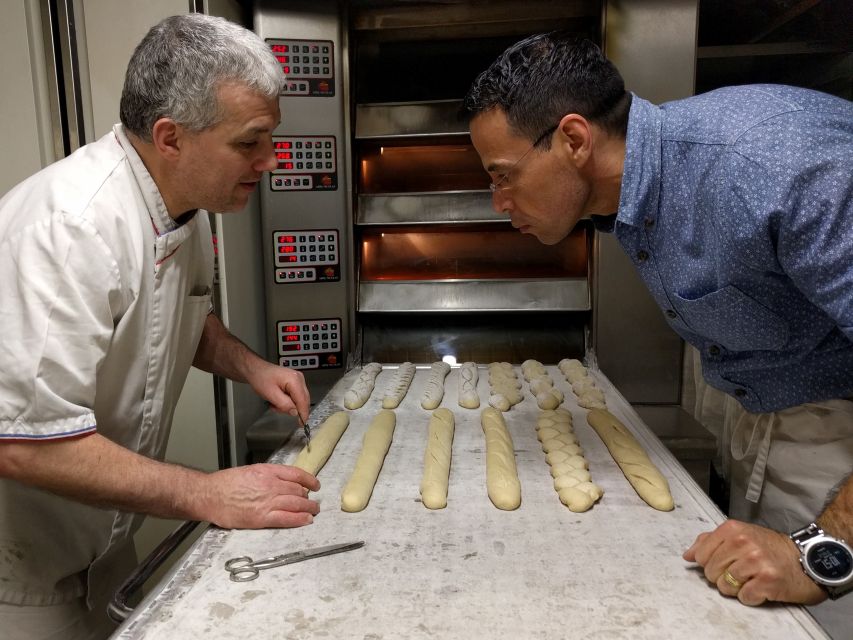
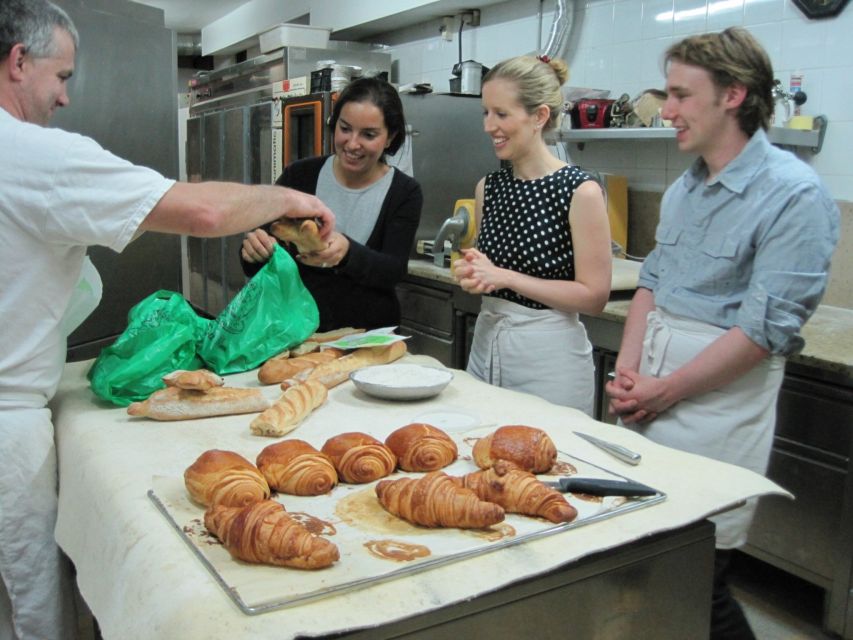
Meet at Le Petit Mitron, 8 rue Oberkampf 75011 Paris. Right away, the class has that real “workday in a boulangerie” feeling. Instead of standing around while someone explains, you’re in the action with ingredients, tools, and an apron.
The most practical part is that you learn in the same environment where the bread is made. You can see how the bakery keeps things moving, and you understand why certain steps matter when you’re surrounded by flour, dough, and the rhythms of the shop.
Because this is a small group (limited to 8 people), the baker and interpreter can slow down when you need it. That matters more than people expect. When you’re learning something as touchy as shaping dough, small corrections help.
Classic baguette and La Parisse: the two breads you bake
The core of this class is French baguette technique, start to finish. You’ll learn how an authentic baguette is made step by step, and the baker emphasizes the small details that separate good bread from great bread.
You bake two types of baguette:
- A classic French baguette
- La Parisse, a bakery specialty the shop is known for across Paris
What’s valuable here is the focus on results you can understand. The baker talks about how to get that crunchy golden crust paired with a soft, warm interior. That’s not just food talk. It’s the kind of cause-and-effect thinking you’ll reuse when you bake later at home.
And because you’re making and baking more than one style, you start to see how bread identity changes with method and shaping. You’re not just collecting a single recipe. You’re learning how a Paris bakery thinks.
A fun bonus is the class includes tasting during the session, so you’re not waiting until the end to taste what the techniques are supposed to achieve. One of the most common “yes” points people make is that you leave with plenty, not just one sad sample.
Croissant shaping: practice the feel, not just the idea
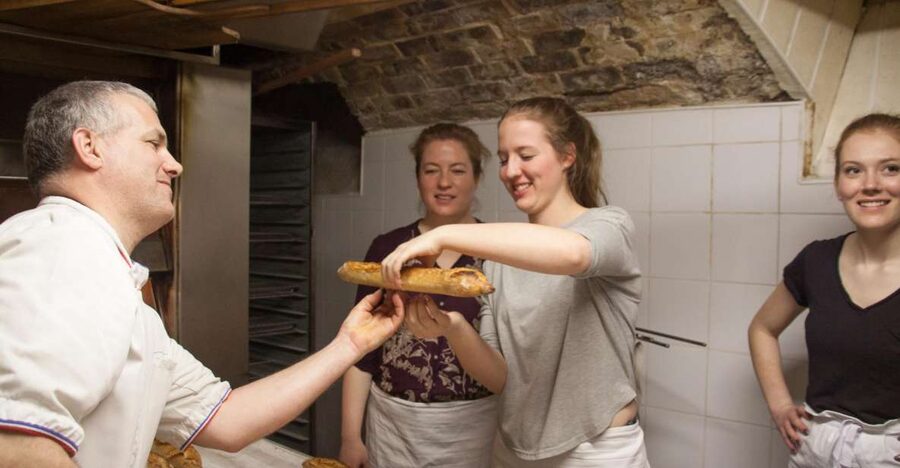
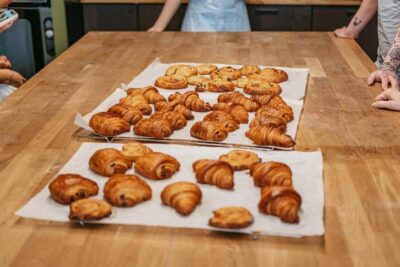
After the baguette focus, the class shifts to making and shaping croissants. This is where you’ll feel the difference between reading about pastry and actually working dough with your own hands.
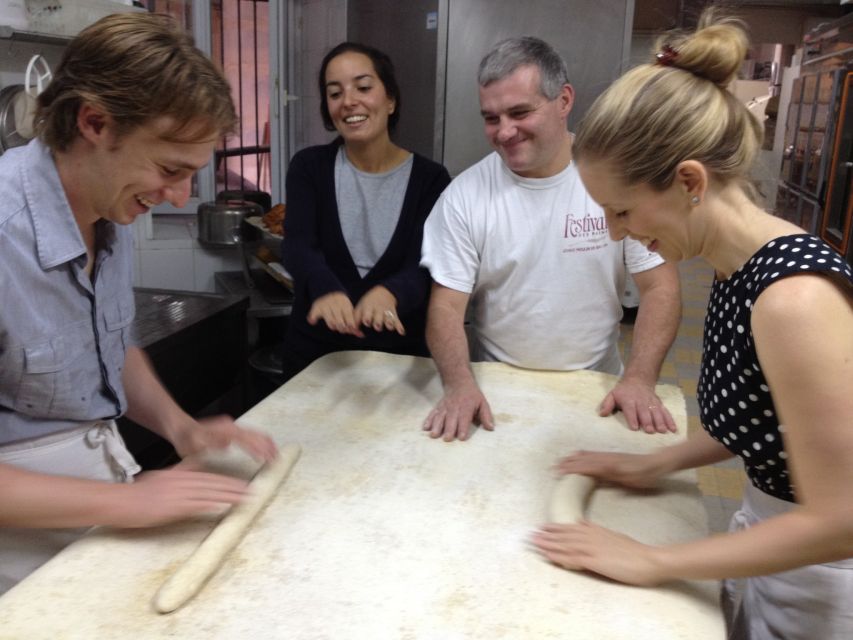
Croissants are all about structure, and structure comes from handling. You’ll get tips on techniques while you shape, so you can see what good dough looks like as it’s handled correctly. The instruction stays hands-on, meaning you’re doing the work rather than watching from a safe distance.
The class also matches the croissant lesson to the broader “French bread craft” theme. That makes it feel like one connected workshop instead of two random tasks. By the time you finish, you understand why a French bakery can turn the same flour and basic ingredients into very different breads with real personality.
If you’re the type who likes tactile learning, you’ll probably love this. People often mention the sheer satisfaction of working the dough, not just eating it.
Why the interpreters matter: Luis, Elsa, and Luce keep it flowing
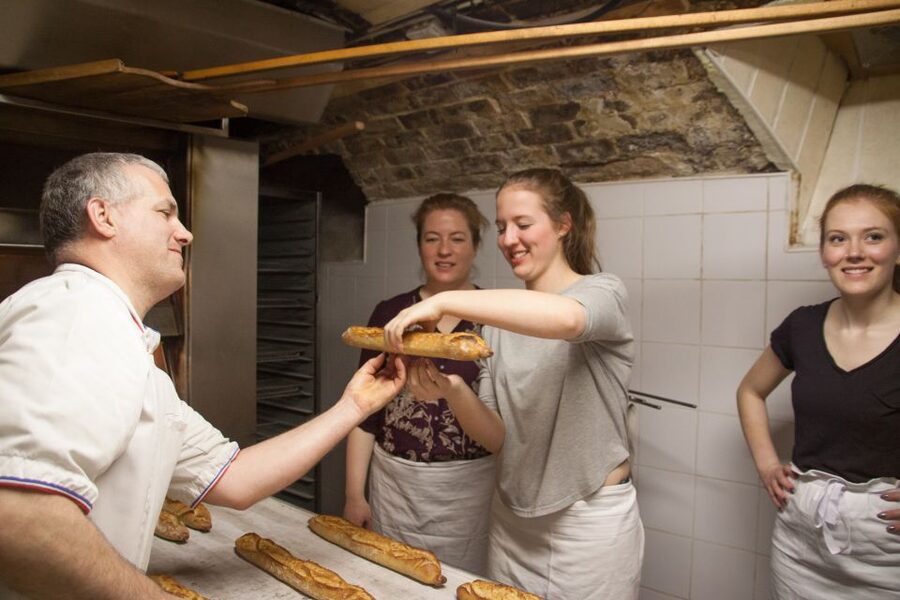
Language support is not an afterthought here. The instructor includes English, French, Japanese, and Spanish, and in practice the interpreters frequently play a big role in how smoothly the class works.
Guides like Luis, Elsa, and Luce stand out in the way they keep the explanation in sync with what the baker is doing. That sounds simple, but in bread making, timing and clarity are everything. You don’t want to hear a key shaping tip after you’ve already moved on.
In a number of accounts, the interpreters also help keep the vibe fun, with humor that makes technical instruction easier to absorb. And the best part is that the baker’s personality comes through. People describe the experience as engaging and interactive, and that interaction is often what makes you retain the techniques.
If you’re planning to take notes or want to understand the “why” behind each step, the translation quality is one of the best reasons to choose this specific class.
Other Paris ateliers to spend an afternoon in:
- Fragonard Paris: Mini Perfume Workshop★ 4.5 · 1,924 reviews
- Paris Cooking Class and Lunch with Wine plus Market Visit Option★ 5.0 · 1,024 reviews
- Paris Croissant Small-Group Baking Class with a Chef★ 5.0 · 910 reviews
- Paris: 2-Hour Perfume Creation Workshop★ 4.8 · 731 reviews
What the class feels like in real time (2 hours, small group, lots of doing)
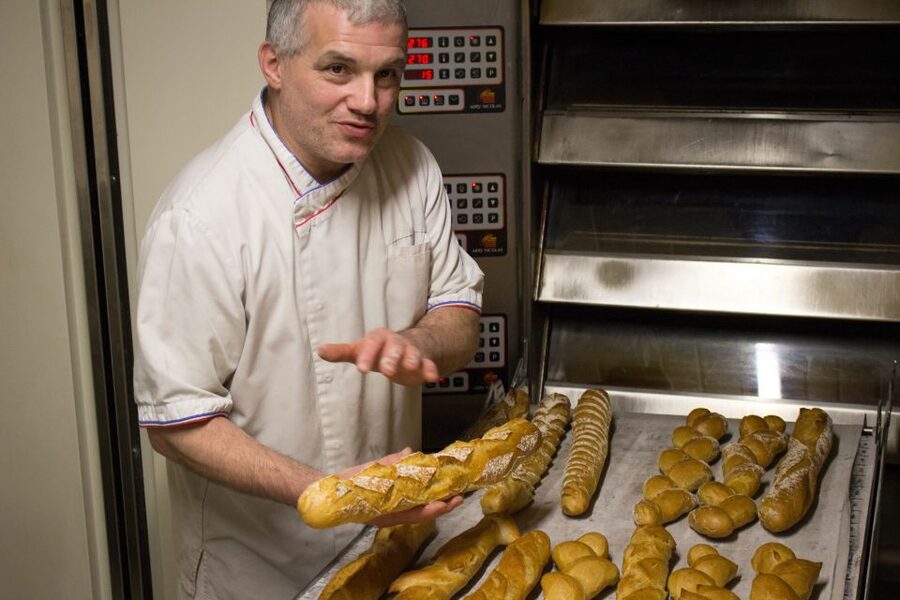
The session runs 2 hours, so it’s paced like a workshop, not a long guided tour. You’ll start in the bakery space, get oriented, then work through the bread-making tasks with the baker and interpreter coaching you along.
Here’s the practical rhythm you can expect:
- You learn baguette process steps, while watching how the baker works behind the counter
- You receive technique guidance aimed at crust and interior texture
- You make and shape croissants as part of the same session
- You taste what you’re making during the class
- You leave with breads you made and a recipe follow-up after
Because the group is capped at 8, you’re more likely to get specific feedback than in bigger cooking classes. That personal correction is huge for shaping and for getting dough handling right.
Also, plan on coming ready to work. If you prefer passive sightseeing, this may not be your best fit. But if you want something hands-on that still feels authentically French, it hits the mark.
Take-home rewards: breads you made and recipes emailed after
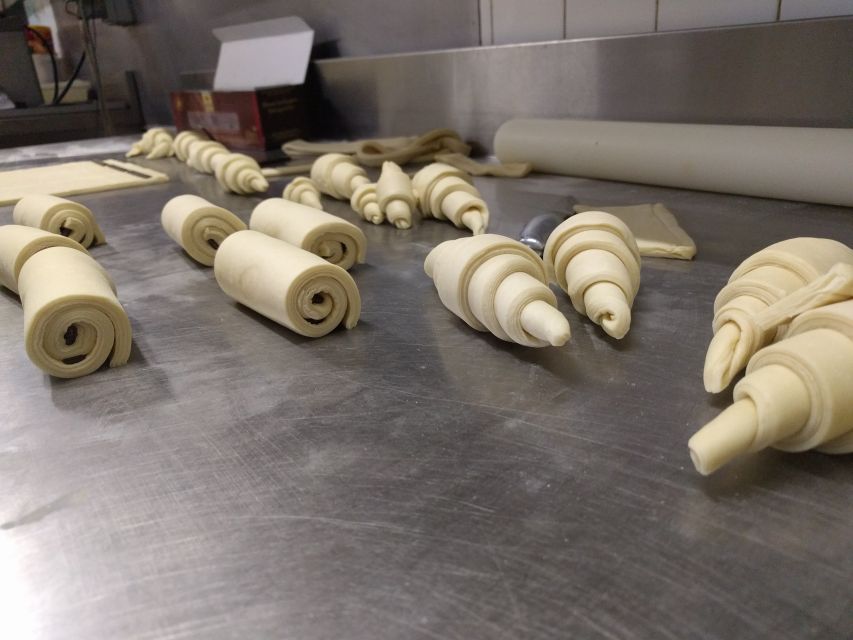
This class has a strong “leave with something real” factor. Many people highlight that they take home a big bag of what they baked, including the baguettes and croissants made during the workshop.
That matters for two reasons:
- It turns the class into an edible souvenir you can share.
- It gives you a comparison point for what your home baking should aim for.
The other key takeaway is the recipe support after you return. You receive a copy of the recipe sent by email, so you’re not relying on memory while trying to replicate a French baguette at home.
One more detail that comes up often: the breads are fresh and warm as part of the tasting. That lets you connect the technique to the sensory result while it’s still happening. It’s easier to learn when you can immediately taste the outcome.
Price and value: is $258 for a 2-hour Paris baking class worth it?
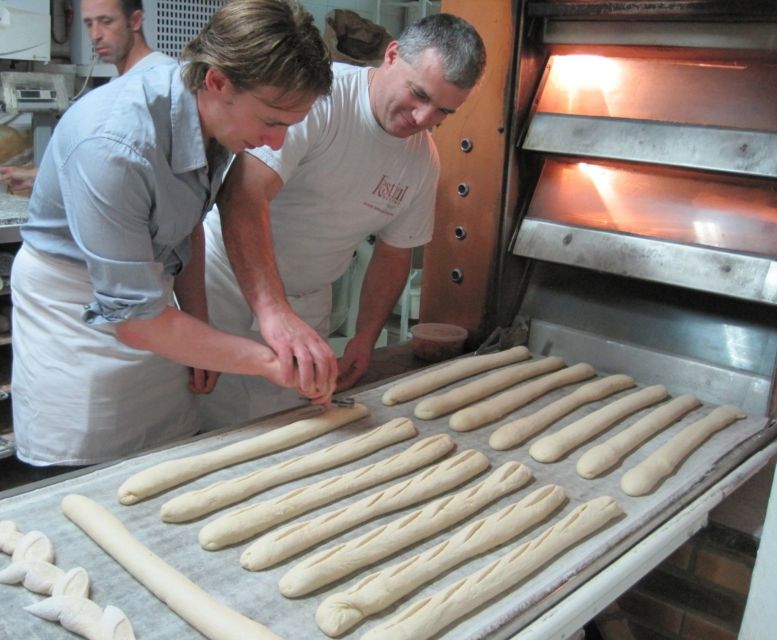
At $258 per person for a 2-hour session, the price is not “cheap,” and it shouldn’t be. This is a craft lesson in a working bakery, with a small group setup and direct instruction from a master baker in the shop.
The value comes from what you actually get:
- Hands-on practice shaping baguettes and croissants
- Instruction tied to texture goals like crust and interior
- Baking two baguette types, including La Parisse
- Tasting during the class
- Take-home bread
- Recipe follow-up by email
If you compare this to paying for individual items at a bakery, the class still wins because it teaches you process, not just product. You’re paying for technique and for the chance to correct your method in real time.
It’s also easier to justify the cost if you’ll bake again at home. The class is designed for people who want to replicate French bread techniques, not just snack and leave.
If you’re traveling with others, small group limits help preserve the learning quality. You’re not crowding the baker, and that makes the instruction feel more personal.
Who should book this Paris bread and croissant class?
This workshop is ideal for:
- People who want a hands-on Paris food experience, not just a bakery walk-through
- Food lovers who like learning techniques tied to results
- Families looking for an engaging activity, including mentions of success when kids are old enough and enthusiastic about hands-on cooking
It’s not for everyone. Here’s the reality check:
- It’s not suitable for children under 6
- If you want a long, slow, sightseeing-style day, 2 hours may feel short
- If you already bake professionally and want deep fermentation science for hours, you might want a more advanced multi-session course
If bread is your interest and you like practical learning, this class fits well. And if you’re nervous about your language level, the instructor language options and interpretive support make it much easier to follow what’s happening and why.
Simple tips to get the most out of your class
These are small things that help you learn faster and leave happier:
- Come with an appetite. The class includes tasting, and you’ll likely want to eat what you make while it’s fresh.
- Wear clothes you don’t mind getting slightly messy. You’ll handle dough and flour.
- If you care about gluten or ingredients, ask questions before the session begins. One participant with gluten intolerance reported no reaction after trying the breads in the class and noted flour is made on site with no additives, but you should still confirm details for your own situation.
Most importantly, treat shaping and handling as part of the lesson. If you rush, you’ll lose the very thing the class is teaching.
Should you book this bread and croissant making class?
Yes, if you want a true Paris baking workshop where you do the work, not just watch. The standout reasons to book are the behind-the-counter access, the small group size, and the way the master baker teaches technique with help from interpreters like Luis, Elsa, and Luce.
Skip it if you need an all-day activity, if you’re bringing a child under 6, or if you only want to sample bakery food without learning process. For the price, you’re buying instruction plus take-home bread plus recipe follow-up, and that combination is exactly what makes the class feel worth it.
If your goal is to go home and make baguettes and croissants with better technique, this is the kind of class that sets you up to succeed.
FAQ
How long is the Paris bread and croissant-making class?
It lasts 2 hours.
Where is the meeting point?
Meet at Le Petit Mitron, 8 rue Oberkampf 75011 Paris.
What is the group size limit?
The class is a small group, limited to 8 participants.
What languages are available?
The instructor support includes English, French, Japanese, and Spanish.
Is the class suitable for children?
It is not suitable for children under 6 years.
What do I take home?
You leave with the breads you make and a copy of the recipe sent by email. The class also includes tasting during the session.
Newest write-ups from Paris



Pastry and Macaron Classes, compared.
Montmartre Cheese, Wine & Pastry Guided Walking Tour
Read our review →
Award-Winning Paris French Bakery Experience — Le Marais, 4th Arr
Read our review →
Private Montmartre Food Tour with Wine, Cheese & Pastries
Read our review →
Paris French Sweets Tasting Tour with Pastries and Chocolates
Read our review →
Paris Croissant Small-Group Baking Class with a Chef
Read our review →
Browse the lists this tour appears in