
Reviewed · PASTRY AND MACARON CLASSES
Paris Croissant and Breakfast Pastry Class with a French Chef
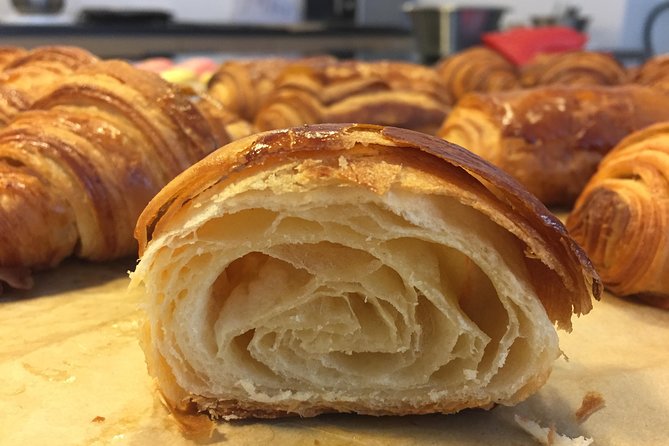
Croissants can be taught like a craft. This 3-hour breakfast pastry class in Paris is all about hands-on technique, led by a French chef in English. You work the steps that make layers, then you take home what you bake.
I really like the small group setup, capped at six, which means you get proper coaching and time to do each step yourself. I also love that you leave with croissants and pain au chocolat, plus tea and coffee to go with the fresh bakes. One drawback to consider is that croissant dough takes serious timing, so the course is a focused workshop, not a full, day-long waiting game.
In This Review
- Key things to know before you go
- Why a croissant class in Paris is a smarter use of time
- Getting to the kitchen near Rue Thimonnier
- The 3-hour flow: what you actually do during the session
- Stop at Patisserie a la Carte: the workshop setting that matters
- Croissant technique, in real bakery language: beurrage to feuilleter
- Pain au chocolat and the chocolate options that change the morning
- Baking, coffee, and taking home a real batch
- Price and value: what $131.54 buys you in Paris
- Who this class is best for, and who it may not be
- What to wear, what to expect from the chef, and how to help yourself
- A quick reality check: how French this feels
- Should you book this croissant and breakfast pastry class?
- FAQ
- How many people are in each class?
- What will I make during the 3-hour class?
- Is the class offered in English?
- What is included besides the chef and ingredients?
- Where does the class start?
- Do I need to bring anything?
- Is hotel pickup included?
Key things to know before you go
- Max 6 people, real attention. With such a small class, you are not standing at the back watching, you are working.
- You learn the core croissant moves. You practice terms like beurrage, pâton, turns, feuilleter, and la pousse.
- You bake and take home. Expect take-home bags, plus enough pastry to enjoy later.
- Thursday has a special twist. On Thursday mornings, you make bicolor croissants filled with chocolate pralin.
- You get gear and recipes. Aprons, equipment, and English recipe copy are provided so you can focus on the technique.
- You get more than pastries. There is also a 10th anniversary eBook called Everyday Gourmet French Tarts.
Other kitchens for macarons and pastry:
- Paris: Montmartre Cheese, Wine & Pastry Guided Walking Tour
★ 4.8 · 2,255 reviews - Paris: Macaron Class at Galeries Lafayette
★ 4.2 · 1,196 reviews - Award-Winning Paris French Bakery Experience — Le Marais, 4th Arr
★ 4.5 · 1,186 reviews - Private Montmartre Food Tour with Wine, Cheese & Pastries
★ 5.0 · 1,027 reviews
Why a croissant class in Paris is a smarter use of time
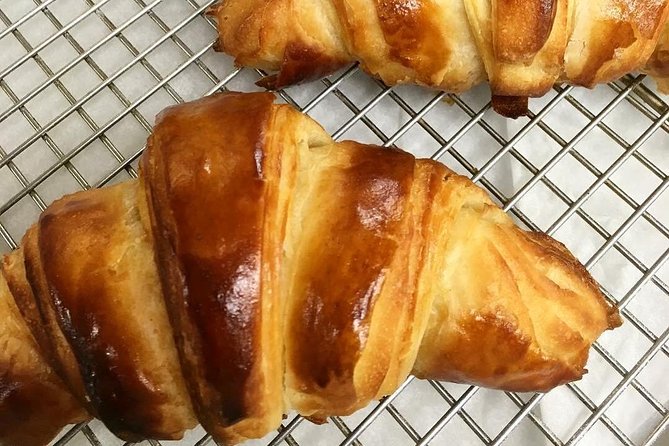
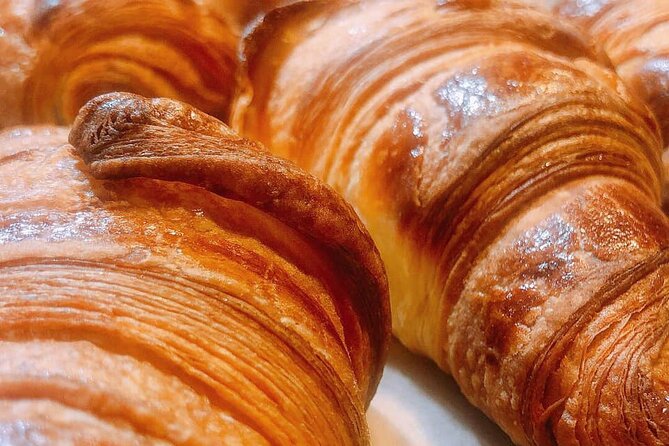
Paris is full of food tours that end at a tasting table. This class is different. You get training in the technique behind the famous result: light, crisp layers outside, tender inside.
If you care about food beyond the first bite, you will like this. Croissants are one of the clearest examples of French pastry thinking: temperature control, timing, and repeatable folding patterns.
And yes, it is very Paris. But it is also practical. When you understand what you are doing, you can try again at home instead of just hoping for the best.
Getting to the kitchen near Rue Thimonnier
The class meets at 9 Rue Thimonnier, 75009 Paris. It is near public transportation, so you do not need a complicated plan to get there.
Hotel pickup and drop-off are not included, so build your own short commute. The session starts in the morning, so I recommend setting yourself up the night before, especially if you are navigating Montmartre or central neighborhoods on foot.
Also, this runs on time. After 5 minutes of delay they begin without late arrivals, and after 15 minutes with nobody showing up the class is canceled. I would rather arrive early and relax than sprint to the meeting point.
The 3-hour flow: what you actually do during the session
Croissant dough is layered yeast dough, which normally requires a lot of prep time, ideally starting the day before. That prep reality is part of what makes croissants so demanding.
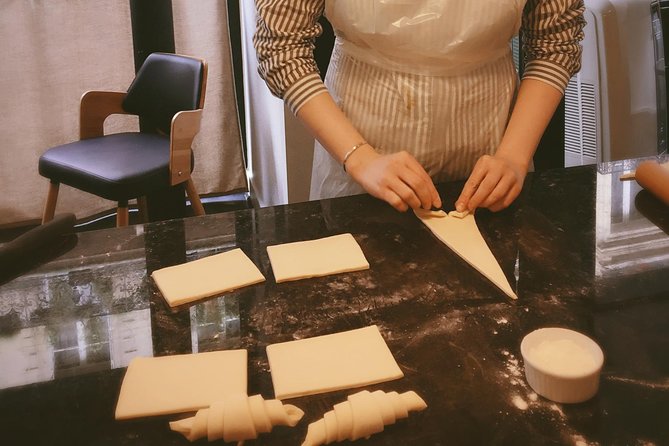
The course handles that by doing some stages in advance, so you still get to enjoy fresh pastries by the end. You will still do key hands-on steps during your 3 hours, and the class is staged so you learn the logic without spending all day waiting for dough to rise.
In practice, you can think of the workshop as two big goals:
1) learn the method and the correct feel of the dough,
2) shape and bake so you leave with your own results.
This is why it works well for a vacation schedule. You get technique, not just a stroll and a snack.
Stop at Patisserie a la Carte: the workshop setting that matters
You are not baking in a tiny corner. The session is run at a professional-style pastry setup where the workflow makes sense for laminated dough.
That matters because croissant making is physical. You roll, fold, and handle butter and dough that can warm up and act differently if your workspace is chaotic.
The class also provides aprons and all cooking equipment. That takes the stress off you, because you can dress comfortably and focus on the process instead of worrying about tools you do not own.
Other Paris ateliers to spend an afternoon in:
- Fragonard Paris: Mini Perfume Workshop★ 4.5 · 1,924 reviews
- Paris Cooking Class and Lunch with Wine plus Market Visit Option★ 5.0 · 1,024 reviews
- Paris Croissant Small-Group Baking Class with a Chef★ 5.0 · 910 reviews
- Paris: 2-Hour Perfume Creation Workshop★ 4.8 · 731 reviews
Croissant technique, in real bakery language: beurrage to feuilleter
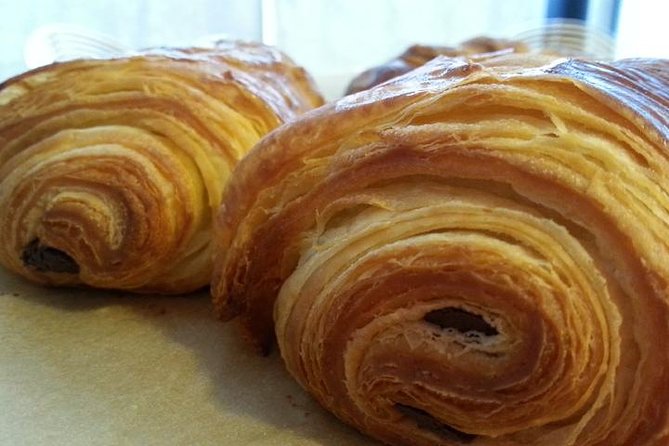
Here is where the class shines. You learn the classic sequence, and you practice the steps that create layers.
You start with the beurrage, which is adding butter into the dough called pâton. In simple terms, this is how the butter becomes part of the structure, not just a filling.
Then comes the pâton concept. It is the block of croissant dough after the butter is folded into the detrempe, forming an envelope. This shape and folding stage are the foundation for everything that follows.
Next you learn the turns. Turns are the rolling-and-folding motions that repeatedly reorganize the dough and butter layers. This is the step that keeps your croissants from becoming thick bread.
After that, you work on feuilleter, making it into thin leaves. This is where the butter gets enclosed in a layer of dough, and you fold and roll again to create very thin layers. This is also where patience pays off, because thin layers mean better texture.
Finally you follow la pousse, the fermentation and rising. The yeast does its job during the rise, and the dough expands as it bakes. Understanding la pousse helps you avoid the classic home-baker mistake of rushing a dough that is not ready.
One nice touch is how instructors keep it understandable. In past sessions, chefs like Julie, Gaëlle, Hiba, Marie, and Mary have been praised for step-by-step guidance in clear English. The pattern you want is the same: demo first, then your hands take over.
Pain au chocolat and the chocolate options that change the morning
Croissants are only part of it. You also make pain au chocolat, the chocolate-filled croissant that feels like Paris comfort food with a crisp edge.
The session is built around both items, so you leave with a variety of results from the same technique base. That is a big deal for value, because you are not paying just for a single pastry. You are learning how the dough behaves, then applying it to two shapes.
On Thursday morning classes, there is a special upgrade. You make bicolor croissants filled with chocolate pralin. If you like the idea of something a bit more unusual than the standard plain pain au chocolat, this is your day.
A small word of caution: if you are expecting additional pastries like pain aux raisins, do not count on them being part of the main hands-on menu. Some participants found the focus is firmly on croissants and pain au chocolat, with other ideas mentioned visually rather than produced on trays.
Baking, coffee, and taking home a real batch

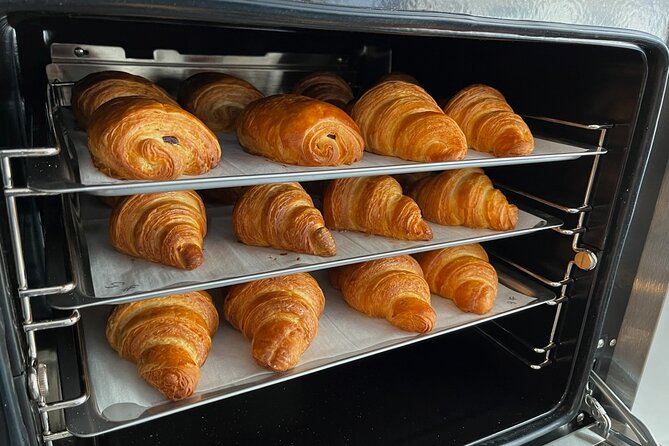
Once your dough is shaped, you get to see it go from workbench to oven. The final stretch is part of what makes this class satisfying, because you see layers develop instead of just reading about them.
Tea and coffee are included, and many people enjoy a drink while taking in the just-baked smell. That is also a good reset, especially because laminated dough work is hands-on and a bit demanding.
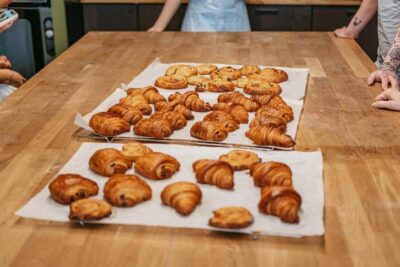
Then comes the best part for your schedule: take home bags. You can bring your pastries back to your hotel or apartment and eat over the next day or two.
Some participants reported leaving with a substantial amount, enough to snack later in the week. Your exact quantity can vary depending on how the class portioning goes, but the consistent message is that you do not leave with crumbs. You leave with a proper home stash.
Price and value: what $131.54 buys you in Paris
$131.54 per person sounds specific, and for once, the math mostly works out.
You are paying for more than ingredients. You are paying for:
- a French pastry chef teaching technique,
- a maximum group size of six,
- aprons, equipment, and hands-on guidance,
- English recipe copy so you can repeat it,
- tea and coffee, and
- take-home bags.
You also get a 10th anniversary eBook called Everyday Gourmet French Tarts. It is not the main course, but it is a nice bonus if you want inspiration beyond croissants.
Compared to buying pastries one by one, you are trading pure convenience for a skill. You should see it as a workshop with breakfast results, not as a tasting event.
Also, slots are booked about 35 days in advance on average. If you are traveling in peak season or you specifically want a Thursday, lock in your date early.
Who this class is best for, and who it may not be
This is a great fit if you want a hands-on morning and you care about learning why something works. Croissant making rewards attention, not speed.
I especially like it for:
- couples and friends who want to do something together,
- travelers who like food technique more than food selfies,
- people who want a structured activity that ends with edible proof.
It may not be ideal if you want a casual, relaxed demo only. This class is practical. You will roll, fold, and handle dough, and you should wear comfortable clothing and flat shoes.
There is also an age minimum of 15 and up, and children must attend with a registered adult (one adult per child). If you are traveling with teens, it can be a memorable, skill-based activity.
And if you have allergies or special dietary requirements, you need to advise the operator when you book, so they can handle ingredient choices appropriately.
What to wear, what to expect from the chef, and how to help yourself
Wear comfortable casual clothes and flat comfortable shoes. If you have long hair, tie it back. This is practical advice because laminated dough sessions involve a lot of movement and close work at the counter.
What you should expect from the chef is a mix of demo plus hands-on coaching. Many instructors, including Julie and Gaëlle in past classes, have been praised for being organized, patient, and precise with step-by-step instructions.
You should also expect printed materials. Some participants specifically noted full printed instructions. That matters because croissants can feel technical at the beginning, and you will want a reference point when you get home.
Finally, be ready for a bit of work. One participant summed it up as fun, but lots of work and tons of learning. That is the right mindset. You will get more out of it if you come curious and willing to get flour on your hands.
A quick reality check: how French this feels
One review did note that the class did not feel super French in style. But that comment was still bundled with praise for the food and learning.
So here is the balanced take: do not expect a theatrical performance with a lot of storytelling. Expect a well-run workshop focused on method. If your goal is technique, you will likely love it.
If your goal is pure cultural vibe through atmosphere, you might find it more “structured cooking class” than “old Paris bakery in a movie.”
Should you book this croissant and breakfast pastry class?
Yes, I think you should book it if you want a memorable Paris morning that teaches real skills. The class has a very strong track record, with an average rating of 4.9 from 68 reviews and a recommendation rate of 99%.
I would book it especially if you are the type who has eaten great croissants and wondered how to make them yourself. This gives you the specific technique words and the hands-on practice: beurrage, turns, feuilleter, and la pousse.
Skip it if you want a low-effort snack stop, or if you are trying to collect a wide range of pastries in one session. The focus stays tight on croissants and pain au chocolat, with Thursday offering the bicolor pralin option.
If you match that fit, this is one of the best ways to turn Paris butter and flour into a lasting skill.
FAQ
How many people are in each class?
The class is capped at a maximum of six participants, so you get a more personal, hands-on experience.
What will I make during the 3-hour class?
You learn how to make classic buttery croissants and pain au chocolat. On Thursday morning classes, you may also make bicolor croissants filled with chocolate pralin.
Is the class offered in English?
Yes. The class is offered in English, and you receive an English language copy of the recipes.
What is included besides the chef and ingredients?
You get aprons, all cooking equipment, recipes in English, tea and coffee, and take-home bags. There is also an Everyday Gourmet French Tarts eBook included for the operator’s 10th anniversary.
Where does the class start?
The meeting point is 9 Rue Thimonnier, 75009 Paris, France. The activity ends back at the meeting point.
Do I need to bring anything?
You should wear comfortable, casual clothing and flat comfortable shoes, and tie back long hair. Everything else for cooking is provided.
Is hotel pickup included?
No. Hotel pickup and drop-off and transportation to and from attractions are not included.
Newest write-ups from Paris


Pastry and Macaron Classes, compared.
Montmartre Cheese, Wine & Pastry Guided Walking Tour
Read our review →
Award-Winning Paris French Bakery Experience — Le Marais, 4th Arr
Read our review →
Private Montmartre Food Tour with Wine, Cheese & Pastries
Read our review →
Paris French Sweets Tasting Tour with Pastries and Chocolates
Read our review →
Paris Croissant Small-Group Baking Class with a Chef
Read our review →
Browse the lists this tour appears in