
Reviewed · PASTRY AND MACARON CLASSES
Paris: Croissant Baking Class with a Chef
Flaky croissants start with a great chef. I loved the hands-on folding coaching and the tight small-group setup, which makes it easier to get feedback as you work. The main catch is that rolling and shaping croissant dough takes real arm strength.
You’ll spend about 3 hours at Studio Pâtisserie, working dough through the key stages, then shaping classic crescents. I also like that the class blends technique with the “why” behind results, so you’re not just copying steps without understanding them.
If you want something extra, there’s a bi-color croissant option on selected days. It’s led in English, and you’ll leave with a recipe to try again at home.
In This Review
- Key things that make this class worth your time
- Entering Studio Pâtisserie and setting yourself up for success
- How the 3-hour flow keeps you from getting lost in the dough
- The hands-on technique that actually changes your croissants
- The science part: butter quality and proofing, explained for real life
- Shaping classic crescents and learning the details that matter
- Sampling hot results and taking home a recipe you’ll use
- Bi-color croissant option: color technique without turning it into a gimmick
- Cost and value: why $140 can make sense for a skill class
- Who this croissant class is best for
- Should you book this croissant baking class in Paris?
- FAQ
- Where is the meeting point?
- How long is the class?
- Is the class taught in English?
- How big is the group?
- Do you make anything besides croissants?
- What are the age requirements?
- What are the cancellation and payment options?
Key things that make this class worth your time
- Chef Léo’s close, step-by-step guidance in a group limited to 8
- Real hands-on dough work using professional tools and equipment
- Science you can apply (butter quality, proofing, texture and flavor)
- You shape and bake your own crescents, then sample the warm results
- English instruction for visitors who want solid technique without language stress
- Bi-color croissant option on selected dates for a fun twist
Other kitchens for macarons and pastry:
- Paris: Montmartre Cheese, Wine & Pastry Guided Walking Tour
★ 4.8 · 2,255 reviews - Paris: Macaron Class at Galeries Lafayette
★ 4.2 · 1,196 reviews - Award-Winning Paris French Bakery Experience — Le Marais, 4th Arr
★ 4.5 · 1,186 reviews - Private Montmartre Food Tour with Wine, Cheese & Pastries
★ 5.0 · 1,027 reviews
Entering Studio Pâtisserie and setting yourself up for success
This is one of those Paris food experiences that actually teaches skills, not just tasting. You meet at Studio Pâtisserie, in the building with a gray storefront, and it’s easy to reach by public transport.
The nearest metro stops are Metro Line 2, Rome, and Metro Line 3, Villiers. That matters because a 3-hour class goes fast, so you want the start time to feel painless, not like a scramble.
Once you’re inside, the vibe is more kitchen workshop than tourist show. You gather around the workstation with your small group, then Chef Léo walks you through what you’ll do next so you know what to focus on.
How the 3-hour flow keeps you from getting lost in the dough
Croissants are not a single-step bake. The timing is part of the craft, so the class is structured around dough that rests and rises while you learn the next move.
Here’s the practical rhythm you should expect:
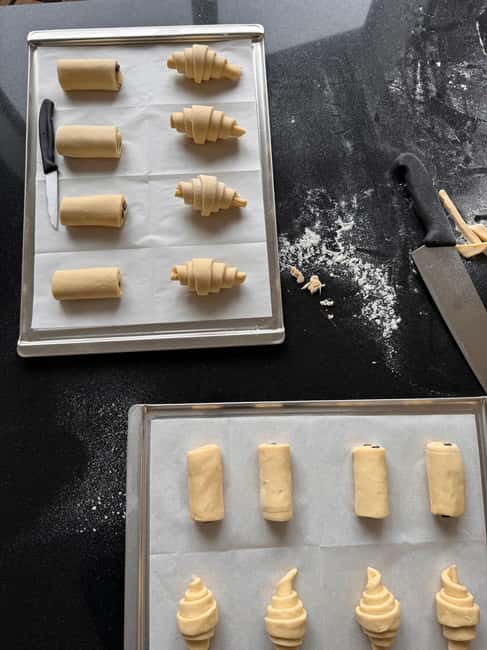
- You start with dough prep and get hands-on with kneading.
- You move into folding, where the technique is the difference between good and great layers.
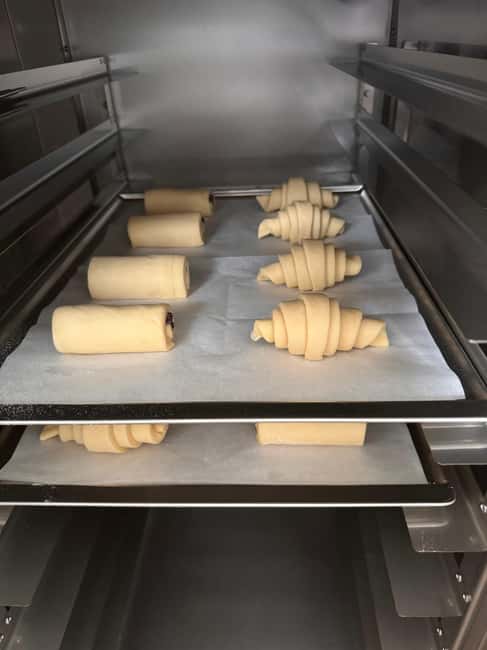
- Then dough rests and rises, and you learn the science behind what’s happening during that waiting time.
- After that, you shape crescents and finish with baking and sampling.
This pacing is helpful because it turns downtime into learning time. You’re not just standing around waiting for dough to do its thing.
The hands-on technique that actually changes your croissants
The biggest reason I like this class is how direct the coaching feels. Chef Léo guides you through each step, and the folding technique gets real attention, not vague advice.
Croissant dough work is physical. You’ll knead and roll, and you’ll shape by hand. That’s why the class has age guidance, and why it’s smarter to show up ready to use your arms and wrists.
In the folding stage, listen closely to how the butter and dough are treated. Even without getting overly technical, Chef Léo focuses on the specific actions that create those signature flaky layers.
The science part: butter quality and proofing, explained for real life
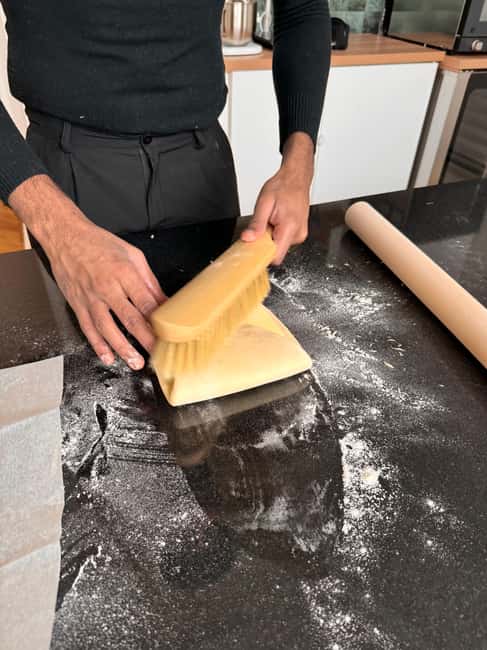
Croissants can taste amazing, or they can turn out disappointing. The difference often comes down to details most people miss.
Chef Léo shares the science behind what works:
- Butter quality matters, because it affects flavor and how the layers behave during baking.
- Proofing matters, because fermentation and resting shape texture and rise.
- Timing matters, because croissant dough is sensitive to temperature and handling.
What I like about this is the balance. You get theory, but it’s tied directly to what you’re doing with your hands. So when you later try the recipe at home, you’re not guessing why something went wrong.
Bring your questions. The class atmosphere supports asking, and the instruction is aimed at making sure you understand each step, not just complete it.
Other Paris ateliers to spend an afternoon in:
- Fragonard Paris: Mini Perfume Workshop★ 4.5 · 1,924 reviews
- Paris Cooking Class and Lunch with Wine plus Market Visit Option★ 5.0 · 1,024 reviews
- Paris Croissant Small-Group Baking Class with a Chef★ 5.0 · 910 reviews
- Paris: 2-Hour Perfume Creation Workshop★ 4.8 · 731 reviews
Shaping classic crescents and learning the details that matter
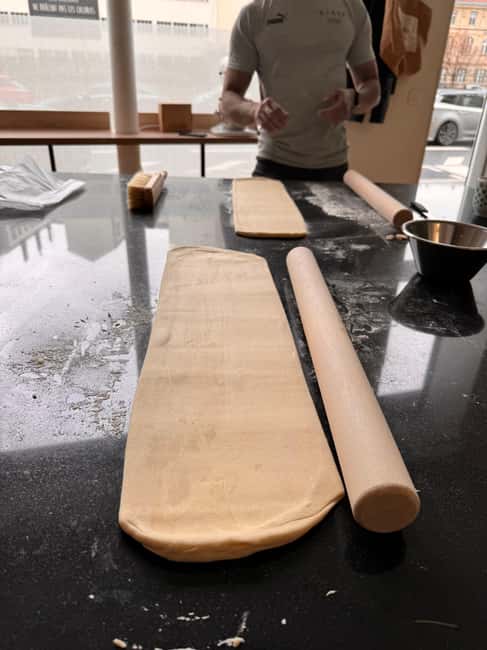
Once the dough is ready, the class shifts from “work the dough” to “build the croissant shape.” This is where you get to practice the gestures that make croissants recognizable.
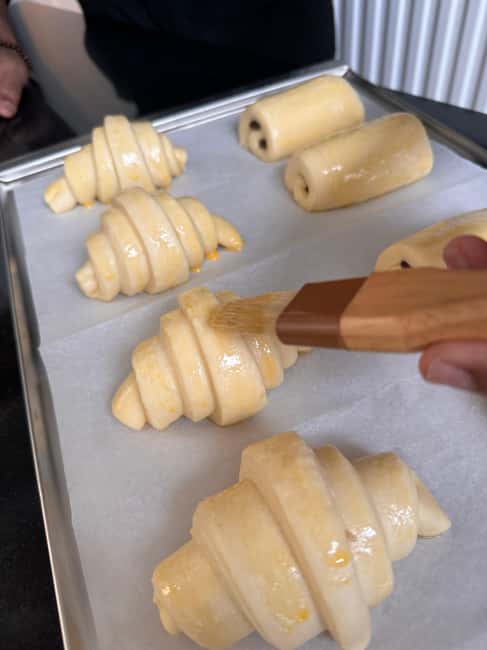
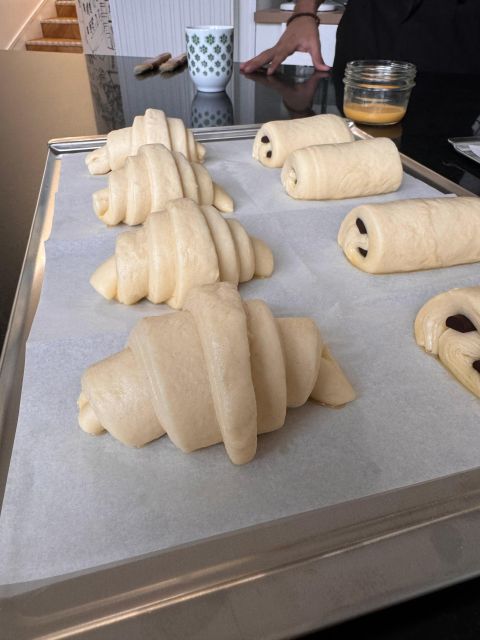
Under Chef Léo’s watchful guidance, you cut, roll, and shape into classic crescents. The goal is not just looks, it’s even thickness and good layer distribution, so the croissants bake consistently.
If you’re new to pastry, you’ll still be able to follow along. The class is set up so you’re not just watching from across the room. You do the steps yourself, and you get correction when needed.
Sampling hot results and taking home a recipe you’ll use
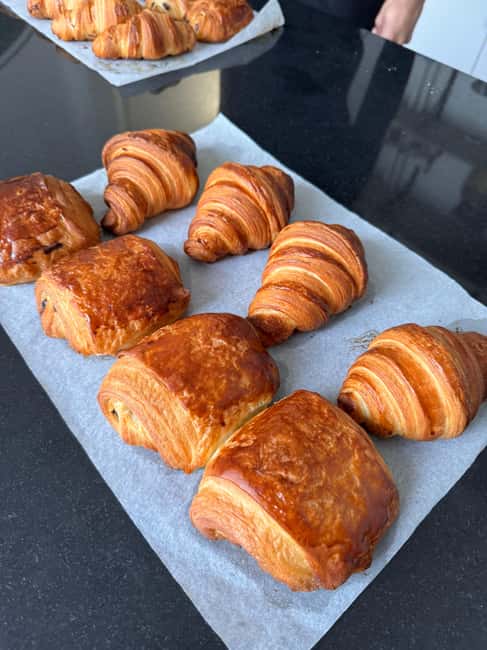
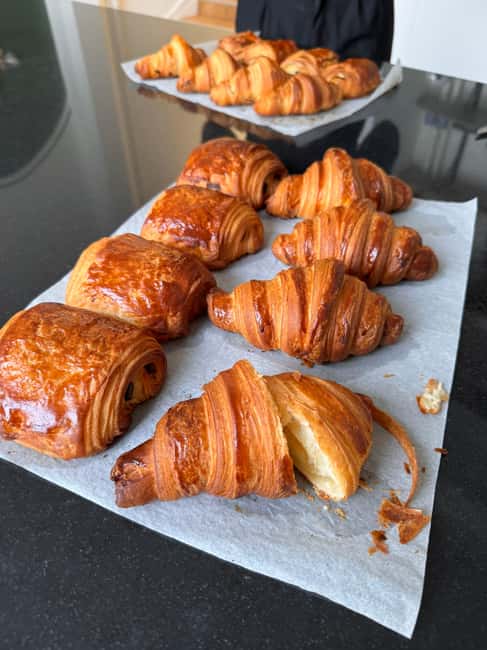
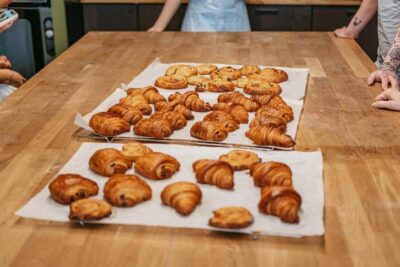
This class doesn’t end with you leaving empty-handed. During the session, you get ample sampling of freshly baked croissants, including ones you made.
That’s a big deal because it gives you instant feedback. You see how your work turns into flavor and texture, right away, not days later when you’re stuck with a finished product you do not understand.
You’ll also get a recipe to take home. I think that’s the real value booster for most people. A class like this is fun, but the recipe is what lets you repeat the process later, with the benefit of what Chef Léo explained.
Bi-color croissant option: color technique without turning it into a gimmick
On selected days, there’s an exclusive bi-color croissant baking class option. This is for you if you want more than the classic look and you like the idea of playful, edible design.
The color technique is taught as part of the dough process, so you’re not just adding decoration on top. The class focuses on how to incorporate vibrant colors into the croissant dough, while keeping the build and layering technique the same.
If you’re an experienced baker, you’ll likely appreciate the extra challenge. If you’re a beginner, you’ll still get structure, because you’re doing it step-by-step with Chef guidance.
Cost and value: why $140 can make sense for a skill class
At $140 per person for about 3 hours, this is not a budget activity. But it can still be good value if you compare it to what you actually receive and what you learn.
You’re paying for:
- Chef-led instruction from Chef Léo throughout the class
- Ingredients for what you bake
- Professional-grade kitchen equipment and tools
- A recipe to take home
- Personalized tips and tricks
- Fresh sampling during the class
In other words, you’re not paying only for pastries. You’re paying for guided technique, plus the chance to produce croissants you can understand and replicate later.
Also, the group size is limited to 8. That usually means more hands-on attention, which is exactly what you want when dough technique decides everything.
Who this croissant class is best for
This fits best if you want a practical Paris experience that teaches technique you can use again. It’s a great choice for food lovers who want more than a restaurant meal.
It’s also a good match for hands-on learners who like clear direction and real practice. Many people enjoy it as a small shared activity, including couples and multi-generation groups, as long as everyone meets the age rules.
Age rules matter here:
- Not suitable for children under 15
- Croissant making needs physical strength to roll out the dough
- Children under 17 must be accompanied by a paying adult
So, if you or someone in your group has limited upper-body strength, consider that reality before booking.
Should you book this croissant baking class in Paris?
Book it if you want a classic Paris food activity that turns into a real skill. You’ll get Chef Léo’s step-by-step coaching, hands-on folding practice, and the science of butter and proofing explained in the middle of doing the work.
Skip it only if you know you cannot comfortably handle rolling and shaping dough, or if you want a more relaxed, watch-only experience. Since this class is hands-on by design, it rewards participation.
FAQ
Where is the meeting point?
Meet at Studio Pâtisserie, the building with a gray-colored storefront. It’s accessible by public transport, with the nearest metro stations being Metro Line 2 (Rome) and Metro Line 3 (Villiers).
How long is the class?
The class lasts 3 hours.
Is the class taught in English?
Yes, the instructor teaches in English.
How big is the group?
It’s a small group limited to 8 participants.
Do you make anything besides croissants?
The class is centered on croissant baking, and you will also sample freshly baked croissants made during the session. Some options may add variety such as the bi-color croissant option on selected days.
What are the age requirements?
It is not suitable for children under 15. Croissant making requires physical strength to roll out the dough, and children under 17 years old must be accompanied by a paying adult.
What are the cancellation and payment options?
Free cancellation is available up to 24 hours in advance for a full refund. There is also a reserve now & pay later option, so you can book your spot and pay nothing today.
French Kitchens to Cook In
- Paris: French Croissant Baking Class with a Chef
★ 4.9 · 712 reviews - Paris Cooking Class: Learn How to Make Macarons
★ 5.0 · 634 reviews - Paris Culinary Tour: 11 Tastings & 2 Wines in Le Marais
★ 4.8 · 625 reviews - Paris: French Macaron Culinary Class with a Chef
★ 4.9 · 591 reviews
Newest write-ups from Paris


Pastry and Macaron Classes, compared.
Montmartre Cheese, Wine & Pastry Guided Walking Tour
Read our review →
Award-Winning Paris French Bakery Experience — Le Marais, 4th Arr
Read our review →
Private Montmartre Food Tour with Wine, Cheese & Pastries
Read our review →
Paris French Sweets Tasting Tour with Pastries and Chocolates
Read our review →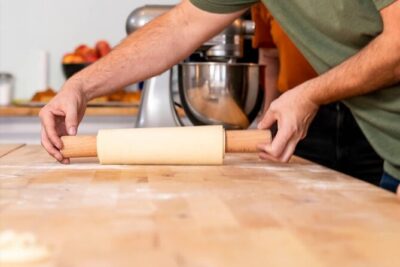
Paris Croissant Small-Group Baking Class with a Chef
Read our review →
Browse the lists this tour appears in