
Reviewed · LE MARAIS WALKING TOURS
Paris: Discover the hidden architecture gems of Le Marais
Paris hides dates in its buildings. This walking tour is a smart way to see how Le Marais changed over eight centuries, with standout stops like Place des Vosges and the aristocratic Hôtel Lamoignon. I like that the focus stays on architecture you can actually look at, not just trivia. One possible drawback, based on past bookings, is a reported no-show, so have a backup plan on the day.
You’ll meet near Saint-Paul and spend 150 minutes with an English-speaking guide who tells the neighborhood story in a way that feels practical and fun. The tour is led by Louis Capion, and several past guests highlighted his humor and his ability to keep families interested. Just note: the info says wheelchair accessible, but it also says it is not suitable for wheelchair users, so confirm accessibility needs before you go.
In This Review
- Key things to watch for on this Le Marais walk
- Getting to Rue Saint-Antoine, and finding the tour on time
- Eight centuries of Paris, translated into what you can actually see
- From early streets to Hôtel Carnavalet: noticing the neighborhood’s “time layers”
- Place des Vosges, the 2nd oldest square and the architecture lesson it forces
- Hôtel Lamoignon: when private mansions explain power
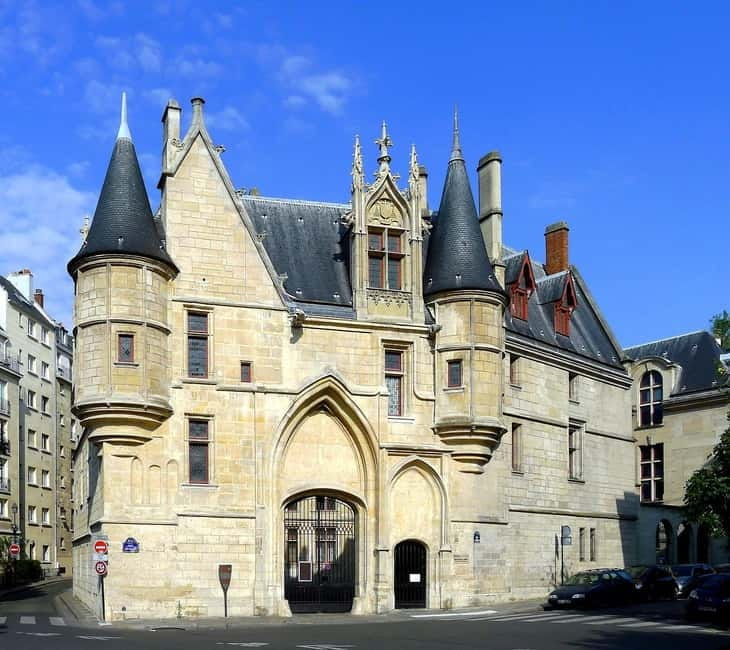
- Hôtel des archevêques de Sens: the medieval detail you can feel
- Paroisse Saint-Paul Saint-Louis: where the neighborhood keeps living
- Price and value at $41 for 150 minutes
- How the guide style matters, and what the ratings suggest
- Who should book this Le Marais architecture walk
- Should you book it?
- FAQ
- Where do I meet for the tour?
- How long is the walking tour?
- Is the tour in English?
- What are the main places you will see?
- Where does the tour start and where does it end?
- Who is the experience provider?
- Is the tour wheelchair accessible?
- Can I cancel and get a full refund?
- Can I reserve now and pay later?
Key things to watch for on this Le Marais walk
- Place des Vosges, and why its age makes it more than a pretty square
- Hôtel Lamoignon, what a private mansion can tell you about wealth and power
- Hôtel des archevêques de Sens, the medieval feel you can still sense in the design
- Hôtel Carnavalet, a key cultural stop that fits the neighborhood’s preservation story
- Paroisse Saint-Paul Saint-Louis, where the area’s everyday life meets major landmarks
Other walks through the Marais:
- Award-Winning Paris French Bakery Experience — Le Marais, 4th Arr
★ 4.5 · 1,186 reviews - Paris Le Marais Food Tour With 10+ Tastings, Cheese, Wine & More
★ 5.0 · 985 reviews - Paris Le Marais District Original Food and Wine Tasting Tour
★ 4.5 · 880 reviews - Paris Bike Tour Hidden Secrets in the Latin Quarter & Le Marais neighborhoods
★ 5.0 · 766 reviews
Getting to Rue Saint-Antoine, and finding the tour on time
This tour starts with you already in the middle of Le Marais. The listed starting point is Rue Saint-Antoine, but the practical meeting point is outside the Saint-Paul metro station (Line 1), with only one exit, so it’s hard to get “close but wrong.”
Arrive about 10 minutes early. On foot tours, being late usually means you miss the intro, and that’s the part where the guide sets the timeline and teaches you how to “read” the buildings you’ll see next.
Also, plan for a steady walking pace. The itinerary is built around multiple sightseeing stretches, not museum-style sitting time. If you want a tour that’s mostly outdoors and mostly moving, this fits well.
Eight centuries of Paris, translated into what you can actually see
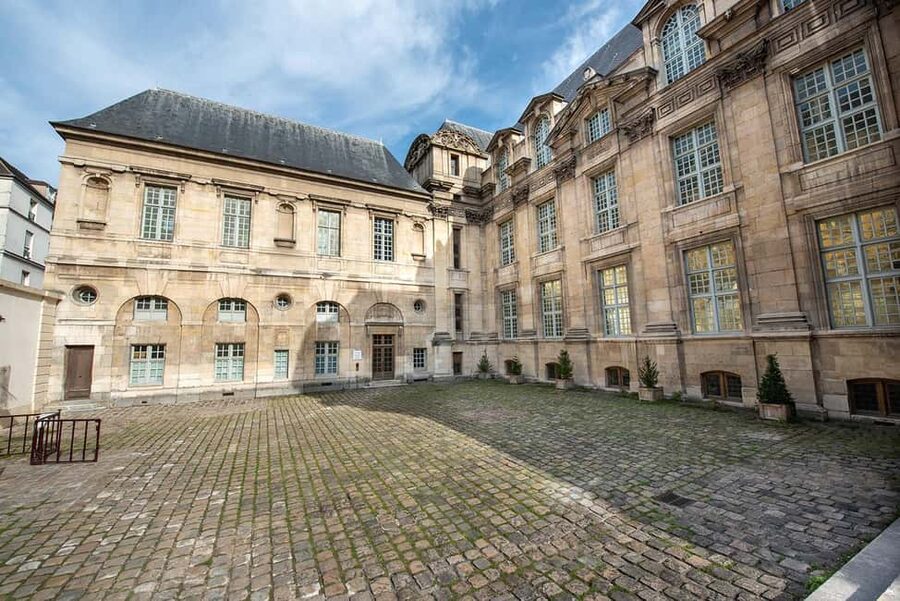
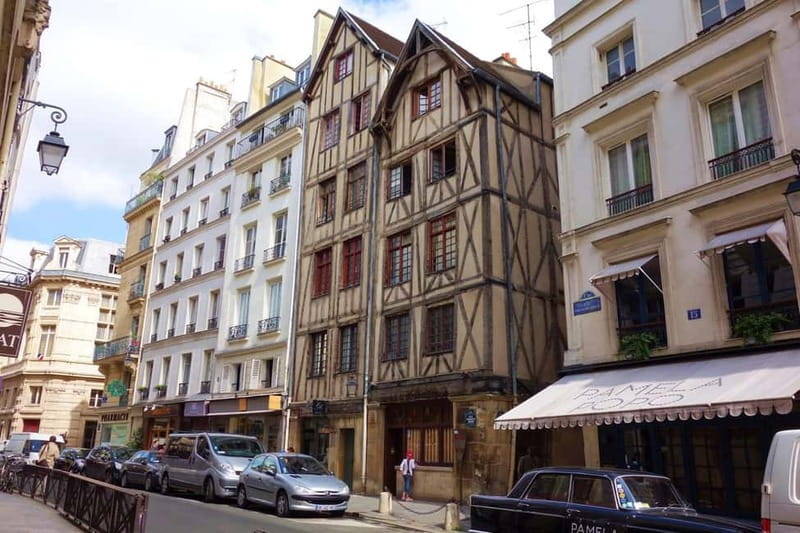
What I like about the concept here is simple. The tour doesn’t treat architecture as wallpaper. It uses the buildings as evidence for how Paris changed, from medieval origins through Renaissance grandeur and into an 18th-century aristocratic style.
Here’s the mental trick to use while you walk: don’t just ask what the building looks like. Ask what its design choice suggests about the people who lived or worked there.
You’ll also get the human side of the neighborhood. The tour description points to stories ranging from major historical moments, including the French Revolution, to how art, culture, and society evolved in these same streets. The best walking guides connect the era to the street level, so you can look at stone, scale, and entrances and understand what changed.
If you’re an architecture fan, you’ll appreciate how private mansions (hôtels particuliers) and institutional buildings stand out in a neighborhood that still feels close to its past. If you’re not, you’ll still get a clear way to notice differences without needing a textbook.
From early streets to Hôtel Carnavalet: noticing the neighborhood’s “time layers”
The middle part of your route is built around a few sightseeing blocks before you reach Hôtel Carnavalet. The timing suggests you’ll have breaks long enough for the guide to stop, explain, and point out details, then move on again.
This is where you should slow down your own pace. When the guide says, look at the façade, they’re usually training your eyes on patterns: proportions, window placement, the feel of the entrance, and the way the building’s character shifts as Paris rebuilt and repurposed structures over time.
Hôtel Carnavalet is the major named stop, and it matters because it anchors the tour in a place dedicated to preserving the neighborhood’s story. Even if you don’t go “deep” inside on this specific walk, it acts as a reminder that Le Marais is not just pretty architecture, it’s also a culture of memory and restoration.
A practical tip: wear shoes you trust. This section is likely the most “legs-first” part of the day, since you’ll be transitioning from one cluster of sights to the next while the guide keeps you oriented.
Place des Vosges, the 2nd oldest square and the architecture lesson it forces
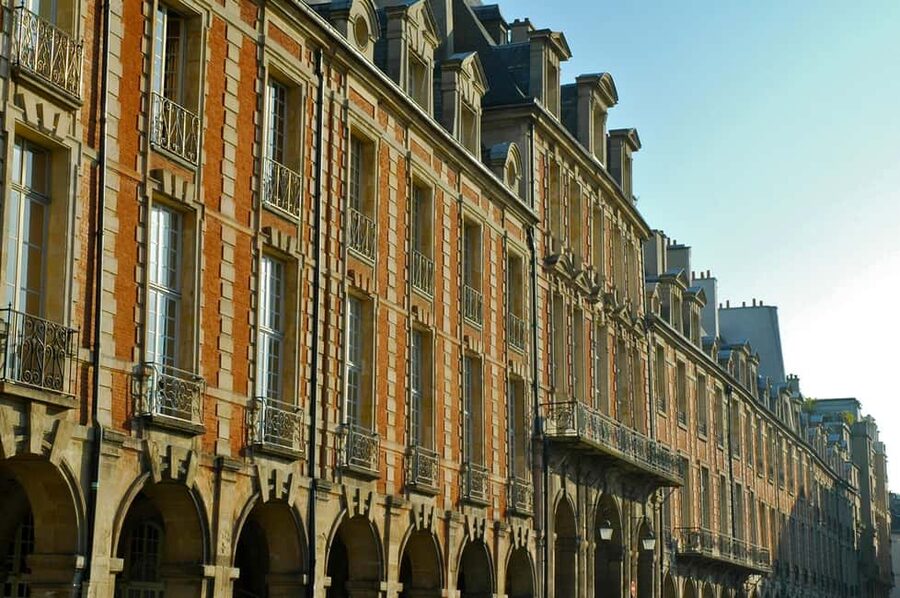
Place des Vosges is one of those stops that sounds familiar, but it’s worth it in person because it changes the way you understand the surrounding area. The tour highlights it as the 2nd oldest square in the city, and that age matters. It’s an early example of how Paris could plan space and prestige in one designed canvas.
What I love here is the geometry. The square is not just a view, it’s a scale model of a particular kind of order. As you stand in the space and look around, you can sense why powerful families wanted to live in a place that signaled status while also organizing daily life.
You’ll spend time there more than once, and that’s a quiet advantage. The first look helps you get your bearings. The later stop lets you compare what you noticed earlier, like façade rhythm and the relationship between street frontage and private life behind it.
One more reason Place des Vosges is a good centerpiece: it’s easy to take the story with you after the tour ends. You can walk the same perimeter on your own, repeat what the guide explained, and turn the square into a real anchor point for your future Paris exploring.
If this one is booked out, Paris has these too:
- Paris: 1-Hour Seine Cruise departing from the Eiffel Tower★ 4.4 · 77,472 reviews
- Disneyland® Paris 1-Day Ticket★ 4.6 · 49,412 reviews
- Paris: Versailles Palace and Gardens Full Access Ticket★ 4.6 · 41,579 reviews
- Paris: Arc de Triomphe Rooftop Tickets★ 4.6 · 34,264 reviews
Hôtel Lamoignon: when private mansions explain power
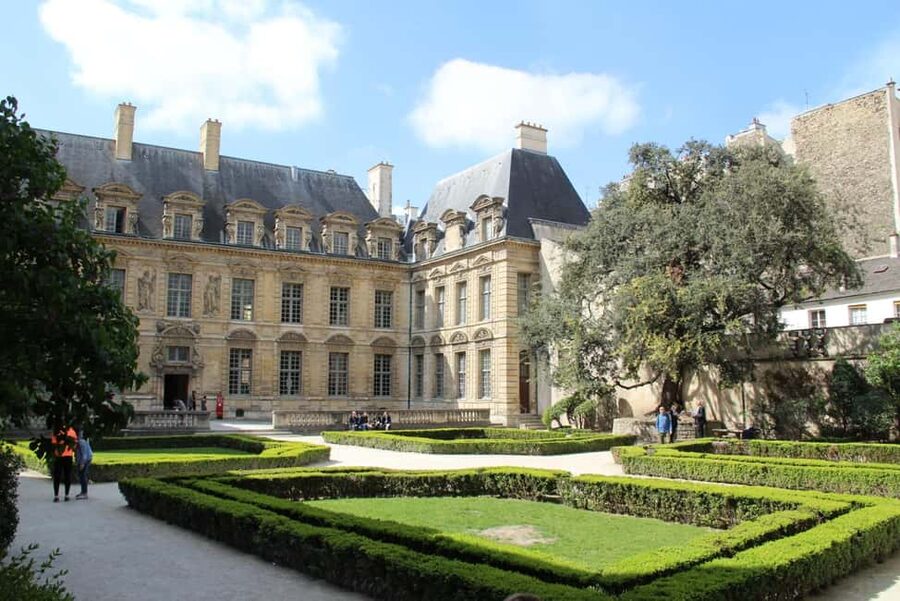
The Hôtel Lamoignon stop is listed as one of the architecture highlights, and that’s exactly the kind of site that makes Le Marais feel different from other parts of Paris. Hôtels particuliers were private mansions, and they were built to broadcast influence through design, position, and presence.
Even without stepping into a mansion, you can learn a lot just by studying the outward cues. Look for how the building presents itself to the street, how entrances are framed, and how the overall layout signals privacy. The tour’s focus on architecture styles helps connect these cues to what the neighborhood was doing politically and economically across centuries.
This stop also fits the tour’s bigger theme: Paris didn’t evolve in a straight line. It re-sorted itself. As power shifted, buildings were used differently, remodeled, and reinterpreted. A mansion like Hôtel Lamoignon becomes a snapshot of a time when elite life needed both separation and display.
If you like photographs, this is one of your best chances. But don’t treat it like a “click and move” moment. Take one full circle around where you’re allowed to stand, and use the guide’s explanations to translate what you see into a story.
Hôtel des archevêques de Sens: the medieval detail you can feel
One of the more intriguing highlights is the Hôtel des archevêques de Sens, described as a hidden medieval hôtel. The phrase hidden matters less than the time period here. Medieval architecture in Paris can feel quieter, more grounded, and more fortress-like than the later grand residences.
On a walk like this, you’re often forced to switch attention. You go from grand planned spaces like Place des Vosges to places that feel older and more layered. That shift is valuable. It teaches you that Le Marais doesn’t just have a single “look,” it has multiple eras living next to each other.
For me, the best way to appreciate a medieval stop is to keep your eyes on the basics: massing (how solid the building feels), openings (how large or tight they appear), and how the street view frames the building. Even if you only see a portion, the guide will help you connect that portion to the era the building represents.
If you’re traveling with kids, this is a strong moment too. Medieval sites naturally spark questions, and the guide’s humor and fun facts, praised by past guests, can turn that curiosity into a real learning moment.
Paroisse Saint-Paul Saint-Louis: where the neighborhood keeps living
You’ll also visit Paroisse Saint-Paul Saint-Louis. This is a good balance point in a tour like this because it reminds you that Le Marais is not only museums and monuments. It’s also a living neighborhood with churches that shape daily rhythms.
A church stop can be hit or miss on architecture walks, but in a timeline tour it has a purpose. Religious buildings often show continuity, and they can reflect how communities stayed organized as the city changed.
As you’re there, don’t only scan for beauty. Scan for role. Ask: why would this type of building make sense at this spot in the neighborhood? What does its presence say about who lived nearby and how people gathered?
Even if you’re not religious, you’ll likely appreciate the calm contrast after the more power-and-wealth focused mansion stops. It gives your eyes a chance to reset before you return toward Place des Vosges to finish.
Price and value at $41 for 150 minutes
At $41 per person for a 150-minute walking tour, you’re paying for three things: a live guide, focused stops, and time that compresses a lot of history into one route.
This is not a budget bargain, but it also isn’t a “tour theater” price. The emphasis is on specific named architecture sites, including Hôtel Carnavalet, Place des Vosges, Hôtel Lamoignon, and Hôtel des archevêques de Sens, plus the broader storyline that links medieval, Renaissance, and 18th-century eras.
The best value sign is that the tour isn’t trying to cover every single landmark in Le Marais. It chooses a sequence that matches its story theme: private mansions and civic identity, then a planned square, then a return to the everyday landmark scale.
One more value point: the guide also shares a recommended dining place. You might not need it, but when you’re walking in a historic district, it helps to have one local-leaning suggestion so you’re not guessing where to eat after the tour.
How the guide style matters, and what the ratings suggest
The experience provider is Louis Capion, and past guests gave him credit for detail and humor. One parent-style review specifically praised how kids stayed interested, which matters if you’re traveling with younger family members and want the pace to stay friendly.
At the same time, the overall rating is 3.8 based on four reviews, and one verified booking reported that the guide did not turn up. That’s the kind of issue you can’t ignore when deciding.
My practical take: assume the tour should run well, but build in common-sense insurance. If possible, choose a time earlier in your trip. Keep your schedule flexible enough that a missed start doesn’t ruin the rest of your day.
Who should book this Le Marais architecture walk
This is a strong match if you want architecture that you can read with your feet. You enjoy walking between key Paris spaces and you like explanations that connect buildings to power, politics, and daily life.
It also seems family-friendly, based on at least one mention of kids staying engaged with the guide’s humor. If that’s your priority, this tour’s stop choices can help keep attention, because you’re switching between squares, mansions, and a parish landmark.
You might consider skipping it if you want mostly indoor time or you have mobility limits. The tour is described as wheelchair accessible, but it is also listed as not suitable for wheelchair users. If you rely on a wheelchair, contact the provider to clarify what “accessible” means on this exact route.
Should you book it?
Yes, book this tour if you want a guided way to see Le Marais architecture as a timeline, with Place des Vosges as your anchor and hôtels particuliers as your main lesson. At $41 for 150 minutes with an English guide, it’s reasonable value for a focused walk that names key stops like Hôtel Lamoignon and Hôtel des archevêques de Sens.
I would only hesitate if you are very schedule-sensitive. One verified booking reported a guide no-show, so pick a departure time that won’t trap you later, and give yourself buffer time to get to the Saint-Paul metro exit calmly. If you do that, you should leave with a clearer sense of how Paris layers medieval beginnings, Renaissance ambition, and aristocratic design into the same streets you’re standing on.
FAQ
Where do I meet for the tour?
Meet outside the Saint-Paul (Line 1) metro station. There is only one exit. Arrive about 10 minutes early.
How long is the walking tour?
The duration is 150 minutes.
Is the tour in English?
Yes, the live tour guide speaks English.
What are the main places you will see?
Key highlights include Place des Vosges, Hôtel Lamoignon, Hôtel des archevêques de Sens, Hôtel Carnavalet, and Paroisse Saint-Paul Saint-Louis.
Where does the tour start and where does it end?
It starts in the Le Marais area around Rue Saint-Antoine and finishes at Place des Vosges.
Who is the experience provider?
The experience provider listed is Louis Capion.
Is the tour wheelchair accessible?
The information includes both wheelchair accessible and also says not suitable for wheelchair users. Please confirm with the provider before booking based on your needs.
Can I cancel and get a full refund?
Yes. Free cancellation is available up to 24 hours in advance for a full refund.
Can I reserve now and pay later?
Yes, you can reserve now and pay later.
Newest write-ups from Paris






Le Marais Walking Tours, compared.

Award-Winning Paris French Bakery Experience — Le Marais, 4th Arr
Read our review →
Paris Le Marais Food Tour With 10+ Tastings, Cheese, Wine & More
Read our review →
Paris Le Marais District Original Food and Wine Tasting Tour
Read our review →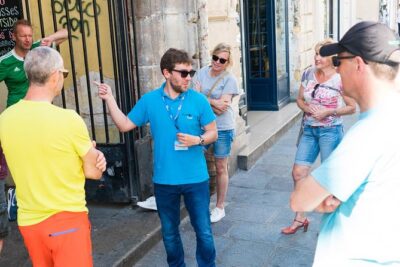
Paris Bike Tour Hidden Secrets in the Latin Quarter & Le Marais neighborhoods
Read our review →
Paris Culinary Tour: 11 Tastings & 2 Wines in Le Marais
Read our review →

Le Marais District Food Tour with 10+ Tastings & Wine
Read our review →
Browse the lists this tour appears in