
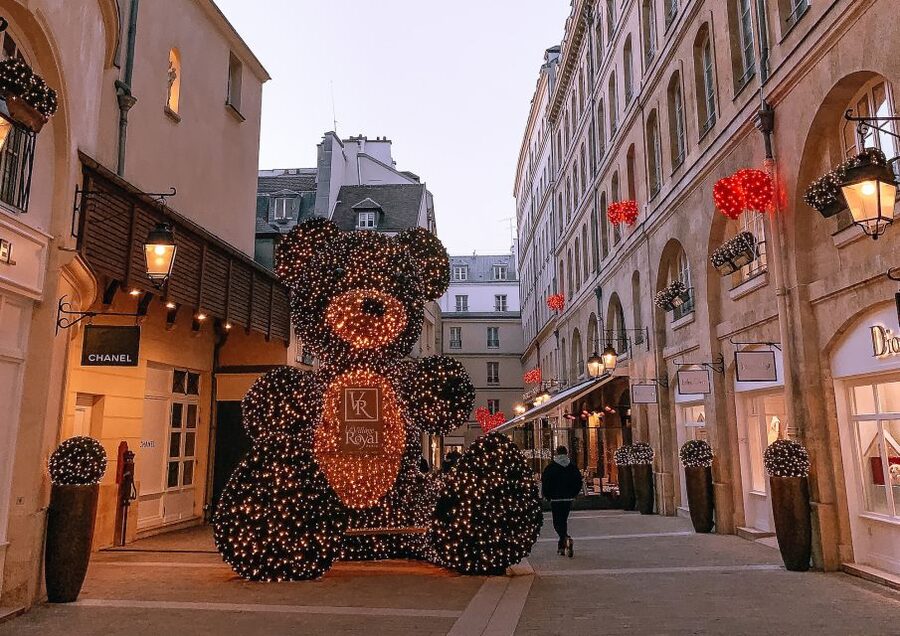
Reviewed · WALKING TOURS
Paris: French Fashion History Walking Tour
Luxury fashion has a street map. I liked how this Paris fashion history walking tour turns big brand names into cause-and-effect stories as you move from Rue Saint-Honoré to Place Vendôme and La Madeleine. My first big win was the guide, Hannah, who keeps everything clear and human, not stuffy.
I also loved the practical way the walk connects couture creators to what you see in stores now, especially around Hermès and the Birkin and Kelly bag mystique. One thing to consider: it is rain or shine, so you will be on your feet for about 90 minutes, and the sidewalks can be uneven.
In This Review
- Key things I’d watch for on this walk
- Getting oriented fast near La Cure Gourmande
- Rue Saint-Honoré, the first ateliers, and why this street matters
- Place Vendôme: where Chanel and Hemingway left their footprints
- Coco Chanel: liberation, brand rescue, and risky personal intersections
- Hermès: from saddler to exclusivity, plus Birkin and Kelly rules
- Dior after the war: post-war fashion and a superstitious mindset
- Yves Saint Laurent: the modern turn in haute couture
- Stepping into a few shops and reading luxury in real time
- Price and timing: is $294 good value for a private 90-minute walk?
- Should you book this Paris fashion history walking tour?
- FAQ
- FAQ
- How long is the Paris French Fashion History walking tour?
- Where do we meet for the tour?
- Is the tour wheelchair accessible?
- What should I bring?
- Does the tour run in bad weather?
- What languages are the live guides speaking?
- What is the cancellation policy for a full refund?
Key things I’d watch for on this walk
- Private group, up to 6 people, so questions stay personal and on topic
- Rue Saint-Honoré, the luxury stretch where early ateliers set the tone for fashion in Paris
- Place Vendôme and its famous hangouts, including the Chanel and Hemingway connection
- Coco Chanel’s turning points, including how her personal life intersected with the German army
- Hermès from saddler to bag maker, plus why their bags became so exclusive
- Post-war change through Dior and Saint Laurent, with a focus on modern haute couture
Other arrondissements taken at walking pace:
- Paris Top Sights Half Day Walking Tour with a Fun Guide
★ 5.0 · 2,893 reviews - Montmartre Hidden Gems and Scenic Highlights Walking Tour
★ 5.0 · 2,684 reviews - Montmartre Hill French Gourmet Food and Wine Tasting Walking Tour
★ 5.0 · 2,588 reviews - Paris: Montmartre Highlights Walking Tour with a Local Guide
★ 4.9 · 2,318 reviews
Getting oriented fast near La Cure Gourmande
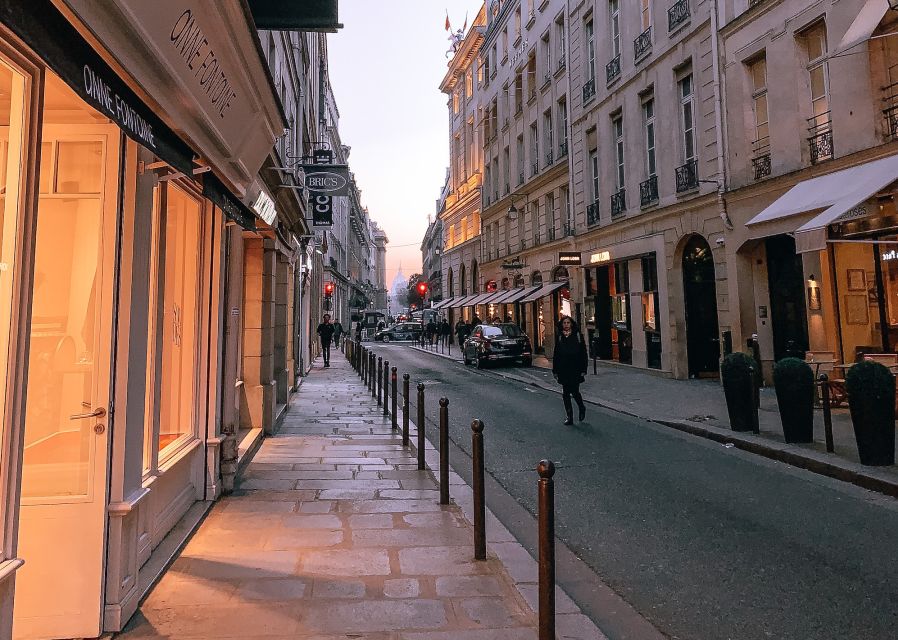
This tour starts in the luxury zone, near the La Cure Gourmande shop, so you are already in the right mood before you even begin. I suggest arriving about 5 minutes early so you can meet up, get your bearings, and avoid that last-minute Paris stress. It is a private group, so you will not be squeezed into a mass-market crowd.
The format is simple: a live English or French guide, a focused route on foot, and a steady set of stops where the story changes. Since it runs rain or shine, you will want comfortable shoes and an umbrella ready, even if the sky looks calm at departure.
Wheelchair accessibility is listed, which matters for how smoothly you can move between stops. Still, because this is a walking tour, you should plan for some sidewalk time and small route adjustments based on weather and street conditions.
Rue Saint-Honoré, the first ateliers, and why this street matters
Rue Saint-Honoré is the backbone of the experience. The guide walks you through what made this area such a magnet for luxury shops, and you get the bigger idea that brands did not become iconic by accident. Here, you learn about the first ateliers that opened up, and how that early artisan and commercial ecosystem shaped what haute couture would become.
You will also hear about Louis Vuitton and travel, which helps you see how fashion brands connected to movement, status, and the idea of being seen. It’s not just about clothing here. It’s about how Paris marketed an entire lifestyle, then kept refining it across the 19th and 20th centuries.
What I like for you: the guide keeps steering the story back to the modern day. When you understand that these houses grew from real locations and real business problems, today’s luxury world makes more sense, not less.
Potential drawback: the “luxury district” setting can tempt you to look straight at the storefronts and forget to look at the street-level context the guide is pointing out. If you want the best value, slow down and listen for the why behind each brand name you see.
Place Vendôme: where Chanel and Hemingway left their footprints
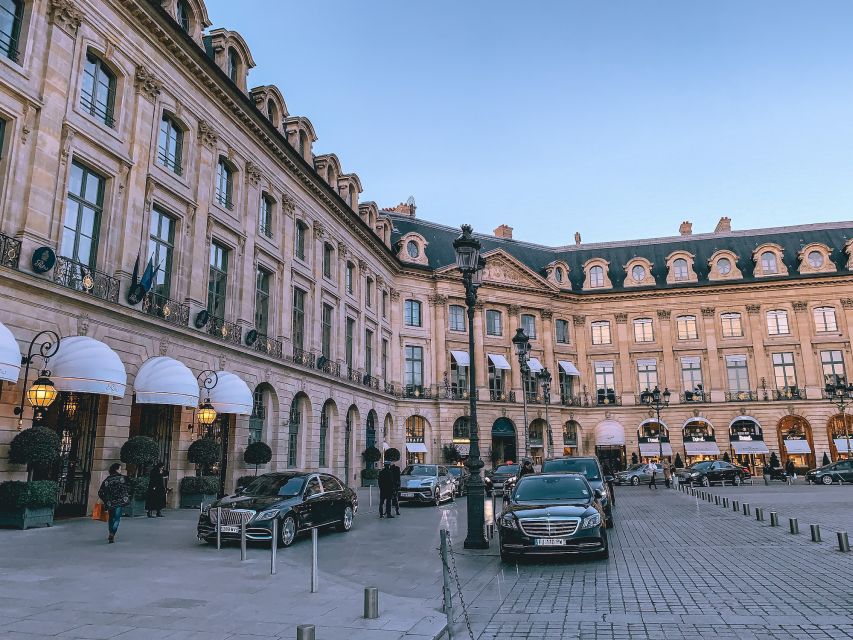
Place Vendôme is one of those Paris squares that feels like a set for a film. In this tour, it is not just a pretty stop. It is a story pause that connects fashion to culture and real life in the area.
You will learn about Chanel spending time here and the Hemingway connection too. That matters because fashion history in Paris is not isolated in ateliers. It lives alongside writers, artists, and the social scene that helped shape taste and demand.
This is also where the tour starts reinforcing a theme you will keep hearing: luxury is built through visibility, relationships, and timing. In about 90 minutes, you cannot cover every chapter of fashion, but you can get a sense of how social life fed brand life.
If you are traveling with someone who thinks fashion is only clothes, this stop often flips that view. Seeing how the brand world overlaps with literature and nightlife gives you an easy mental map.
Coco Chanel: liberation, brand rescue, and risky personal intersections
Coco Chanel is a huge part of the walk, and it is treated as more than a fashion biography. The guide lays out the revolution she brought to fashion and the way her work is tied to women’s changing freedom and independence. You will also hear how Chanel’s lovers changed her life and, importantly, saved her brand.
That last point is where the story gets sharper. The walk includes her connection with the German army, and you should expect context and explanation rather than a simple good or bad verdict. Use this as a chance to understand how complicated power and survival could be during that era, even for the people who later became symbols of style.
What you will likely take away is that Chanel was not only about aesthetics. She was about strategy. The tour shows how her choices, connections, and timing helped her keep a foothold when the fashion world was shifting around her.
For you, this section is worth it if you want fashion history that connects art to real life. If you only want sketchy glamour, you may find the political and personal notes heavier than expected. But if you like stories with edges, this is one of the tour’s standout strengths.
A handful more Paris options to weigh up
- Paris: Dark History and Ghostly Guided Walking Tour★ 4.7 · 1,000 reviews
- Le Marais/Paris – The Historic, Trendy, Jewish, LGBT district★ 5.0 · 341 reviews
- Paris City of Fashion History Private Guided Walking Tour★ 5.0 · 221 reviews
- History of Paris City Center w/ Notre Dame Semi-Private 12ppl Max★ 5.0 · 194 reviews
Hermès: from saddler to exclusivity, plus Birkin and Kelly rules
Hermès is covered in a way that explains the brand’s mystique without turning it into pure mythology. You will walk down the fashion streets and see the first Hermès shop, which gives the history a physical anchor. That small detail changes the feel of the story, because you are not just hearing a timeline, you are standing where the business began.
The guide also covers how Hermès developed from a saddler to an iconic bag creator. That shift is important because it shows how a brand can move from a functional craft identity to a high-status symbol while still claiming authenticity.
Then comes the question everyone wants answered: why is Hermès so exclusive, and how do they sell Birkin and Kelly bags? The tour focuses on the system behind the exclusivity, so you can understand how scarcity, brand image, and customer demand have shaped the modern luxury mindset.
I like this segment because it is not only about the bags as objects. It’s about the business story of making something feel rare and therefore more desirable.
One consideration: if you came purely for fashion design history, you may want to be ready for a heavier business angle. The tradeoff is you get a more realistic view of how luxury houses stay exclusive, not just how they create.
Dior after the war: post-war fashion and a superstitious mindset
Christian Dior shows up with a very specific narrative: he changed post-war fashion, and the guide explains his personal temperament as well. You will hear about him being superstitious and following his destiny, plus how he created his brand after a few failures.
That structure is smart for a walking tour. It gives you an arc you can remember: struggle, belief, and then a new direction that catches the moment after the war.
For you, Dior becomes a bridge between eras. You are not stuck in early haute couture only. You are watching how the industry adapts when society changes, finances tighten, and people start wanting different kinds of glamour.
If you like stories that include personality, this is the section where Dior feels most human. You might not agree with the cause and effect, but you will understand the logic the guide uses, which makes it easier to remember the names and the turning points.
Yves Saint Laurent: the modern turn in haute couture
The tour ends with one more big shift: the iconic Yves Saint Laurent, described as a founding figure for modernity in fashion. This is the part where the walk stops feeling like a history lesson and starts feeling like a map to the future.
You will see the industry changing across the 19th and 20th centuries, and Saint Laurent becomes a symbol for the move toward modern style thinking. The guide uses his role to explain how fashion kept reinventing itself, not just repeating older ideas.
What makes this valuable: it helps you connect the past to the present without pretending fashion is one straight line. Instead, you get the sense that each generation reacts to the one before it, then finds its own signature voice.
Stepping into a few shops and reading luxury in real time
Part of the experience includes entering a few shops. The exact stores are not the point as much as what you learn while you are inside. You get a better understanding of how luxury brands handle their legacy in space and presentation, and the guide ties it back to what you just walked past on the street.
This is where you can test your new knowledge. If a brand’s exclusivity is part of the story, you can look for how the store communicates that. If a house built itself around innovation, you can look for how that innovation is framed in materials, service style, and brand cues.
I also liked that the guide could answer questions instead of brushing them off. In a tight 90 minutes, having good Q and A keeps you engaged, especially if you have a fashion-nerd moment where you want to know how something became a status symbol.
If you want a more complete day, ask for practical food suggestions at the end. Restaurant tips were included in the experience, and they can save you time later.
Price and timing: is $294 good value for a private 90-minute walk?
The price is $294 per group, up to 6 people, for 90 minutes. That makes the value math pretty friendly if you can fill the spots. If you have the full group, you are basically paying about $49 per person, which is strong for a private guide in one of the most brand-dense areas of Paris.
Even if you do not fill all spots, you are still paying for a private format, which matters on a tour like this. When the content is about Chanel, Hermès, Dior, and Saint Laurent, you want a guide who can flex to your interests. Private time also helps if someone in your group is more curious about the political context, while another person cares about design and store culture.
Timing is another plus. Ninety minutes is long enough to cover meaningful themes and key locations, but short enough that it does not turn into a slog. It also fits well into a bigger Paris plan where you might do museums later.
Main practical note: you are walking, rain or shine. Plan your day so you still have energy after. Bring an umbrella and let your feet lead the pace.
Should you book this Paris fashion history walking tour?
Book it if you want Paris fashion history that feels practical. This is ideal if you love brands but also want the “why,” the people, and the turning points that made luxury work. It is especially good for couples, parent and adult child pairs, and small groups who want a private guide instead of a crowded script.
Skip it only if you want a purely design-focused museum style experience. This walk blends fashion with social life, business strategy, and real-world context around where brands took root. If that mix sounds like your kind of story, you will probably have a great time.
FAQ
FAQ
How long is the Paris French Fashion History walking tour?
The tour lasts 90 minutes.
Where do we meet for the tour?
You meet near the La Cure Gourmande shop. Arrive about 5 minutes before the activity starts.
Is the tour wheelchair accessible?
Yes, the tour is listed as wheelchair accessible.
What should I bring?
Bring comfortable shoes and an umbrella.
Does the tour run in bad weather?
Yes, it runs rain or shine.
What languages are the live guides speaking?
The live tour guide offers English and French.
What is the cancellation policy for a full refund?
You can cancel up to 24 hours in advance for a full refund.
Newest write-ups from Paris



Walking Tours, compared.
Paris Top Sights Half Day Walking Tour with a Fun Guide
Read our review →
Montmartre Hidden Gems and Scenic Highlights Walking Tour
Read our review →
Montmartre Hill French Gourmet Food and Wine Tasting Walking Tour
Read our review →
Montmartre Highlights Walking Tour with a Local Guide
Read our review →
Paris Île de la Cité and Notre-Dame Walking Tour With Crypt
Read our review →
Montmartre Cheese, Wine & Pastry Guided Walking Tour
Read our review →
Paris in a Day: Louvre or Orsay, Eiffel Tower, City Walk & Cruise
Read our review →
Paris City Center Free Walking Tour (Tip-Based)
Read our review →Browse the lists this tour appears in