
Reviewed · WALKING TOURS
Paris – Historic City Center Walking Tour
Paris begins on a small island. This walking tour strings together the heart of the city with one strong theme: the big stories behind the landmarks, from ancient Île de la Cité roots to Notre-Dame’s modern chapter. I like the story-driven route and how the guide includes practical food and activity recommendations you can use right away, not just dates and names.
One thing to keep in mind is what the tour does not do: it is not a museum ticket program. You get Louvre views and key context, but you do not enter the museum, and the stops are mostly outdoor viewing and walking.
In This Review
- Key highlights worth your time
- Walking Paris from Île de la Cité to the Tuileries
- Île de la Cité, Notre-Dame, and the through-line of Paris
- Fontaine Saint-Michel and Pont Saint-Michel, plus the WW2 detail
- Place Dauphine and Henri IV: a calmer pocket for lunch
- Pont Neuf secrets and the Paris of small legends
- Louvre views, Arc de Triomphe du Carrousel, and a Tuileries walk
- Eiffel Tower views and the 1889 Gustave Eiffel story
- Price and value for a 2.5-hour private guided walk
- What it’s like with real guides, and why English clarity matters
- Logistics that keep the day from getting messy
- Should you book this Paris Île de la Cité to Eiffel walking tour?
- FAQ
- How long is the Paris Historic City Center Walking Tour?
- Where do I meet, and where does the tour end?
- Does the tour include pick-up or drop-off?
- Is the tour offered in English?
- Is this a private tour?
- Does the tour include entering the Louvre Museum?
- Are there admission fees included for the stops?
- Can I get a full refund if I cancel?
- Are service animals allowed?
Key highlights worth your time
- Île de la Cité first, so you understand why Paris is shaped around this island
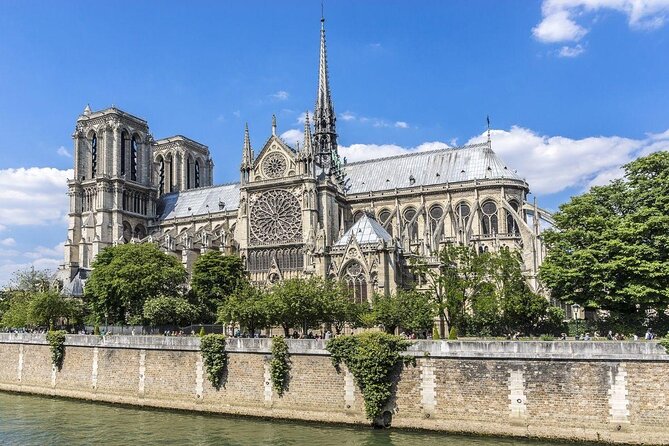
- Notre-Dame storytelling from its start in 1163 through the 2019 fire, with French Revolution and Napoleon context
- Pont Saint-Michel WW2 details, including bullet hole evidence and why Paris was not destroyed
- Henri IV stops in plain sight, from Place Dauphine to an equestrian statue and river views
- Pont Neuf secrets, plus a fun look at tooth pullers of Paris
- Tuileries to Eiffel Tower views, with the Gustave Eiffel construction story in your headphones
Other arrondissements taken at walking pace:
- Paris Top Sights Half Day Walking Tour with a Fun Guide
★ 5.0 · 2,893 reviews - Montmartre Hidden Gems and Scenic Highlights Walking Tour
★ 5.0 · 2,684 reviews - Montmartre Hill French Gourmet Food and Wine Tasting Walking Tour
★ 5.0 · 2,588 reviews - Paris: Montmartre Highlights Walking Tour with a Local Guide
★ 4.9 · 2,318 reviews
Walking Paris from Île de la Cité to the Tuileries
This tour hits one of the best ways to understand central Paris: start at the place that was already important long before the city looked like today. You begin on Île de la Cité in the 4th arrondissement area (Cité75004), and the walk continues through classic sights down toward the Tuileries area, ending close to major transit (Tuileries Garden75001).
The timing is about 2 hours 30 minutes. That is long enough to learn a lot, but short enough that you are not trapped in a full-day slog. Expect a steady walking rhythm and lots of quick orientation moments, like how the Seine bends the city and where the landmarks “talk” to each other across bridges.
Price-wise, it costs $156.01 per person. For a guided, private walking format with a certified expert guide, I see the value in the structure: you are paying for interpretation, not entry tickets. Also, the itinerary lists free admission tickets for the stops, which helps keep your costs predictable.
Île de la Cité, Notre-Dame, and the through-line of Paris
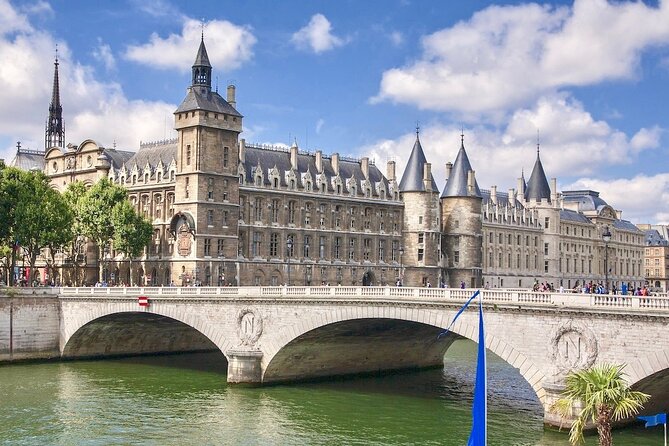
Your tour kicks off on Île de la Cité, the island where the Parisii tribe set down temples more than 2,000 years ago, before the Romans later took control. It is a smart opener because it answers a question you might not even think to ask. Why does Paris feel like it circles this place? The guide frames the island as the real center and heart, not just another photo stop.
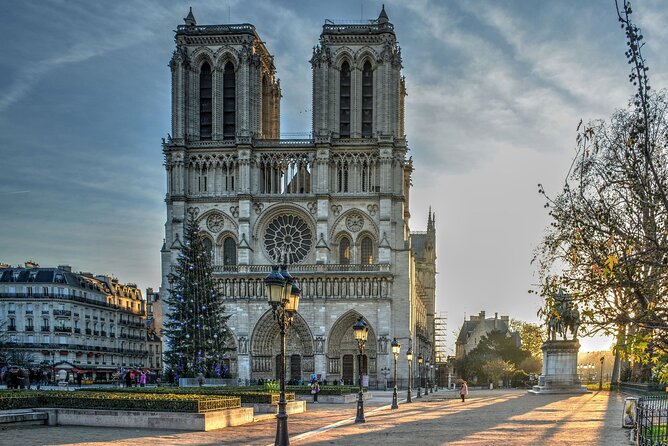
Next comes Cathedrale Notre-Dame de Paris. You do not just hear the famous parts of the story. You get the build-up: construction beginning in 1163, then major political moments tied to the cathedral, including the French Revolution and Napoleon’s coronation. Then the conversation reaches the 2019 fire and what it changed in how the world thinks about the building.
This stop is where the tour is most useful if you have never spent serious time with Notre-Dame. The guide’s job is to help the cathedral feel like a living timeline, not a single image on a postcard. I also like that the tour keeps it human. You get context for why people cared then, and why they still care now.
A small consideration: if you came expecting a long indoor cathedral visit, the tour is unlikely to satisfy that. The plan is designed as a walking history route, with outdoor viewing and explanation doing most of the heavy lifting.
Fontaine Saint-Michel and Pont Saint-Michel, plus the WW2 detail
After Notre-Dame, you transition toward the Seine and a pair of stops that feel like Paris doing “memory work.” You visit Fontaine Saint-Michel, a fountain built during the grand reconstruction of Paris. It helps if you want your city history to include more than medieval towers. Reconstruction matters too, and fountains are one of the easiest ways to spot how a city rebuilds its identity.
Then you cross to Pont Saint-Michel. Here you learn about bullet holes from WW2. That is the kind of detail that makes the walk click. You are not just looking at architecture. You are reading the city like a document, with scars that never fully fade.
The guide also explains why Paris was not destroyed during the war. That part is important because it gives you a reason, not just a fact. It helps you connect the surviving landmarks to the choices made in real time, which makes the bridges feel weightier than their postcard charm.
Both of these stops are relatively short. That can be a plus if you like momentum, but it means you should be ready for quick snapshots rather than long lingering.
Place Dauphine and Henri IV: a calmer pocket for lunch
One of the nicest moments in the itinerary is the time spent around Place Dauphine. You actually walk inside the square, and you get a feel for why it is popular. The square is one of the early projects of Henri IV, and the area is known for restaurants, so it is naturally a good spot for a slower break.
This is not a “sit on a bench for an hour” kind of stop, but it can work well for planning lunch. If you want to avoid eating randomly, the guide’s restaurant recommendations can save you time. One of the memorable guide moments here was a lunch recommendation and a detour to a small bookstore in the general area, which is the kind of extra local flavor you can’t easily replicate on your own.
Next you see the statue équestre d’Henri IV. From there, you also get views over the Seine. I like that the guide connects the visual to the story, so Henri IV is more than a name on a street. It is also a reminder that his reign was short, but it still left visible marks.
If your feet are starting to feel it, this is a good section to treat as a reset. The route keeps moving, but you get small pauses built into the flow.
A handful more Paris options to weigh up
- Paris: Dark History and Ghostly Guided Walking Tour★ 4.7 · 1,000 reviews
- Le Marais/Paris – The Historic, Trendy, Jewish, LGBT district★ 5.0 · 341 reviews
- Paris City of Fashion History Private Guided Walking Tour★ 5.0 · 221 reviews
- History of Paris City Center w/ Notre Dame Semi-Private 12ppl Max★ 5.0 · 194 reviews
Pont Neuf secrets and the Paris of small legends
Then you hit one of the most iconic bridge names: Pont Neuf. It is the oldest bridge in Paris, and the tour uses that age as a gateway to “how Paris became Paris.” You hear stories tied to Henry IV, including that he finished the bridge in 1607.
A fun angle here is the talk about tooth pullers of Paris. That might sound odd at first, but it works because it turns the street level into something you can picture. You start thinking about what everyday life looked like around these bridges, not just who commissioned what.
The practical value of this segment is that you learn how to look at the city. Bridges become vantage points, passageways, and history pages at the same time. Even if you already know the “big” landmarks, the small legends make the walk feel more grounded.
One drawback to flag: the bridge stories can be fast-paced. If you are the type who loves taking pictures and listening at the same time, give yourself grace. You will have moments to stop, but this is not a quiet, museum-style experience.
Louvre views, Arc de Triomphe du Carrousel, and a Tuileries walk
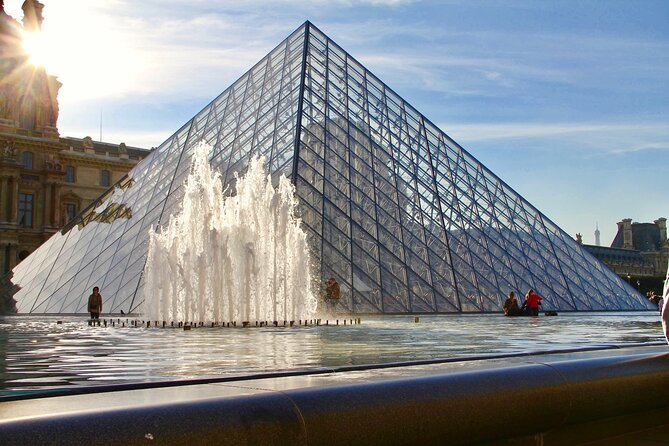
A highlight for many people is the Louvre Museum stop, even though you do not enter. The plan is to use the setting for context: the guide talks about Leonardo da Vinci and why the Mona Lisa became such a famous image. You also hear about Francis I, the king who built the foundations of the Louvre as a fortress and a palace.
You will also see the glass pyramid area from the outside. That matters because it connects the old fortress idea to the modern museum identity in one glance. If you want an easier first day, this approach makes sense. You get the big names and themes without the pressure of museum navigation.
A quick note: if you are determined to spend hours inside the Louvre, you will still need a separate ticket and time slot. This tour is built for orientation and storytelling, not full museum time.
After that, you reach Arc de Triomphe du Carrousel, a smaller but meaningful Napoleonic monument. The tour frames it as reflecting Napoleon’s rise and ambition as master of Europe. It is a short stop, but it helps balance the route. You get medieval roots, then you get revolution-era consequences, then you get Napoleonic power, all within one walk.
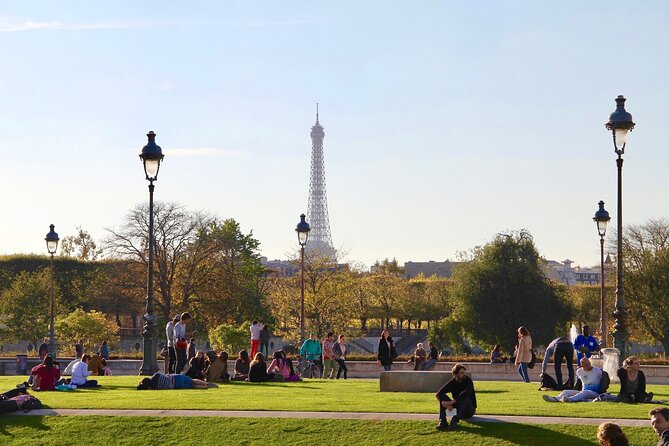
Then the itinerary shifts to the Tuileries Garden area. You walk through a space filled with statues, sculptures, and fountains. The guide also ties it back to the idea of Paris garden design, including the fact that it was planned by a designer connected to the same type of garden thinking as Versailles, aimed at creating a sense of mystique and grandeur.
This is one of those segments that can feel like a breath of air after the dense building clusters near the river.
Eiffel Tower views and the 1889 Gustave Eiffel story
The final “wow” factor is the Eiffel Tower view. You are watching it from the Tuileries gardens, which is a great way to avoid the crush feeling you can get at the base in peak times. The guide provides how-to-look context, including the idea of how Gustave Eiffel pulled off the construction in 1889.
What makes this section land is the contrast. Earlier you were learning about survival, reconstruction, and political symbolism. Here you get the engineering story behind the structure that became a global symbol. The walk ends with the tower not just as an image, but as a result of design, materials, and bold ambition.
The tour concludes close to public transportation, so you can keep moving easily after the final viewpoint.
Price and value for a 2.5-hour private guided walk
At $156.01 per person, this tour is priced for what you actually receive: interpretation from a certified expert guide, a structured route through major sites, and a private walking format where only your group participates.
It is also a smart value if you hate wasting time guessing. You do not have to figure out what to prioritize between Notre-Dame, bridges, Henri IV landmarks, the Louvre area, and the Tuileries. The guide already threads it into a timeline, so you spend your energy looking and listening, not planning.
Another value point is that the stops list free admission tickets, and the plan avoids high-friction add-ons. You are not being pushed into buying museum tickets mid-walk. The Louvre stop being outside only also makes the timeline more manageable.
If you are price sensitive, this tour will not be the cheapest way to do a Paris basics loop. But if you want the city explained clearly in plain English, and you like the idea of a guide who can also point you toward where to eat and what to do next, the price starts to feel reasonable.
What it’s like with real guides, and why English clarity matters
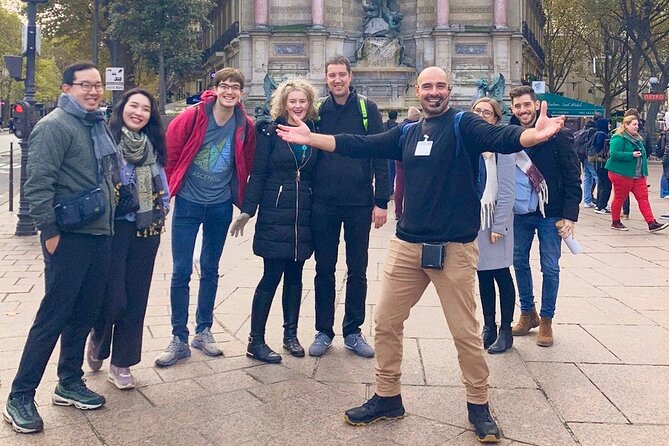
The quality signal here is the guide performance. I’m paying attention to names like Michael and Daniel, plus Alberto, because they represent the range of what makes the storytelling work. Michael’s energy supports the pace of the walk, Daniel adds extra local touches like pointing you toward a smaller bookstore, and Alberto’s English was described as easy to understand and clearly delivered.
That English clarity point is bigger than it sounds. In Paris, you can easily lose meaning if a guide talks too fast or assumes you already know the context. The guide in this format is built to connect history to what you see in front of you.
Also, because the tour is private, you are not stuck with a mixed group that forces the guide to slow down or rush for someone else’s needs. You can usually ask questions and get answers that stick.
Logistics that keep the day from getting messy
This tour includes a guide and is a private walking tour, but there is no pick-up or drop-off. You meet at Cité75004 Paris and finish near Tuileries Garden75001 Paris. The end point is close to public transit, which is a relief because your last viewpoint is not far from buses and metro options.
You’ll also get a mobile ticket, and confirmation happens at the time of booking. Service animals are allowed, and the experience is described as something most people can participate in.
One practical tip: because the tour covers many stops in a short window, wear walking shoes you trust. Paris sidewalks are great until your day turns into an accidental endurance test.
Finally, if you want to lock it in, consider booking early. It is often booked about 55 days in advance, so waiting too long can narrow your choices.
Should you book this Paris Île de la Cité to Eiffel walking tour?
Book it if you want a guided “spine” for central Paris, starting where Paris actually began and ending with iconic Eiffel Tower views from the Tuileries. The tour is especially worth it for first-time Paris visits because it explains why the city’s major landmarks connect, and it gives you practical next steps through the guide’s restaurant and activity ideas.
Skip it if your priority is museum time or long indoor visits. The Louvre is views only, and the Notre-Dame experience here is built around story and orientation rather than a long interior visit.
If you’re deciding right now, my quick rule is simple. If you want a clear, English-first history narrative you can walk with for 2.5 hours, this is a strong fit. If you prefer self-guided wandering with no guide input, you might feel like you paid for guidance you did not need.
FAQ
How long is the Paris Historic City Center Walking Tour?
The tour lasts about 2 hours 30 minutes.
Where do I meet, and where does the tour end?
The tour starts at Cité75004 Paris, France and ends at Tuileries Garden75001 Paris, France, close to public transportation.
Does the tour include pick-up or drop-off?
No. The tour does not include pick-up or drop-off of guests.
Is the tour offered in English?
Yes, the tour is offered in English.
Is this a private tour?
Yes. It is a private tour/activity where only your group participates.
Does the tour include entering the Louvre Museum?
No. The itinerary includes learning about the Louvre and related sights, but it states that you do not enter the museum on this tour.
Are there admission fees included for the stops?
The stops list free admission tickets, and the tour itself does not indicate paid museum entry as part of the experience.
Can I get a full refund if I cancel?
Yes. You can cancel up to 24 hours in advance for a full refund.
Are service animals allowed?
Yes, service animals are allowed.
Newest write-ups from Paris




Walking Tours, compared.
Paris Top Sights Half Day Walking Tour with a Fun Guide
Read our review →
Montmartre Hidden Gems and Scenic Highlights Walking Tour
Read our review →
Montmartre Hill French Gourmet Food and Wine Tasting Walking Tour
Read our review →
Montmartre Highlights Walking Tour with a Local Guide
Read our review →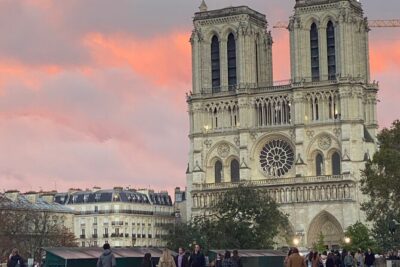
Paris Île de la Cité and Notre-Dame Walking Tour With Crypt
Read our review →
Montmartre Cheese, Wine & Pastry Guided Walking Tour
Read our review →
Paris in a Day: Louvre or Orsay, Eiffel Tower, City Walk & Cruise
Read our review →
Paris City Center Free Walking Tour (Tip-Based)
Read our review →Browse the lists this tour appears in