
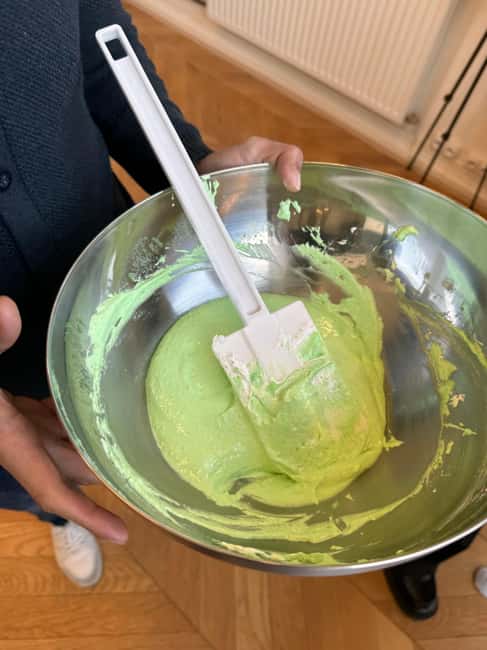
Reviewed · PASTRY AND MACARON CLASSES
Paris: Macaron Baking Class in Central Paris
Macarons are part food, part science. This hands-on baking class in central Paris turns that tricky chemistry into steps you can actually master, often with Chef Leo guiding an English-speaking session.
I like two things right away: the small group setup (up to 10) and the fact that you get a clear process, not just a demo. I also like that you start with the ingredients and the story behind macarons, then you end with a real tasting plus a take-home recipe.
One consideration: this class is not suitable for vegans or nut allergies. If either applies, you will need to skip this one and look for an alternative.
In This Review
- Key Highlights You’ll Actually Feel
- Your Central Paris Macaron Workshop, Without the Tourist Fog
- What Happens Before the Mixing Bowls: The Macaron Story and Ingredients
- The Hands-On Core: Shells, Piping, and the Technique That Actually Changes Results
- Fillings, Flavor Choices, and Getting the Balance Right
- Baking, Waiting, and the Real Part of Learning: Troubleshooting
- Tasting What You Made: The Moment It Clicks
- What You Take Home: Recipe Plus Confidence (Not Just Cookies)
- Price and Value for 150 Minutes in Paris
- Who Should Book This Macaron Class in Central Paris
- Final Verdict: Should You Book This Paris Macaron Baking Class?
- FAQ
- Where do I meet for the Paris macaron baking class?
- How long is the class?
- How much does it cost?
- What is included in the experience?
- Is the instructor English-speaking and is the group small?
- Is this class suitable for children, vegans, or people with nut allergies?
- What should I bring?
- Can I cancel, and is there a pay-later option?
Key Highlights You’ll Actually Feel
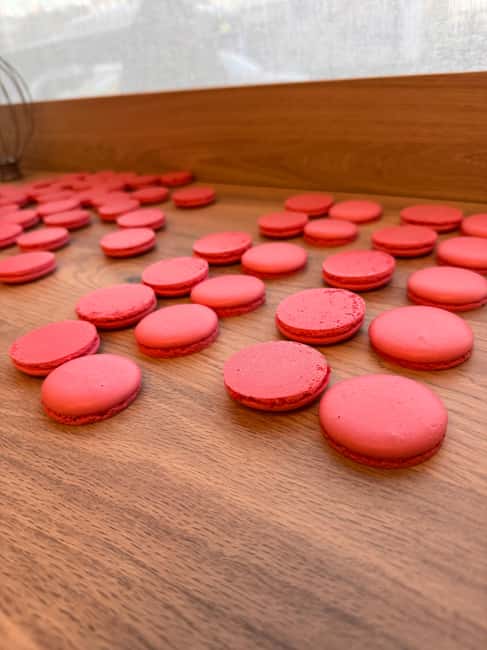
- Small group, real attention, limited to 10 participants so questions do not get lost in the mix
- English instruction with hands-on work, not stand-and-watch baking
- Macaron science made practical, including technique for shells and fillings
- A finish that feels earned, tasting what you made and leaving with a recipe
- Tasty payoff to practice later, with many people leaving with enough macarons for more than one snack session
Other kitchens for macarons and pastry:
- Paris: Montmartre Cheese, Wine & Pastry Guided Walking Tour
★ 4.8 · 2,255 reviews - Paris: Macaron Class at Galeries Lafayette
★ 4.2 · 1,196 reviews - Award-Winning Paris French Bakery Experience — Le Marais, 4th Arr
★ 4.5 · 1,186 reviews - Private Montmartre Food Tour with Wine, Cheese & Pastries
★ 5.0 · 1,027 reviews
Your Central Paris Macaron Workshop, Without the Tourist Fog
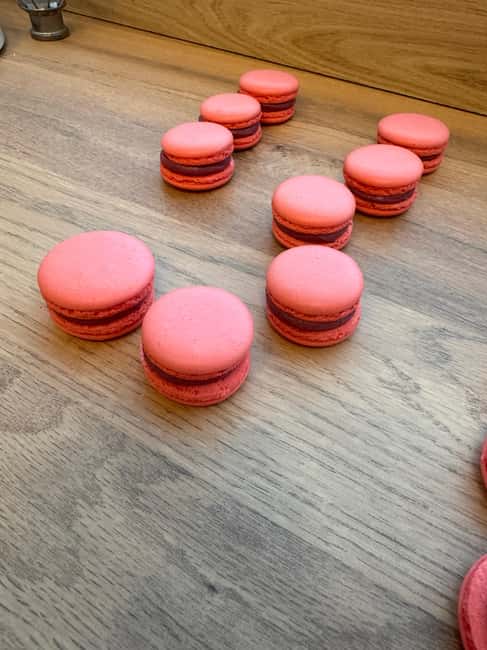
The first thing you notice is the vibe: this is a studio-style kitchen experience, built for doing, not just looking. You meet your instructor and your small group, then get settled before you even touch a mixing bowl.
The meeting point is straightforward: look for a grey-coloured storefront on the main road. In this part of Paris, you can usually plan your day so you arrive without rushing across half the city, and multiple class participants note it is easy to reach by metro.
Why this matters is simple. Macarons are timing-sensitive. If your class day starts with chaos, your batter decisions start with stress. A central location and a clear meeting point help you show up calm, which is half the battle with delicate pastries.
Also, you are not stuck in a giant room full of strangers. The limit of up to 10 people keeps the class more conversational. That is a big deal when you are learning something finicky. When your instructor can see what you are doing, you can fix small issues early and avoid the sad, “why did that go flat?” moment.
What Happens Before the Mixing Bowls: The Macaron Story and Ingredients
Before hands-on baking begins, the class starts with an intro to macaron history and artistry. You get the origins and cultural significance, but the best part is what comes next: the ingredient overview.
This is not trivia for trivia’s sake. Macarons rely on the behavior of powders, sugar, and egg proteins. When you understand what each ingredient is supposed to do, the later steps make more sense, even if you have never made them before.
You also learn which ingredient roles matter most for the final texture. For example, the shells depend on both structure and smoothness, which is why the mixing stage and piping stage are treated like a technique lesson, not just a recipe-following exercise.
If you are the kind of traveler who likes to understand what you eat, this pre-work gives you a helpful framework. You are basically being taught how to think like a pastry cook.
The Hands-On Core: Shells, Piping, and the Technique That Actually Changes Results
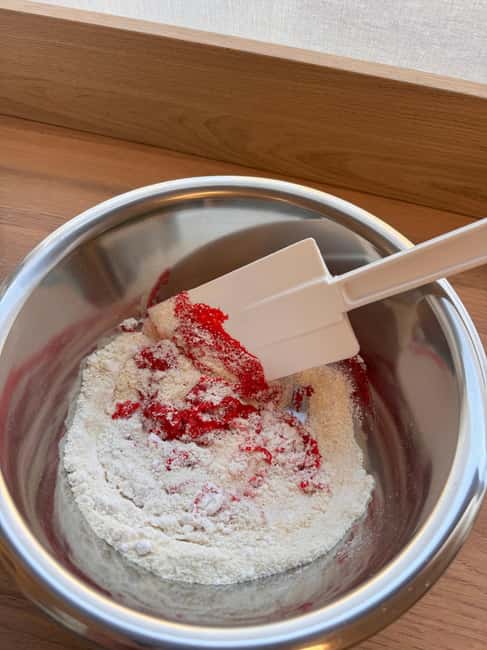
This is the heart of the experience. You will learn how to create macaron shells and work on both technique and consistency. Expect to mix batter, pipe shapes, and follow the instructor’s guidance closely so your shells bake into the classic macaron look.
What you are aiming for is more than pretty cookies. The goal is the right bite and texture balance. In multiple class experiences, instructors stress that macarons are a science you can learn, and that learning the “why” helps you troubleshoot when something goes off.
Here’s what you should pay attention to as you work:
- Mixing batter correctly, because too much or too little mixing affects spread and surface
- Piping with steady control, because uniform rounds help them bake evenly
- Following pacing and cues, because macaron-making is partly about timing and partly about feel
Small details matter. That is exactly why the group size matters too. With a smaller class, you can get immediate feedback if your batter looks too thick, too runny, or uneven.
And yes, it is normal to feel a little challenged at first. That is what makes the win at the end so satisfying.
Fillings, Flavor Choices, and Getting the Balance Right
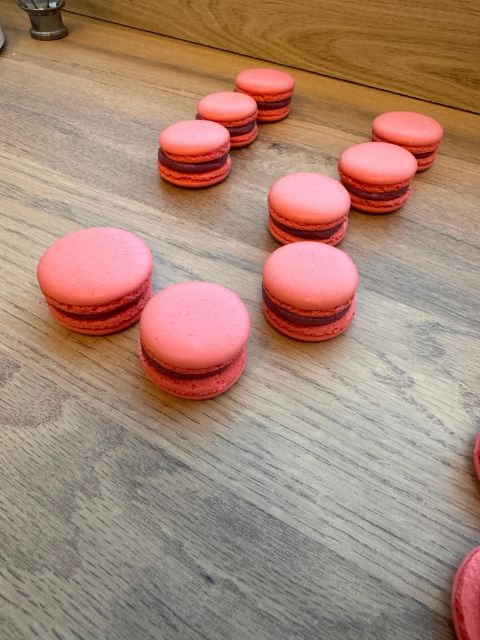
After the shells, you move into fillings. This stage matters because macarons are not just about the shell. The filling is where you control sweetness, texture, and the overall flavor experience.
Most people leave feeling confident because you are guided through the process rather than just being given a checklist. You work as a team with your instructor watching your technique, and you learn how to assemble the final sandwich.
One practical note from an actual experience: the instructor may choose flavors for the class. In one instance, the flavors were chocolate, black currant, and passionfruit. If you have strong preferences like pistachio or vanilla, treat that as a reason to ask what flavors are planned ahead of time or adjust expectations once you arrive.
That said, the upside is that you learn how fillings behave across different flavors. You walk away with general skill, not just one repeatable flavor combination.
Other Paris ateliers to spend an afternoon in:
- Fragonard Paris: Mini Perfume Workshop★ 4.5 · 1,924 reviews
- Paris Cooking Class and Lunch with Wine plus Market Visit Option★ 5.0 · 1,024 reviews
- Paris Croissant Small-Group Baking Class with a Chef★ 5.0 · 910 reviews
- Paris: 2-Hour Perfume Creation Workshop★ 4.8 · 731 reviews
Baking, Waiting, and the Real Part of Learning: Troubleshooting
Once you pipe, you move into baking and the waiting period. This is where macarons test your patience, because you cannot rush them. But you can observe what is happening so you learn what cues to look for next time.
In several accounts, the class includes troubleshooting advice. That is huge for first-timers. Many people only notice a failure after the fact, like shells that did not develop properly or a texture that feels off. When you learn what caused it and how to adjust, your next batch is smarter.
One standout theme from these experiences is that the instructor emphasizes improvisation based on conditions. For example, weather can affect how your macarons set and dry. You do not need to predict the forecast like a meteorologist, but you do benefit from learning the idea: conditions influence outcomes.
If you want to bake at home in a different climate, this kind of guidance turns the recipe from a nice sheet of paper into a usable tool.
Tasting What You Made: The Moment It Clicks
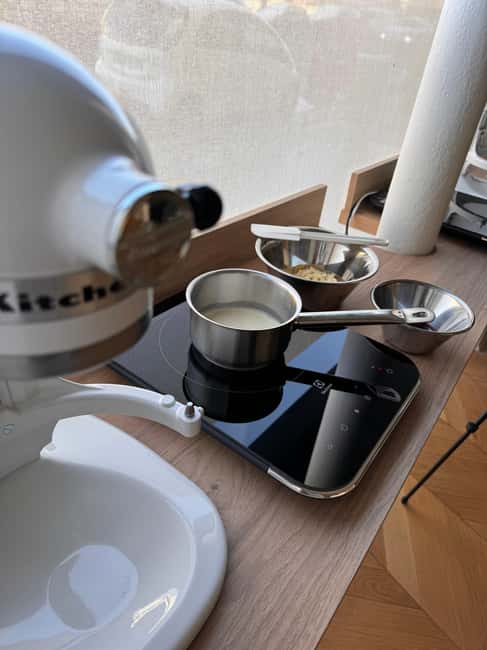
After baking, you taste what you made. This is not a token sample. It is the payoff step where you finally understand what all those technique cues were for.
You are looking for:
- the classic macaron shell crunch and interior texture
- a filling that balances sweetness
- overall bite quality that feels consistent, not hollow or overly soft
Many people describe a real sense of accomplishment here. That makes sense. Macarons have a reputation for being hard. When yours turn out well, it is not just delicious, it is proof that your learning worked.
Also, tasting helps you calibrate your memory before you leave the studio. Later, when you bake again, you will remember what success tasted like. That helps you fix your next batch faster.
What You Take Home: Recipe Plus Confidence (Not Just Cookies)
The class includes a recipe to take home, and that matters more than you might think.
A recipe alone is not enough for macarons. The difference between decent and great macarons is technique and judgment. With the recipe plus what you practiced, you can replicate the process and troubleshoot more intelligently.
Many participants mention leaving with a lot of macarons, sometimes enough to snack on for days. Some experiences describe around 15 macarons per person, and in a few cases, totals like 30 handmade macarons for a couple. Even if your exact count varies, you should expect a satisfying edible takeaway, not just a single treat.
And you will likely feel motivated to try again right away. That is where the course earns its keep.
Price and Value for 150 Minutes in Paris
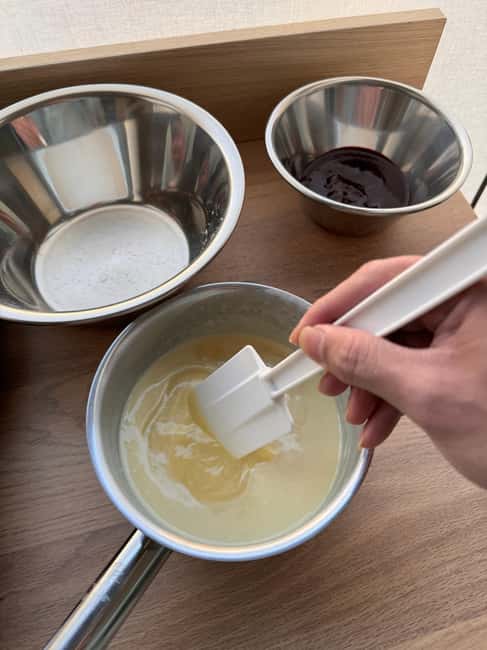
The price is listed at $122 per person for 150 minutes. That can sound steep if you compare it to store-bought pastries. But the value is in what you receive and what you learn.
Here is how I’d think about it:
- You pay for instructor-led technique, including step-by-step guidance while you bake
- You get tasting during the session, plus a take-home recipe
- You typically leave with enough macarons for multiple servings
- You gain a skill you can reuse back home, not just a one-time snack
If you have ever bought fancy macarons in Paris, you already know they can be pricey. This class shifts the equation. Instead of paying for an already-made product, you pay for the ability to make the product yourself, guided by an English-speaking pastry instructor in a clean, organized studio.
Could you do it cheaper with ingredients from a grocery store? Sure. But you would be paying with your time, your mistakes, and the frustration of not knowing why your first batch fails. When a class reduces that learning curve, $122 starts to look like a practical travel spend.
Who Should Book This Macaron Class in Central Paris
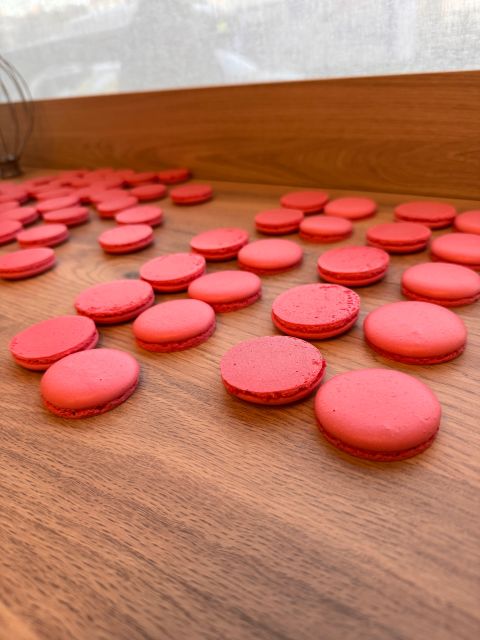
This is a strong fit if:
- you want a hands-on food activity in Paris, not a museum-style experience
- you enjoy learning technique and the science behind what you eat
- you want a small-group class where your questions get answered
- you want a fun challenge, then a satisfying tasting payoff
It is especially good for couples, solo travelers, and older teens who can follow a baking workflow. The class is not suitable for children under 12, but experiences include teens around 13 to 15 thriving in the setting.
If you are vegan or have a nut allergy, skip it. The listing is explicit that it is not suitable for vegans and it is not for people with nut allergies.
Final Verdict: Should You Book This Paris Macaron Baking Class?
Book it if you want a high-skill, hands-on Paris experience with a small group and an English instructor, and if you like the idea of leaving with both macarons and a recipe you can actually use. This is the kind of activity where the learning and the eating happen in the same 2.5 hours, and the result is something you can share back home.
Skip it if vegan options or nut allergy safety are dealbreakers for you, or if you strongly dislike the idea that flavor choices might be set by the class plan.
If you are even mildly curious about macaron-making, this one is worth it. It turns a famous French treat into a repeatable skill, and that is a rare kind of souvenir.
FAQ
Where do I meet for the Paris macaron baking class?
You meet at a grey-coloured store front on the main road.
How long is the class?
The duration is 150 minutes.
How much does it cost?
It is priced at $122 per person.
What is included in the experience?
You get an instructor, the baking class itself, a tasting, and a recipe to take home.
Is the instructor English-speaking and is the group small?
Yes. The instructor speaks English, and the group is limited to 10 participants.
Is this class suitable for children, vegans, or people with nut allergies?
It is not suitable for children under 12, vegans, or people with nut allergies.
What should I bring?
Wear comfortable shoes and comfortable clothes.
Can I cancel, and is there a pay-later option?
The class offers free cancellation up to 24 hours in advance for a full refund, and you can reserve now and pay later.
French Kitchens to Cook In
- Paris: French Croissant Baking Class with a Chef
★ 4.9 · 712 reviews - Paris Cooking Class: Learn How to Make Macarons
★ 5.0 · 634 reviews - Paris Culinary Tour: 11 Tastings & 2 Wines in Le Marais
★ 4.8 · 625 reviews - Paris: French Macaron Culinary Class with a Chef
★ 4.9 · 591 reviews
Newest write-ups from Paris


Pastry and Macaron Classes, compared.
Montmartre Cheese, Wine & Pastry Guided Walking Tour
Read our review →
Award-Winning Paris French Bakery Experience — Le Marais, 4th Arr
Read our review →
Private Montmartre Food Tour with Wine, Cheese & Pastries
Read our review →
Paris French Sweets Tasting Tour with Pastries and Chocolates
Read our review →
Paris Croissant Small-Group Baking Class with a Chef
Read our review →
Browse the lists this tour appears in