
Reviewed · PASTRY AND MACARON CLASSES
Paris: Macarons Class, Teatime and To-Go Box
Macarons become doable in a Paris kitchen. At Le Foodist in the Latin Quarter, this small group class uses the Italian meringue method, so you’re not just eating macarons, you’re learning a repeatable craft. I like that the teaching pace is hands-on, you actually pipe, color shells, and build a filling.
Your finish is food, plus a box. I love the teatime portion, with tea, coffee, fruit juices, and stories that connect macarons to French culture (with a wink). One consideration: only participants can enter the kitchen, so if you’re bringing kids or you want extra viewing time, plan around that.
In This Review
- Key things you’ll notice right away
- Le Foodist in Paris 5e, and why the location helps
- The Italian meringue method, and why it’s worth the extra effort
- What you do in the kitchen: shells, color, piping, filling
- The piping practice that turns amateurs into confident makers
- Teatime at Le Foodist, where you eat your work with stories
- Your to-go box: how the “take home” part adds real value
- Price and group size: is $152 fair?
- Who this macaron class is best for
- A key thing to know before you book: kitchen access is for participants
- Tips to make your class day smoother
- Should you book this Paris macaron class?
- FAQ
- How long is the Paris macaron class?
- How big is the group?
- What macaron method do you learn?
- Is the class taught in English?
- Can kids participate?
- Do I get a box to take home?
- Are recipes included, and are they in English?
- Is there free cancellation?
Key things you’ll notice right away
- Italian meringue method: harder than the French method, but it helps you get a more reliable shell
- Small group up to 6: you get personal attention while you pipe, fill, and troubleshoot
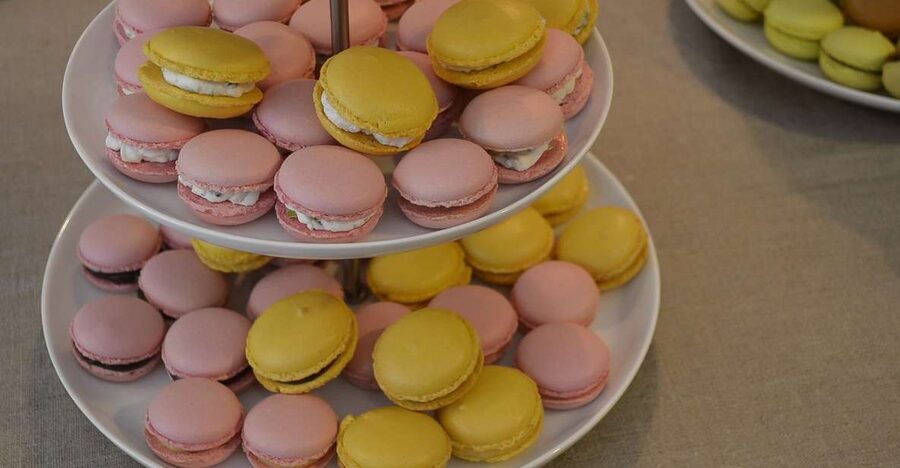
- Shell color practice: you learn how to add color to the shells, not just follow a vague recipe
- Build your own filling: you make a ganache or curd-style filling and learn the piping part
- Teatime with stories: tea and coffee, plus cultural macaron talk while you eat what you made
- To-go box included: you leave with macarons to share at home, not just a single tasting
Other kitchens for macarons and pastry:
- Paris: Montmartre Cheese, Wine & Pastry Guided Walking Tour
★ 4.8 · 2,255 reviews - Paris: Macaron Class at Galeries Lafayette
★ 4.2 · 1,196 reviews - Award-Winning Paris French Bakery Experience — Le Marais, 4th Arr
★ 4.5 · 1,186 reviews - Private Montmartre Food Tour with Wine, Cheese & Pastries
★ 5.0 · 1,027 reviews
Le Foodist in Paris 5e, and why the location helps
This class meets at Le Foodist, 59 Rue Cardinal Lemoine (75005 Paris), in a neighborhood that’s easy to pair with other Latin Quarter stops. It’s also walking distance from Notre-Dame, so you can fit this into a morning or afternoon that already includes classic sights.
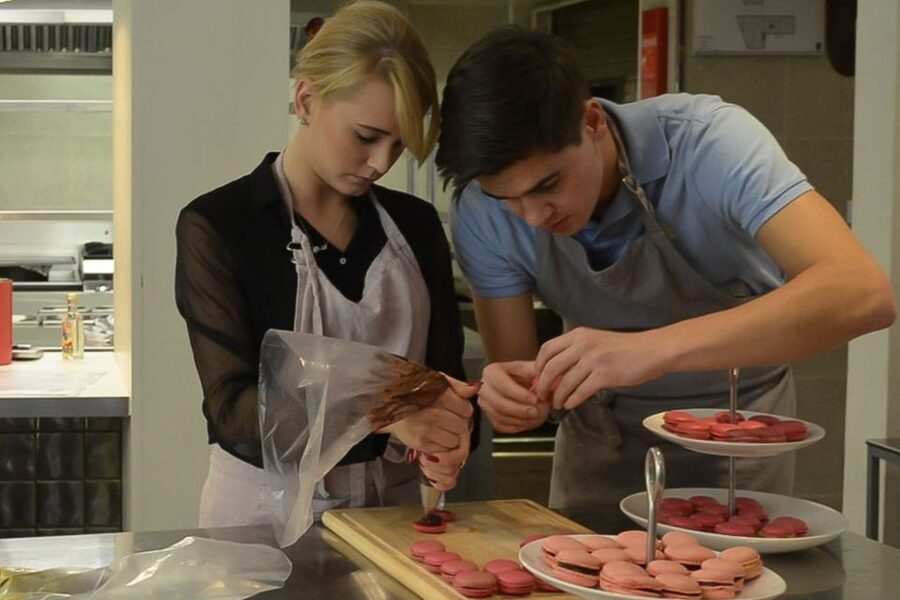
A practical reason I like this meeting point: arriving early is less stressful here than hunting for a hidden apartment kitchen. You’ll be in a real cooking space designed for classes, with equipment and aprons ready for you, which matters for a delicate dessert like macarons.
The Italian meringue method, and why it’s worth the extra effort
Macarons have a reputation for being fussy. This class tackles that head-on by teaching the Italian meringue approach. It’s “harder,” in the sense that you need to manage hot sugar syrup and timing, but it’s also “more reliable,” because the meringue structure tends to behave better.
What that means for you: you’re learning the technique pastry chefs use when they want consistent results. And if you’ve ever watched macarons collapse, be too chewy, or come out hollow, you know consistency is the whole game.
In a 3-hour experience, the method choice matters. If the class used an easier route, you might leave with a passable batch and a confidence boost. With Italian meringue, you leave with real process knowledge, so you can adjust at home.
What you do in the kitchen: shells, color, piping, filling
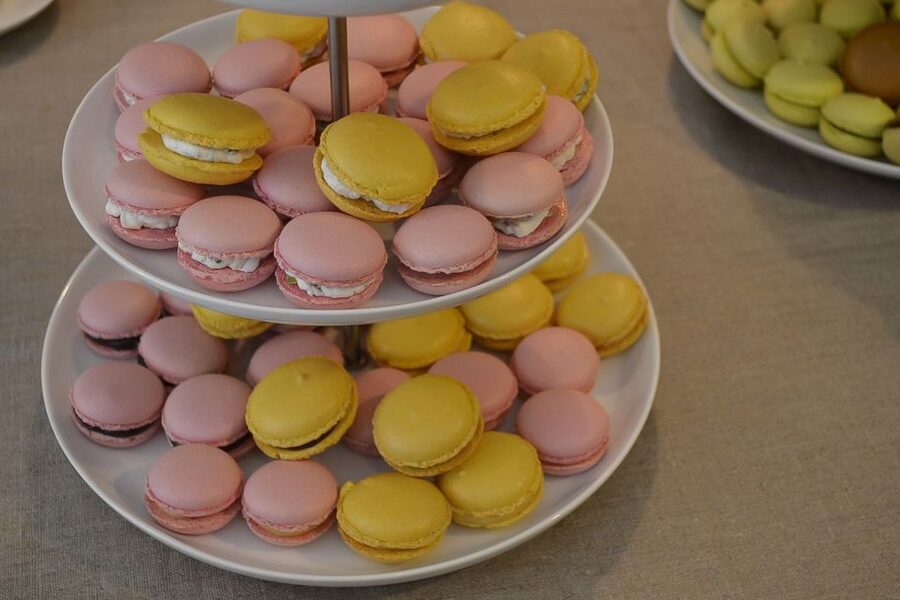
The class itself runs for about 2 hours, then you move to teatime with your creations. In the kitchen, you’ll follow the step-by-step workflow that makes macarons possible: meringue, batter, piping shells, and finishing.
Here’s the core sequence you can expect:
- You learn the Italian meringue technique to build a stable meringue base.
- You make the macaron batter and work it into the right texture for piping.
- You practice piping skills that help shells form correctly.
- You add color to the shells, so your final box looks like more than “just cookies.”
- You make a filling, either ganache or curd, and learn how to pipe it neatly.
This is one of the most valuable parts of the class: the skills are modular. Even if you choose not to make every flavor again, you still learn the mechanics of piping and sandwiching macarons without guessing.
The piping practice that turns amateurs into confident makers
Macarons are basically a timing and texture sport. The class is set up so you’re not just doing one “demo tray” while everyone watches. You’ll pipe, and you’ll get guidance while you do it.
That matters because macarons are sensitive. Small differences in batter consistency, piping pressure, or shell shaping can change the result. When you practice under an instructor’s eye, you can fix problems faster, and you’ll understand what went wrong when things are off.
From the instructor style, one theme shows up again and again: patience. Different instructors get mentioned often, including Luc, Stéphane Jimenez, Anne, Hugo, Fanny, Florence, Frederic, and Amanda. The common thread is teaching that keeps beginners moving forward, not stalled in the weeds.
Other Paris ateliers to spend an afternoon in:
- Fragonard Paris: Mini Perfume Workshop★ 4.5 · 1,924 reviews
- Paris Cooking Class and Lunch with Wine plus Market Visit Option★ 5.0 · 1,024 reviews
- Paris Croissant Small-Group Baking Class with a Chef★ 5.0 · 910 reviews
- Paris: 2-Hour Perfume Creation Workshop★ 4.8 · 731 reviews
Teatime at Le Foodist, where you eat your work with stories
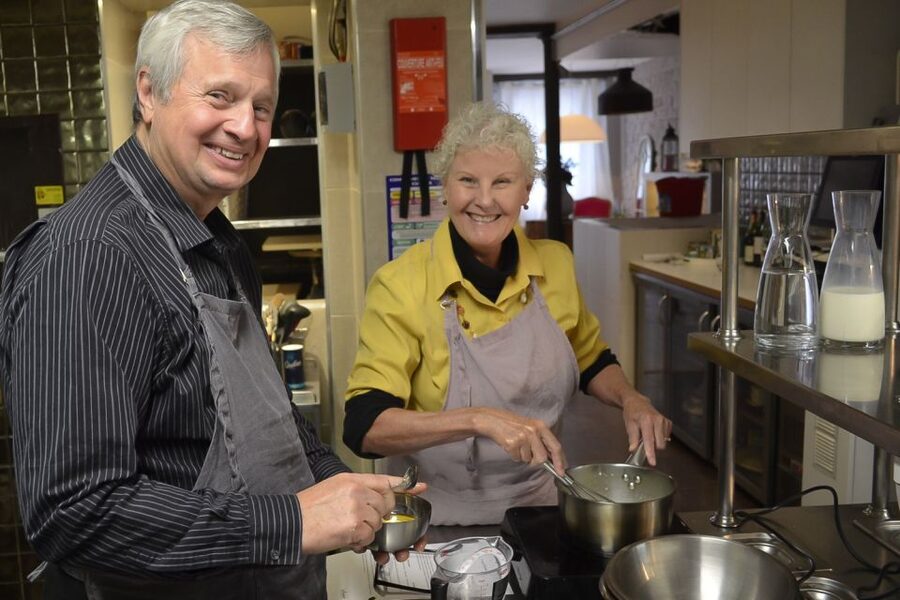
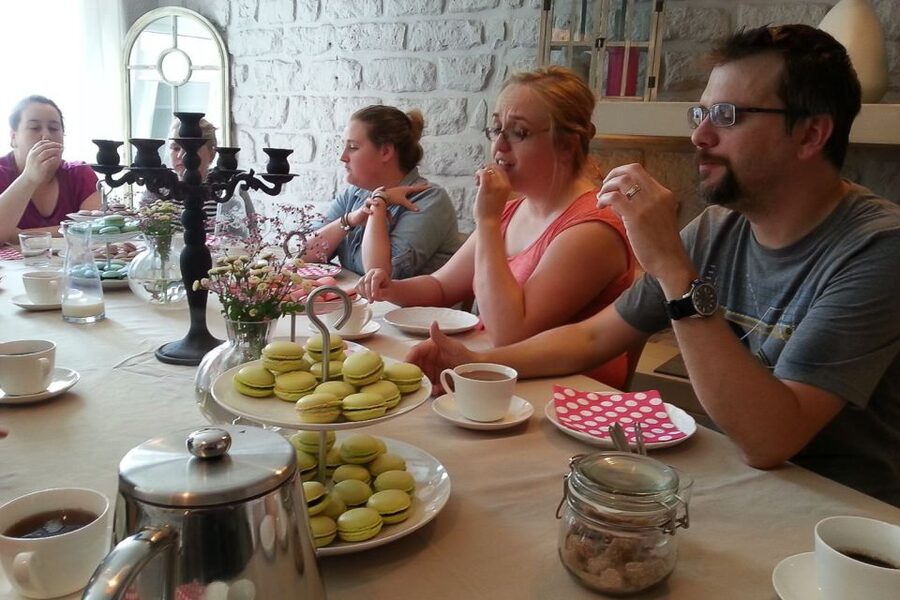
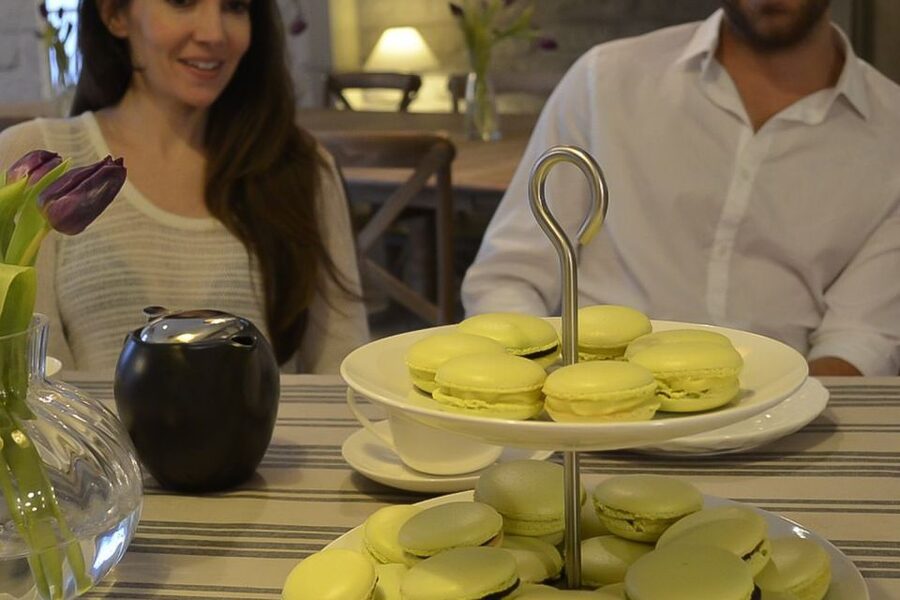
After the hands-on portion, you sit down for teatime. This isn’t just a snack break. You get tea and coffee, plus fruit juices, and you taste a selection that includes what you made.
You’ll also hear stories about the macaron, plus a few humorous bits of French culture talk. It’s the part that makes the class feel like an experience, not a kitchen worksheet. And it’s also smart: you eat while the steps are still fresh in your mind, so your brain connects flavor and technique.
If you like food education that doesn’t feel like a lecture, this portion hits the right tone. You’re tasting, asking quick questions, and walking away with a clearer picture of what “good” should feel like.
Your to-go box: how the “take home” part adds real value
One of the biggest reasons this class gets such strong feedback is the ending. You leave with a to-go box of your own macarons. That changes the value equation.
You’re paying for more than instruction. You’re paying for an experience plus an edible souvenir you can share at home. Several people highlight that there’s enough to eat with coffee or tea, while still leaving with a sizeable box for friends and family.
If you’ve ever bought macarons in Paris and wished you understood why one shop’s shells were crisp and another’s were chewy, this is your shortcut. You’re learning the mechanics and then taking proof home.
Price and group size: is $152 fair?
At $152 per person, this isn’t a bargain class. But for what you get, it can feel fair.
You’re paying for:
- Small group size with a limit of 6 participants, which helps you get individual attention while piping and troubleshooting
- A real 2-hour hands-on session with equipment and an apron provided
- Recipes in English, both hard copy and electronic
- Teatime with multiple drink options
- A to-go box that lets you extend the experience over a few days
The price starts to make sense if you’re someone who cares about technique. If your goal is just to eat macarons, you could do that for less money in Paris. But if your goal is to learn how to produce macarons you recognize as macarons, the class structure is designed for that.
Who this macaron class is best for
This is a great match for beginners who want a guided path. The class format is built around keeping everyone involved, and the small group size helps. If you’re the type who likes learning by doing, not just watching, you’ll appreciate how much time you spend at your station.
It’s also a good family choice, with limits. Children under 12 cannot participate, and unaccompanied minors are not allowed. If you’re bringing kids aged 12 to 16, they need to be accompanied by a participating adult. There’s also no childcare on site, so plan around that if you’re traveling with younger children.
For teens and older kids, this can be a fun challenge. Many people mention bringing teenagers, and the class seems to work well when everyone is ready to pipe and wait for shells to settle.
A key thing to know before you book: kitchen access is for participants
Here’s the practical part: only participants can enter the kitchen. That means:
- If you want your whole group to make macarons, make sure every person in your party has a spot as a participant.
- If you’re traveling with family members who want to watch from outside, you should expect that they may not be able to get full kitchen access.
If you want to avoid surprises, contact the provider before you book if you’re unsure how observation works for your exact group setup. This is one of those “ask once, relax later” situations.
Tips to make your class day smoother
You don’t need special skills to do well, but you can set yourself up for success.
- Arrive on time at Rue Cardinal Lemoine. A 3-hour window moves faster than you think once you start working with batter and timing.
- Wear something comfortable. You’ll be at a workstation, and baking involves close work, not just sitting and tasting.
- Pay attention during the method portion. The Italian meringue step is the backbone of the whole batch.
- Take your English recipes seriously. Hard copy plus electronic is useful, but only if you actually use it at home.
- Bring excitement. This isn’t heavy labor, but it is focused work. When people stay engaged, the class moves better for everyone.
One small note from an overall practical standpoint: some guests wished they had more of the chef’s personal tips written directly on the handout. So if you think you’ll want those details, ask questions during class and jot notes on your copy.
Should you book this Paris macaron class?
Book it if you want:
- Hands-on training in a method you can repeat at home, specifically Italian meringue macarons
- A small group experience with room to ask questions while you pipe and fill
- A cultural food moment during teatime, not just a quick tasting
- A to-go box that turns your class into a multi-day treat for friends and family
Skip it, or at least double-check your expectations, if:
- You want a sit-back-and-watch activity. The kitchen access is for participants.
- You’re traveling with someone under the eligible age range. Under 12 cannot participate, and 12 to 16 needs a participating adult.
If you’re planning just one “food experience” in Paris that’s genuinely interactive, this one is hard to beat. It costs more than buying macarons. You pay for learning, and you leave with proof in a box.
FAQ
How long is the Paris macaron class?
The total experience is about 3 hours, with a 2-hour macarons class and then teatime.
How big is the group?
The class is a small group limited to 6 participants.
What macaron method do you learn?
You learn macarons using the Italian meringue method.
Is the class taught in English?
Yes, the instructor provides instruction in English.
Can kids participate?
Unaccompanied minors are not allowed. Children under 12 cannot participate. Children between 12 and 16 must be accompanied by a participating adult.
Do I get a box to take home?
Yes. You leave with a to-go box containing your macarons.
Are recipes included, and are they in English?
Yes. Recipes are provided in English, with both hard copy and electronic versions.
Is there free cancellation?
Yes, you can cancel up to 24 hours in advance for a full refund.
Newest write-ups from Paris



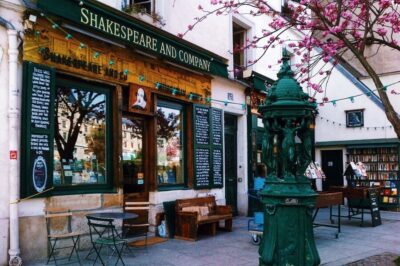

Pastry and Macaron Classes, compared.
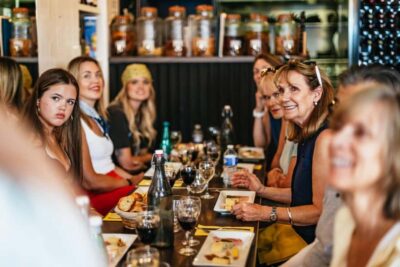
Montmartre Cheese, Wine & Pastry Guided Walking Tour
Read our review →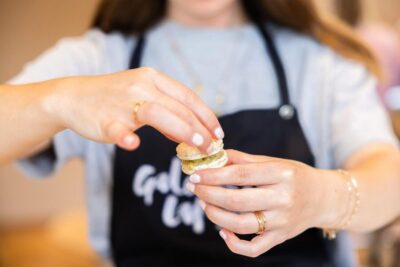
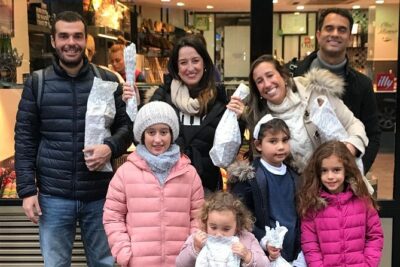
Award-Winning Paris French Bakery Experience — Le Marais, 4th Arr
Read our review →
Private Montmartre Food Tour with Wine, Cheese & Pastries
Read our review →
Paris French Sweets Tasting Tour with Pastries and Chocolates
Read our review →
Paris Croissant Small-Group Baking Class with a Chef
Read our review →

Browse the lists this tour appears in