
Reviewed · LE MARAIS WALKING TOURS
Paris: Marais District & Jewish Quarter Guided Tour 12 guest
Marais is where Paris keeps talking. This guided walk strings together Marais history and the Jewish Quarter in 150 minutes, with an art historian guide who brings the streets to life. You also get the benefit of a tight group size, max 12, so you are not just being swept along.
I especially like how the tour links big landmarks to everyday meaning, from royal-era architecture to quiet memorial details. One thing to consider: there is moderate walking, and the semi-private option is not available for wheelchair users or those with walking disabilities.
In This Review
- Key things I’d plan around
- Entering the Marais: where old Paris starts to feel close
- Saint-Paul-Saint-Louis and Hôtel de Sully: the Marais in architectural chapters
- Place des Vosges: Paris slows down for a reason
- Into the Jewish Quarter: Pletzl, Rue des Francs-Bourgeois, and the clues on every corner
- Hôtel Carnavalet and the art of understanding Paris from inside museums
- Rue des Rosiers and Rosiers- Joseph Migneret Garden: where the tone turns personal
- Hotel de Ville and Centre Pompidou: two eras, same walk
- Churches at the edges of the story: Saint Gervais as a final anchor
- Guide quality makes or breaks this kind of tour
- Price and value: what $61 buys you in Paris walking time
- Practical tips before you go
- Should you book this Marais and Jewish Quarter guided tour?
- FAQ
- How long is the Marais District & Jewish Quarter guided tour?
- How much does the tour cost?
- What is the group size limit?
- Is this tour private or semi-private?
- Where does the tour start?
- Which languages are offered for the live guide?
- Does the tour include entry into synagogues?
- Is food and drink included?
- What ID do I need to bring?
- Are large bags allowed?
Key things I’d plan around
- Small group limit of 12 means questions and real back-and-forth, not just a lecture.
- Art historian guide gives you street-level context, not just dates on a sign.
- Place des Vosges + Hotel de Sully courtyard shows you why the Marais became the city’s stage.
- Jewish Quarter focus on the Pletzl and Rue des Rosiers helps you understand the neighborhood beyond postcards.
- Memorial stone stops add emotional weight, especially around artistic tomb stones and graves.
- No synagogue entry keeps the visit focused on exterior sites and museums, not restricted worship spaces.
Other walks through the Marais:
- Award-Winning Paris French Bakery Experience — Le Marais, 4th Arr
★ 4.5 · 1,186 reviews - Paris Le Marais Food Tour With 10+ Tastings, Cheese, Wine & More
★ 5.0 · 985 reviews - Paris Le Marais District Original Food and Wine Tasting Tour
★ 4.5 · 880 reviews - Paris Bike Tour Hidden Secrets in the Latin Quarter & Le Marais neighborhoods
★ 5.0 · 766 reviews
Entering the Marais: where old Paris starts to feel close
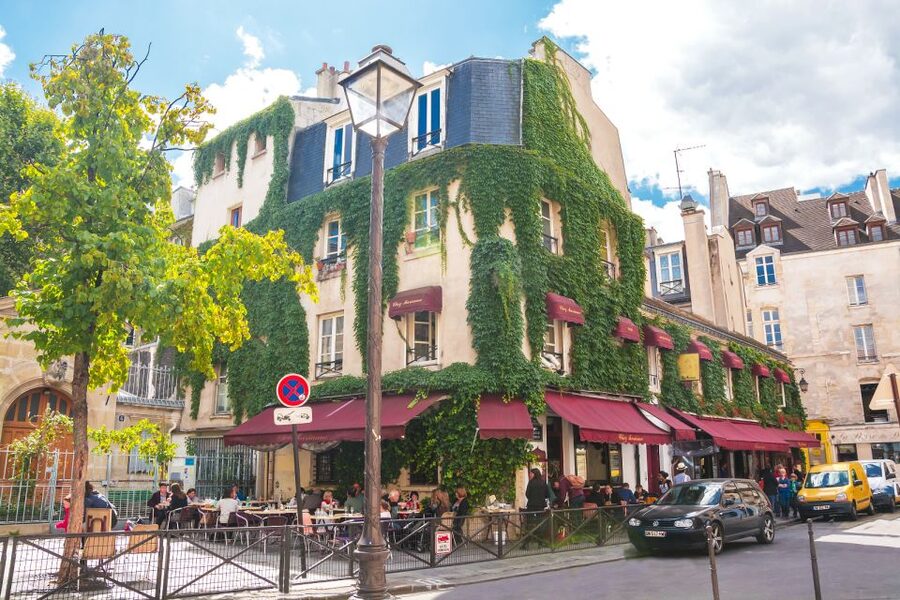
The Marais is not just pretty streets. It is a time machine you can walk through without needing a ticket to the past. This tour begins by getting you oriented to why the district mattered when it was outside the city center, and why it later became central to Paris life.
You will likely meet at one of two start points, depending on the option booked, and then head into the neighborhood on foot. The route is paced for a short, efficient experience, so you do not feel like you are spending most of your time staring at your feet.
What makes this tour work is the way it connects the physical layout of the Marais to the stories people made there. You start to see how mansions, courtyards, squares, and church facades all played roles in politics, religion, commerce, and community life.
Saint-Paul-Saint-Louis and Hôtel de Sully: the Marais in architectural chapters
Early on, you pass Paroisse Saint-Paul Saint-Louis, then move toward the Hotel de Sully. This is where the tour’s “street reading” approach really clicks.
Saint-Paul-Saint-Louis is a classic Paris landmark that helps you anchor the walk in real place. You are not just hearing generalities. Your guide can point out what you are actually looking at and why it matters. Even if you have seen church exteriors before, the tour framing makes the building feel like part of a bigger story about the Marais.
Then you step closer to the Hotel de Sully, often described as majestic and pristine in mood. The courtyard visit and nearby discussion matters because courtyards are where you can feel the social separation between public street life and private elite space. In other words, you start understanding the Marais as a patchwork of power and daily life, not one single neighborhood vibe.
If you like walking tours that explain the “why,” this section is a strong start. If you hate standing still for explanations, try to keep your pace active and ask quick questions as you go.
Place des Vosges: Paris slows down for a reason
Next comes Place des Vosges. This is one of those squares that feels famous even when you first notice it. What I like about having it in the middle of the tour is the reset effect: you go from architecture and courtyards, to an open space where you can actually take in the shape of the place.
Your guide uses the square to explain royal-era planning and how the Marais gained status over time. Place des Vosges is also visually satisfying in a practical way. It gives you a mental landmark so the rest of the route makes more sense.
You do not just look. You learn how the square functions as a public face of the district. It is the kind of stop that makes future wandering easier, because you can later orient yourself by what you already learned here.
Into the Jewish Quarter: Pletzl, Rue des Francs-Bourgeois, and the clues on every corner
After you absorb the royal side of the Marais, the tour shifts forward in time to the bustling Jewish community that helped put this part of Paris on the map during the 18th and 19th centuries. This transition is one of the most valuable parts of the itinerary because it changes how you interpret what you are seeing.
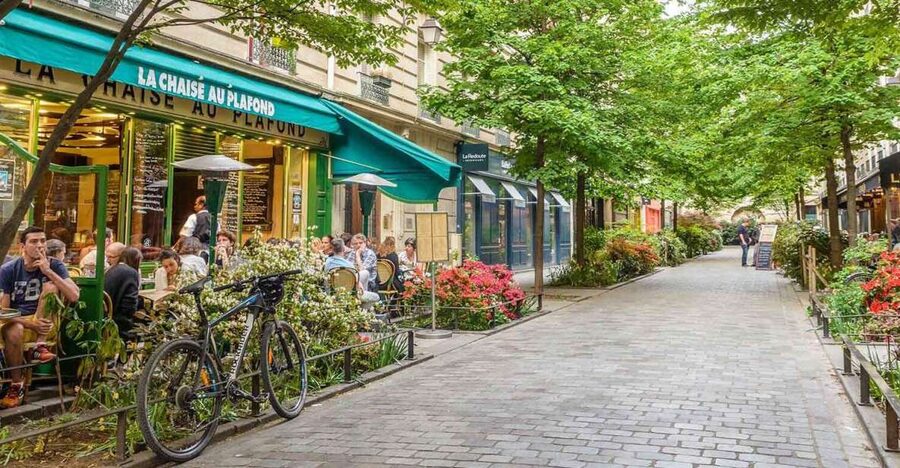
You walk through the area around the Pletzl, the center of Jewish neighborhood life, and then head along Rue des Francs Bourgeois, where shops and historic mansions sit close together. The guide’s job here is important. Without that narrative, it is easy to treat this area like a charming shopping street.
With the tour, you start noticing clues: who lived where, how community life shaped street activity, and how the neighborhood’s social identity influenced the built environment. The result is that the Marais stops feeling like a museum you walk through, and starts feeling like a living neighborhood with layered eras.
A highlight here is how your guide can connect the Jewish Quarter to broader Paris history, rather than treating it like a side story. If you are curious about how communities build a city, this is the section you will remember.
A handful more Paris options to weigh up
- Paris: Louvre Guided Tour with Reserved Access & Boat Cruise★ 4.3 · 16,353 reviews
- Louvre Museum Masterpieces Guided Tour with Access★ 4.5 · 12,023 reviews
- Louvre Museum – Exclusive Guided Tour (Entry Included)★ 5.0 · 6,296 reviews
- Versailles: Skip-the-Line Guided Palace Tour and Full Access★ 4.6 · 5,214 reviews
Hôtel Carnavalet and the art of understanding Paris from inside museums
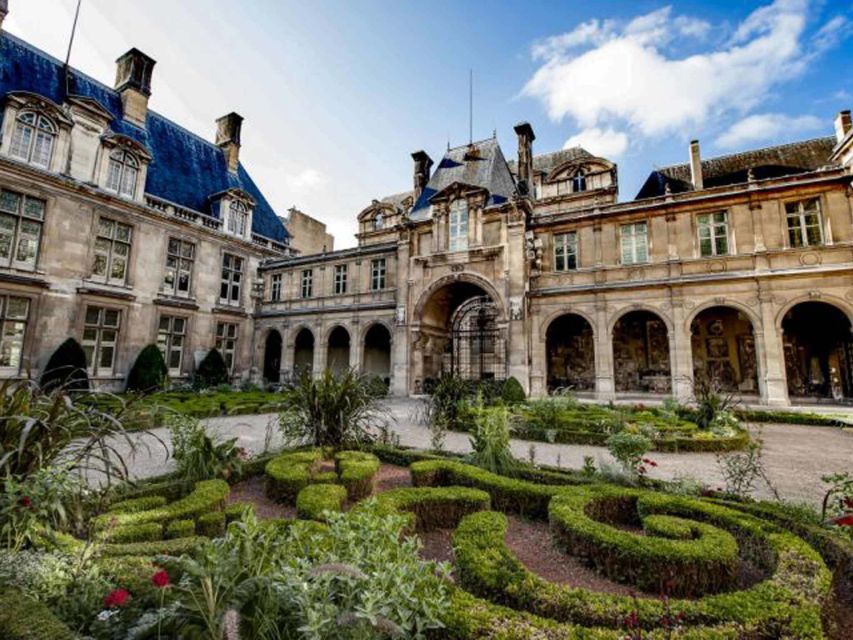
The route includes Musée Carnavalet, which is worth your attention if you want a deeper background layer. Even when you are not spending hours inside, a guide can help you make sense of what you might see later.
This stop works best when you use it as a mental bridge. You watch how the Marais changed over centuries, and then you get pointed toward a museum that helps tie those changes together.
One practical note: museums can have occasional closures without prior warning from management. If that happens, the guide provides an alternative. It is good to know up front because it keeps the day from feeling derailed.
If your goal is understanding Paris as a story, not just a photo set, the Carnavalet connection is a smart move.
Rue des Rosiers and Rosiers- Joseph Migneret Garden: where the tone turns personal
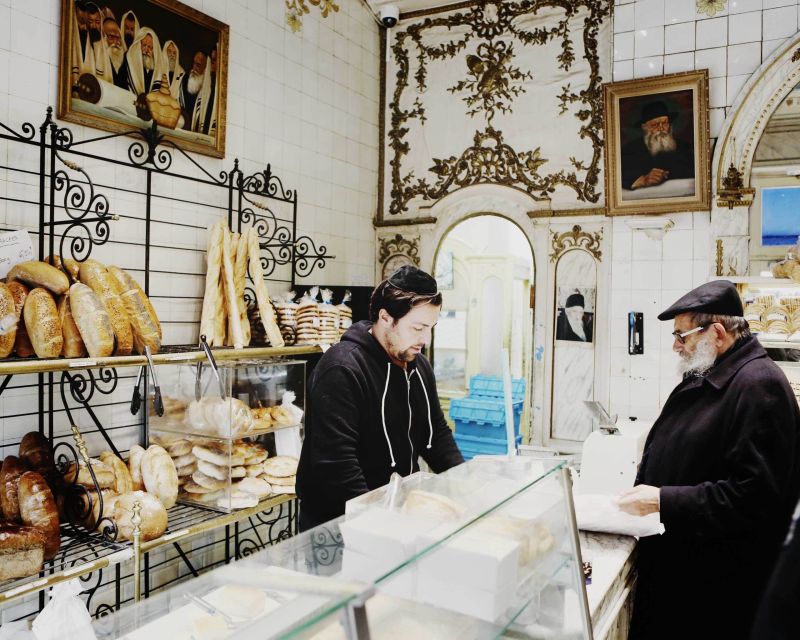
Rue des Rosiers is the kind of street where the atmosphere matters. This is where the Jewish Quarter feels immediate. Your guide steers you through the neighborhood in a way that connects the past to what still lines the street today.
Then you reach Rosiers, Joseph Migneret Garden. A garden stop might sound like a break, but in a story-focused tour it can become more than a pause. It helps you shift your attention from buildings and commerce to the quieter signals that make places meaningful.
One of the most praised elements of this experience is the stroll past artistic tomb stones and graves. That part is not about horror-history shock. It is about witnessing how art, memory, and identity can be literally inscribed into a landscape.
If you are the type who likes a bit of emotional realism in your travel, this portion lands well. If you prefer upbeat-only sightseeing, you might want to balance this day with a less heavy meal and a calmer evening plan.
Hotel de Ville and Centre Pompidou: two eras, same walk
The tour may also take you past the Hotel de Ville and Centre Pompidou. This pairing gives you a useful contrast.
Hotel de Ville represents a different kind of Paris importance, tied to civic power and government. Centre Pompidou is a much later architectural attitude, and seeing it from the Marais side of things helps you feel how Paris keeps reinventing itself without deleting the past.
Even if you have seen both places before, having them dropped into this specific neighborhood narrative makes the architecture feel less random. It becomes part of the same question your guide is asking all along: how does a district evolve, and what does change look like on the ground?
Churches at the edges of the story: Saint Gervais as a final anchor
Near the end, you pass Saint Gervais Church. This is a good finishing anchor because churches often act like time stamps in Paris. They can connect you back to earlier stops, helping you see the neighborhood through a lens of continuity.
If you are walking all day in Paris, the last church stop also helps you keep your orientation. The route ends up feeling like a loop of meaning, not just a straight line of passing sights.
This is also where the guide’s storytelling rhythm matters. You have spent the morning learning how the district works across centuries. A final anchor stop helps everything click into place.
Guide quality makes or breaks this kind of tour
This experience has an excellent track record, and the names Eden and Francois come up for the way they teach. Eden is described as friendly, highly engaging, and emotionally invested in the area. Francois is praised for clear English, humor, and personality, plus a genuine love for the neighborhood.
That combination matters. Marais and the Jewish Quarter are not theme-park topics. They require a guide who can balance context with respect. The best part is not just having facts, it is how the facts get translated into what you can see, smell, and walk past.
Your language options are also broad, including English, French, Italian, Spanish, German, and Russian. Having the story delivered clearly is a big factor in whether a 150-minute tour feels inspiring or tiring.
Price and value: what $61 buys you in Paris walking time
At about $61 per person for 150 minutes, this is positioned as a value-friendly guided history experience. You are paying for three things that are hard to replace on your own: an art historian guide, a structured route, and a small group size.
For perspective, a short walking tour that actually explains architecture and neighborhood change, while keeping group size under control, usually costs more in big cities. Here, the price makes it possible to do a focused learning day without blowing your whole Paris budget on one museum.
What you are not paying for is also clear. There is no hotel pickup or drop-off, and food and drinks are not included. That is normal for a walk, but it means you should plan your day accordingly.
Also, keep expectations realistic: synagogues are not included because access is restricted to worshippers for security reasons. The tour still covers the neighborhood story, but you are not going to treat this as a synagogue visit itinerary.
Practical tips before you go
- Bring your passport or ID card, since it is required.
- Avoid luggage or large bags. The tour notes that only handbags or small thin backpacks are typically allowed inside the museum areas.
- Expect moderate walking. Comfortable shoes matter.
- Quiet rules can apply in specific museum rooms. Your guide will explain what to expect before you enter those spaces.
- Museums can close occasionally with no warning. When that happens, you get an alternative rather than a stop-and-stare pause.
- Dress for a walking day, even if it sounds like a “short” tour on paper.
Should you book this Marais and Jewish Quarter guided tour?
Book it if you want a compact, respectful walking experience that connects Paris architecture to Jewish neighborhood life through major eras. You will likely enjoy it most if you like learning while moving, and if you value a guide who can make the streets feel personal, not just famous.
Pass or consider another option if you need synagogue entry as the main goal, or if you know that moderate walking will be uncomfortable for you. Also note the semi-private option limitations for wheelchair users or those with walking disabilities.
If your ideal Paris day is part architecture, part neighborhood story, and part memory in stone, this is a solid pick.
FAQ
How long is the Marais District & Jewish Quarter guided tour?
The tour duration is 150 minutes.
How much does the tour cost?
It costs $61 per person.
What is the group size limit?
The tour has a maximum of 12 guests per guide.
Is this tour private or semi-private?
Private and semi-private tour options are available, with wheelchair tours available only on request.
Where does the tour start?
The meeting point may vary depending on the option booked.
Which languages are offered for the live guide?
Live guide languages include Russian, German, French, Italian, English, and Spanish.
Does the tour include entry into synagogues?
No. The tour does not include entry into any synagogues because access is restricted to worshippers for security reasons.
Is food and drink included?
No. Food and drinks are not included.
What ID do I need to bring?
Bring a passport or ID card.
Are large bags allowed?
No luggage or large bags are allowed. Only handbags or small thin backpacks are allowed inside museum areas.
Newest write-ups from Paris




Le Marais Walking Tours, compared.

Award-Winning Paris French Bakery Experience — Le Marais, 4th Arr
Read our review →
Paris Le Marais Food Tour With 10+ Tastings, Cheese, Wine & More
Read our review →
Paris Le Marais District Original Food and Wine Tasting Tour
Read our review →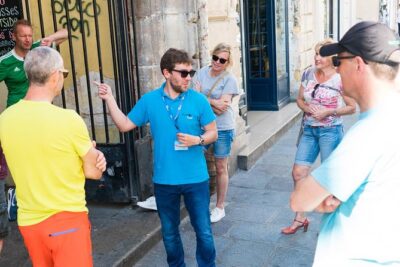
Paris Bike Tour Hidden Secrets in the Latin Quarter & Le Marais neighborhoods
Read our review →
Paris Culinary Tour: 11 Tastings & 2 Wines in Le Marais
Read our review →

Le Marais District Food Tour with 10+ Tastings & Wine
Read our review →
Browse the lists this tour appears in