

Reviewed · LE MARAIS WALKING TOURS
Paris Medieval Heart: Walking Tour in Ancient Marais
If you like Paris that feels lived-in, this walk is for you. This 2.5-hour Marais circuit mixes standout sights with quiet corners, including the oldest synagogue in Paris and Sully’s hidden garden courtyard. I like how the route keeps moving without turning into a crowd-stomp, and how the guide can spot the details you would miss. One possible drawback is the meeting point can be tricky to find, so aim to arrive early.
What makes this tour worth your time is the pacing and the focus. You cover major medieval and early-modern themes in one sweep, from Jewish history to Jesuit-era style changes, then end at Centre Pompidou for a modern counterpoint. The small group size, max 15, also matters when you want to ask questions and get practical local recommendations for food and shopping afterward.
In This Review
- Key highlights you will feel on the ground
- A Medieval Marais Walk That Doesn’t Feel Like a Checklist
- The Real Value: $51.66 for a Guided Circuit of Mostly Free Stops
- Start at Bastille, Finish at Pompidou: The Route Logic Makes Sense
- Rue des Tournelles and the Oldest Synagogue in Paris
- Place des Vosges: Paris’ Oldest Square, With Hidden Stories
- Maison de Victor Hugo: Literary Paris in a Real Apartment
- Hotel de Sully Courtyard and Garden: The Quiet Pause You Want
- Saint-Paul-Saint-Louis Church: From Gothic to Jesuit Baroque
- Rue des Rosiers and the Jewish Quarter Food Street Mood
- Jardin des Rosiers Joseph-Migneret: Medieval Wall Traces in a Garden
- Halles des Blancs Manteaux: A Templar Fortress Angle
- Rue des Francs Bourgeois: The Unique Ashes Factory Institution
- Picasso-Paris and Archives Nationales Gardens: Art and Power in the Same Stretch
- Hotel de la Bretonnerie Area: Trendy Shops, Food, and an LGBT Community Hub
- Centre Pompidou Finish: Postmodern Museum and a Practical Next Stop
- What You’ll Probably Learn About the Marais, Beyond the Facts
- Who This Tour Fits Best (And Who Might Want Something Different)
- Should You Book This Paris Medieval Heart Walking Tour?
- FAQ
- How long is the Paris Medieval Heart Walking Tour?
- What does the tour cost?
- What time does the tour start?
- Where do you meet for the tour?
- Where does the tour end?
- Is the tour offered in English?
- What is included in the price?
- What is not included?
- Are admission tickets needed for the stops?
- Is mobile ticketing used, and are service animals allowed?
- What is the cancellation policy?
Key highlights you will feel on the ground
- Oldest synagogue stop (21bis Rue des Tournelles), with free entry
- Place des Vosges, Paris’ oldest planned square, plus stories and side streets
- Victor Hugo apartment visit at Maison de Victor Hugo, also free
- Sully’s courtyard and garden at Hotel de Sully, a true tucked-away green pause
- Jardin des Rosiers Joseph-Migneret, with traces of the medieval defensive wall
- Centre Pompidou as the finish, tying medieval streets to 1970s contemporary culture
Other walks through the Marais:
- Award-Winning Paris French Bakery Experience — Le Marais, 4th Arr
★ 4.5 · 1,186 reviews - Paris Le Marais Food Tour With 10+ Tastings, Cheese, Wine & More
★ 5.0 · 985 reviews - Paris Le Marais District Original Food and Wine Tasting Tour
★ 4.5 · 880 reviews - Paris Bike Tour Hidden Secrets in the Latin Quarter & Le Marais neighborhoods
★ 5.0 · 766 reviews
A Medieval Marais Walk That Doesn’t Feel Like a Checklist
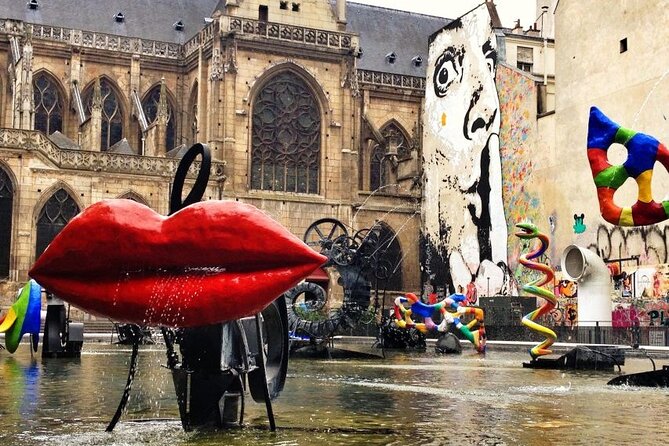
Le Marais can look like a postcard from street level, but this tour pushes beyond the obvious photo spots. You move through the neighborhood’s layered story, where synagogues, royal squares, church style shifts, and medieval defensive traces all sit within a short walk.
I like that the tour is built for orientation as much as entertainment. By the time you finish near Centre Pompidou, you have a mental map of what matters, where it is, and what kind of mood each micro-neighborhood has.
And yes, the guide can really help make the details stick. In the strongest versions of this tour, guides like Sacha, Maria, and Lucie use well-prepared explanations, including illustration-style notes in a notebook, to match what you are seeing in real time.
The Real Value: $51.66 for a Guided Circuit of Mostly Free Stops
At $51.66 per person for about 2 hours 30 minutes, the price is reasonable because you are paying for guidance, not a stack of paid museum tickets. Many stops are listed as free, and several are exterior or courtyard moments where you learn context without needing to buy an entrance.
Here is the practical angle: if you plan to explore the Marais anyway, a guided walk helps you avoid the common mistake of wandering with no sense of what you are looking at. Instead of just seeing beautiful streets, you learn why they were important and what changed over time.
What you should consider is that you will still spend your time walking between locations. This is not a slow, sit-and-sip tour. It is structured, with about 10 to 15 minutes per stop, so bring comfy shoes and expect a steady rhythm.
Start at Bastille, Finish at Pompidou: The Route Logic Makes Sense

You start at 3bis Pl. de la Bastille at 10:00 am. The end point is in front of Centre Pompidou at Place Georges-Pompidou.
I like routes that feel logical, and this one does. You begin in the eastern Marais around the old Jewish Quarter landmarks, head toward major squares and literary history, then shift through medieval traces and historic institutions. Ending at Pompidou gives you a clean “here’s where to go next” finish.
One caution: a small number of guests have had trouble locating the exact start point. So treat that meeting address like a real appointment. Arrive a bit early, especially if you are using navigation on a busy street.
Rue des Tournelles and the Oldest Synagogue in Paris
The tour kicks off at 21bis Rue des Tournelles to see the oldest synagogue in Paris, with free admission. This stop sets the tone in a smart way because it grounds the rest of the tour in a Jewish community that shaped the Marais for centuries.
When a tour starts here, you notice things differently later. You start connecting street names, neighborhood character, and nearby landmarks, instead of treating each location like a random pretty building.
If you are a first-timer, this is also a great way to get perspective fast. You learn there is more than just “old streets” in the Marais. There are real institutions, real communities, and real history.
Other arrondissements taken at walking pace:
- Paris Top Sights Half Day Walking Tour with a Fun Guide★ 5.0 · 2,893 reviews
- Montmartre Hidden Gems and Scenic Highlights Walking Tour★ 5.0 · 2,684 reviews
- Montmartre Hill French Gourmet Food and Wine Tasting Walking Tour★ 5.0 · 2,588 reviews
- Paris: Montmartre Highlights Walking Tour with a Local Guide★ 4.9 · 2,318 reviews
Place des Vosges: Paris’ Oldest Square, With Hidden Stories

Next is Place des Vosges, with the guide explaining why this square matters and sharing smaller stories you might miss on your own. This is the oldest square in Paris, and the tour gives you a way to look at it beyond the classic views.
A square like this can become wallpaper if you stand still. With a guide, you get cues for what to pay attention to, like the way the space is used and how it connects to the surrounding neighborhood.
The tour description notes that admission tickets are not included here, which makes sense because Place des Vosges is a public square. In practice, you do not need tickets for the viewpoint itself. You just need the time and the walking shoes to look carefully.
Maison de Victor Hugo: Literary Paris in a Real Apartment
At Maison de Victor Hugo, you visit Victor Hugo’s apartment, with free admission noted for this stop. Hugo is one of those names that belongs to everyone’s Paris memory, but this visit helps you anchor that reputation in a specific home and daily space.
This stop works well in the tour because it adds a different kind of history. You are not only learning about medieval structures and religious architecture. You are also learning how Paris became a stage for writers and ideas.
In the best versions of the tour, this is where the guide’s explanations click. You can hear how culture, power, and place all overlap in the Marais.
Hotel de Sully Courtyard and Garden: The Quiet Pause You Want
Then you shift to a more peaceful moment: Cour et jardin de l’Hotel de Sully. This is described as a hidden garden courtyard within a mansion built by Sully, a finance minister under King Henry IV.
I like that this stop breaks the pace without killing your momentum. You get architecture and context, then a small green reset. In a dense neighborhood like the Marais, that matters more than you expect.
This is also one of the spots you might walk past later without noticing. A guided look helps you slow down just enough to spot what makes the place special.
Saint-Paul-Saint-Louis Church: From Gothic to Jesuit Baroque

At Paroisse Saint-Paul Saint-Louis, the tour focuses on a church with a style turning point. It is noted as the first one to break completely from Gothic style and use the new Baroque style of the Jesuits.
That is a strong theme, and it makes the stop more than a quick photo stop. You learn how architecture signals ideology and cultural shifts. A guide can help you see the style changes as more than decorative details.
If you care about art and design, this is the kind of stop that makes the rest of the tour easier to understand. You start looking at buildings as historical documents.
Rue des Rosiers and the Jewish Quarter Food Street Mood
You then head to La Rue des Rosiers, described as a gastronomic delicatessen street in the heart of the ancient Jewish Quarter. This is where the tour becomes more sensory.
Even if you do not buy anything, you get a feel for how the neighborhood operates. The guide’s context helps you recognize why this street became a center for food and everyday culture, not just sightseeing.
After a tour like this, I always recommend planning your meal right away. The tour’s local recommendations help you choose within walking distance, so you do not waste time figuring out what is close and good.
Jardin des Rosiers Joseph-Migneret: Medieval Wall Traces in a Garden
The next stop is Jardin des Rosiers – Joseph-Migneret, described as a hidden garden with traces of the medieval defensive wall of Paris. This is one of those “how did I miss that?” moments that works perfectly on foot.
A defensive wall sounds serious, but inside a garden, the learning feels relaxed. You can picture the city’s old boundaries while you stand somewhere surprisingly calm.
This stop is also valuable because it changes the way you read the Marais. Instead of only “pretty streets,” you start noticing survival marks of old infrastructure.
Halles des Blancs Manteaux: A Templar Fortress Angle
At Halles des Blancs Manteaux, you get acquainted with a fortress connection tied to Templar Knights in the Middle Ages.
If you have ever walked past a historic building and wondered why it matters, this is the fix. The guide frames the place with a specific medieval story, turning a familiar courtyard complex into a location with purpose.
This is also where small group pacing helps. You do not just pass through. You spend enough time to connect the explanation to the architectural forms you are seeing.
Rue des Francs Bourgeois: The Unique Ashes Factory Institution
Next is Rue des Francs Bourgeois, where the guide shows a very interesting space you might never find on your own: the factory of ashes, an institution that worked until the middle of the 19th century.
This kind of stop is a big reason I enjoy walking tours like this. It pulls you off the standard museum-track and into the working side of the city. Even if the concept sounds odd, it is exactly these unusual urban details that make the Marais feel real.
If you like quirky history, this will be a highlight. If you prefer only famous monuments, you might still appreciate the “daily life versus big history” balance.
Picasso-Paris and Archives Nationales Gardens: Art and Power in the Same Stretch
You get a stop in front of Musée Picasso-Paris. The tour description is clear that it is essentially a viewing stop, so you get the location and context without committing to another full interior museum visit.
Right after, you visit Musée des Archives Nationales, focusing on the hidden gardens behind the frontside, where noble people had luxury mansions. This is a clever pairing because it shifts from one cultural icon to another kind of prestige, administrative power, and aristocratic space.
I like that the tour includes both visual arts and institutional history. It helps you understand the Marais as an old center of influence, not just a preserved neighborhood.
Hotel de la Bretonnerie Area: Trendy Shops, Food, and an LGBT Community Hub
Then you move through the area of Hotel de la Bretonnerie, where the guide points out the mix of trendy fashion stores, food shops, and cafés connected with the LGBT community.
This part matters for a simple reason. The Marais is not only about the past. It is also a living neighborhood where people eat, shop, and socialize.
So after learning medieval or early-modern context, you come out with modern orientation. You are ready to keep exploring after the tour ends.
Centre Pompidou Finish: Postmodern Museum and a Practical Next Stop
The final stop is Centre Pompidou. The tour description emphasizes the 1970s building created for contemporary art, plus its library and cinema.
Even if contemporary art is not your top priority, it is a smart finish point. Pompidou is visible, central, and easy to build your day around afterward.
You can use the ending as your springboard. With the Marais mapped in your mind, you can choose where to go next, whether that means staying in the neighborhood or branching out to another part of Paris.
What You’ll Probably Learn About the Marais, Beyond the Facts
The itinerary pieces together several themes that you can actually use while wandering later.
You learn how the Marais carried identity through time, especially through the Jewish Quarter focus. You see style evolution in architecture, like the shift tied to Jesuit Baroque. You also learn that “medieval Paris” is not only cathedrals and towers. It includes walls, institutions, and even industrial-adjacent history like the ashes factory.
In short, you finish with context that improves every street you walk afterward.
Who This Tour Fits Best (And Who Might Want Something Different)
This tour is a strong match if you:
- want a first-timer Marais orientation
- enjoy a mix of architecture, religious history, and literature
- like small-group conversations and question time
- need a clear plan so you do not lose half your day in aimless wandering
It also worked well for families in the sense that guides can adapt the pacing and explanations. For teens and younger kids, the street-to-story approach is often easier than a long museum-only format.
If you prefer quiet self-guided exploring with no stops, this may feel a bit structured. You are also covering many separate sites in a compact window, so it helps if you are okay moving at a steady pace.
Should You Book This Paris Medieval Heart Walking Tour?
I would book it if you want value and direction. For $51.66, you get a guide, lots of free or low-friction stops, and a route that connects Jewish Quarter landmarks, Place des Vosges, literary Paris, and medieval traces in one smooth narrative.
I would think twice if you strongly dislike walking between tight points, or if you know you have a hard time finding meeting addresses. The negative feedback style here is mostly about that start location getting missed, not about the content itself.
If you can arrive a little early and wear shoes you can move in, this is one of the better ways to experience the Marais for what it really is, a dense neighborhood with layers you can learn to see.
FAQ
How long is the Paris Medieval Heart Walking Tour?
It runs for about 2 hours 30 minutes.
What does the tour cost?
The price is $51.66 per person.
What time does the tour start?
The start time is 10:00 am.
Where do you meet for the tour?
The meeting point is 3bis Pl. de la Bastille, 75004 Paris, France.
Where does the tour end?
The tour ends at Place Georges-Pompidou, in front of Centre Pompidou.
Is the tour offered in English?
Yes, it is offered in English.
What is included in the price?
An experienced local guide is included.
What is not included?
Bottled water is not included.
Are admission tickets needed for the stops?
Many stops list admission as free, and Place des Vosges is noted as not included. The exact need depends on the stop, but several are free according to the tour details.
Is mobile ticketing used, and are service animals allowed?
Yes, you get a mobile ticket. Service animals are allowed.
What is the cancellation policy?
Free cancellation is allowed up to 24 hours in advance for a full refund. If you cancel less than 24 hours before the start time, the amount paid is not refunded.
Newest write-ups from Paris





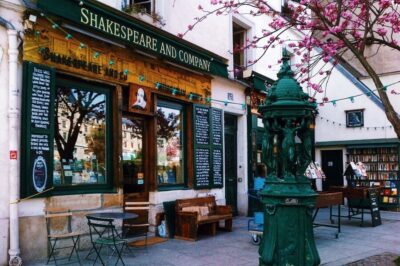

Le Marais Walking Tours, compared.

Award-Winning Paris French Bakery Experience — Le Marais, 4th Arr
Read our review →
Paris Le Marais Food Tour With 10+ Tastings, Cheese, Wine & More
Read our review →
Paris Le Marais District Original Food and Wine Tasting Tour
Read our review →
Paris Bike Tour Hidden Secrets in the Latin Quarter & Le Marais neighborhoods
Read our review →
Paris Culinary Tour: 11 Tastings & 2 Wines in Le Marais
Read our review →

Le Marais District Food Tour with 10+ Tastings & Wine
Read our review →
Browse the lists this tour appears in