
Reviewed · MONTMARTRE HILL TOURS
Paris: Montmartre Macaron Baking Workshop
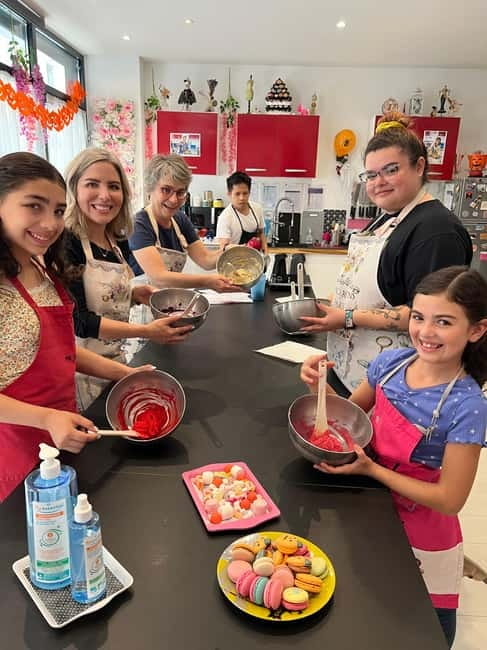
Macarons reward patience and precision. At the Montmartre Macaron Baking Workshop at Maca’Rong, you learn Italian meringue technique, then pipe, design, and bake your way to 15 take-home macarons in about two focused hours. It is a small-group class built around doing the steps, not just watching someone else do them.
I like the way the workshop keeps you moving through the real bottlenecks of macaron baking, from getting the batter right to filling and piping clean shells. Your only real consideration: if you want a printed recipe to write on during class, that is not guaranteed, and you may be directed to grab details later (for example via Instagram).
In This Review
- Key things I think you will notice right away
- Arriving at Maca’Rong on Rue Legendre, and what the 2 hours really feel like
- Tant pour tant and Italian meringue: the shell skills that make macarons fail less
- Macaronage and piping bag control: how you avoid waste and get smooth shells
- Making your macarons pretty: double nozzle designs you can actually do
- Filling lesson while your shells bake: raspberry ganache and mango-passion options
- What you take home: 15 macarons in a special box, plus the practical gear
- Price, group size, and when this workshop is worth the $150
- Should you book the Montmartre Macaron Baking Workshop at Maca’Rong?
- FAQ
- Where is the meeting point for the workshop?
- How long does the Montmartre macaron workshop last?
- How many people are in the group?
- What do I make, and how many macarons do I take home?
- What method do you teach for the macaron shells?
- What fillings and flavors are included or demonstrated?
- Is this class suitable for people with food allergies or lactose intolerance?
- Can I stay and observe if I am not participating?
Key things I think you will notice right away
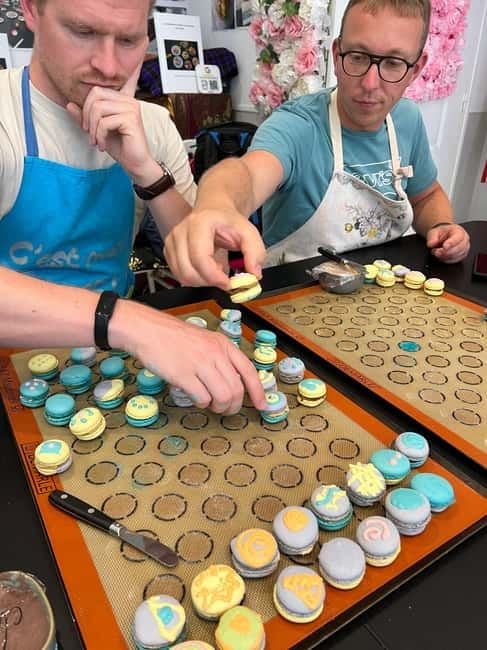
- Italian meringue method for steadier macaron shells and a more efficient process
- Tant pour tant setup with ingredients ready for each participant, so you can focus on technique
- Macaronage practice that teaches you when the batter is shiny enough
- Personal designs with a double nozzle so your macarons look like yours
- Raspberry or mango-passion ganache lesson to level up your filling, not just your shells
- Small group size (max 6) for real hands-on coaching
Other kitchens for macarons and pastry:
- Paris: Montmartre Cheese, Wine & Pastry Guided Walking Tour
★ 4.8 · 2,255 reviews - Paris: Macaron Class at Galeries Lafayette
★ 4.2 · 1,196 reviews - Award-Winning Paris French Bakery Experience — Le Marais, 4th Arr
★ 4.5 · 1,186 reviews - Private Montmartre Food Tour with Wine, Cheese & Pastries
★ 5.0 · 1,027 reviews
Arriving at Maca’Rong on Rue Legendre, and what the 2 hours really feel like
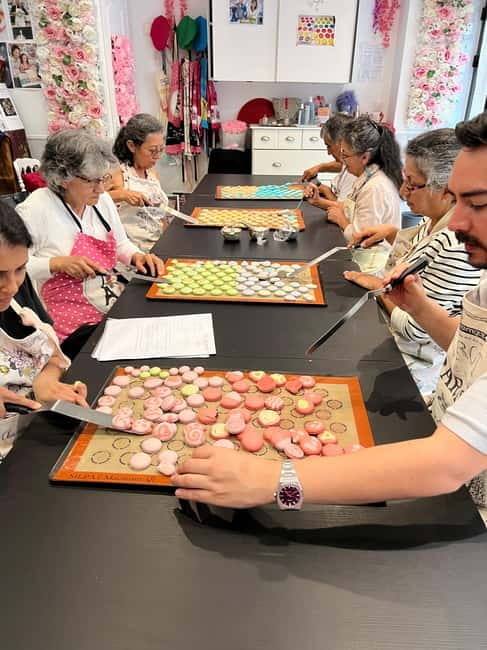
Your workshop starts at 175 Rue Legendre, inside the Maca’Rong shop on the ground floor. This matters more than you might think. When the session begins right where the supplies and tools are staged, you do not waste time hunting for equipment or waiting for the class to get set up.
Expect a tight timeline built around making macarons the right way: shells first, then piping, then filling demos while your batch finishes baking. The class is English and French, and it is small group sized, capped at 6 participants, which keeps questions from turning into a waiting game.
One practical point: you cannot just stand there and watch. The workshop requires reservations for everyone in the room, so plan to join in if you want to be part of the experience.
Tant pour tant and Italian meringue: the shell skills that make macarons fail less
Macaron success is mostly about avoiding a few predictable mistakes. This workshop teaches you the workflow that helps prevent them, starting with your ready-to-go bowl of tant pour tant ingredients. That phrase means the sweet, dry almond-based mix is measured and portioned so you can concentrate on the wet technique.
Then comes the key shell lesson: Italian meringue. This is the method that uses hot sugar syrup to whip egg whites into a stable meringue. You learn why it is “foolproof” compared with some other approaches, because it tends to give you more dependable structure for the batter and shell. The guide also explains other techniques, but the Italian route is the one you actually build on during the session.
If you care about doing macarons at home later, the most useful part is not the fancy name. It is the cause-and-effect coaching: what changes when the batter gets too thick, too loose, or when the meringue is not whipped enough. You get the steps, but you also get the reasons behind them.
Instructors you might meet here include Kanika and Vouthy (chef patissier). People consistently praise how practical they are, and that shows up in the way the workshop focuses on repeatable habits you can copy later.
Macaronage and piping bag control: how you avoid waste and get smooth shells
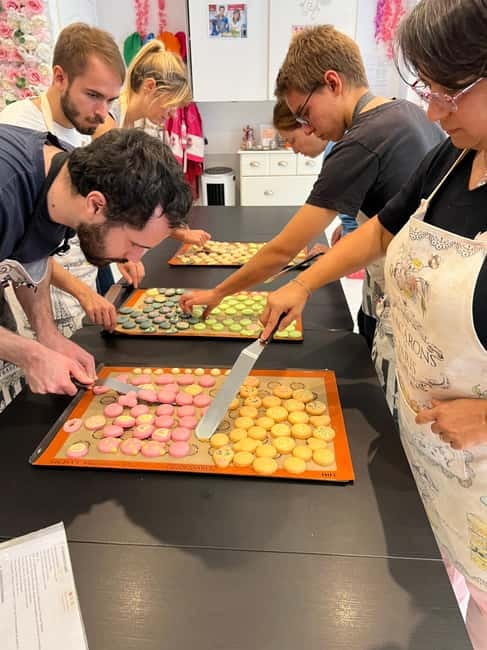
Once your batter comes together, the workshop moves into macaronage, the mixing stage where you develop the right batter texture. This is where many people panic at home, because macaron batter does not behave like cookie dough. The goal is a consistency that flows and shines, not a batter that looks lumpy or stays stubborn.
In this class, you are guided through what to look for as the batter reaches the right stage. The instruction is slightly technical, but it is also efficient, which is exactly what you want in a 2-hour class. You get your batch to the right point and then you move on.
Next is piping. They specifically teach you how to fill and handle the piping bag to avoid waste. That sounds minor, but it changes everything. If your bag is overfilled, you get messy domes and inconsistent rounds. If you do not control pressure and angle, you get uneven shells. Here, you practice the basics so your piping matches the shell template work.
You will pipe onto round templates first, then later you get into decorative work. That order is smart because it reduces frustration. You learn the functional piping before you add personality.
Making your macarons pretty: double nozzle designs you can actually do
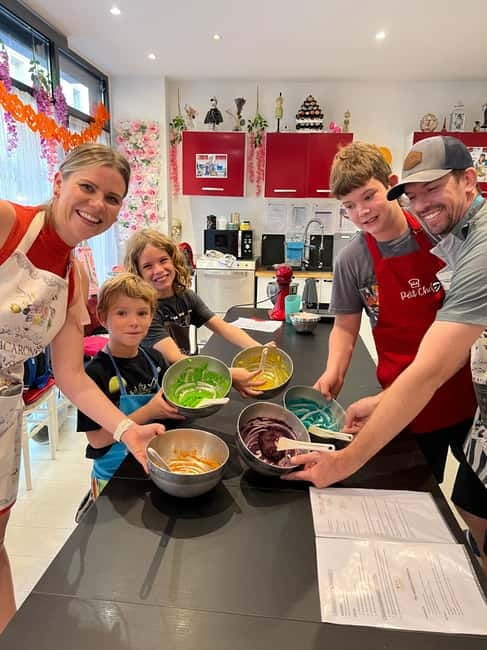
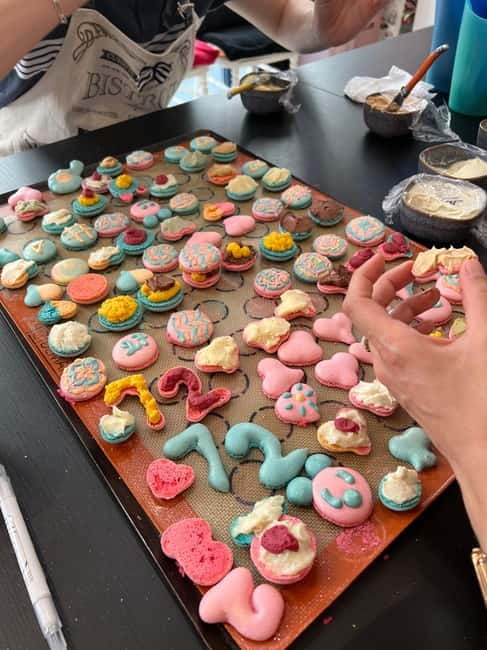
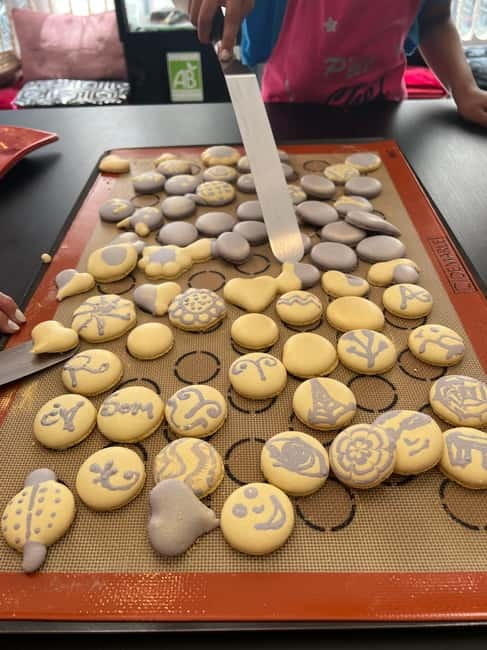
The highlight for many people is how much creative control you get. After shells are piped, the workshop shifts to designs using a smaller double nozzle. This is the part that feels like craft time instead of lab time.
The format is simple: you are shown how to embellish, then you apply it to your own shells. You can keep it minimal, go bold, or mix both. You are not just coloring something that looks good only on paper. You learn how to pipe patterns while the batter sets up.
This is also where the “hands-on” part truly matters. If you are watching a class online, you might understand the idea of double nozzle piping. Doing it for real forces you to learn the rhythm and pressure that makes lines stay crisp instead of spreading.
By the end, your shells are not just baked cookies. They are personalized macaron tops, with designs you put there.
Other climbs up the Butte:
- Montmartre Hidden Gems and Scenic Highlights Walking Tour★ 5.0 · 2,684 reviews
- Montmartre Hill French Gourmet Food and Wine Tasting Walking Tour★ 5.0 · 2,588 reviews
- Paris: Montmartre Highlights Walking Tour with a Local Guide★ 4.9 · 2,318 reviews
- The Secrets of Montmartre Walking Tour★ 4.8 · 1,258 reviews
Filling lesson while your shells bake: raspberry ganache and mango-passion options
While your macarons bake, your culinary work continues with a ganache focus. You learn how to make a richer raspberry ganache, and the workshop also covers a mango-passion option. The filling is not treated like an afterthought. It is presented as part of what makes the final macaron taste complete.
This matters for value and for what you take home. If you only learn shell technique, your macarons may look right but taste flat. If you learn fillings too, you can actually build flavors at home without relying on store-bought shortcuts.
The workshop also includes a range of filling options. You are provided 10 fillings, so you are not stuck with just one profile. That makes it easier to match your shell designs with flavors, and it helps you leave with variety rather than one single batch you might get bored of.
What you take home: 15 macarons in a special box, plus the practical gear
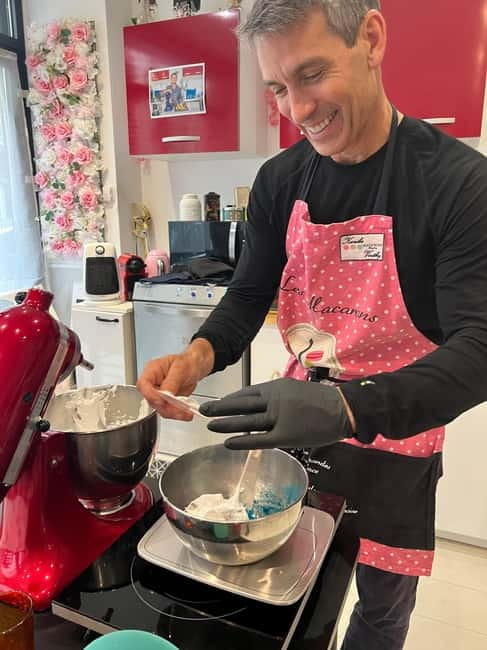
You end up crafting 15 personalized macarons to take home. You also receive them encased in a special box and you get bags for transporting the box, which is a small detail but a big one if you plan to carry them through Paris without drama.
Depending on how precise your piping and decorating are, you may end up with slightly more or less from the batch, but the expectation is that you leave with a substantial number. That is one reason this workshop often feels like great value. You are not paying just for instruction. You are paying for materials, technique coaching, and a finished product you actually get to share later.
The class also includes tea and coffee, plus macarons for tasting during the session. That gives you a reference point while you learn, so you can connect what you are doing with what good texture and flavor should feel like.
And yes, you get a chef sharing a secret recipe element. You should still expect that notes might not be printed for you, so if you want to recreate the process later, plan to capture key steps on your phone.
Price, group size, and when this workshop is worth the $150
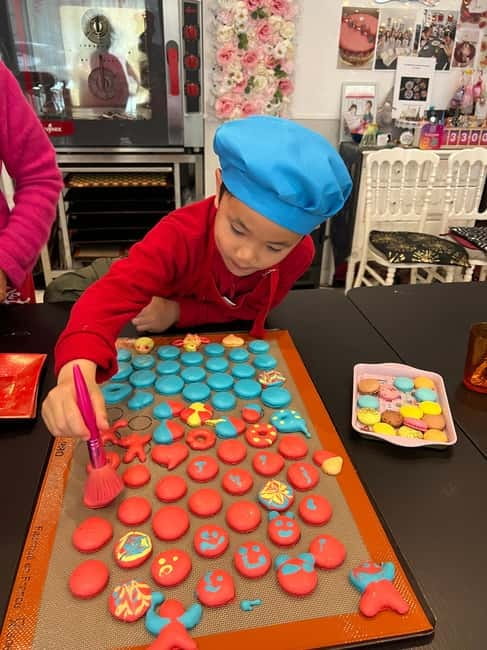
At $150 per person for a 2-hour class, you are paying for three things at once: specialized technique coaching, ingredients and gear, and a batch of macarons you can confidently take home.
The group size is limited to 6 participants, which is a major part of the value. In bigger classes, instructors often split attention across many hands. Here, the structure is built so you can get guidance when you hit the tricky points like batter texture and piping consistency.
Also, this is the kind of workshop that teaches skills, not only a final result. You leave knowing the Italian meringue method, the macaronage stage, and how to pipe clean shells, then you learn a filling approach like raspberry ganache (and mango-passion as an option). That turns the payment from a one-time splurge into a repeatable recipe you can use later.
Who should consider it?
- Adults and couples who want a real macaron method, not a pastry demo
- Food lovers who like learning technique they can practice at home
- Families with kids who can handle a hands-on baking session (the workshop is not suitable for children under 6)
- Anyone planning to eat macarons in Paris anyway, because you will likely understand what you are tasting
Who should skip it?
- People with food allergies or lactose intolerance (not suitable)
- Wheelchair users (not suitable)
- Anyone traveling with oversize luggage (not allowed)
- Babies under 1 year
If you are trying to decide between buying a box of macarons and doing this class, the math can surprise you. You get more than a small tasting box. You leave with a build-your-own experience and a stack of macarons you can share, plus the method behind them.
Should you book the Montmartre Macaron Baking Workshop at Maca’Rong?
If your goal is to go home with a usable macaron method, I think this is a smart booking. The workshop is paced to cover the hard parts: Italian meringue, the exact feel of macaronage, piping bag handling, then filling like raspberry ganache. You also get personal designs with a double nozzle, which makes the experience feel creative, not mechanical.
Book it if:
- You want a small-group, hands-on class with 15 take-home macarons
- You like structured instruction and clear steps
- You want to learn more than one flavor path, since there are 10 fillings
Maybe skip it if:
- You want to watch and not participate, because the class does not allow non-participants to stay
- You strongly need a printed recipe handed out on-site, since a printed sheet may not be provided
If you are ready to roll up your sleeves for a couple hours in Montmartre, this workshop is one of the better ways to turn Paris candy obsession into real baking confidence.
FAQ
Where is the meeting point for the workshop?
You meet at 175 Rue Legendre, and you go inside the Maca’Rong shop on the ground floor.
How long does the Montmartre macaron workshop last?
The workshop duration is 2 hours.
How many people are in the group?
It is a small group limited to 6 participants.
What do I make, and how many macarons do I take home?
You make macaron shells, fill them, and take home 15 macarons in a special box.
What method do you teach for the macaron shells?
The workshop teaches the Italian meringue method as the main approach for making foolproof macaron shells.
What fillings and flavors are included or demonstrated?
You learn to make a raspberry ganache, and you also discover a mango-passion ganache. You are also provided a selection of 10 fillings.
Is this class suitable for people with food allergies or lactose intolerance?
No. People with food allergies and people with lactose intolerance are not suitable for this workshop.
Can I stay and observe if I am not participating?
No. Everyone in the workshop must have made a reservation, so it is not possible to stay just to observe.
Ateliers for an Afternoon
- Fragonard Paris: Mini Perfume Workshop
★ 4.5 · 1,924 reviews - Paris Cooking Class and Lunch with Wine plus Market Visit Option
★ 5.0 · 1,024 reviews - Paris Croissant Small-Group Baking Class with a Chef
★ 5.0 · 910 reviews - Paris: 2-Hour Perfume Creation Workshop
★ 4.8 · 731 reviews
Newest write-ups from Paris




Montmartre Hill Tours, compared.
Montmartre Hidden Gems and Scenic Highlights Walking Tour
Read our review →
Montmartre Hill French Gourmet Food and Wine Tasting Walking Tour
Read our review →
Montmartre Highlights Walking Tour with a Local Guide
Read our review →
Montmartre Cheese, Wine & Pastry Guided Walking Tour
Read our review →
Private Montmartre Food Tour with Wine, Cheese & Pastries
Read our review →
Sacré-Coeur and Montmartre Tour with Expert Guide
Read our review →
Paris Montmartre Food Tour – A Full French Meal by Do Eat Better
Read our review →Browse the lists this tour appears in