
Reviewed · MONTMARTRE HILL TOURS
Paris: Montmartre Walking Tour with Sacré-Cœur Basilica
Montmartre moves fast, even when you slow down. This 2-hour walk strings together Moulin Rouge, artist stops like Van Gogh’s house, and a grand finish at Sacré-Cœur with Paris views. It’s a smart way to orient yourself in the hills without trying to build a route from scratch.
Two things I really like: the careful mix of art and street-level storytelling, and the way the tour pauses for the I Love You Wall so you get a real photo moment, not just a quick stop. I also like how the route includes both famous names and under-the-radar places like Clos Montmartre.
One thing to consider is the walking, including uphill bits, and the fact that the guide ends by dropping you at Sacré-Cœur. You’ll explore inside on your own, so you’ll want to arrive with a little time and energy left.
In This Review
- Key things to notice before you go
- Starting at Blanche: getting your bearings by Moulin Rouge
- Moulin Rouge to Le Mur des Je t’aime: a love-and-celebrity photo rhythm
- Van Gogh’s house and La Bateau-Lavoir: art stops that feel human
- Dalida and Place Dalida: music legend, street-level context
- Moulin de la Galette, La Maison Rose, and Clos Montmartre
- Lapin Agile and Place du Tertre: where the neighborhood keeps performing
- Sacré-Cœur finale: dramatic Paris views, with self-guided time
- Price and timing: is $46 worth 2 hours?
- Should you book the Montmartre Walking Tour with Sacré-Cœur?
- FAQ
- Where do I meet for the Montmartre walking tour?
- How long is the tour?
- How much does it cost?
- What language is the live guide?
- Does the guide go inside Sacré-Cœur with you?
- What stops are included on the tour?
- Are meals or drinks included?
- What are the rules during the tour?
- Is this tour suitable for everyone?
- What should I wear or prepare for?
Key things to notice before you go
- Blanche Metro start puts you right next to Moulin Rouge, so you get instant Montmartre atmosphere.
- Van Gogh’s house and La Bateau-Lavoir connect the dots between artists who actually worked and gathered here.
- Le Mur des Je t’aime gives you a quick romantic break, plus a clear photo stop.
- Clos Montmartre adds a real, surprising twist, because wine is still produced in Paris.
- Lapin Agile and Place du Tertre show you Montmartre nightlife and the artists who keep working in the square.
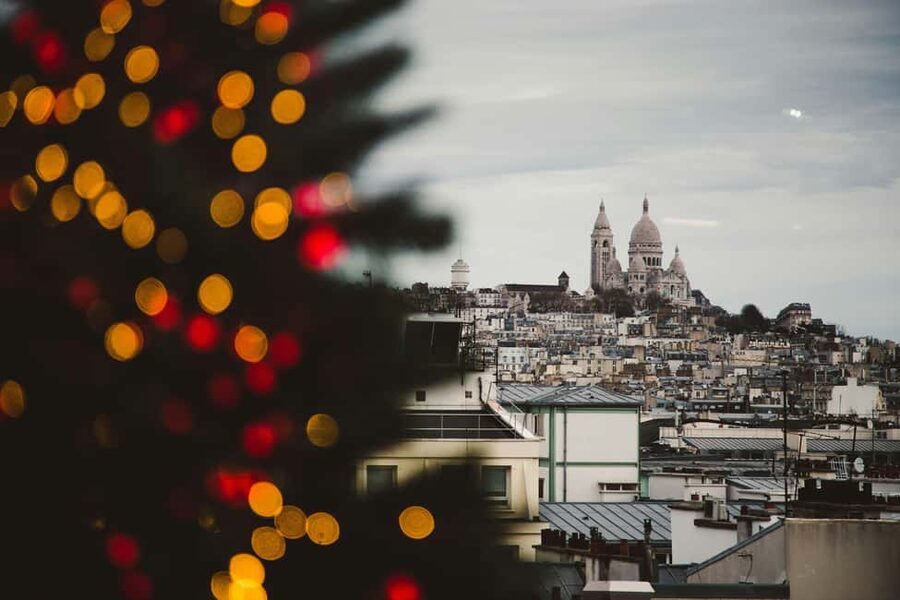
- Sacré-Cœur views without a guide inside means you control your pace for photos and the interior.
Other climbs up the Butte:
- Montmartre Hidden Gems and Scenic Highlights Walking Tour
★ 5.0 · 2,684 reviews - Montmartre Hill French Gourmet Food and Wine Tasting Walking Tour
★ 5.0 · 2,588 reviews - Paris: Montmartre Highlights Walking Tour with a Local Guide
★ 4.9 · 2,318 reviews - Paris: Montmartre Cheese, Wine & Pastry Guided Walking Tour
★ 4.8 · 2,255 reviews
Starting at Blanche: getting your bearings by Moulin Rouge
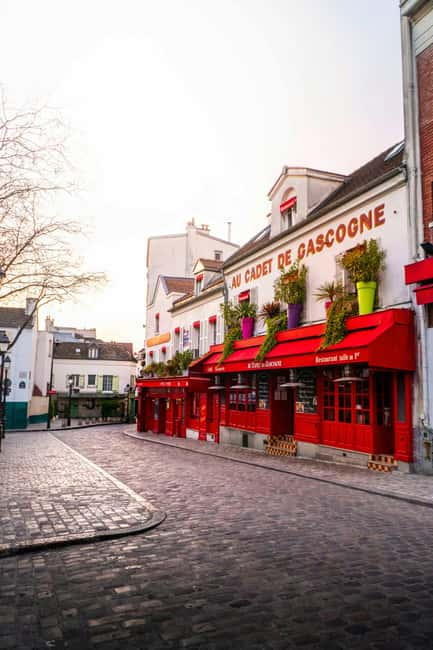
Your tour starts in front of the Blanche Metro station, on Line 2. It’s right by Moulin Rouge, so the first few minutes feel like a movie set, except you’re standing in the real place where the cabaret story lives.
A big value of starting here is orientation. Even if you’ve heard a lot about Montmartre, the neighborhood’s topography can feel confusing. This start gives you a clear mental map: you’re moving away from the big show business spotlight and toward the quieter artist streets higher up.
The route also gives you quick “okay, I get it” moments. You’ll pass Moulin Rouge, then transition toward the love-and-art corners that made Montmartre famous to artists, filmmakers, and poets. Expect a walk that feels deliberate, not rushed.
Practical tip: comfortable shoes matter. If your legs are already tired from getting around Paris, plan to take it easy at first and save your energy for the last stretch toward Sacré-Cœur.
Moulin Rouge to Le Mur des Je t’aime: a love-and-celebrity photo rhythm
After the Moulin Rouge pass-by, the tour keeps moving through streets that are instantly recognizable once you know what to look for. Then you hit Le Mur des Je t’aime, the Wall of Love, where messages of love appear in many languages.
I like this stop because it works on two levels. First, it’s genuinely beautiful and made for photos. Second, it slows the tour down enough that you can actually look around, notice the street life, and feel the neighborhood rather than just collect sights.
You’ll also get that classic Montmartre “what is this street actually like?” experience. The tour doesn’t just aim at big landmarks. It guides you through the small corridors between them, which is where Montmartre’s character shows up.
Photo tip: bring your phone charger energy in your legs, not just in your bag. The Wall is a quick photo moment, but you’ll want to linger enough to get one sharp picture without blocking other people.
Van Gogh’s house and La Bateau-Lavoir: art stops that feel human
This tour treats art like a living thing, not a museum lecture. One highlight is Van Gogh’s house, reached as you walk along the streets that link the neighborhood to his story. You also pass the Café des Deux Moulins, the famous café connected with Amélie, which helps you visualize how Montmartre became a cultural backdrop.
From there, you move to La Bateau-Lavoir, a historic artists’ studio where creatives such as Picasso once gathered. This is one of those stops where the value is not just who was there, but what it signals: Montmartre wasn’t only a place people visited, it was a place people worked and met.
What I like about this section is the balance. You get mainstream recognition (Van Gogh) and a broader creative network (Bateau-Lavoir and Picasso). It’s an art route that doesn’t require you to know every name already.
Watch for the uphill energy shifts. You’ll keep walking between each art stop, so pace yourself on the turns. If you’re the type who reads every sign, you’ll want to budget a little time, because the streets don’t always give you a long pause at every corner.
Dalida and Place Dalida: music legend, street-level context
Next up is Dalida, a French icon tied to the emotional side of Montmartre’s fame. You’ll visit her house and then do a photo stop at Place Dalida, a square named in her honor.
This part is a nice reminder that Montmartre isn’t only painters and windmills. It also belongs to singers, performers, and public figures whose music and presence shaped the neighborhood’s cultural identity.
Even if you’re not a Dalida superfan, the photo stop helps you anchor the story in an actual place. Squares in Montmartre act like small stages. When you stand in one, you can feel how people would gather here, and how a neighborhood becomes a brand of its own.
Consideration: if your group expects museum-style explanations at every stop, this section is more about guiding you to meaningful locations and letting you connect the dots with quick context. It’s walking-tour pacing, not an all-day lecture.
Other arrondissements taken at walking pace:
- Paris Top Sights Half Day Walking Tour with a Fun Guide★ 5.0 · 2,893 reviews
- Paris Île de la Cité and Notre-Dame Walking Tour With Crypt★ 5.0 · 2,272 reviews
- Paris in a Day: Louvre or Orsay, Eiffel Tower, City Walk & Cruise★ 5.0 · 1,956 reviews
- Paris City Center Free Walking Tour (Tip-Based)★ 5.0 · 1,340 reviews
Moulin de la Galette, La Maison Rose, and Clos Montmartre
Montmartre’s postcard look shows up hard in the middle of this walk. You’ll pass Moulin de la Galette, the windmill that once served as a popular dance hall. It’s one of those landmarks that makes you instantly understand why Montmartre became a place for nightlife and public entertainment.
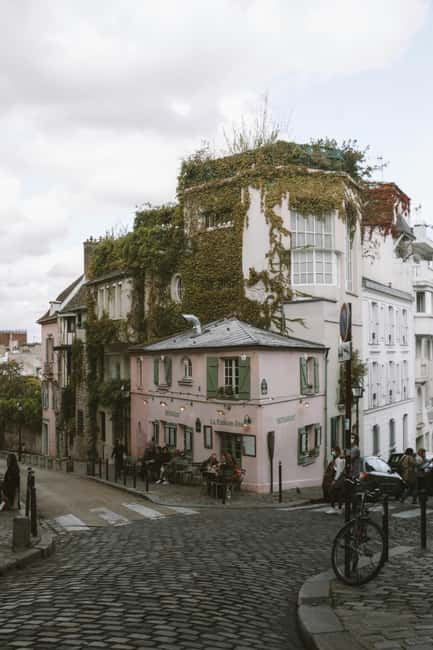
Then you’ll stroll by La Maison Rose, the pastel-pink café that artists have long been drawn to and that you may recognize from local artwork. This stop is less about ordering something and more about seeing how color and atmosphere define the area.
The highlight that changes the pace is Clos Montmartre, a “secret” vineyard tucked into the city. The tour points out that it’s still producing wine in Paris, and that detail matters. It turns Montmartre from an image into a living landscape, where old traditions still continue.
What to expect here: you’ll move along at a steady walking pace, with each stop designed for short, meaningful viewing. If you love unique details, this is the stretch where the tour feels most specific to Montmartre rather than generic sightseeing.
Lapin Agile and Place du Tertre: where the neighborhood keeps performing
As you head toward the finale, the tour adds traditional Montmartre nightlife with Lapin Agile Cabaret. It’s one of the last bastions of classic Montmartre cabaret, and it gives the neighborhood a sense of continuity. Even if you don’t go inside, the idea of what it represents lands fast.
Then you reach Place du Tertre, where artists still gather to sell their work. This is where Montmartre becomes visually active. You’re surrounded by people working at easels or displaying art, and the square feels like a place that has always served as a meeting spot.
I like this portion because it’s practical for timing. By the time you arrive here, you’ve already seen the big-name landmarks. Now you get the everyday Montmartre scene, which makes the Sacré-Cœur climb feel more grounded.
Consideration: Place du Tertre can be busy. If you want photos without crowds, choose your moments and keep moving. The tour helps you get in, look, and keep going, rather than getting stuck.
Sacré-Cœur finale: dramatic Paris views, with self-guided time
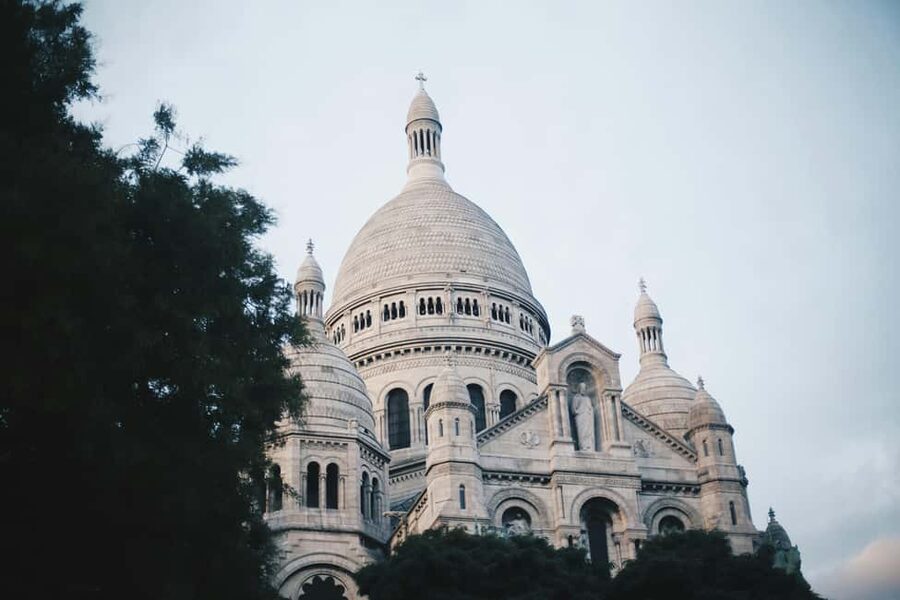
The tour ends at the Basilica of the Sacred Heart of Paris (Sacré-Cœur). The guide will drop you there, and you won’t go inside with the guide, so you can explore at your own pace.
This setup is smart. Sacré-Cœur is one of those places where everyone wants photos, and lighting changes fast. Having independent time lets you adjust your timing, linger at viewpoints, and step into the church when you’re ready.
Expect the big payoff: panoramic views of Paris. It’s the kind of finale that turns your earlier walking route into a real geography lesson. Suddenly you understand why the neighborhood earned its reputation for artists, performers, and visitors. The views explain the pull.
Practical note: the uphill portion is real. Even if you’re fine on your feet, go slow in the final climb. Bring a little water if you can, since meals and drinks are not included.
Price and timing: is $46 worth 2 hours?
For about $46 per person and a 2-hour duration, the value comes from the concentration of stops. You’re not just getting one landmark. You’re moving past Moulin Rouge, viewing the love wall, seeing artist-linked locations like Van Gogh’s house and La Bateau-Lavoir, learning about Dalida at Place Dalida, and finishing with Sacré-Cœur views.
Another value factor is the included focus stops. This tour includes visits and photo stops tied to specific places, including Clos Montmartre and Lapin Agile Cabaret, plus time walking through Montmartre’s core streets.
The trade-off is time. Most stops are not long sit-down moments, so if you want to spend an hour at every location, you’ll likely want a separate visit afterward. Think of this as orientation plus highlights, not a full deep-study day.
Who it fits best: first-time visitors who want a meaningful Montmartre loop, art and music fans who like stories tied to real addresses, and anyone who prefers a guided framework for a neighborhood that otherwise takes effort to navigate.
Who should pause before booking: people who struggle with uphill walking, and anyone who needs longer inside-church interpretation from a guide.
Should you book the Montmartre Walking Tour with Sacré-Cœur?
If you want an efficient Montmartre experience with real variety, this is a strong pick. I’d book it if your ideal day includes iconic Paris images (Moulin Rouge, Sacré-Cœur) plus specific art and culture stops (Van Gogh’s house, La Bateau-Lavoir, Dalida) and one genuine surprise (Clos Montmartre producing wine in the city).
I’d skip it if your priority is long museum time or if uphill walking is a concern. Also, since meals and drinks are not included, plan your food around the tour so you’re not hunting while tired.
One more reason to feel good about choosing this tour: the guides named Perkin and Pierre are praised for making the walk feel interesting and giving good background. That kind of guide energy matters in a neighborhood where it’s easy to get lost in crowds and cafés.
FAQ
Where do I meet for the Montmartre walking tour?
You meet in front of the Blanche Metro Station on Line 2. The guide will have a flag with The Perfect Vacation Logo.
How long is the tour?
The tour lasts about 2 hours.
How much does it cost?
The price is $46 per person.
What language is the live guide?
The tour is guided in English.
Does the guide go inside Sacré-Cœur with you?
No. The guide will drop you at Sacré-Cœur, and you will explore inside on your own.
What stops are included on the tour?
Included are a guided walking tour of Montmartre plus visits and stops at Van Gogh’s house, the I Love You Wall, La Bateau-Lavoir, Place Dalida (photo stop), Moulin de la Galette, La Maison Rose (stroll by), Clos Montmartre, Lapin Agile Cabaret, Place du Tertre, and Sacré-Cœur.
Are meals or drinks included?
No. Meals and drinks are not included.
What are the rules during the tour?
Alcohol and drugs are not allowed, and audio recording is not allowed.
Is this tour suitable for everyone?
It is not suitable for people over 95 years old.
What should I wear or prepare for?
Wear comfortable shoes for walking. The route includes some uphill walking, and it’s a good idea to check the weather forecast and dress appropriately. Photography is encouraged, but respect private property.
Newest write-ups from Paris





Montmartre Hill Tours, compared.

Montmartre Hidden Gems and Scenic Highlights Walking Tour
Read our review →
Montmartre Hill French Gourmet Food and Wine Tasting Walking Tour
Read our review →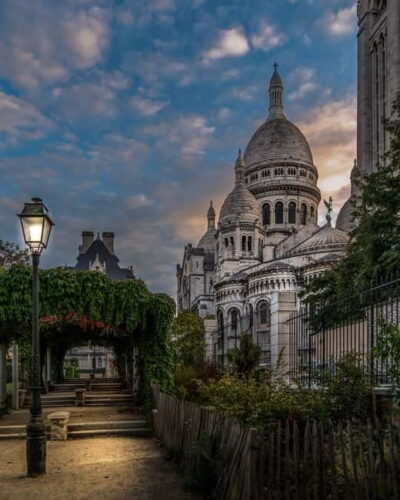
Montmartre Highlights Walking Tour with a Local Guide
Read our review →
Montmartre Cheese, Wine & Pastry Guided Walking Tour
Read our review →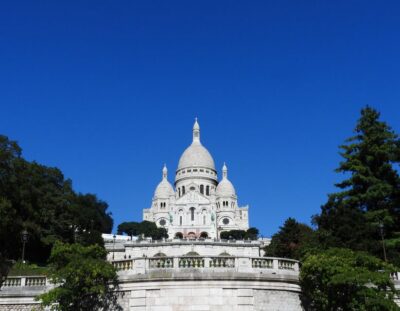
Sacré-Coeur and Montmartre Tour with Expert Guide
Read our review →
Private Montmartre Food Tour with Wine, Cheese & Pastries
Read our review →
Paris Montmartre Food Tour – A Full French Meal by Do Eat Better
Read our review →Browse the lists this tour appears in