
Reviewed · ORSAY MUSEUM ENTRY TICKETS
Paris: Musée d’Orsay Skip-the-Line Tour with Expert Guide
Orsay feels doable in 90 minutes. I love the skip-the-line entry and how an art expert turns famous paintings into a clear story. The only drawback is that the tour keeps a steady pace, so you will want extra time after to linger on what grabs you.
This is a small-group visit, capped at 20 people, with headsets that help when the museum gets busy. The format is built for first-timers and repeat visitors alike: you get guided highlights first, then you break off on your own inside the museum.
If you are sensitive to adult themes, check in with yourself before booking. The Orsay collection includes nude figures and references to prostitution and sexual exploitation of minors, and the guide discussions are not censored, though they can be adjusted for younger listeners.
In This Review
- Key things to know before you go
- Skip-the-line entry that actually matters at Orsay
- The Beaux-Arts station you pass through to reach the paintings
- Stop 1: Your guided route to the Impressionist revolution
- Stop 2: Monet, Manet, Renoir, Degas, Van Gogh, and why critics panicked
- Small groups and headsets, and why that improves the whole visit
- After the tour: free time to explore your own favorites
- Price of $67.60: what you are really paying for
- Planning tips for families, crowd levels, and content notes
- Should you book this Musée d’Orsay skip-the-line tour?
- FAQ
- How long is the Musée d’Orsay skip-the-line tour?
- What is included in the price?
- Is the tour offered in English?
- Where do we meet, and where does the tour end?
- How many people are in the group?
- Do we get time to explore the museum on our own?
- Is a mobile ticket provided?
- What is the cancellation policy?
Key things to know before you go
- Skip-the-line, pre-reserved entry saves you from waiting at the busiest doors.
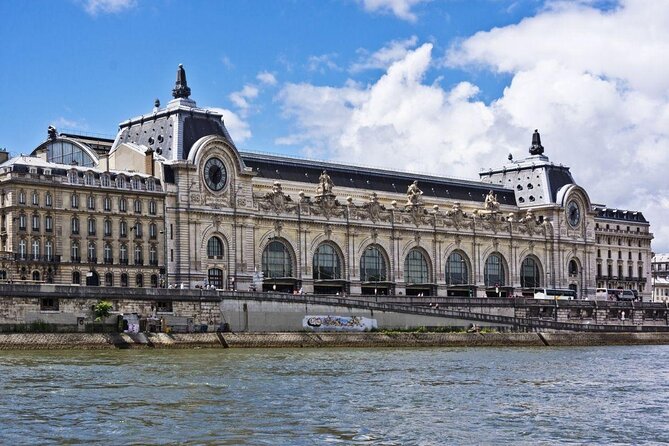
- Beaux-Arts train-station setting is part of the experience, not just background.
- Small group size (max 20) and headsets make it easier to hear the guide.
- Two guided segments keep the story flowing: context first, then the Impressionist revolution.
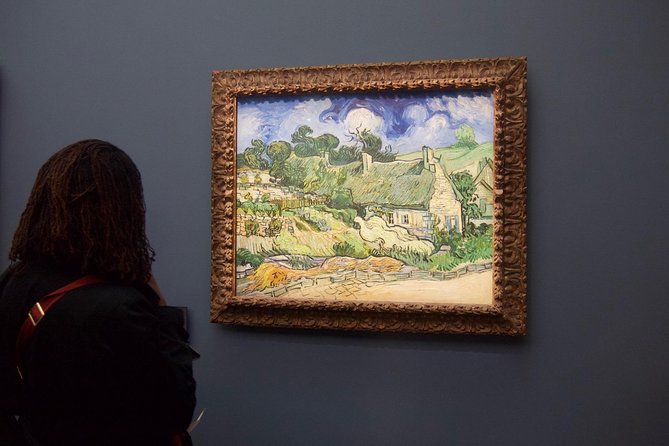
- Iconic works are front and center, including Monet’s Water Lilies and Manet’s Olympia.
- You get time to explore on your own right after the guided portion.
Other ways into the Orsay:
- Paris: Orsay Museum Entry Ticket
★ 4.7 · 25,647 reviews - Paris: Orsay Museum Entry Ticket and Digital Audio Guide App
★ 4.4 · 3,170 reviews - Paris in a Day: Louvre or Orsay, Eiffel Tower, City Walk & Cruise
★ 5.0 · 1,956 reviews - Musée d’Orsay Skip-the-Line Tour with Expert Guide
★ 4.8 · 1,088 reviews
Skip-the-line entry that actually matters at Orsay

At Orsay, the line problem is real. This tour packages a ticket plus reserved entry through a special entrance, so you can spend your energy looking at art, not standing still. For a museum as packed as the Orsay, that time-saving feels like more than convenience, it helps you have a better first visit.
I also like the “start strong, then go free” rhythm. You get a structured guided visit that helps you navigate a huge museum without trying to memorize everything. Then you get your own time to wander, compare, and zoom in on your favorites.
One practical note: the tour ends inside the museum. That matters because you can simply keep walking without backtracking to find your group again. Also, since the Orsay can get crowded, headsets and a guided route help you keep your bearings fast, even when people pack in around the most popular paintings.
The Beaux-Arts station you pass through to reach the paintings
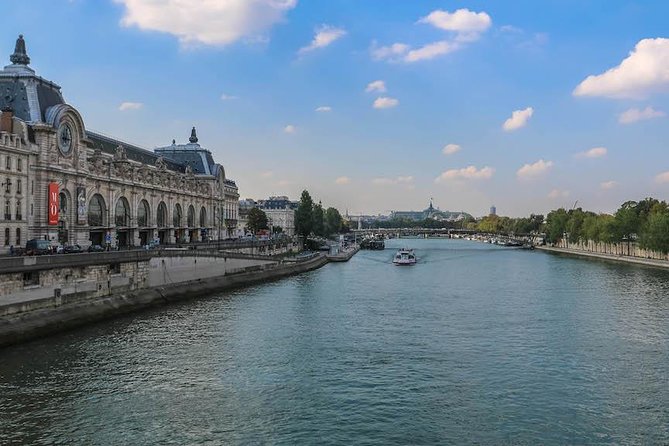
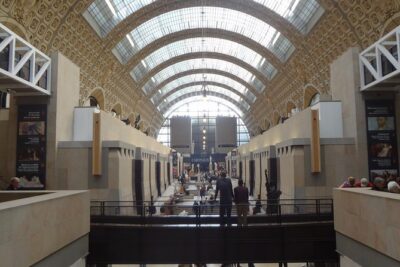
Musée d’Orsay is famous for its setting in a former train station. The soaring architecture is not just a nice photo stop. It also makes the whole experience feel like a grand, historic transition, which fits the museum’s 19th-century focus.
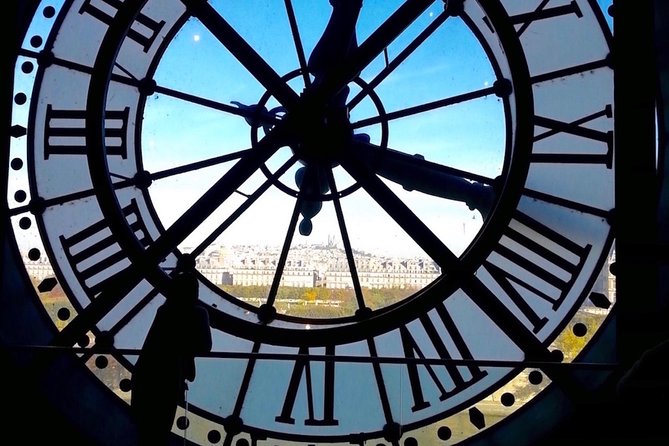
In this kind of guided tour, that building detail becomes useful. The guide helps you notice how the space frames the art, and why the museum itself feels like part of the story of modernity. Even one of the iconic visual landmarks, the giant clock, tends to become a natural “pause point” when you are moving through the building.
If you love museums where the structure gives meaning, you’ll appreciate this Orsay setup. If you prefer only paintings and nothing else, you can still focus on the art, but the station architecture will pull you in anyway.
Stop 1: Your guided route to the Impressionist revolution
The first guided portion begins just outside the museum at 2 Rue de la Légion d’Honneur, then moves you into Orsay. This stage is about learning how to look, not just where to stand. An accredited art expert leads you at a relaxed pace, aiming to give you context you can carry to the next rooms.
Here is what this first segment does well for you:
- It turns the movement into a story, so Impressionism does not feel like a random set of styles.
- It connects what you see on the canvas with why it caused a stir in its time.
- It helps you understand that the Impressionists were responding to the art world, not painting in a vacuum.
You will also get help with priorities. Orsay has a lot on display, and without guidance it is easy to wander and feel like you saw nothing in particular. With a planned highlight route, you end up with a stronger sense of what matters most, and why.
A detail I appreciate from the experience style: guides often weave lively history into the talk. People mention guides like Cecilia and Julie as standout examples of bringing the period to life, and that same tone is the goal here. If you learn best when someone explains the “why” behind the brushwork, this first stop is the one that sets you up for success.
Stop 2: Monet, Manet, Renoir, Degas, Van Gogh, and why critics panicked

The second part of the tour is where the Impressionist and Post-Impressionist story really locks in. This segment focuses on the shock factor. Bright color, visible brushstrokes, and modern subjects were not just artistic choices. They were challenges to the established standards that critics were used to.
Your guide explains what made works feel scandalous at the time, and how artists pushed back instead of toning things down. The talk moves through big names and the personalities around them, including Monet, Manet, Renoir, Degas, and Van Gogh.
You will also stand before major works, including:
- Monet’s Water Lilies
- Manet’s Olympia
That “stand in front of it and learn what to notice” format is where a guided Orsay visit starts paying off. You stop seeing paintings as just famous images, and you start reading them like scenes. After this portion, you will be much better at spotting style decisions, not only subject matter.
One more thing I’d call out: Orsay is crowded, and the most popular canvases can be shoulder-to-shoulder. This tour does not remove crowds. It does help you reach key works with a plan, and it helps you avoid spending your best attention on the wrong objects.
Other Paris galleries with a shorter queue:
- Louvre Museum Masterpieces Guided Tour with Access★ 4.5 · 12,023 reviews
- Paris: Louvre Museum Entry Ticket With Host and River Cruise★ 4.6 · 9,926 reviews
- Les Invalides: Napoleon’s Tomb & Army Museum Entry★ 4.6 · 9,185 reviews
- Louvre Museum – Exclusive Guided Tour (Entry Included)★ 5.0 · 6,296 reviews
Small groups and headsets, and why that improves the whole visit
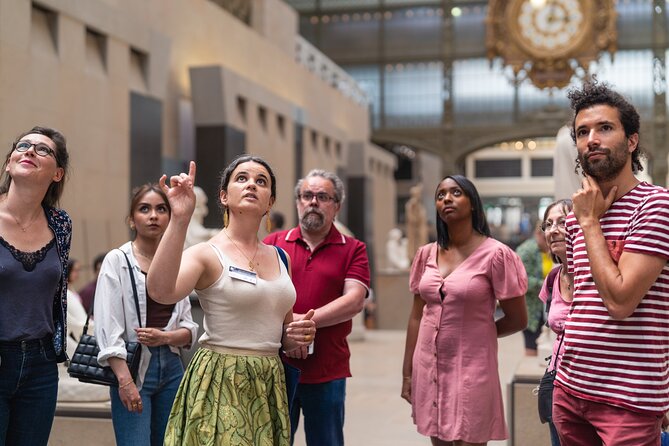
This tour keeps the group size to a maximum of 20 people. That is a big deal in a museum where paths narrow and certain rooms become bottlenecks. A smaller group makes it easier for the guide to keep everyone together without rushing you off.
Headsets also help. In practice, it means you can stay close enough to hear the art story without crowding into someone else’s personal space. It also means you can listen even in louder or more crowded areas.
Across the experience, guides are repeatedly praised for keeping people engaged, including families and mixed ages. Names that come up in the guide lineup include Claire, Ivan, Stephanie, Caroline, Anthony, and Sylviane. You should not expect one specific guide, but you can take the pattern seriously: the tour is designed for clear explanations and a fun, human delivery, not a monotone lecture.
If you want a guided museum day that does not feel like you are herded, this setup is a solid fit.
After the tour: free time to explore your own favorites
Once the guided portion wraps, you keep exploring on your own inside the museum. This is key. Many museum tours end and you walk away with only what you happened to catch. Here, you leave with context already in your head, so your free time becomes more focused.
I suggest using your extra time like this:
- Revisit the paintings that got your attention during the talk.
- Look for visual details the guide highlighted, like changes in brushwork or choices of color and subject.
- If you came for Impressionism, try to compare across artists rather than bouncing randomly.
One practical tip you will appreciate: even with skip-the-line entry, the museum can still feel busy later in the day. People recommend going early when possible, because Orsay crowd levels rise. If you are flexible, earlier is often better for actually enjoying the space around the paintings.
The nice part is that your ticket advantage and the tour route work together. You are not guessing where to start, and then you are not stuck with a rigid schedule.
Price of $67.60: what you are really paying for

At $67.60 per person for about 1 hour 45 minutes, the value comes from what is included. You get:
- Admission to Orsay
- A guided experience with an art expert
- Skip-the-line access through a special entrance
- A small group format with headsets
So you are paying for time efficiency and interpretation. Orsay is one of those museums where “just buying entry” can still be a great day, but it is easier to end up overwhelmed. This tour helps you build a mental map fast, especially around the Impressionist shift and the reasons it mattered.
Also, English is offered, and you get confirmation at booking. If you are planning ahead, the average booking timing is about 36 days in advance, so it is smart to book early if your dates are firm.
In short, the price is not just for a ticket. It is for guided navigation plus the story you would otherwise have to hunt down on your own, one label at a time.
Planning tips for families, crowd levels, and content notes
This Orsay experience can work for families, but there is an adult-content reality you should know. One review notes that discussions can include nude figures and references to prostitution and sexual exploitation of minors. The provider response states they do not censor these topics, though they can tailor discussions for smaller ears when needed.
So, if you are traveling with kids or teens, I would treat this as a factor you plan for. If your family is comfortable with art history topics in context, you will likely appreciate the honesty. If not, you might want to adjust expectations or choose a different kind of visit.
Crowds are another planning point. Even with skip-the-line entry, Orsay can still feel packed. Guides help you navigate, but they cannot change how many people want to see the same works. If your goal is slower viewing, arrive earlier in your museum day if you can.
Finally, taxis can be tricky in Paris. The meeting point is accessible, but if you plan to taxi in, leave extra time to find one and get to the start area.
Should you book this Musée d’Orsay skip-the-line tour?
I’d book it if you want an art museum day that is structured, not stressful. The big win is the mix of skip-the-line entry plus an expert-led explanation that helps you understand why Impressionism broke the rules. You also get enough time to keep exploring after the tour, which is where most people find their personal favorites.
I would think twice if you hate any guided pace at all, because the route is built to cover key works efficiently in about 1 hour 45 minutes. It is also worth considering the content notes if you are bringing younger kids.
If your goal is to walk out of Orsay feeling like you actually understood the story behind Monet, Manet, Renoir, Degas, and Van Gogh, this is a strong choice.
FAQ
How long is the Musée d’Orsay skip-the-line tour?
It runs about 1 hour 45 minutes.
What is included in the price?
The tour includes the admission ticket, pre-reserved entry through a special entrance, and guided time with headsets.
Is the tour offered in English?
Yes, the tour is offered in English.
Where do we meet, and where does the tour end?
You meet at 2 Rue de la Légion d’Honneur, 75007 Paris, France. The tour ends inside the museum at the Orsay Esplanade Valéry Giscard d’Estaing.
How many people are in the group?
The maximum group size is 20 travelers.
Do we get time to explore the museum on our own?
Yes. After the guided portion, you have free time to continue exploring at your own pace inside the museum.
Is a mobile ticket provided?
Yes, it is listed as a mobile ticket experience.
What is the cancellation policy?
You can cancel up to 24 hours prior to the experience for a full refund. Refunds are not possible for missed tours.
Newest write-ups from Paris







Orsay Museum Entry Tickets, compared.


Orsay Museum Entry Ticket and Digital Audio Guide App
Read our review →
Paris in a Day: Louvre or Orsay, Eiffel Tower, City Walk & Cruise
Read our review →
Musée d’Orsay Skip-the-Line Tour with Expert Guide
Read our review →
The Musée d’Orsay Guided Tour Orsay Museum Semi-Private 6ppl Max
Read our review →
Louvre & Musée d’Orsay Guided Museum Tour Semi-Private 6ppl Max
Read our review →
Browse the lists this tour appears in