
Reviewed · ORSAY MUSEUM ENTRY TICKETS
The Musée d’Orsay Guided Tour Orsay Museum Semi-Private 6ppl Max
A train station setting helps art make sense. This semi-private Musée d’Orsay tour (max 6 people) pairs reserved entry with an easy story line through the Impressionists. You’ll also get that hands-on feel because guides like Eduardo and Lily frequently lead with humor, questions, and real context.
I especially like the pacing and focus. You’re not wandering, you’re moving from one key work to the next, and the guide helps you see the big shifts from artists before the Impressionists through post-Impressionists like Van Gogh.
One possible drawback to plan around: the tour is not available for people with walking disabilities or those using a wheelchair, and Orsay security rules limit bag size.
In This Review
- Key things I’d put on your short list
- Why Musée d’Orsay feels different with a guide
- The semi-private size that makes questions worth it
- Priority entrance and the smart time window
- Your 2.5-hour Orsay route, in real-world terms
- Start at the former train station, then step into the art timeline
- Manet’s Luncheon on the Grass, where scandal helps you remember the art
- Renoir’s Dance at Le Moulin de la Galette, the human scale of Impressionism
- Millet’s The Gleaners, how people before the movement connect to the theme
- Monet’s poppies and water lilies, color with intention
- Degas’s Ballerinas, looking behind the performance
- Van Gogh’s Bedroom in Arles, techniques you can actually spot
- Works may swap, but the story stays
- The guide experience, from Eduardo to Ana
- Price and value: is $144.21 worth it?
- What to watch for, so nothing ruins your flow
- Who this tour fits best
- Should you book this Musée d’Orsay semi-private tour?
- FAQ
- How big is the group for this Musée d’Orsay tour?
- How long does the tour take, and is it offered in English?
- What’s included in the price?
- Are temporary exhibitions included, and are specific artworks guaranteed?
- Can I bring a big bag into the museum?
- Is the tour wheelchair accessible or suitable for walking disabilities?
- What is the cancellation policy?
Key things I’d put on your short list
- Max 6 travelers so you can actually ask questions
- Reserved entry included to reduce waiting at the museum
- Professional English-speaking guide with a clear art-history thread
- Orsay highlights in one route, usually including Manet, Renoir, Monet, Degas, Millet, and Van Gogh
- 2 to 2.5 hours to cover a lot without turning it into a marathon
- Works may vary if an artwork is on loan or under restoration
Other ways into the Orsay:
- Paris: Orsay Museum Entry Ticket
★ 4.7 · 25,647 reviews - Paris: Orsay Museum Entry Ticket and Digital Audio Guide App
★ 4.4 · 3,170 reviews - Paris in a Day: Louvre or Orsay, Eiffel Tower, City Walk & Cruise
★ 5.0 · 1,956 reviews - Paris: Musée d’Orsay Skip-the-Line Tour with Expert Guide
★ 4.5 · 1,145 reviews
Why Musée d’Orsay feels different with a guide
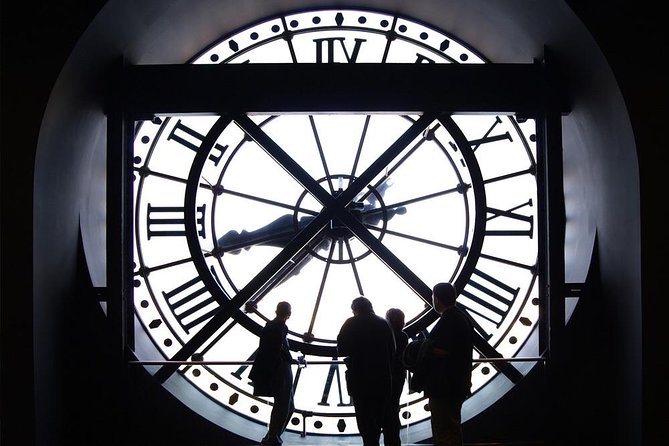
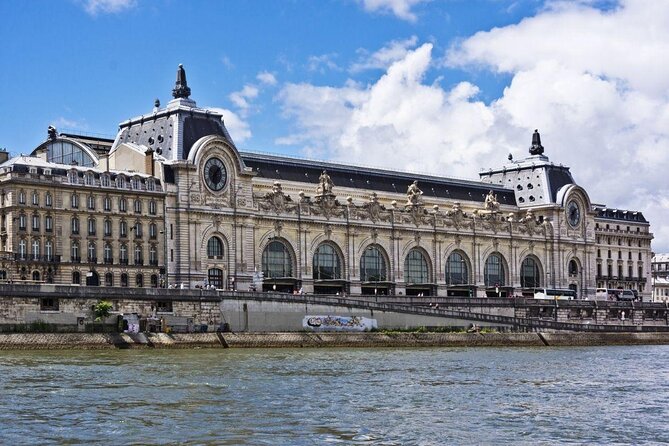
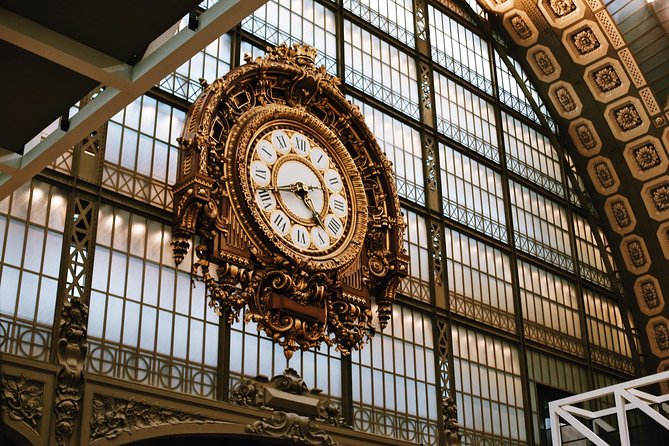
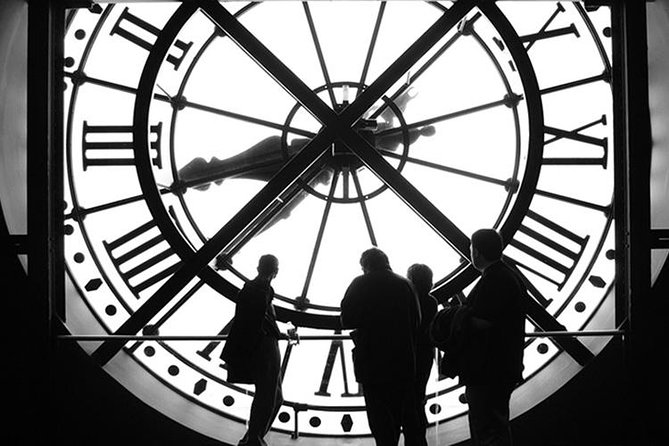
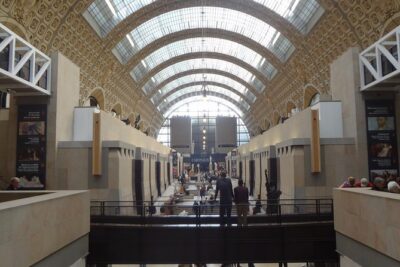
Musée d’Orsay is one of those Paris museums that can overwhelm fast. The building alone, a converted train station with big, dramatic spaces, already pulls your attention. Then you hit galleries filled with paintings that look similar at first glance, until someone explains what changed, when it changed, and why.
That’s where this tour earns its keep. With a small group and a guide, you’re not just looking, you’re learning the “what and why” behind the move toward modern art. And because the group is capped at 6, you’re less likely to lose your place or feel like a background extra in someone else’s tour.
The other thing I like: this tour is set up to help first-time visitors get oriented quickly. One guest route is often chronological, so you start with the artistic leads up to the Impressionists and then follow what came after. It makes the museum feel like a story instead of a shuffle through rooms.
The semi-private size that makes questions worth it
This is genuinely built around the phrase semi-private. The group is never more than 6 guests, and that matters more than it sounds.
In a big group, the guide has to push forward. In this smaller setup, the guide can slow down when someone wants clarification. In the stronger tours, guides like Kotryna S, Christophe, and Ivanna kept the group engaged while still giving detailed explanations of paintings and techniques.
You’ll feel that difference most in the “pause points.” Those are moments where your brain asks, Wait, what am I looking at? Why does it look different? A good guide can answer without moving on like the next stop is already calling their name.
Priority entrance and the smart time window
You get priority entrance, and admission fees are included. In practice, that means you’re spending your limited time inside Orsay, not trapped outside with everyone else.
Timing also helps. The tour runs about 2 hours to 2.5 hours, with morning, afternoon, or evening options. For many people, booking an evening slot can be easier on the nerves, especially if you’re trying to see other parts of Paris the same day.
One practical note: some security measures can still create lines, even with reserved entry. If that happens, the tour guide can usually help you adjust your flow, but it’s smart to keep your expectations flexible.
Your 2.5-hour Orsay route, in real-world terms
The museum visit is built around a guided route through major movements that led to Impressionism and then pushed beyond it. It’s not random. It’s a progression that helps you connect the dots.
Other Paris galleries with a shorter queue:
- Louvre Museum Masterpieces Guided Tour with Access★ 4.5 · 12,023 reviews
- Paris: Louvre Museum Entry Ticket With Host and River Cruise★ 4.6 · 9,926 reviews
- Les Invalides: Napoleon’s Tomb & Army Museum Entry★ 4.6 · 9,185 reviews
- Louvre Museum – Exclusive Guided Tour (Entry Included)★ 5.0 · 6,296 reviews
Start at the former train station, then step into the art timeline
You meet at Musée d’Orsay and the tour ends back at the same meeting point. That means you’re not chasing a different pickup location later.
Early on, the guide helps you understand the building and the museum’s logic. Orsay is a converted rail station, and that layout can make visitors feel turned around. Your guide’s job is to get you oriented quickly, then guide you into the key rooms where the story begins.
Manet’s Luncheon on the Grass, where scandal helps you remember the art
One of the usual stops is Manet’s Luncheon on the Grass. This painting gets attention for a reason, and a good guide uses that spark to teach more than facts. They explain why the work was controversial at the time, and how that reaction fits into the bigger shift in art.
This is a great start because it gives you a “before and after” mindset. You start noticing that art choices were not just aesthetic. They were also social. Technique, subject, and presentation all carried meaning.
Renoir’s Dance at Le Moulin de la Galette, the human scale of Impressionism
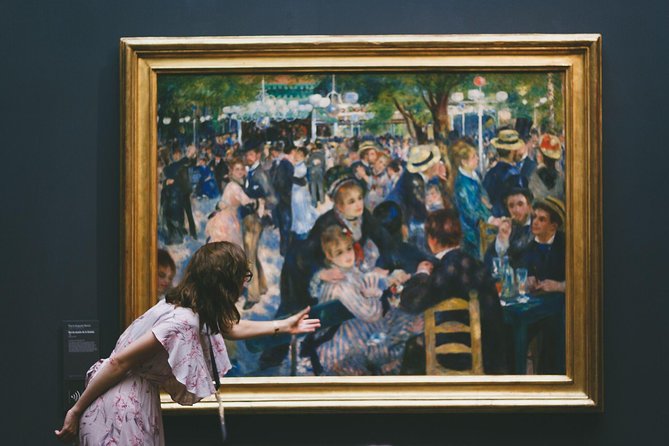
Next up, Renoir’s Dance at Le Moulin de la Galette is often a highlight. If you’ve ever felt like Impressionism is just pretty color, this stop can correct that. You see how modern life and light effects work together, and you start noticing composition and brushwork rather than only atmosphere.
A strong guide also helps you interpret what you’re seeing. You learn to look for how the scene is built, not just how it feels.
Millet’s The Gleaners, how people before the movement connect to the theme
The tour often includes Millet’s The Gleaners. This matters because it shows you the roots of subject matter that helped shape the next wave of art.
The value here is context. You’re not just learning names of artists, you’re learning the threads connecting Realism and the social concerns that fed later Impressionist ideas. It’s an easy way to see that Impressionism didn’t come out of nowhere.
Monet’s poppies and water lilies, color with intention
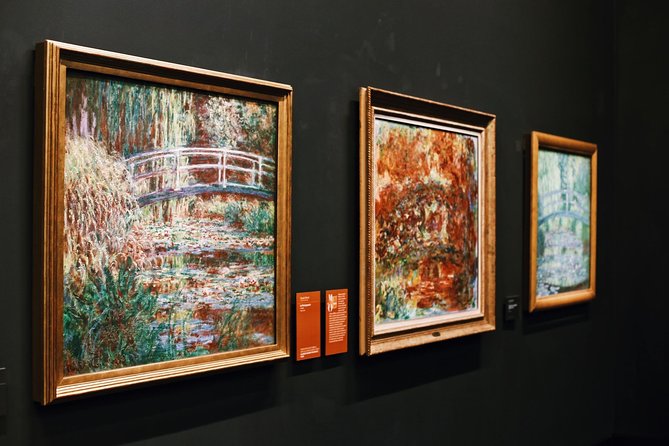
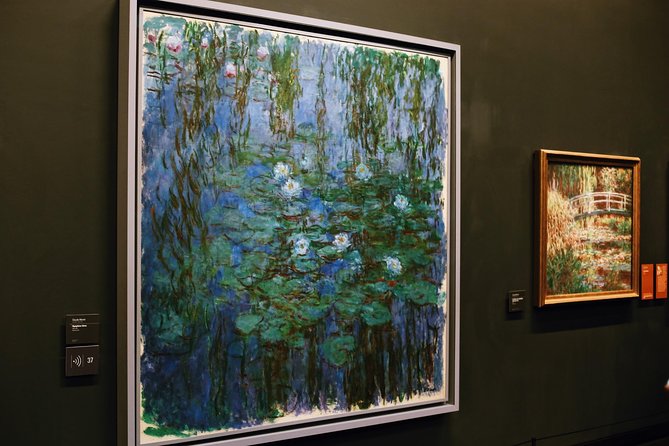
Monet is a must at Orsay, and this tour typically highlights Monet’s poppy field and water lilies. The guide uses these as anchor points for understanding Impressionism as more than casual observation.
Instead of treating the colors like decoration, you’re shown how the artist organized perception. You learn to see that these works are built around how light changes, how the eye reads shapes, and how a painting can feel immediate while still being carefully designed.
If you love photography, this stop can be surprisingly satisfying, because you learn why the look feels modern and how the artist achieved it.
Degas’s Ballerinas, looking behind the performance
Degas’s Ballerinas is another common stop. Degas is a bridge figure in the story, and a good guide often focuses on what makes his work different from the more outdoor, light-focused side of Impressionism.
This is one of those sections where you can learn technique by learning intent. You start noticing motion, angles, and framing choices that make the ballet feel caught mid-thought instead of posed like a postcard.
Van Gogh’s Bedroom in Arles, techniques you can actually spot
Van Gogh’s Bedroom in Arles is frequently included. This is where the tour’s art-history thread becomes practical. A guide explains techniques in a way that helps you see them even if you’re not an art major.
If you’ve ever wondered why Van Gogh’s color feels emotional instead of descriptive, this stop is where you can start answering that for yourself. You connect brush direction, color layering, and the feeling of space.
Works may swap, but the story stays
A smart thing to know: the tour highlights generally include the big names listed, but specific works can be temporarily on loan or under restoration. That’s normal at major museums.
Even if one painting is missing on your date, the route and the movement story should still make sense. You should still get a strong “evolution of style” experience.
The guide experience, from Eduardo to Ana
A lot of the best moments in the tour depend on the person leading it. The good news is that many guides have a track record for turning art into stories.
You might encounter guides such as:
- Eduardo, praised for engaging delivery and clear timeline explanations
- Lily, often noted for being fun and for keeping kids engaged across ages
- Christophe, described as a strong pace-setter who stays responsive to questions
- Ana, recognized for leading through the collection and making the museum feel organized
- Ivanna, noted for storytelling and for organizing the journey by evolution of styles
- Valerie, praised for flexible pacing and friendly explanations
- Daniel, highlighted for well-organized structure and good pacing
One practical strategy for you: if you’re booking for a family, check whether the operator is offering a kid-friendly family tour option as an upgrade. The standard format already works for many families, but a family-specific option can help keep attention where it needs to be.
Price and value: is $144.21 worth it?
At $144.21 per person, this is not a budget tour. You’re paying for three things that matter in Paris: time savings, guided context, and a small group size.
Here’s how I think about value:
- Reserved entry and entrance fees included reduce time lost to lines, and time at Orsay is expensive if you want to enjoy rather than sprint.
- A professional guide gives you an art-history framework that you can’t easily replicate in a rush with an app.
- A max group of 6 keeps it conversational, not lecture-heavy.
If you’re the kind of visitor who wants to understand why artists made certain choices, the price can feel fair quickly. If you just want a quick highlight pass and you’re happy reading wall labels, you might decide you can do it on your own. But if the museum feels like a blur, this tour is built to turn blur into clarity.
What to watch for, so nothing ruins your flow
A few rules and reality checks help you have a smoother visit.
- No large bags or suitcases inside: only handbags or small thin bag packs get through security.
- Appropriate dress is required for some sites within the museum.
- Moderate physical fitness is required, since this is a walking tour through multiple galleries.
- Some rooms have quiet or restricted speaking rules, and the guide shares information before you enter those areas.
Also, Orsay can have occasional closures without much notice from the museum itself. If the opening is delayed by more than 1 hour from the tour start, the operator provides an alternative. In those delay scenarios, refunds or discounts may not apply.
None of this should scare you off. It just means you’ll enjoy the tour more if you travel light and keep your schedule flexible.
Who this tour fits best
This is a strong match for:
- art enthusiasts who want the major works plus the “how we got here”
- first-time visitors who feel intimidated by Orsay’s size
- families with kids who benefit from stories and questions
- anyone who prefers small-group pacing over big-bus style movement
It may not fit if:
- you use a wheelchair or need accommodations for walking disabilities, since the tour is not available for those needs
- you expect a full checklist of every single famous work, since loans and restoration can affect what’s on view
If you like structure but still want time to look on your own, this format usually hits the sweet spot.
Should you book this Musée d’Orsay semi-private tour?
If you want Orsay to feel understandable, book it. The biggest reason is simple: the tour turns a huge museum into a guided art-history route that connects the Impressionists to what came before and after. With max 6 people, you get better interaction and less crowd friction.
I’d especially recommend it if you care about specific works like Manet, Monet, Degas, Millet, or Van Gogh, because the tour is designed to spotlight those themes and techniques. And if you’re only in Paris for a short time, the reserved entry and focused route are the difference between seeing a lot and actually enjoying what you see.
If you’re on a tight budget or you’re the type who loves wandering without structure, you might skip the paid guide. But if you want your museum visit to click, this is one of the more practical ways to do it.
FAQ
How big is the group for this Musée d’Orsay tour?
This is a semi-private tour with a maximum of 6 travelers, and it will never exceed that group size.
How long does the tour take, and is it offered in English?
The tour runs about 2 hours to 2 hours 30 minutes. It is offered in English.
What’s included in the price?
The tour includes a semi-private museum tour, a professional tour guide, reserved entry (including all entrance fees), and a mobile ticket.
Are temporary exhibitions included, and are specific artworks guaranteed?
Temporary exhibitions are not included. The tour’s highlights generally include major works such as Manet, Renoir, Monet, Van Gogh, Degas, and Millet if they are not on loan or being restored, and some collections can vary by year.
Can I bring a big bag into the museum?
No large bags or suitcases are allowed inside the museum. Only handbags or small thin bag packs are allowed through security.
Is the tour wheelchair accessible or suitable for walking disabilities?
The tour is not available for those with walking disabilities or for using a wheelchair.
What is the cancellation policy?
You can cancel for a full refund up to 24 hours before the experience starts. If the tour is canceled because the minimum number of travelers is not met, you’ll be offered an alternative or a full refund.
Newest write-ups from Paris





Orsay Museum Entry Tickets, compared.
Orsay Museum Entry Ticket and Digital Audio Guide App
Read our review →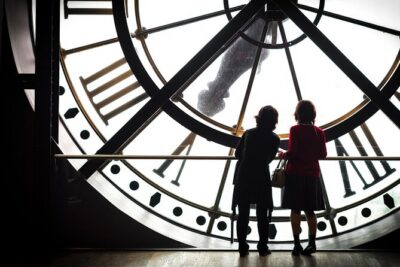
Paris in a Day: Louvre or Orsay, Eiffel Tower, City Walk & Cruise
Read our review →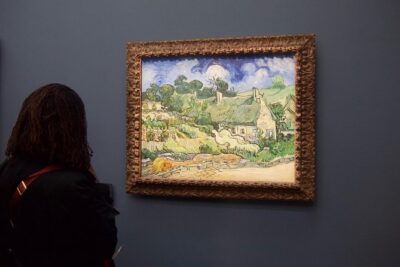
Musée d’Orsay Skip-the-Line Tour with Expert Guide
Read our review →
Musée d’Orsay Skip-the-Line Tour with Expert Guide
Read our review →
Louvre & Musée d’Orsay Guided Museum Tour Semi-Private 6ppl Max
Read our review →
Browse the lists this tour appears in