

Reviewed · ESCAPE GAMES AND TREASURE HUNTS
Paris WWII: Occupation & Liberation Exploration Game and Tour
Paris has a way of turning walking into remembering. This app-based game turns WWII Paris into a story you can follow on foot, with you as a Polish teenager piecing together your great-grandfather’s heroic account while you pass major and lesser-known landmarks tied to resistance and survival. I like that it uses real places (from Charles de Gaulle to the Seine bridges) as the checkpoints, and I also like how the format is interactive, not just reading text on a screen. One thing to consider: you are doing it on your own, so if you want a live human guide to set the scene at every stop, this style may feel a bit too self-directed.
The route is built around short puzzle moments, then free time to look around. You’ll get a new clue at each stop, and the game keeps you moving toward the next location until it wraps at Quai de Montebello. It’s also priced low enough that you can treat it as a low-risk way to get a deeper WWII angle without buying a pile of ticketed museum time. The tradeoff is that some stops are tied to places that can be ticketed (like Jeu de Paume and the Louvre), so you’ll want to know what you plan to see inside versus outside.
In This Review
- Key Points That Make This Game Tour Worth Your Time
- A Phone App Game That Makes WWII Feel Personal in Paris
- Price, Time, and Value: Why This Costs So Little
- How the Questo App Experience Works While You Walk
- Stop-by-Stop: The WWII Clues From Charles de Gaulle to Quai de Montebello
- Stop 1: Statue du Général Charles de Gaulle (Pl. Clemenceau)
- Stop 2: Statue de Winston Churchill
- Stop 3: Place de la Concorde (Obélisque de Louxor reference)
- Stop 4: Jeu de Paume
- Stop 5: Rue de Rivoli
- Stop 6: Le Meurice
- Stop 7: Hotel Regina Louvre
- Stop 8: Musée du Louvre (admission not included)
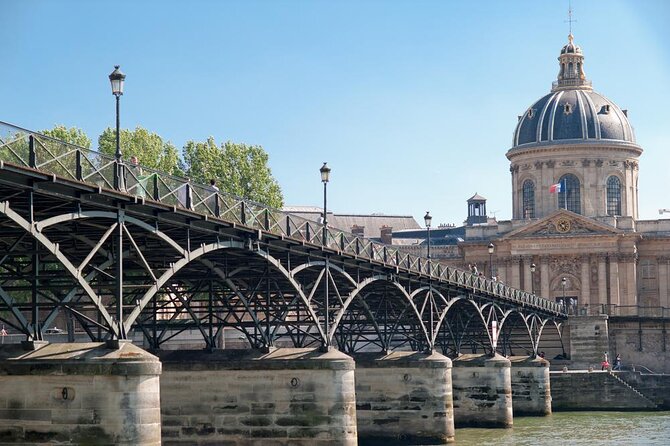
- Stop 9: Pont des Arts
- Stop 10: Pont Neuf
- Stop 11: Boulevard du Palais
- Stop 12: Quai de Montebello, finish here
- What You Actually Learn: WWII Themes You’ll Keep Noticing
- Logistics That Make It Easier Than You’d Expect
- Who This Tour Fits Best
- Should You Book This Paris WWII Occupation and Liberation Exploration Game?
- FAQ
- How long does the Paris WWII Occupation and Liberation Exploration Game take?
- Is there a tour guide during this experience?
- Do I need admission tickets for places like Jeu de Paume or the Louvre?
- Where does the tour start and end?
- What support is available if I have questions during the game?
- Can I get a refund if I cancel?
Key Points That Make This Game Tour Worth Your Time
- A real story with a role-play twist: you follow a WWII plot through the eyes of a Polish teen and your family’s resistance thread
- Short stop format you control: around 5 minutes to start each clue, then you can linger and keep walking at your pace
- Major sights plus smaller checkpoints: you hit landmarks most people know, plus under-the-radar points that still matter in the plot
- Phone-only, no guide needed: the Questo app runs the experience, with 24/7 customer support if you get stuck
- Designed for a quick afternoon walk: roughly 45 minutes to 1 hour 15 minutes for the full route, end-to-end
Other puzzle hunts around Paris:
- Who Killed Victor ? Escape Game at Père Lachaise Cemetery
★ 4.8 · 258 reviews - Escape Hunt Paris, Escape Game
★ 4.5 · 122 reviews - Romantic Montmartre: Paris Lost Lovers Exploration Game and Tour
★ 4.5 · 107 reviews - Louvre Museum Guided Family Treasure Hunt
★ 5.0 · 78 reviews
A Phone App Game That Makes WWII Feel Personal in Paris
If you’ve ever felt overwhelmed by Paris history, this tour style solves part of the problem. Instead of trying to absorb everything at once, you get handed a clue, you move to the next point, and the story nudges your attention to what you might otherwise miss.
What I like most is that you aren’t just collecting facts. You’re building a narrative. The premise is simple but effective: you play a Polish teen uncovering your great-grandfather’s heroic story, and along the way you learn about Hitler’s plan to destroy Paris and the resistance fighters who helped protect people living there. That means your brain stays switched on, even when you’re standing in places that are famous for other reasons.
You’ll also like the pacing. Each stop is quick to begin, and then you can take your time. Paris rewards slow looking, and this route gives you room for it, whether that means a careful read at a landmark or just a chance to watch the world go by.
Price, Time, and Value: Why This Costs So Little
At $9.54 per person, this is priced like an activity you can layer into almost any day. That matters in Paris, where “doing history” can quickly turn into museum ticket math plus guided-tour costs.
Here’s the value logic I’d use if I were planning your schedule:
- You pay once for the app-based game experience.
- You do not need paid entry tickets to complete the tour.
- You still walk among major sights, plus extra stops that give you a reason to travel a bit beyond the usual photo loop.
Duration is listed at about 45 minutes to 1 hour 15 minutes. That’s long enough to feel like an actual experience, but short enough that you won’t lose your whole day to WWII homework. Also, because it’s a private activity for your group, you aren’t forced to fit your pace to strangers.
The big practical consideration is that you’ll get the best result if you treat it like a walk with missions. If you only half-engage, you might miss what makes it work.
How the Questo App Experience Works While You Walk
This tour is self-guided and runs through the Questo app on your phone. You don’t check in with a guide. Instead, you start at the first meeting point, receive a first clue, and the game tells you where to go next.
A few details matter here:
- You get an admission ticket for parts where relevant, but the experience can be completed without paid entry.
- You’ll want your phone ready for the whole route, since clues depend on it.
- You can stop as long as you like at each location, but the format is designed for movement. If you spend 25 minutes at every stop, you’ll stretch the timing.
I also appreciate that customer support is available 24/7. That’s useful for any app-based experience, because tech problems are the one thing you can’t always predict while traveling.
Stop-by-Stop: The WWII Clues From Charles de Gaulle to Quai de Montebello
The route is laid out as 12 checkpoints, and each one gives you the next piece of the puzzle. Think of it like a story-driven walking map: clue, location, clue, location, then a city bonus at the end.
More wartime Paris on foot:
- Paris WW2 The German Occupation Small group or Private tour★ 4.5 · 128 reviews
- Normandy D-Day Beaches and World War II Sites Day Trip from Paris★ 4.5 · 56 reviews
- Invalides Museum – WWI & WWII – Guided Tour up to 8 guests★ 5.0 · 32 reviews
- Skip-the-line Les Invalides World War Museum Guided Tour – Semi-Private 8ppl Max★ 5.0 · 30 reviews
Stop 1: Statue du Général Charles de Gaulle (Pl. Clemenceau)
You begin at the Charles de Gaulle Statue in Pl. Clemenceau. This is a strong first move, because Charles de Gaulle is directly tied to French political resistance and wartime determination in general terms. Even if you already know his name, you’re starting the game in the right emotional key.
You’ll get your first clue here, and it immediately turns the landmark into a story launch. Since the stop timing is about 5 minutes, you won’t linger for long unless you want to.
Practical note: this is a good place to orient yourself. Take a minute, then get moving. The game is built to keep you in motion.
Stop 2: Statue de Winston Churchill
Next comes the statue of Winston Churchill. The WWII connection is obvious on paper, but in practice, the game uses this stop as a plot hinge. You’ll receive a new clue tied to the story and then you’re off again.
This checkpoint is also useful for a travel reason: it breaks the walk into digestible segments. You’re not strolling for an hour without structure.
Consideration: since it’s another quick clue stop, don’t expect an in-depth lesson on-site unless you pause and read what you see around you.
Stop 3: Place de la Concorde (Obélisque de Louxor reference)
At Place de la Concorde, the game points you toward the Obélisque de Louxor as a clue context point. Concorde is one of those huge open squares where it’s easy to feel like you’re just passing through. The clue system gives you a reason to actually look around instead of treating it as a traffic roundabout.
You’ll again get a clue, then you can explore at your own pace. If you like people-watching and city light, Concorde is great in daytime because the space helps you feel the scale of Paris.
Stop 4: Jeu de Paume
Jeu de Paume is where the route turns a bit from classic postcard Paris into a place with a more specific museum identity. The key point for you is logistics: admission is listed as not included here. The good news is the tour is designed so you don’t need paid tickets to complete the game.
So here’s how I’d handle it as you plan:
- If you want outside views and the clue moment only, you can keep it budget-friendly.
- If you want to go inside, you’ll need to handle that separately.
Either way, this stop matters because it’s one of those “wait, why is this in a WWII story” moments. That contrast is often where the most interesting learning happens.
Stop 5: Rue de Rivoli
Rue de Rivoli is a classic walking street. The game gives you a clue tied to the Monument de Rue de Rivoli, and it turns a route you might otherwise treat as a shortcut into a story checkpoint.
This is also a nice mental break in the middle of the route. You get to walk with a purpose, but you’re not stuck inside a museum environment.
Drawback to consider: if you’re visiting during a busy time of day, Rue de Rivoli can be crowded. That can make clue-reading slightly harder, so give yourself a bit of breathing room at street level.
Stop 6: Le Meurice
Le Meurice is another big-name Paris landmark. Even if you don’t go in, it works well as a story stop because it reminds you that wartime occupation didn’t happen in a museum bubble. The city’s “front stage” spaces are still part of the war’s geography.
You’ll receive a clue here and then move on. Since each stop begins quickly, you’ll want to balance looking at the building with keeping your pace.
Stop 7: Hotel Regina Louvre
This is one of the stops that feels like a direct step toward the Louvre area, and the game uses Hotel Regina Louvre as a plot point. You’ll get your next clue and keep going.
At this stage, you’re usually deep enough into the story that it’s not just about the sights. You’re trying to connect the clues to what you think the resistance story is building toward, including the larger themes of Hitler’s plan and the people who worked to protect others.
Stop 8: Musée du Louvre (admission not included)
The Louvre stop is a big one. But again, admission is listed as not included. That means you can do the clue moment without buying a ticket and still finish the game.
I think this is smart design, because the Louvre is already a time sink if you let it be. You can keep the WWII game moving, then decide later if you want museum time.
If you do want to go inside, plan for extra time on your own schedule. The game timing is built for the full route, not for a long museum detour.
Stop 9: Pont des Arts
Crossing into the river views, Pont des Arts changes the mood. You’re now between clues with the Seine in front of you, and that view helps the story feel grounded. Wartime Paris isn’t only about monuments and institutions. It’s also about the physical city people had to navigate.
This stop is quick to start, but it’s a good place to slow down for a photo or just a minute of river air.
Stop 10: Pont Neuf
Pont Neuf is one of the most iconic bridges in Paris. It’s hard to walk over it without feeling the city’s age and continuity. In the context of a WWII resistance story, it becomes a visual reminder that the city survived, adapted, and carried on.
You’ll receive your next clue and can explore at your own pace. If you like architecture details, this bridge gives you plenty to look at while still keeping the game moving.
Stop 11: Boulevard du Palais
Boulevard du Palais is a shift again, and the game gives you a clue tied to the Monument Boulevard du Palais. This is the kind of stop where you might want to watch how Paris flows around you. The boulevard area can help you picture how wartime movement and information could move through the city.
It’s still a quick stop by design, so if you want to do more than the clue moment, keep an eye on your timing.
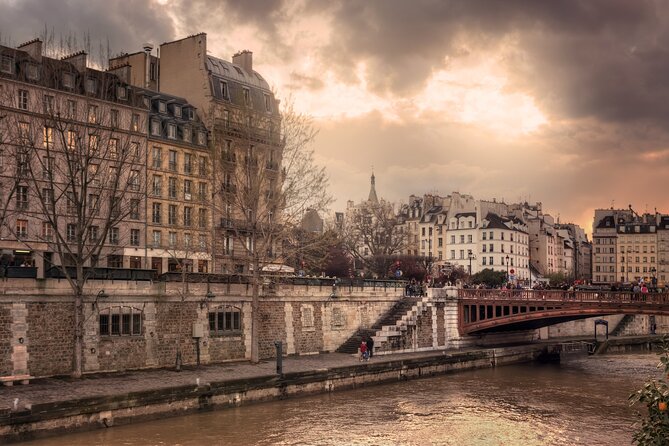
Stop 12: Quai de Montebello, finish here
The game ends at Quai de Montebello, where both the story and city exploration game wrap up. This makes a lot of sense. Finishing near the river feels like a natural cooldown after a puzzle route.
If you want to extend the day, this is a good place to keep walking in either direction. You’ll already be oriented to the area, and you can turn your game momentum into a casual sightseeing loop.
What You Actually Learn: WWII Themes You’ll Keep Noticing
This isn’t just a scavenger hunt with random WWII references. It’s structured around major WWII themes:
- The French resistance as people who helped protect others
- The city-level threat, including Hitler’s plan to destroy Paris
- A personal thread, your character’s family link through a great-grandfather story
What I like about that blend is that it gives you both scale and personhood. Paris isn’t an abstract backdrop. The story pushes you to see the places you walk past as part of a real network of risk, decision-making, and survival.
And the role-play angle matters. Once you’re invested in the character’s goal, you pay better attention to what you see around the clues. That’s why the top praise for this kind of experience tends to mention feeling genuinely drawn into the narrative while still enjoying the walk through the city.
Logistics That Make It Easier Than You’d Expect

Even though it’s self-guided, it’s built with practical traveler needs in mind.
You get:
- A mobile ticket
- Near public transportation at the start
- Group discounts
- The ability to do it as a private activity for your group only
Most travelers can participate, and service animals are allowed.
One more practical tip: plan to do this when you have a calm block of time. If you’re rushing for a train or piling museum tickets into every hour, the “find clue, read clue, walk to next stop” rhythm can feel like homework. If you treat it as a walk with missions, it feels fun.
Who This Tour Fits Best
I’d recommend this Paris WWII app game if you:
- Want WWII context without committing to a long guided tour
- Like interactive storytelling and don’t mind following directions on your phone
- Prefer flexible timing, meaning you can pause and look without waiting for a group
- Have limited time and want a structured walking route
You might not love it if you:
- Want expert narration in real time
- Prefer museum-heavy sightseeing with ticketed interiors
- Dislike tech-based activities while walking
Should You Book This Paris WWII Occupation and Liberation Exploration Game?
Yes, if you want an affordable, story-driven way to connect WWII themes to the actual streets you’re walking. I like that it’s cheap for what it gives you: a guided-feeling route without the cost of a guide, and without requiring museum tickets just to complete the experience.
Book it especially if you’re the type who remembers stories better than dates. The Polish teen framing and the resistance focus help the city feel connected, not just displayed.
If you’re the type who needs a lecturer at every step, consider pairing it with another form of guided learning. But as a standalone activity, this works well as an efficient “get the WWII angle, then keep exploring Paris” plan.
FAQ
How long does the Paris WWII Occupation and Liberation Exploration Game take?
The duration is listed as about 45 minutes to 1 hour 15 minutes.
Is there a tour guide during this experience?
No. It’s app-based and self-guided, with the Questo app used on your phone.
Do I need admission tickets for places like Jeu de Paume or the Louvre?
Admission tickets are not included for Jeu de Paume and Musée du Louvre, but the tour is designed so you do not need entry tickets to complete the tour.
Where does the tour start and end?
It starts at Statue du Général Charles de Gaulle, Pl. Clemenceau, 75008 Paris, and ends at 8 Quai de Montebello, 75005 Paris.
What support is available if I have questions during the game?
Customer support is available 24/7.
Can I get a refund if I cancel?
Yes, you can cancel for free up to 24 hours in advance for a full refund. Canceling less than 24 hours before the start time is not refundable.
Walked Without a Guide Waiting
- Paris: Illuminations River Cruise with Audio Commentary
★ 4.3 · 12,340 reviews - Paris: Orsay Museum Entry Ticket and Digital Audio Guide App
★ 4.4 · 3,170 reviews - From Paris: Giverny Day Trip with Audio Guide or Live Guide
★ 4.3 · 2,372 reviews - Giverny and Monet’s House Half Day Trip from Paris Guide or Audio
★ 4.0 · 1,319 reviews
Newest write-ups from Paris






Escape Games and Treasure Hunts, compared.
Who Killed Victor ? Escape Game at Père Lachaise Cemetery
Read our review →
Romantic Montmartre: Paris Lost Lovers Exploration Game and Tour
Read our review →

Paris Murder Mystery: Death on the Seine Quest and Tour
Read our review →
Louvre Museum – Private Family Tour with Da Vinci Treasure Hunt
Read our review →
Paris Sweet & Chocolate Family Treasure Hunt
Read our review →
Outdoor Escape Game in Paris : The Stone of Nicolas Flamel
Read our review →Browse the lists this tour appears in