
Reviewed · WORLD WAR TWO HISTORY TOURS
Paris WW2 The German Occupation Small group or Private tour
Paris WWII history lives on the sidewalks. This small-group walking tour follows the logic of the German occupation through Parisian power centers, quiet side streets, and big public spaces, with stories anchored to what happened to real people. You meet at the Palais Royal metro exit, and by the time you reach Place de la Concorde, the city feels different in your hands and eyes.
I love two things most. First, the guide, Chris Pollard, explains the occupation through people, choices, and consequences, not just a checklist of famous buildings. Second, the pace has room for questions, so the tour can swing toward what matters to your group without turning into a rigid museum script.
The main drawback to consider is simple: this is an outdoor walk. Even with short stops, you are outside for a few hours, so plan for cold, wind, and changing weather.
In This Review
- Key highlights worth planning around
- Meet your guide at Palais-Royal, then walk in the footsteps of power
- Louvre area to Palais-Royal, why the tour starts with doors and hotel empires
- Rue de Rivoli and the surrounding streets, where Gestapo control meets collaboration
- The Gestapo and collaboration networks
- Military command inside famous addresses
- Place Vendôme and the Ritz story, where resistance and final-solution policy intersect
- Spies and radio, the Societe Maurice Duclos site
- Rue Rouget de Lisle and Jeu de Paume, a resistance origin story and Nazi looted-art reality
- Rue Rouget de Lisle, resistance that started organically
- Jeu de Paume, where art was processed before shipment
- Place de la Concorde, the second-largest monumental square and the scars still visible
- How the Shoah and Vichy story is handled on this general tour
- Price and value for a small-group WWII walk at about $108.84
- What this tour feels like in practice, and who it suits best
- Should you book this WWII Paris occupation tour?
- FAQ
- Where do we meet for the tour?
- How long is the tour?
- How big is the group?
- Is it offered in English?
- What areas of Paris does the route cover?
- Will we visit the Marais Jewish Quarter or the Shoah memorial?
- Does the tour include a mobile ticket?
- What happens if the tour is canceled due to weather or low numbers?
Key highlights worth planning around
- Palais-Royal meeting point at Metro exit 5 (opposite the Comédie-Française), easy to find and ideal for starting the story in the center of power
- Theme-based route that moves from the Louvre area to Rue de Rivoli and ends at Place de la Concorde, instead of a slow chronological lecture
- Jeu de Paume focus on Nazi handling of looted artwork, explained right where the history happened
- Resistance origins on Rue Rouget de Lisle with October 1940 as a key turning point in the story
- Small-group format capped at a maximum of 10 travelers to keep it conversational and personal
- Shoah depth options: the general tour covers context, while dedicated Holocaust-focused visits require a private Shoah request
More wartime Paris on foot:
- Normandy D-Day Beaches and World War II Sites Day Trip from Paris
★ 4.5 · 56 reviews - Invalides Museum – WWI & WWII – Guided Tour up to 8 guests
★ 5.0 · 32 reviews - Skip-the-line Les Invalides World War Museum Guided Tour – Semi-Private 8ppl Max
★ 5.0 · 30 reviews - Paris 2-hour WWII Walking Tour: Occupation history
★ 4.9 · 29 reviews
Meet your guide at Palais-Royal, then walk in the footsteps of power
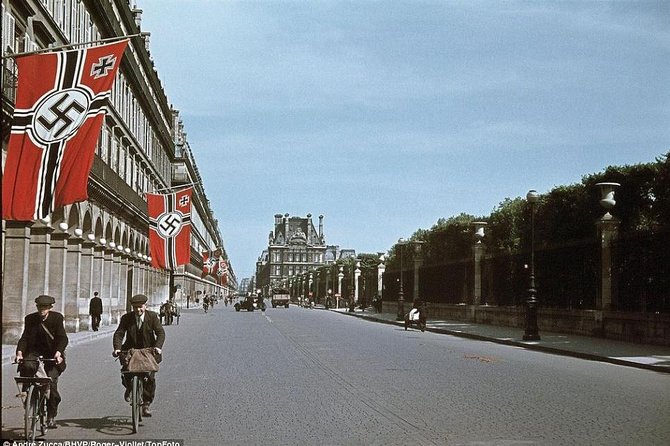
The tour starts at Palais Royal Metro Exit 5 on Place Collette, directly opposite the Comédie-Française. You will meet your guide and the group, then ease into an overview of what German occupation meant in day-to-day Paris, and how the war’s path in France took shape.
This is a smart way to begin because it avoids the trap of starting with the most famous sights. Instead, you start near major cultural and political buildings, where the lines between propaganda, administration, and everyday life get blurry fast. That matters, because Paris under occupation was not only about arrests and battles. It was also about control of information, access, jobs, and fear.
Chris Pollard runs these walks with small groups, generally 8 to 10 people max (and the whole tour caps at 10 travelers). That size helps a lot. You can ask real questions without the guide having to “move on” every 30 seconds, and it also keeps the tour from feeling like a crowded parade.
Louvre area to Palais-Royal, why the tour starts with doors and hotel empires
After the initial orientation, the route stays in the wide central band between the Louvre area and west toward Place de la Concorde. You are not doing a museum route. Think of it as the occupation spread out across a few neighborhoods, with places acting as stage sets for the people making decisions.
This part is valuable because the guide can connect the big structures to small details. An unremarkable door, a discreet corridor, or a well-known hotel entrance can turn into a window on the mechanics of control. In occupied Paris, some of the most important actions happened behind ordinary façades.
One common theme here is the way German military and administrative power nested inside Parisian institutions. From grand hotels to government-linked buildings, the occupation used existing systems, which makes today’s cityscape feel oddly familiar even when the subject is horrific.
If you like WWII history that explains the background currents, this is where you feel it. The guide builds context early, so later street corners and specific sites make more sense instead of reading like disconnected facts.
Rue de Rivoli and the surrounding streets, where Gestapo control meets collaboration
The long main section is around Rue de Rivoli and nearby streets. This is where the tour turns into the most street-level, and where you see the occupation through a mix of fronts: policing, propaganda, accommodation, and the early resistance.
Here are the types of stops you should expect in this stretch, and what makes them meaningful:
The Gestapo and collaboration networks
You will hear about the first secret HQ of the Gestapo in Paris, plus the headquarters of France’s largest collaborationist group, the PPF, and its leader. This matters because “collaboration” was not one simple story. It included ideology, opportunism, and varying levels of commitment, all operating under the umbrella of German control.
You will also look outward at the Louvre (exterior) as part of the occupation map. Even when you are not inside a museum, the building works as a symbol. It signals power, prestige, and the way occupiers and collaborators tried to shape how Paris saw itself.
A handful more Paris options to weigh up
- Louvre Museum Paris Essential Guided Tour Semi-Private 6ppl Max★ 5.0 · 3,807 reviews
- SUV Private Transfer: Paris to Charles de Gaulle Airport (CDG)★ 4.0 · 3,091 reviews
- Paris: Private Photoshoot at the Eiffel Tower★ 4.7 · 2,636 reviews
- Top Private Cruises in Paris with French Champagne and surprises★ 5.0 · 1,553 reviews
Military command inside famous addresses
Next comes the occupation’s comfort zone, the hotels and hubs that made the city run. You will pass the Hotel Meurice, described as a German Army HQ for Paris, and also the Continental Hotel, another key German-controlled property.
These stops are not about gossip or glamour. The point is location as power: who gets access, where meetings happen, and how the occupation became routine rather than occasional.
Place Vendôme and the Ritz story, where resistance and final-solution policy intersect
You will visit the Place Vendôme area and the story tied to the Ritz hotel, including how it connects to Coco Chanel and also to anti-Nazi movement meetings within the German forces. The tour also links this zone to a darker turning point, describing where the Final Solution was first introduced to France.
This is one of those moments where the city’s beauty and the occupation’s brutality collide in your brain. It is uncomfortable, but it is also one of the most educational aspects of a well-led WWII tour: it shows how normal life and catastrophic policy could occupy the same spaces.
Spies and radio, the Societe Maurice Duclos site
You will also hear about the Societe Maurice Duclos, described as a secret site of the first Allied spy network in France and radio communications. I like this inclusion because it expands your understanding beyond the street of arrests and uniforms.
Resistance and intelligence work are often misunderstood as romantic myths. Here, they are treated as systems, risks, and coordination. You come away thinking about who had information, who passed it along, and what that meant for survival.
Rue Rouget de Lisle and Jeu de Paume, a resistance origin story and Nazi looted-art reality
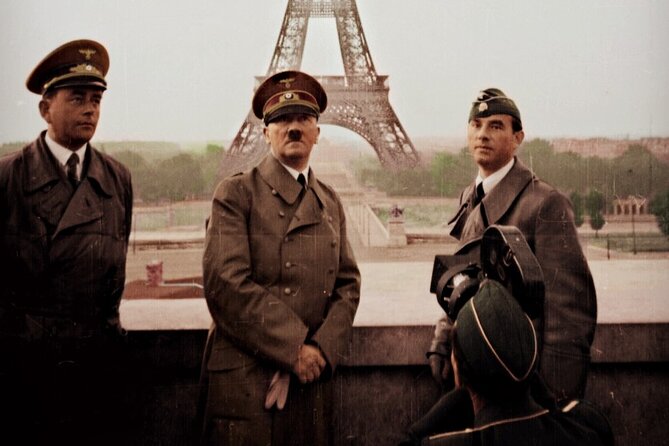
As the route continues, you reach two of the most emotionally powerful themes on the walk: resistance beginnings and Nazi treatment of Jewish life and art.
Rue Rouget de Lisle, resistance that started organically
At Rue Rouget de Lisle, you will learn where the organic French Resistance really began in October 1940. That date matters. It pushes the story back from the later, more famous phases of WWII, and it helps you understand resistance as something that grew out of a specific moment, not just a heroic slogan.
Jeu de Paume, where art was processed before shipment
You will check out the Jeu de Paume Museum connection, explained as the place where Nazis stored, processed, and looted art before sending it to Germany.
This is a practical lesson in historical cause and effect. Art theft was not only about money. It was also about domination, control of culture, and propaganda. When the guide explains it near the site, it stops being a textbook paragraph and becomes a real logistical story about paperwork, storage, and transport.
If you have ever wondered how occupation systems worked in practice, this stop answers that question from an unexpected angle. Culture was a target, and the occupiers treated it with the same administrative seriousness as prisons and offices.
Place de la Concorde, the second-largest monumental square and the scars still visible
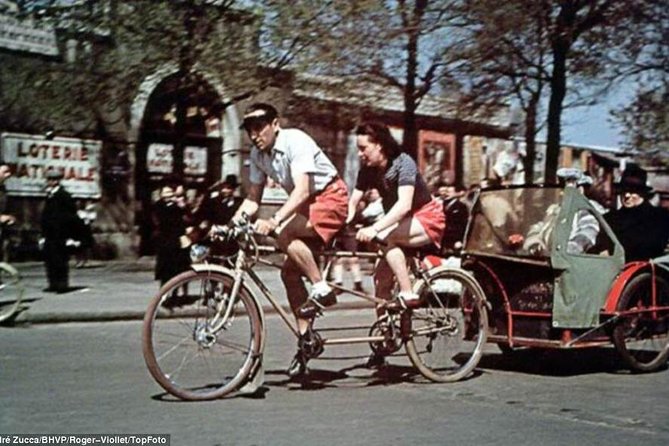
The walk’s ending zone is Place de la Concorde, where the tour typically finishes around the 3 to 3.5 hour mark (the overall tour is listed as about 3 to 4 hours depending on how the group moves and what gets discussed).
Place de la Concorde is a huge, public kind of space, which makes it perfect for understanding how the occupation and liberation left physical marks in the open. You will learn it was originally Place Louis XV, completed in the 18th century, and then you get the wartime layers added on top.
Expect the guide to point out:
- The guillotine history here, where Louis XVI and Marie Antoinette faced execution
- The twin Naval Ministry and Hotel Crillon as important German HQs during the war
- The Grand Palais, described as the largest freestanding building in Paris and the only one destroyed during the occupation and Liberation
- Bullet holes and hidden scars tied to the fighting for Liberation
- The Luxor obelisk as a visible reminder of how Paris stacks symbols across centuries
I like tours that end where the city is loud and open, because it forces the lesson to stay with you. You can’t “hide” in a quiet museum. You have to sit with the contrast of grand stone, a famous obelisk, and human suffering in the same frame.
How the Shoah and Vichy story is handled on this general tour
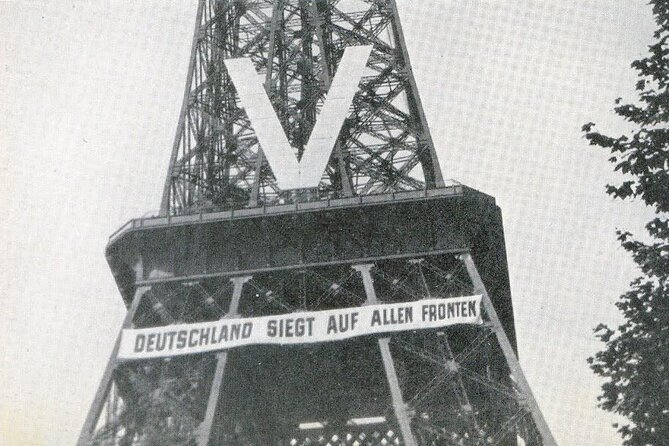
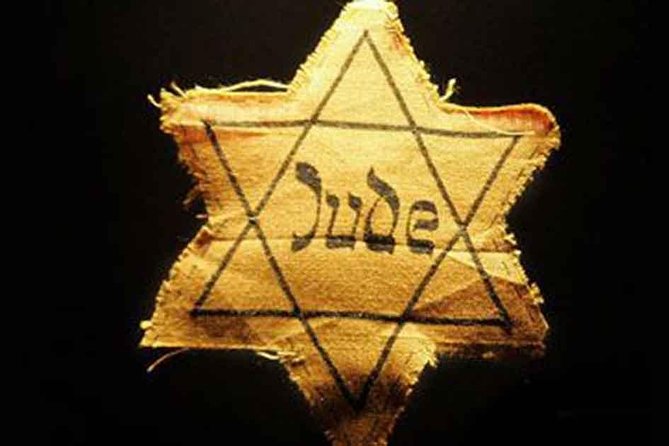
This tour is about the German occupation, resistance, collaboration, and how the occupation evolved. That includes the rise of anti-semitism and the role of the Vichy government, but the presentation is designed as context, not as a stand-alone deep dive.
On the general tour, the guide covers overall currents that led to the implementation of the Final Solution in France, plus conditions for Jewish people in Paris and occupied France in the years leading up to that shift. You also get the story of Jewish people’s role in resistance efforts.
Here is the key practical point: the tour is not trying to do everything in one afternoon. The Holocaust-specific subject is described as needing a whole tour devoted to it to do it justice. If you want stops like the Holocaust memorial and the Jewish Quarter in the Marais in a focused way, that is routed through a private Shoah tour request, not the default general format.
So if you are coming to Paris specifically for Holocaust-focused sites, ask for the private Shoah option. If you want occupation context plus a thoughtful overview, this general tour fits well.
Price and value for a small-group WWII walk at about $108.84
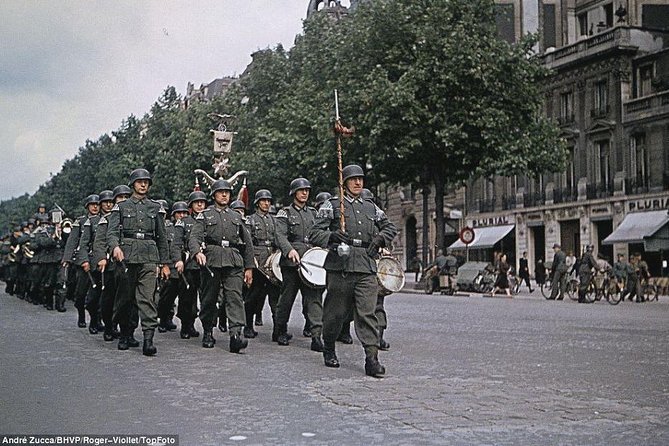
At $108.84 per person for roughly 3 to 4 hours, this is not cheap, but it also isn’t inflated for what you get. You are paying for time with an expert guide, a small group size, and a walk that hits high-impact locations tied to the occupation’s machinery.
Two value signals stand out:
- The group limit keeps the experience personal and discussion-friendly, which is rare on “big script” tours.
- The route is intentionally selective. Instead of squeezing in 25 stops, you get a coherent snapshot of how occupation policies and human choices played out across Paris.
You also get a mobile ticket, and the tour is offered in English. For most people, that combination plus the intimate format makes the price feel more like a guided education than a sightseeing add-on.
One other thing to note: there is a minimum of 4 people required for the tour to run. That can affect availability close to travel dates, but it also signals you are booking a small, specialist operation rather than a huge bus-style product.
What this tour feels like in practice, and who it suits best
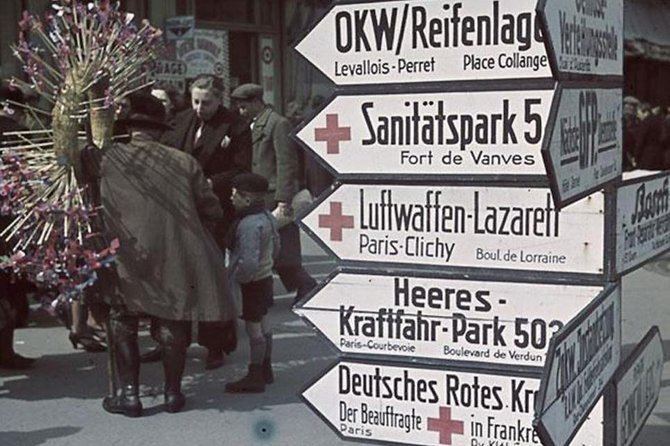
From the design of the route, this is best for people who want meaning, not only markers.
If you want a general overview of WWII in Paris with a focus on occupation systems, collaboration, and resistance, you will like the structure. The guide also uses prepared materials and tends to adapt depth based on what your group cares about, which is great if you have specific interests like resistance networks or the looted art story.
If you hate walking, you may find it challenging. Expect extended outdoor time and a few miles of movement over the half-day span, depending on pacing and stops. The tour also depends on good weather, so plan layers and something windproof.
If you have teenaged kids or you want an experience that can hold attention, this style often works better than a passive lecture. The small group size makes it easier to include everyone in the conversation.
Should you book this WWII Paris occupation tour?
Yes, I think you should book it if you want a compact but serious understanding of how the German occupation operated across Paris, and you like the idea of learning from street-level sites tied to real networks like the Gestapo, Allied spying, and resistance growth. The small-group limit is a major plus, and the guide, Chris Pollard, brings strong depth and clear explanations tied to why people acted as they did.
Skip or modify your plan if your top priority is purely Holocaust-specific sites. This general tour explains the context and the lead-up, but a dedicated Shoah-focused private tour is positioned as the better match if you want that subject treated as the main event.
FAQ
Where do we meet for the tour?
You meet at Palais Royal Metro Exit 5 on Place Collette, opposite the Comédie-Française Theatre.
How long is the tour?
It runs about 3 to 4 hours, with the route time often around 3 to 3.5 hours depending on how the group moves and how discussions go.
How big is the group?
The tour is capped at a maximum of 10 travelers, and it is designed for small group experiences with 8 to 10 people.
Is it offered in English?
Yes, the tour is offered in English.
What areas of Paris does the route cover?
You start around Palais-Royal and focus on central Paris between the Louvre area and Place de la Concorde, including the Rue de Rivoli area and surrounding streets.
Will we visit the Marais Jewish Quarter or the Shoah memorial?
On the general group tour, the guide discusses the broader currents affecting Jewish people and the lead-up to the Final Solution, but Holocaust-specific visits like the Jewish Quarter in the Marais and the Holocaust memorial are described as part of a private Shoah tour request rather than the default general format.
Does the tour include a mobile ticket?
Yes, the experience includes a mobile ticket.
What happens if the tour is canceled due to weather or low numbers?
The experience requires good weather, and if it is canceled due to poor weather you are offered a different date or a full refund. The tour also has a minimum number of travelers, and if it is canceled because the minimum is not met, you are offered a different date or a full refund. You can cancel for free up to 24 hours in advance for a full refund.
Newest write-ups from Paris


World War Two History Tours, compared.
Normandy D-Day Beaches and World War II Sites Day Trip from Paris
Read our review →
Invalides Museum – WWI & WWII – Guided Tour up to 8 guests
Read our review →
Skip-the-line Les Invalides World War Museum Guided Tour – Semi-Private 8ppl Max
Read our review →Paris 2-hour WWII Walking Tour: Occupation history
Read our review →
Skip-the-line Les Invalides World War Museum Guided Tour – Exclusive Guided Tour
Read our review →Browse the lists this tour appears in