
Reviewed · WORLD WAR TWO HISTORY TOURS
Paris 2-hour WWII Walking Tour: Occupation history
Paris changes when you see it under occupation.
This Paris WWII walking tour gives you a clear mental map of how occupied Paris worked, using a coherent route instead of disconnected stops. I especially like the focus on exact, documented locations, so the story stays grounded to real street corners, not vague monuments.
What makes it click is how the walk stays interactive and visual. With a cap-limited small group (5 participants), Margaux can answer questions as you go, and you’ll get time for discussion instead of a one-way lecture. I also like the method of using rare archival photographs on site, then comparing them with what you see today, which makes the wartime setting feel instantly legible.
One thing to consider: the topics are heavy, including how Parisians and Jews were treated during the German occupation. Expect a respectful, serious tone, and wear warm clothes in colder months since it is a walking tour.
In This Review
- Key things I’d look for on this tour
- A Paris WWII tour that actually gives you a mental map
- Margaux and the small-group rhythm that keeps it human
- Is $12 worth it for a 2-hour walk in occupied Paris?
- Place de la Concorde to Hôtel Meurice, the occupation told in real geography
- Place Vendôme and Opéra Garnier, public space under control
- Palais Berlitz and Rue de Rivoli, where daily pressure shows up
- The Louvre area, turning landmarks into wartime roles
- What you learn, and what you can do with it after
- Who this tour is best for, and who should skip it
- Practical tips to make your walk easier
- Should you book this occupied Paris WWII walking tour?
- FAQ
- How long is the Paris WWII walking tour?
- What language is the tour in?
- How much does it cost?
- Where do I meet the guide?
- Is it a small group?
- What should I bring?
- Is the tour suitable for children?
- Do I need a public transportation ticket?
- What if I need to cancel?
Key things I’d look for on this tour
- A coherent central route that keeps the geography clear from start to finish
- Exact WWII locations across the 1st and 2nd arrondissements, not symbolic stops
- Rare archival photos you often will not have seen before, shown at the actual sites
- Small group size (5 people) that makes questions practical and on-topic
- Margaux’s approach: Paris-born, English-speaking, and comfortable explaining complex events clearly
- Daily life context that helps you connect buildings to how the city actually functioned (1940-1944)
More wartime Paris on foot:
- Paris WW2 The German Occupation Small group or Private tour
★ 4.5 · 128 reviews - Normandy D-Day Beaches and World War II Sites Day Trip from Paris
★ 4.5 · 56 reviews - Invalides Museum – WWI & WWII – Guided Tour up to 8 guests
★ 5.0 · 32 reviews - Skip-the-line Les Invalides World War Museum Guided Tour – Semi-Private 8ppl Max
★ 5.0 · 30 reviews
A Paris WWII tour that actually gives you a mental map
A lot of history walks in Paris do the same thing. You hop from one famous place to another, and you leave with a list of dates that never quite connect to the streets. This one is different because it is built like a route you can remember.
You walk in the city center with a clear thread: how the occupation shaped daily life, how German authority was organized in Paris, and how political control turned ordinary places into parts of a working system. By the end, you should be able to look at buildings you pass all the time and understand what they meant during 1940 to 1944. That is the big value here. It changes how you read Paris, not just what you learn for two hours.
The tour also helps you visualize the past in a concrete way. The guide brings rare archival photographs and uses them to compare wartime scenes to today’s streets. That quick before-and-after effect is powerful because it forces your brain to translate the story into something you can see.
Margaux and the small-group rhythm that keeps it human
You meet Margaux, the Paris-born French guide, wearing a black cap. She has an international perspective from living abroad, which matters on a tour like this. You get complex content explained in a way that still respects how heavy it is.
The group is limited to 5 participants, and that small size shows up in the feel. You can ask questions, and the guide can shape her explanations around what the group wants to understand. Several people highlight that she is approachable rather than scripted. You end up with more of a conversation, even though the tour still stays structured.
You also get the benefit of a guide who keeps the walk safe and organized. One review notes the guide paid attention to group needs and safety, and another points out the tour is well timed and flows smoothly with the route. In practice, that means you are not constantly stopping, backtracking, or losing momentum.
Is $12 worth it for a 2-hour walk in occupied Paris?
At $12 per person, this is priced like an easy add-on to a day, not a premium museum experience. For that money, you get a full 2-hour guided walk with English commentary, a carefully structured route, and on-site explanations at WWII locations. You also get the photo component, which is hard to replicate on your own because it links images directly to street-level geography.
The value gets even better because you are not paying for entry fees to specific sites. The tour is built as a walking route where you learn at the places themselves, so your spending stays under control. Several reviews explicitly call it good value for money, with time that feels to pass quickly rather than dragging.
The one cost in your day is physical effort. Bring comfortable shoes, and plan to focus. If you are hoping for casual sightseeing only, you might find the subject matter emotionally intense. If you want clarity and context, it is a very efficient use of time.
Place de la Concorde to Hôtel Meurice, the occupation told in real geography
The tour starts with Place de la Concorde and continues toward Hôtel Meurice. This is a smart first step because it anchors you in central Paris right away. Instead of beginning with something abstract, you start with a place that feels instantly recognizable, then learn how it fit into the occupation-era reality between 1940 and 1944.
A key theme you should expect here is how power becomes visible through organization. The guide explains how German authority operated in the city and what control looked like in the lived space around you. One of the main things you gain early is the tour’s promise: you will connect landmarks to wartime roles, not just names or dates.
Hôtel Meurice is also a good “shock of recognition” stop. It is the kind of building most people associate with glamour, and that contrast helps the message land. With Margaux’s archival photographs at the location, you can literally compare what you see now with how the space appeared during the occupation. That comparison turns the history into something you can picture, instead of something you have to imagine from scratch.
Other arrondissements taken at walking pace:
- Paris Top Sights Half Day Walking Tour with a Fun Guide★ 5.0 · 2,893 reviews
- Montmartre Hidden Gems and Scenic Highlights Walking Tour★ 5.0 · 2,684 reviews
- Montmartre Hill French Gourmet Food and Wine Tasting Walking Tour★ 5.0 · 2,588 reviews
- Paris: Montmartre Highlights Walking Tour with a Local Guide★ 4.9 · 2,318 reviews
Place Vendôme and Opéra Garnier, public space under control
Next, the route brings you toward Place Vendôme and then Opéra Garnier. These are major Paris landmarks, and the guide uses them for more than atmosphere. She explains how political control shaped everyday life, even in places that looked cultural or official on the surface.
One practical benefit of this section is orientation. As you walk through these neighborhoods, you are not only learning history, you are learning the layout of the streets and how to move through the area confidently. Reviews mention that the tour is also a great way to navigate the 1st and 2nd arrondissements while getting a local perspective. If you are staying nearby, this can quietly improve the rest of your trip.
At Opéra Garnier, the tour’s approach really shows. You are not just hearing that the occupation affected Paris life. You are standing at a specific location and getting the occupation context tied to that spot. With the photo comparisons, you learn to read the city like a document.
Palais Berlitz and Rue de Rivoli, where daily pressure shows up
Then you move into Palais Berlitz and Rue de Rivoli. This is the part of the walk where the tour shifts from major monumental settings into the more lived-in, street-level feel of control.
This section is particularly useful if you want the daily-life side of WWII Paris, not only the big-picture story. Margaux focuses on how Parisians lived day to day and how political control shaped everyday routines and survival. One review calls out rationing details, including that food rations could add up to around 1,200 calories per day. That kind of specific everyday fact makes the history stick.
Rue de Rivoli also helps you understand how the occupation worked as an urban system. When you walk a straight, busy street in daylight, it is easy to forget that a city street can also be a corridor of authority, surveillance, movement, and restrictions. The tour’s structure keeps you from missing that link.
And again, the archival photos help. Even if you know Paris well, the images let you see the wartime version of these streets, so you stop treating the occupation like a distant abstraction.
The Louvre area, turning landmarks into wartime roles
The tour finishes around the Louvre surroundings. That ending location is meaningful because it brings you back to a cluster of iconic buildings that many visitors treat as purely aesthetic. Here, the emphasis is on the city’s wartime logic, and on how authority shaped what was happening in and around these spaces.
By the time you reach this part of the route, you have already built a mental framework: a coherent story of how occupation power functioned, and how it connected to specific places. This finish reinforces that framework because the Louvre area is so central and familiar. You get to test your new understanding right away.
Expect the tone to stay respectful and accessible. Multiple reviews stress Margaux’s sensitivity handling heavy topics, especially around how Jews were treated and how Parisians were affected. The goal is not sensationalism. It is understanding, and it is building memory through concrete place.
What you learn, and what you can do with it after
The real payoff of this walk is what happens when you stop thinking like a visitor and start thinking like a reader of streets. You leave with a mental map of occupied Paris, plus a way to connect a landmark to its WWII role.
Concretely, you should come away able to:
- Identify key German power sites you see on foot in the route and explain their relevance
- Explain occupation-era daily life, including rationing stress and the human scale of restrictions
- Hold onto the city’s WWII geography without feeling lost or stuck with disconnected trivia
- Use what you learned to recognize why certain buildings and areas mattered, even if they look ordinary now
A lot of history tours give you facts. This one pushes you toward connections. And that is why it tends to score so high. People repeatedly mention that the tour changes how they see Paris afterward, even if they live in the city.
Who this tour is best for, and who should skip it
This is best for adults and teens who want to understand the occupation beyond what films and broad summaries provide. It suits you if you like structure, you enjoy walking, and you want clear explanations tied to precise locations.
It is also a strong choice if you are traveling solo or just want a focused afternoon activity. The small group format keeps it social without becoming too large or too noisy, and the guide is comfortable answering questions.
Skip it if:
- You cannot do a walking tour comfortably
- You need wheelchair access, or you are visually impaired (the tour is not listed as suitable for those cases)
- You are going for light, carefree sightseeing, because the subject matter is heavy
- You are traveling with very young children, since it is not suitable for children under 12
Practical tips to make your walk easier
This is a straightforward 2-hour experience, but Paris rewards basic preparation.
- Wear comfortable shoes, since the tour is a walking route through central streets
- Bring water
- Dress for the season. One review mentions getting warm in winter days, and the walk can feel longer in cold weather even though it stays well paced
- Plan to be attentive. The tour uses archival photos and on-site explanations, so it helps to look up from your phone at the stops
Also note the guide’s black cap for easy meeting. You will find it fast, and that reduces the usual stress of meeting times in busy central areas.
Should you book this occupied Paris WWII walking tour?
Book it if you want a clear, place-based understanding of WWII occupation history in central Paris. At $12, with English commentary, a tight small group of 5, and rare archival photos used at exact locations, it is a strong value. Margaux’s approach also seems to be a big part of why people love it: respectful tone, room for questions, and a narrative that stays accessible without flattening the subject.
Don’t book it if you are looking for only cheerful sightseeing, or if you cannot manage a walking tour in central Paris. And if you are sensitive to heavy topics, mentally prepare for that. The tour handles the material carefully, but it is still about occupation and persecution.
If you are in Paris with even a small free window and you want to see the city differently after your walk, this is the kind of experience that pays off every time you pass a familiar façade afterward.
FAQ
How long is the Paris WWII walking tour?
It lasts 2 hours.
What language is the tour in?
The tour is in English.
How much does it cost?
It is listed at $12 per person. There is also a launch phase discount mentioned as 25% off.
Where do I meet the guide?
The guide will be wearing a black cap.
Is it a small group?
Yes. It is limited to 5 participants (with a private option if selected).
What should I bring?
Bring comfortable shoes and water.
Is the tour suitable for children?
No. It is not suitable for children under 12 years old.
Do I need a public transportation ticket?
No. Public transportation tickets are not required for this walking tour.
What if I need to cancel?
Free cancellation is available up to 24 hours in advance for a full refund.
More Historical Tours in Paris
- Paris: Dark History and Ghostly Guided Walking Tour
★ 4.7 · 1,000 reviews - Le Marais/Paris – The Historic, Trendy, Jewish, LGBT district
★ 5.0 · 341 reviews - Paris City of Fashion History Private Guided Walking Tour
★ 5.0 · 221 reviews - History of Paris City Center w/ Notre Dame Semi-Private 12ppl Max
★ 5.0 · 194 reviews
Newest write-ups from Paris



World War Two History Tours, compared.

Paris WW2 The German Occupation Small group or Private tour
Read our review →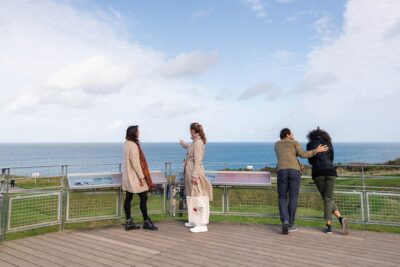
Normandy D-Day Beaches and World War II Sites Day Trip from Paris
Read our review →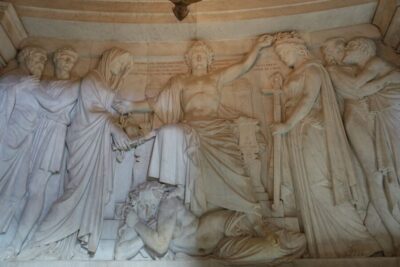
Invalides Museum – WWI & WWII – Guided Tour up to 8 guests
Read our review →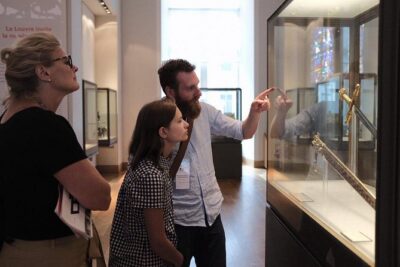
Skip-the-line Les Invalides World War Museum Guided Tour – Semi-Private 8ppl Max
Read our review →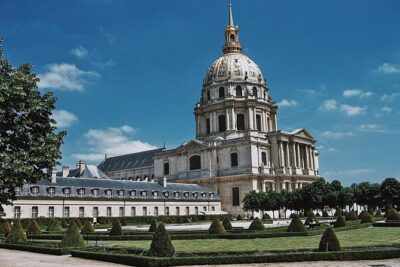
Skip-the-line Les Invalides World War Museum Guided Tour – Exclusive Guided Tour
Read our review →Browse the lists this tour appears in