
Reviewed · LOUVRE MUSEUM TICKETS
Private tour Louvre By night
Even the Louvre slows down at dusk. This private evening tour gets you inside with priority entry and a licensed guide to help you make sense of the biggest hits, from the Mona Lisa to major sculpture and painting. You start outside at the illuminated Arc de Triomphe du Carrousel, then move through the museum’s main wings while the daytime rush fades.
Two things I love: the skip-the-line time slot means you spend less time stuck at entrances and more time looking closely. I also like how the guide frames the Louvre’s three departments, so you don’t just see famous works, you understand why they are grouped together and how the collection tells a story.
One consideration: even at night, you can still run into crowd pockets and a tight 3-hour pace. If you care about very specific works or have mobility needs, you’ll want to communicate priorities early, and you’ll need to be sharp about the meeting spot so you do not lose valuable minutes.
In This Review
- Key highlights I’d plan around
- Why night at the Louvre feels different (even if it is still popular)
- Meeting at Arc de Triomphe du Carrousel for an easy start
- Priority entry via the Louvre pyramid, and how that changes your visit
- The Louvre’s three departments, translated into what you will actually see
- The highlights route, from Mona Lisa to Napoleon stories
- How your licensed guide changes what you notice
- Crowd levels, pace, and getting the best photos in 3 hours
- Price and value: what $349.98 buys you on a night you will remember
- Final call: should you book this Louvre by night private tour?
- FAQ
- Where does the tour start?
- How long is the Louvre private tour by night?
- What time does the tour begin?
- Is the admission ticket included?
- Is this tour private?
- What language is the tour offered in?
- What is included in the price?
- What is not included?
- Can I cancel for a full refund?
Key highlights I’d plan around
- Priority entry at 6:00 pm so you can start your visit with momentum instead of waiting.
- The Louvre’s three departments in one route (Sully, Denon, Richelieu) with an easy mental map.
- Evening lighting and photo time where galleries can feel calmer and more comfortable.
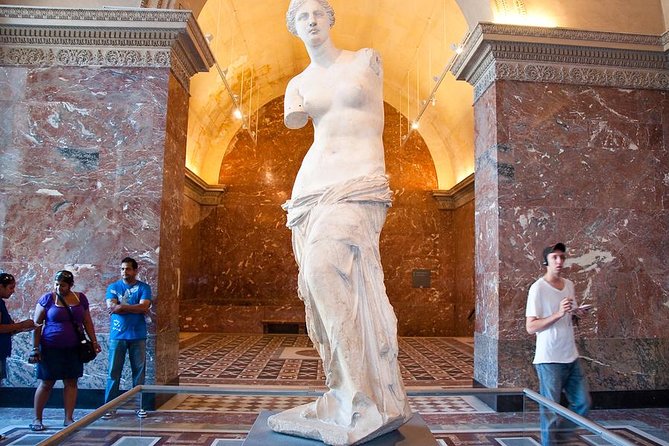
- Real storytelling for the headline works like the Mona Lisa, Venus de Milo, and Napoleon-related masterpieces.
- A private guide who adjusts to your interests rather than dragging you through a fixed checklist.
More routes through the Louvre:
- Paris: Louvre Guided Tour with Reserved Access & Boat Cruise
★ 4.3 · 16,353 reviews - Louvre Museum Masterpieces Guided Tour with Access
★ 4.5 · 12,023 reviews - Paris: Louvre Overview, Exploration tour and Reserved Entry
★ 4.1 · 10,145 reviews - Paris: Louvre Museum Entry Ticket With Host and River Cruise
★ 4.6 · 9,926 reviews
Why night at the Louvre feels different (even if it is still popular)
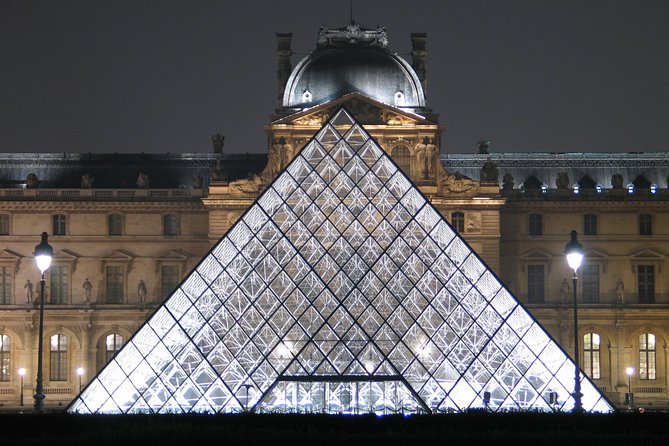
The Louvre is huge. That sounds obvious, but it is the real reason a visit can go sideways if you do not have a plan. Nighttime helps because the building can feel less like a conveyor belt and more like a museum you can actually look at. You get the effect of fewer people moving through the galleries, which makes it easier to stop, zoom in with your eyes, and take photos without fighting for space.
That said, do not assume the Louvre becomes empty. One of the advantages people mention is calm compared with daytime, but you should still expect some busy moments. In other words, this is a smarter way to visit, not a guarantee of total quiet.
This is also a “great overview in a short visit” style of experience. In about 3 hours, you will see major sculpture, key painting stops, and a slice of the museum’s architecture and planning. If you are a first timer, that overview matters. If you already know the highlights, the value is in having someone point out what to notice so you see more than the first famous image you recognize.
Meeting at Arc de Triomphe du Carrousel for an easy start
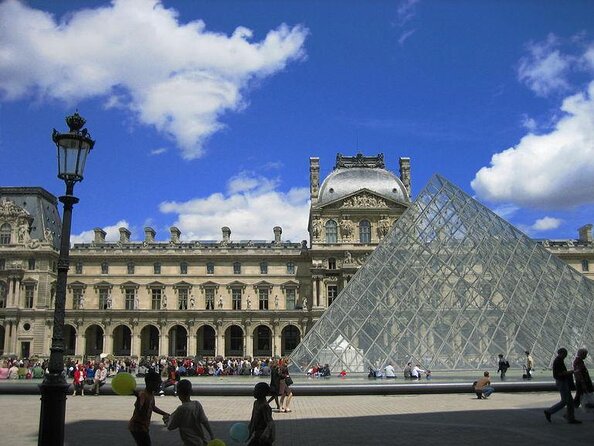
Your tour begins at the Arc de Triomphe du Carrousel side of the Louvre area. The meeting point is Pl. du Carrousel, 75001 Paris, and the start time is 6:00 pm. Your guide is supposed to meet you there with a sign, which is helpful because the Louvre entrances can feel like a maze if you arrive stressed.
Here is the practical part: arrive with a little extra margin. Some travelers had trouble locating the guide at first, partly because map pins can be less useful than street-level landmarks. To protect your schedule, I suggest you use the text description of the meeting location along with a quick look at nearby photos in your maps app. Then, get there early enough that you can confirm you are in the right spot before your start time.
Once you are matched with your guide, you are set up for one of the biggest advantages of this experience: priority entry. That means your entry time is handled so you spend less effort navigating lines and more energy inside.
Priority entry via the Louvre pyramid, and how that changes your visit
The Louvre pyramid is the key visual reference point, and this tour uses it for a straightforward entry. You are not guessing where to go or waiting around hoping you found the correct queue. Instead, you get a time slot and move through the “priority” flow to start your museum route.
For me, this is where the tour earns its keep. A standard Louvre visit can be a time tax at the start. Even when you know what you want to see, the first bottleneck can shrink your actual gallery time. With priority entry, you can spend your limited visit window doing the fun part: looking.
After you enter, your guide leads you into the museum and sets the big picture. You will learn that the Louvre is organized into three departments: Sully, Denon, and Richelieu. Those names sound abstract at first, but your guide turns them into a practical map. You start feeling like you can orient yourself, instead of wandering through rooms hoping your favorite masterpiece is around the next corner.
The Louvre’s three departments, translated into what you will actually see
Sully, Denon, and Richelieu are not just administrative labels. In a short tour, they become your navigation system.
Sully department focuses on older parts of the collection, especially the world of the Middle Ages. This is the wing where you can shift from the “I came for the Mona Lisa” mindset into a broader feel for how European art and objects evolved over time. If you like medieval themes, this is a strong way to get a meaningful slice without committing to a full day.
Denon department is where you are more likely to hit the famous sculpture and major painting highlights. Expect standout stops tied to classical art, including the Venus de Milo and the Winged Victory of Samothrace. On the painting side, you will also encounter major Italian works and the sweeping Italian Gallery concept that stretches for nearly a kilometer. In a tour context, that length matters because it helps explain why guides choose specific anchor works rather than trying to show everything.
Richelieu department rounds out the overall arc. Even if you do not walk every corridor, your guide uses the department structure to connect stories across the museum. You may also hear about Napoleonic imagery and the way the Louvre collection reflects French political and cultural moments.
This department approach is a big advantage because it helps you return later on your own. After one guided evening, you can often plan your next Louvre day with less guesswork.
More of Paris after the streetlights come on:
- Paris: Evening River Cruise with Music★ 4.4 · 22,721 reviews
- Paris: Day or Sunset Cruise with Drink, Ice Cream or Dessert★ 4.4 · 4,225 reviews
- Paris: Big Bus Panoramic Night Tour by Open-Top Bus★ 4.4 · 4,168 reviews
- Paris: Illuminated Evening River Cruise & Waffle Tasting★ 4.1 · 2,697 reviews
The highlights route, from Mona Lisa to Napoleon stories
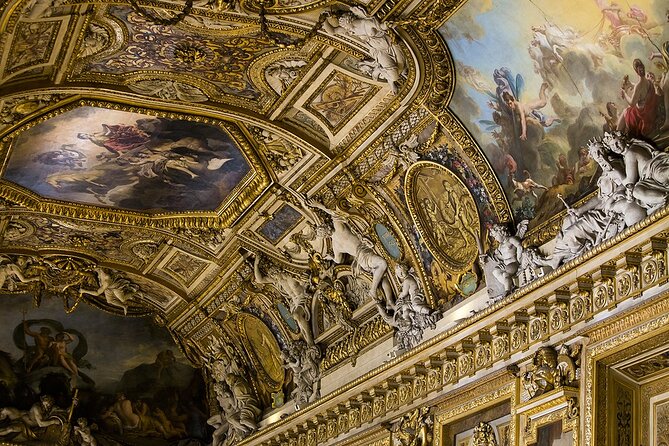
A 3-hour Louvre plan is always a curated selection. The trick is choosing the selection smart enough that it feels like a true visit, not a rushed highlight reel. This is where the guide makes the biggest difference, because you are not just walking to icons, you are learning how to read them.
You will likely spend time on major “must see” moments. The Mona Lisa is typically a central stop, and your guide can explain why it became a global symbol and what artists and viewers have been responding to for generations. You may also see the Venus de Milo and other defining sculptures that show how different eras approached the human figure.
Painting highlights often include works that help you understand the famous names. The Italian Gallery stretch, and the idea that it houses key masters, is part of the storytelling even if you cannot cover the full length in one evening. In the same theme of anchoring your visit, guides often point you to scenes and paintings connected to historical power, including Napoleon-related works. One of the most-cited examples is the Coronation of Napoleon by David, which helps connect the Louvre to France’s political theater and artistic ambitions.
One more thing I like about this type of route: it can add a few surprises beyond the single most famous image. In past experiences with this tour style, guides have also pointed out additional well-known works such as Wedding at Cana, depending on the guide and the group interests. The exact sequence will vary, but the underlying method is consistent: big works first, then a few context points that make them click.
Important practical note: if you have a “must see” list, say it early to your guide. One traveler reported missing a planned stop after they asked about a work, and the tour ended earlier than expected. That is not the norm you should plan on, but it is a reminder that your route depends on your guide’s choices, time management, and what your group prioritizes.
How your licensed guide changes what you notice
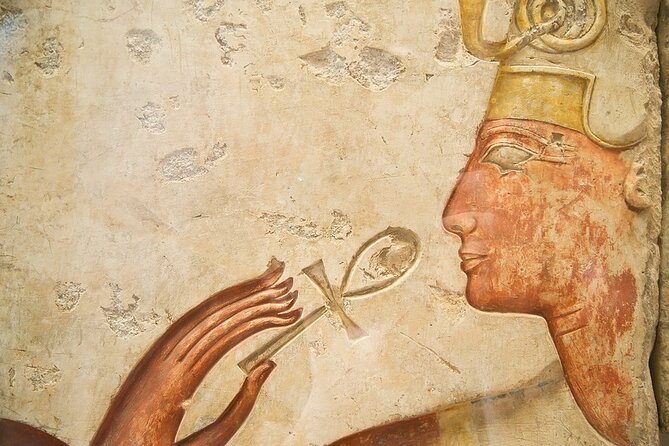
This tour is built around one core idea: a great guide saves you from feeling lost. You are walking through a maze of rooms where the Louvre can overwhelm even confident museum lovers.
The guide’s job is not just to talk about famous art. It is to help you interpret details while you are looking at the actual object. In guides’ feedback, you repeatedly see the same strengths: clear explanations, friendly personality, and an ability to tailor the pace for different interests.
Some guides even become a major draw. People have praised Claudia for turning an evening visit into something special through deep commentary. Ivette and Olga have been singled out for steering visitors through highlights and adding context that makes big-name works feel more grounded. Joseph and Ludovic have been praised for making the time fly while keeping the story readable, and Oriel has been mentioned for blending art history with a compact, easy-to-follow comparison of eras. Gilles is another guide who has received strong praise, though at least one experience pointed out gaps in meeting specific requests and in using elevators for accessibility.
What that means for you: if you want the Louvre to feel like a guided conversation rather than a museum assignment, you want a guide who can adapt. This private format helps, because you are not stuck waiting while a larger group catches up.
Crowd levels, pace, and getting the best photos in 3 hours
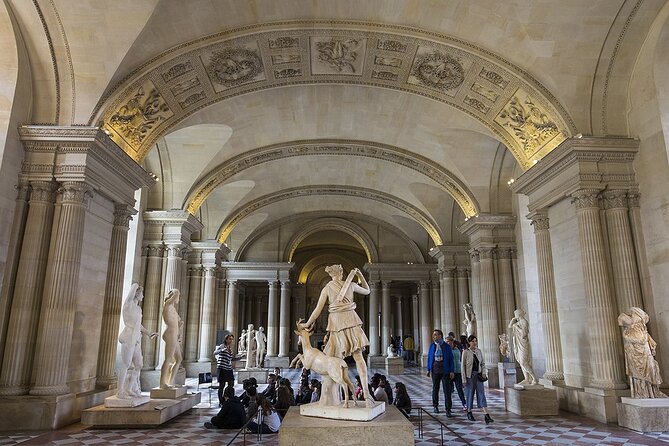
The evening timing is the main crowd strategy. Many people love it because the mood changes once the worst of the daytime traffic clears. You can often find calmer pockets for looking closely and photographing without standing shoulder-to-shoulder.
Still, a 3-hour tour has a built-in pace. You are moving through several zones of the museum, and your guide is working to hit major anchors. Some visitors found the tour rushed, while others felt it was a great overview with time to absorb. Your experience will depend on your group size, your guide’s timing, and how many questions you ask in the galleries.
My practical advice is to treat this tour as “get oriented and see the canon.” Think of it as a first chapter, not the whole book. When you find a work that really grabs you, ask one focused question and then take a few minutes to look on your own before the group moves on.
Also, wear shoes you can stand in for a while. Even with fewer people, the Louvre still demands time on your feet. If you want photos, consider stepping slightly to the side when you see a spot popular with other visitors, so you do not block other people and you still get a clean frame.
Price and value: what $349.98 buys you on a night you will remember
At $349.98 per person for about 3 hours, this is not a bargain. It is a premium ticket. The value comes from four places that matter in Paris.
First, you get skip-the-line admission tickets with a time slot. That can save time that you cannot easily recover once the museum day is underway. Second, you get a licensed professional guide. The Louvre is one of those museums where guidance often turns “wow, huge” into “wow, I understand what I am seeing.” Third, the private setup means you are not watching a guide juggle a big group. You are the group.
Fourth, the evening timing is part of the product. Even if you still encounter crowds, night visits tend to feel more relaxed than midday. That matters for enjoyment and for photography.
You should consider this price most if:
- you have limited time in Paris and want maximum museum impact
- you prefer a guided storyline rather than self-guided wandering
- you care about context for the headline works, not just checking boxes
- you want personalized pacing, especially if you are traveling as a couple or small group
If you are the type who loves reading labels and going at your own speed, you might prefer self-guided admission. But if you want the Louvre to feel understandable fast, the cost is easier to justify.
Final call: should you book this Louvre by night private tour?
Book it if you want the Louvre in a smart, guided snapshot and you value priority entry and a guide who can explain the meaning behind the famous pieces. It is a strong choice for first-time visitors and for anyone who has limited time, because the evening route helps you feel the collection instead of just seeing it.
Skip it or change your approach if you want a slow, unlimited museum day. A private night tour is still paced, and the Louvre can still feel busy in places. If you have accessibility or mobility needs, tell your guide what you need from the start and ask about elevator routing, since navigation details can make a difference inside a large museum.
If you do book, do two things: arrive early to confirm the meeting spot at Arc de Triomphe du Carrousel area, and come with a short list of your top priorities. That is how you turn 3 hours into real satisfaction.
FAQ
Where does the tour start?
The tour starts at Arc de Triomphe du Carrousel, Pl. du Carrousel, 75001 Paris, France. The meeting is at 6:00 pm, and the guide will be waiting with a sign.
How long is the Louvre private tour by night?
It runs for about 3 hours.
What time does the tour begin?
The start time is 6:00 pm.
Is the admission ticket included?
Yes. Entrance tickets with a time slot are included, along with skip-the-line admission.
Is this tour private?
Yes. It is a private tour, so only your group participates.
What language is the tour offered in?
The tour is offered in English. It may also be operated by a multi-lingual guide.
What is included in the price?
The tour includes a professional guide, skip-the-line entrance tickets with a time slot, and all taxes, fees, and handling charges.
What is not included?
Transportation to and from attractions is not included.
Can I cancel for a full refund?
You can cancel for a full refund if you cancel at least 24 hours before the experience’s start time. If you cancel less than 24 hours before, the amount paid is not refunded.
Newest write-ups from Paris



Louvre Museum Tickets, compared.

Louvre Guided Tour with Reserved Access & Boat Cruise
Read our review →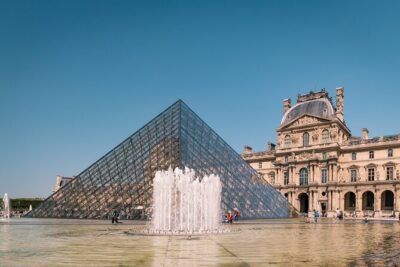
Louvre Museum Masterpieces Guided Tour with Access
Read our review →
Louvre Overview, Exploration tour and Reserved Entry
Read our review →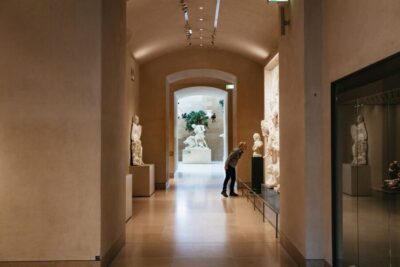
Louvre Museum Entry Ticket With Host and River Cruise
Read our review →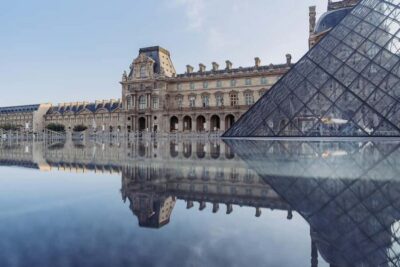
Mona Lisa & Louvre Masterpieces Tour with Reserved Access
Read our review →
Louvre Museum – Exclusive Guided Tour (Entry Included)
Read our review →
Louvre Museum Hosted Entry and Mona Lisa Audioguide
Read our review →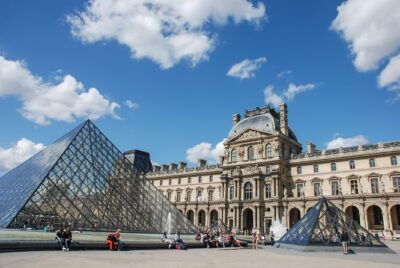
Louvre Access with Mona Lisa Escort or Guided Option
Read our review →Browse the lists this tour appears in