
Reviewed · LE MARAIS WALKING TOURS
Jewish History Tour of Le Marais
Paris history gets personal in Le Marais. Karen, a guide with 20 years of experience, leads you through Jewish Paris with stories you will not find in a quick guidebook stop, plus a rare sit-down history break inside an old synagogue. I especially love how the tour blends big-picture Jewish history with everyday neighborhood details, and I also like the human touch, built through Karen’s long relationships in the community. One consideration: the tour ends at a solemn place, so bring the right mood if you want a lighter day.
This is a practical, walking-first tour with two sit-down breaks built in, and it covers just a few blocks overall. Even if you are not a serious history buff, you will find it moves at a pace that feels manageable for many visitors. If you are sensitive to crowds and long lines, plan for a busy area around lunch time, though the VIP access at L’As du Fallafel helps.
You will also get a meaningful finish at the SHOAH Holocaust Memorial & Museum, with time to explore on your own afterward. For lunch, you are looking at about €15 to €25 per person at L’As du Fallafel, and it is not included in the tour price. Overall, it is strong value for the time you spend, especially because of the access and the caliber of the guide.
In This Review
- Key things I’d bet on before you book
- Le Marais gives Jewish Paris a real place to stand on
- Where to start: Place des Vosges and the Louis XIII meeting point
- The heart of the walk: Place des Vosges and neighborhood identity
- Hôtel de Sully exterior: a 17th-century mansion with a long memory
- Hector Guimard synagogue exterior: Art Nouveau meets religious architecture
- Inside an old synagogue: a rare sit-down history break
- Musée Carnavalet exterior: Paris history seen through the city’s lens
- L’As du Fallafel VIP lunch: worth budgeting for
- Ending at the SHOAH Memorial and Museum: the emotional finish
- Price and value: why $94 works for what you get
- How strenuous is this Jewish history walk in Le Marais
- Who this tour suits best
- Should you book Karen’s Jewish History Tour of Le Marais?
- FAQ
- Where does the Jewish History Tour of Le Marais start?
- How long is the tour?
- Is the tour offered in English?
- Is lunch at L’As du Fallafel included in the tour price?
- Will you always enter a synagogue during the tour?
- What is the final stop of the tour?
- Is the walking tour wheelchair accessible?
- What are the cancellation and payment options?
Key things I’d bet on before you book
- Karen’s 20 years of guiding means the stories land, and the pacing fits mixed groups
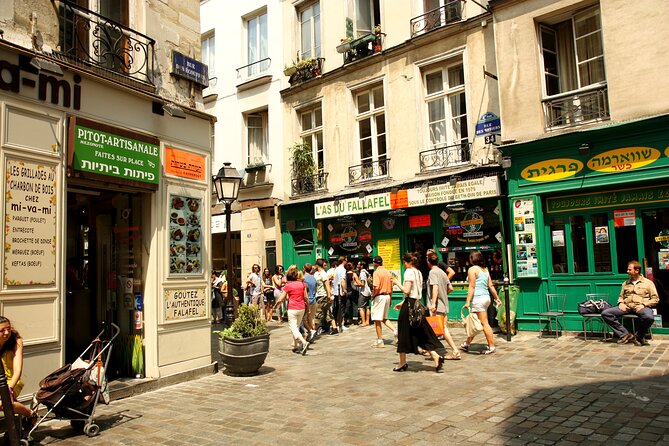
- VIP access at L’As du Fallafel can save you from a long line at lunch
- A sit-down break inside one of the oldest synagogues in Paris (sometimes skipped only if neighborhood security changes)
- Le Marais, the core Jewish neighborhood, plus major Paris landmarks nearby
- Two planned 45-minute sit-down breaks, so the day does not turn into nonstop walking
- SHOAH Memorial & Museum at the end, with optional self-guided time
Other walks through the Marais:
- Award-Winning Paris French Bakery Experience — Le Marais, 4th Arr
★ 4.5 · 1,186 reviews - Paris Le Marais Food Tour With 10+ Tastings, Cheese, Wine & More
★ 5.0 · 985 reviews - Paris Le Marais District Original Food and Wine Tasting Tour
★ 4.5 · 880 reviews - Paris Bike Tour Hidden Secrets in the Latin Quarter & Le Marais neighborhoods
★ 5.0 · 766 reviews
Le Marais gives Jewish Paris a real place to stand on
Le Marais is where you can feel the layers of Paris history, including Jewish life that shaped the neighborhood for generations. This tour keeps you in the same area the whole time, which matters because it lets you connect names, buildings, and social history without constantly changing neighborhoods. You get the sense of how community history lives in streets, not just in museums.
I like that it does not treat Jewish history as a separate, sealed-off topic. Instead, you walk through major Paris landmarks right alongside Jewish heritage sites, and that comparison helps the story stick.
The most valuable part, though, is access and context. Karen has built lasting relationships in the local community, and that trust shows up in what you can see, plus how you are guided through what happened there.
Where to start: Place des Vosges and the Louis XIII meeting point
You meet at the foot of the statue of King Louis XIII, right in the middle of Place des Vosges. This square is one of the prettiest anchors in central Paris, with a layout that makes it easy to get oriented quickly. It also sets the tone that you are moving through real, lived-in Paris, not just a catalog of stops.
From the start, you will get a sense of the neighborhood’s layout and why Le Marais became so important over time. If you have ever felt lost in big walking tours, I think this start helps you settle in fast.
Time-wise, the full experience runs about 210 minutes, or roughly 3.5 hours. For many people, that is a good sweet spot: long enough to cover meaningful ground, short enough to stay fresh.
The heart of the walk: Place des Vosges and neighborhood identity
Place des Vosges is not just a pretty square. It is the kind of place where the city’s self-image and power shows up in the architecture and the way people gather. As you begin here, you start to understand why the Jewish neighborhood that developed nearby became so tied to wider Paris history.
This part of the tour is also a mental warm-up. You are learning how to read the neighborhood, so later stops feel less like random points on a map.
I find that walking tours work best when the first part teaches you how to see. This one does that early, so the rest of the route feels clearer.
Hôtel de Sully exterior: a 17th-century mansion with a long memory
The Hôtel de Sully stop is an exterior look at a stunning 17th-century mansion. Even without going inside, it matters because you start to frame the neighborhood within the broader story of Paris elite life, wealth, and influence.
In practice, this kind of exterior stop is great when you want atmosphere without losing time. You get architectural context, and Karen can connect that to how cities grow and how communities live alongside power.
If you enjoy architecture, you will likely have fun spotting details and listening for what to pay attention to. If you do not, you still get the historical meaning.
A handful more Paris options to weigh up
- Paris: Dark History and Ghostly Guided Walking Tour★ 4.7 · 1,000 reviews
- Le Marais/Paris – The Historic, Trendy, Jewish, LGBT district★ 5.0 · 341 reviews
- Paris City of Fashion History Private Guided Walking Tour★ 5.0 · 221 reviews
- History of Paris City Center w/ Notre Dame Semi-Private 12ppl Max★ 5.0 · 194 reviews
Hector Guimard synagogue exterior: Art Nouveau meets religious architecture
Next up is the famous synagogue by Hector Guimard, seen from the outside. This is where Paris starts to surprise you, because it reminds you that religious architecture can also be tied to the creative movements of its time.
Guimard’s style is known for its Art Nouveau flair, and that design energy creates a visible contrast with the idea of tradition. That contrast is a smart way to discuss how Jewish communities expressed identity through both cultural continuity and the aesthetics of the era.
Karen’s storytelling here is the key. You are not just looking at a building, you are learning how to interpret why a structure looks the way it does.
Inside an old synagogue: a rare sit-down history break
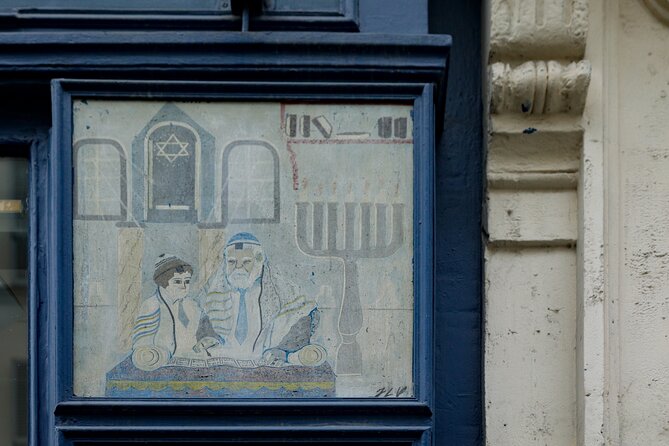
The tour’s standout moment is the chance for a sit-down history break inside one of the oldest synagogues in Paris. Sit-down matters. It changes the whole feel of the day, because the story can slow down and the emotional weight can land without rushing.
This is also where the local-community relationships really matter. Access is not something you can fake. The tour plans this break, with a note that entry can be affected in rare cases due to neighborhood security changes.
If that stop is important to you, I would treat it like the event, not like a bonus. Even if you come in with general interest, you will probably leave thinking about how sacred spaces hold memory in physical form.
This is also where I think the tour is at its best for thoughtful travelers. You are not just learning facts, you are being guided into what those facts mean in place.
Musée Carnavalet exterior: Paris history seen through the city’s lens
You also see Musée Carnavalet from the outside, a museum closely tied to Paris history. Exterior stops might sound smaller on paper, but they work well on this route because you are building context. You are learning how the city tells its own story and how neighborhoods fit into it.
Karen can connect what you are seeing now to how Paris museums and institutions frame history. Even if you do not go in to Carnavalet as part of the tour, the stop helps you know what kind of story the city is telling around you.
I recommend viewing this moment as a bridge. It links the neighborhood and synagogue stops to the final museum experience at the end.
L’As du Fallafel VIP lunch: worth budgeting for
Lunch is a VIP stop at L’As du Fallafel, and it is not included in the tour price. You should plan on about €15 to €25 per person for food.
Here’s why that lunch stop is more than just convenience. The VIP access helps you bypass a very long line, so the meal feels like a reward instead of a wait-and-hope ordeal. If you have ever tried to get falafel in a busy place in Paris, you know why that matters.
Also, this is the part of the tour where the day turns from learning mode into people mode. You share a meal, talk with your group, and get a local rhythm you cannot replicate from a restaurant recommendation.
If you have dietary needs, keep expectations practical. The tour data does not list specific options, so it is worth checking what is available once you arrive.
Ending at the SHOAH Memorial and Museum: the emotional finish
The tour ends at SHOAH Holocaust Memorial & Museum. This is a deeply moving stop, and you will hear powerful stories before you have the option to explore the museum on your own.
This ending shape matters because it gives you a last layer of meaning after you have learned about community life, architecture, and neighborhood identity. You are not ending with a random museum. You are ending with a place built for remembrance and learning, where context turns into responsibility.
Practical advice: plan a slower pace for yourself at the end. If you feel overwhelmed, you can choose to focus on the sections that resonate most, and you do not need to rush through everything to get value.
Price and value: why $94 works for what you get
At $94 per person, this tour is priced like a specialty guided experience, not a generic walking loop. What makes the value feel real is the mix of elements: a skilled guide, a neighborhood-based route, sit-down time inside an old synagogue, and VIP access for lunch at L’As du Fallafel.
A common problem with paid walking tours is that you pay for time but still end up standing around. Here, the design fights that. The route includes two 45-minute sit-down breaks, plus the fact that most movement stays within a small area of Le Marais, so you are not spending your energy on long transfers.
If you are comparing value, think of it this way: you are paying not only for storytelling, but for access and for pacing. That is why the guide’s long experience matters too. When a guide has spent two decades doing the same route, they learn what works with groups and how to keep the day meaningful.
Lunch being extra is normal for Paris tours. The upside is that the VIP component makes that extra spend easier to justify, because it reduces time lost to lines.
How strenuous is this Jewish history walk in Le Marais
This is described as one of the more physically achievable options, and I agree that the structure supports that. You get two sit-down breaks of about 45 minutes, plus sightseeing in Le Marais where the route is only a few blocks overall.
So, if you can handle a moderate walk and you like breaks, this should feel fair. If you expect a tour that never requires standing, you might find parts of it challenging, since you will still have outdoor walking segments.
Overall, I would file this under “manageable for many ages,” especially compared to tours that are nonstop for hours.
Who this tour suits best
This experience is a strong fit if you want Jewish history in Paris tied to place, not just dates and names. It is also ideal if you like guides who can handle different levels, since the tour style is friendly and story-driven.
It works well for:
- History-minded visitors who want the neighborhood angle
- Families and teens, especially if your group learns best through humor and narrative
- Jewish heritage travelers and allies who want deeper understanding from a local guide
I also think it suits solo travelers who want structure and context. Meeting at Place des Vosges and ending at SHOAH gives the day a clean arc.
Should you book Karen’s Jewish History Tour of Le Marais?
If you want a guided walk that blends Jewish heritage with classic Paris landmarks, this is a smart booking. The key reasons are access (the synagogue sit-down moment), pacing (two planned long breaks), and lunch convenience (VIP help at L’As du Fallafel).
You might skip it if you only want light entertainment or if your group is strictly focused on non-emotional sightseeing. The SHOAH Memorial end is serious, and it deserves time and attention.
For most visitors, though, this tour hits a great balance: authentic neighborhood context, meaningful storytelling, and enough comfort built in to keep you enjoying the day.
FAQ
Where does the Jewish History Tour of Le Marais start?
The meeting point is at the foot of the statue of King Louis XIII, right in the center of Place des Vosges.
How long is the tour?
The tour duration is about 210 minutes.
Is the tour offered in English?
Yes, the live tour guide speaks English.
Is lunch at L’As du Fallafel included in the tour price?
No. Lunch is not included. Expect to pay about €15 to €25 per person for the meal, and the tour includes VIP access.
Will you always enter a synagogue during the tour?
There is a sit-down history break inside one of the oldest synagogues in Paris, except in rare cases where neighborhood security increases.
What is the final stop of the tour?
The tour ends at the SHOAH Holocaust Memorial & Museum, where you hear stories and then can explore the museum on your own.
Is the walking tour wheelchair accessible?
Yes, the tour is listed as wheelchair accessible.
What are the cancellation and payment options?
You can cancel up to 24 hours in advance for a full refund. You can also reserve now and pay later to keep plans flexible.
Newest write-ups from Paris





Le Marais Walking Tours, compared.

Award-Winning Paris French Bakery Experience — Le Marais, 4th Arr
Read our review →
Paris Le Marais Food Tour With 10+ Tastings, Cheese, Wine & More
Read our review →
Paris Le Marais District Original Food and Wine Tasting Tour
Read our review →
Paris Bike Tour Hidden Secrets in the Latin Quarter & Le Marais neighborhoods
Read our review →
Paris Culinary Tour: 11 Tastings & 2 Wines in Le Marais
Read our review →

Le Marais District Food Tour with 10+ Tastings & Wine
Read our review →
Browse the lists this tour appears in