
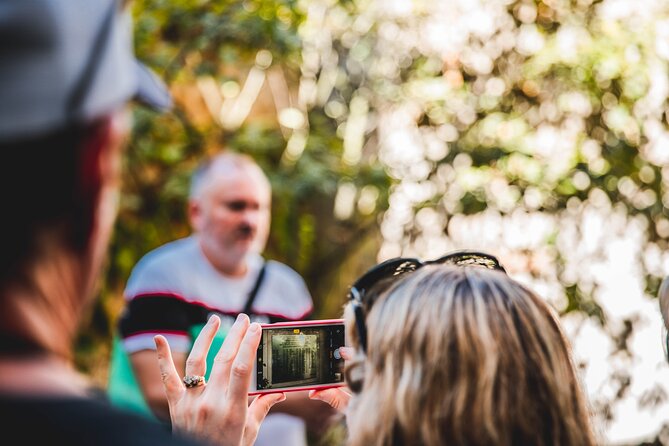
Reviewed · LE MARAIS WALKING TOURS
Life at the Marais during World War II
Occupied Paris hides in plain sight. This small-group walk connects the human side of World War II to real places in Paris, from everyday survival under occupation to the final days near Notre Dame.
I like that the guide doesn’t stick to big-picture battles. You get grounded details on food rationing, the black market, and curfews, tied to what you can see on the street. It also helps that the route links Le Marais to Île de la Cité, including a stop at the Holocaust museum and the Wall of the Righteous.
The main drawback is also the point. This is heavy subject matter, so you should expect an emotional tone, not a light sightseeing stroll. If you want comedy and cake only, this may not fit your mood.
In This Review
- Key Highlights You Should Know
- A Walk Through Occupied Paris, Le Marais to Notre Dame
- Le Marais Under Occupation: Rationing, Black Markets, and Curfews
- The Holocaust Museum and the Wall of the Righteous Stop
- Île de la Cité Landmarks With WWII Markings
- The Ending: The Final Days Near Notre Dame
- Coffee, Group Size, and Price That Actually Adds Up
- Who This Tour Fits Best (and Who Might Want Another Option)
- Practical Tips for a Smoother Walk
- Should You Book This Life at the Marais During World War II Tour?
- FAQ
- How long is the tour?
- Where does the tour start?
- Where does the tour end?
- What language is the tour offered in?
- How much does it cost?
- How many people are in the group?
- What is included in the price?
- Is admission free for the tour stops?
- Is private transportation included?
- Is there a mobile ticket?
- Can I cancel for free, and how far in advance?
Key Highlights You Should Know
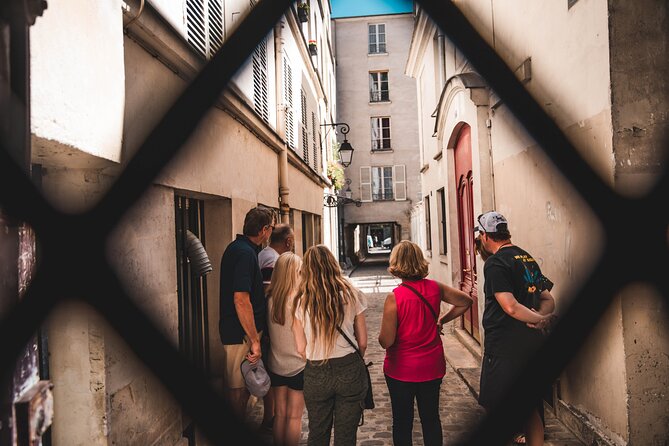
- Real daily-life WWII details: food rationing, black market trading, and curfews explained in place.
- Le Marais first, for context: you start where ordinary Parisians lived, worked, and tried to cope.
- A stop that changes the temperature: the Holocaust museum and the Wall of the Righteous add necessary weight.
- Île de la Cité, with visible scars: you look for markings connected to the war around major landmarks.
- A guided ending at Notre Dame area: the walk closes on the harrowing final days of the Occupation and the arrival of the Allied forces.
More wartime Paris on foot:
- Paris WW2 The German Occupation Small group or Private tour
★ 4.5 · 128 reviews - Normandy D-Day Beaches and World War II Sites Day Trip from Paris
★ 4.5 · 56 reviews - Invalides Museum – WWI & WWII – Guided Tour up to 8 guests
★ 5.0 · 32 reviews - Skip-the-line Les Invalides World War Museum Guided Tour – Semi-Private 8ppl Max
★ 5.0 · 30 reviews
A Walk Through Occupied Paris, Le Marais to Notre Dame
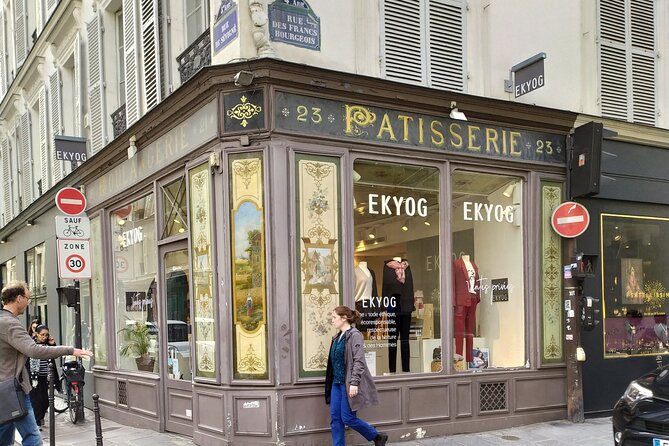
This is a 3-hour, English-language walking tour designed to take you from the old streets of Le Marais toward the Île de la Cité landmarks and, ultimately, the Notre Dame area. The schedule is tight enough that you stay on a story arc, but not so fast that you feel rushed every minute.
You start near Saint-Paul, Rue Saint-Antoine (75004) and end at Notre Dame, Paris. There’s a mobile ticket for the experience, and you’ll get coffee or tea included, which is a small comfort when the weather is doing its usual Paris thing.
The group stays intimate. The tour caps at a maximum of 10 travelers, and the pricing is per group up to 8. Practically, that means you’re not competing with a wall of people for attention when the guide points out specific spots on buildings or streets.
One more thing I appreciate: this is not framed like a lecture you endure. The best part is how the guide ties each stop to what you can still observe around you, so you leave with a clearer mental map of occupied Paris, not just a pile of dates.
Le Marais Under Occupation: Rationing, Black Markets, and Curfews
Le Marais is where the tour gets personal, fast. You move past key buildings and hidden details, and the guide uses them to explain what life felt like day to day under occupation. This is the portion that makes World War II stop being an abstract school unit and start being about bread, heat, and timing.
Here’s the kind of content you can expect:
- Food rationing and why it shaped almost everything.
- The black market, including how people tried to get around official limits.
- Curfews and what they did to daily routines.
I love the way these topics connect. Rationing wasn’t only about hunger. It drove risk-taking. Curfews weren’t only about control. They rewired how people moved through streets, planned errands, and avoided trouble. And once you understand those pressures, the black market makes more sense as a survival system, not just a plot point.
Is Le Marais visually “war-themed”? Not really. That’s why it works. The guide helps you read the city like a document. You’re not looking for obvious signs of conflict all the time, you’re learning how to spot the places where the story sticks, even when Paris looks calm today.
One practical consideration: since this segment is 2 hours, it’s the longest continuous walking block. If you have mobility issues, you may want to go in planning for that time on foot.
The Holocaust Museum and the Wall of the Righteous Stop
At a certain point, the tour shifts from daily survival to the larger moral reality of the period. You’ll stop at Paris’s Holocaust museum and the Wall of the Righteous.
This is one of the most important parts of the experience for me to highlight. Even if you already know the outlines of history, these places force you to slow down and focus. The Wall of the Righteous specifically adds something you don’t always get in war narratives: attention to people who helped others, even under extreme danger.
A quick reality check for your expectations. This is not the part of the tour where you’re cracking jokes or snapping quick photos for your feed. It’s a respectful, weighty stop, and your best move is to treat it like that. If you’re the type who gets emotionally affected by historical sites, plan for that instead of fighting it.
Also, check how the museum visit feels for you in advance. The listing doesn’t spell out the exact duration for this stop, so I recommend building in mental flexibility, and if you need a reset, give yourself it.
Île de la Cité Landmarks With WWII Markings
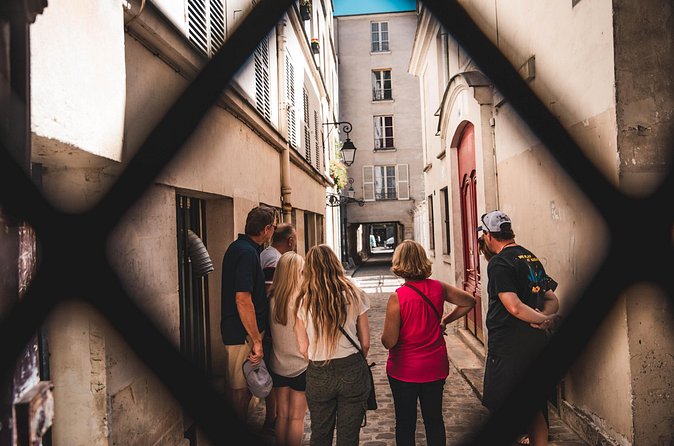
After Le Marais, the route goes toward Île de la Cité, and that’s where the tour leans more into visible wartime traces. This segment runs about 1 hour, focused on iconic buildings and the war’s physical footprint in the city.
You’ll hit several major sites, including:
- Notre Dame Cathedral
- Paris Préfecture
- Conciergerie
What makes this part worth your time is the guide’s focus on details that are easy to miss. You’ll look for bullet holes and artillery impacts hidden in plain sight. That phrase matters, because it tells you what kind of tour this is: not sweeping viewpoints only, but close reading.
Here’s the practical value: when you can stand in front of something damaged and then hear what happened there, the city becomes more than scenery. It becomes evidence. And even if you’re not a hardcore history person, it’s still compelling because the visual cues are right in front of you.
One possible drawback: you should expect a more intense tone than a typical monuments tour. This part is still respectful, but it can feel more somber than you might want on a short walking schedule.
Other walks through the Marais:
- Award-Winning Paris French Bakery Experience — Le Marais, 4th Arr★ 4.5 · 1,186 reviews
- Paris Le Marais Food Tour With 10+ Tastings, Cheese, Wine & More★ 5.0 · 985 reviews
- Paris Le Marais District Original Food and Wine Tasting Tour★ 4.5 · 880 reviews
- Paris Bike Tour Hidden Secrets in the Latin Quarter & Le Marais neighborhoods★ 5.0 · 766 reviews
The Ending: The Final Days Near Notre Dame

The tour finishes with a contemplation of the Occupation’s final days, including Hitler’s orders to destroy the city and the arrival of the Allied Forces just in the nick of time.
This ending matters because it helps you stitch the story together. Early on, you see how occupation shaped daily life, what people did to get food and stay out after dark. Later, you see what the conflict did to the city itself and how the war’s momentum turned.
I like that the ending doesn’t pretend history is simple. It frames the last days as frantic and precarious, not clean and heroic. That matches reality better than most pop-history versions.
If you’re trying to decide whether you want a “battlefield tour” versus an “occupied life tour,” this one does a smart blend. You get both the human survival side and the city-level consequences, and the route naturally guides you toward that.
Coffee, Group Size, and Price That Actually Adds Up
Price is listed as $458.53 per group (up to 8), for about 3 hours. That’s not cheap at first glance, but you should think of it as a guided history service for a small group, not an individual ticket price.
Let’s do the math you can actually use. If the group is filled at 8 people, that’s about $57 per person. If fewer people join your group, the per-person cost rises. In other words, this is best when you’re booking as friends or with a small private group of your own.
What you get for the price:
- A guided walking route across multiple historic areas
- Coffee and/or tea
- A mobile ticket
- English-speaking guide delivery (the experience is offered in English)
- Admission is specifically marked as free for the Le Marais and Île de la Cité segments
What you don’t get:
- Private transportation (so you should plan to handle getting yourself to the start point)
From a value standpoint, the included coffee is a small perk, but the real value is the structure. You’re paying for someone to connect the dots between daily survival and the places where you can still notice war traces, including around major landmarks.
And the small cap, maximum of 10 travelers, helps. In a topic like this, crowd noise kills attention. A smaller group keeps the guide’s explanations usable.
Who This Tour Fits Best (and Who Might Want Another Option)
This tour is a great fit if you want Paris to feel real. You’ll like it if you’re the type who reads buildings and streets like clues, not just a photo background. The daily-life themes suit people who get more from history through human behavior than through dates alone.
You’ll probably enjoy it even if you’re not a self-described history buff. The tone stays understandable, and the guide’s style is meant to keep a mixed group engaged. That includes people who came along for the story and people who came along for the facts.
On the other hand, consider skipping or pairing this with something lighter if you:
- Want an upbeat, casual walking day
- Get strongly affected by Holocaust-related content
- Prefer tours that focus only on visible monuments, not wartime marks and survival details
A smart approach is to plan a low-key meal after the tour. You’ll likely feel the weight of what you learn, and you’ll want time to decompress.
Practical Tips for a Smoother Walk
Paris can be wet year-round, and this kind of walking tour depends on staying comfortable so you can pay attention. Pack for weather, not postcard photos.
My advice:
- Wear shoes you can stand in for a good chunk of time, especially for the 2-hour Le Marais portion.
- Bring a light rain layer if there’s any chance of showers.
- Keep water and a small snack plan in mind. The tour includes coffee and/or tea, but it does not list a full meal.
- If you’re sensitive to emotionally intense locations, mentally prepare for a heavier museum stop and plan a calm activity after.
Also, since the start is near public transportation and the end is at Notre Dame, you can usually arrange your day around normal transit without needing private transport.
Should You Book This Life at the Marais During World War II Tour?
Yes, I think you should book this tour if you want a grounded, place-based look at occupied Paris. The strongest reason is the combination: daily-life WWII details in Le Marais, a serious stop at the Holocaust museum and the Wall of the Righteous, then the war’s physical traces around Île de la Cité and the Notre Dame area.
Book it especially if you value a guide who can connect facts to what you’re seeing right now. That’s what turns a history subject into a living walk.
But if you’re seeking a light day, or you know heavy historical topics will put you in a bad headspace, look for a different kind of tour that matches your mood. This one is built to inform, and it does not shy away from the truth.
FAQ
How long is the tour?
It runs for approximately 3 hours.
Where does the tour start?
The tour starts near Saint-Paul, Rue Saint-Antoine, 75004 Paris, France.
Where does the tour end?
It ends at Notre Dame, Paris.
What language is the tour offered in?
The tour is offered in English.
How much does it cost?
It costs $458.53 per group, up to 8 people.
How many people are in the group?
The tour has a maximum of 10 travelers.
What is included in the price?
Coffee and/or tea are included.
Is admission free for the tour stops?
Admission Ticket Free is specifically stated for the Le Marais segment (2 hours) and the Île de la Cité segment (1 hour). The Holocaust museum stop is listed, but admission details are not specified there.
Is private transportation included?
No, private transportation is not included.
Is there a mobile ticket?
Yes, the tour includes a mobile ticket.
Can I cancel for free, and how far in advance?
Yes, free cancellation is offered. You must cancel at least 24 hours in advance for a full refund.
Newest write-ups from Paris







Le Marais Walking Tours, compared.

Award-Winning Paris French Bakery Experience — Le Marais, 4th Arr
Read our review →
Paris Le Marais Food Tour With 10+ Tastings, Cheese, Wine & More
Read our review →
Paris Le Marais District Original Food and Wine Tasting Tour
Read our review →
Paris Bike Tour Hidden Secrets in the Latin Quarter & Le Marais neighborhoods
Read our review →
Paris Culinary Tour: 11 Tastings & 2 Wines in Le Marais
Read our review →

Le Marais District Food Tour with 10+ Tastings & Wine
Read our review →
Browse the lists this tour appears in