
Reviewed · MONTMARTRE HILL TOURS
Montmartre Walking Tour, A Journey Through Art and History
Paris has a way of surprising you on steep streets. This Montmartre walking tour strings together art and local lore across famous and off-the-beaten corners, with a small group capped at 10, so you can actually hear the guide and ask questions. I like that the focus is on specific places tied to artists, not just generic postcard stops.
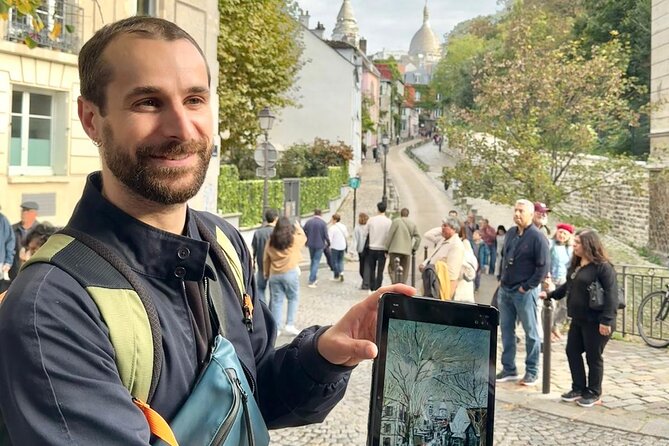
Two things I especially like are the tight pacing and the way the stories connect to what you see in front of you. Stops are short, usually around 5 to 15 minutes, so you get a sense of place without getting stuck in one spot. I also like that the tour can be led in English and uses visuals, including iPad support mentioned in the experience details, which helps when you are new to art history.
One consideration: this is a walking tour with a moderate fitness level, and you will be on the move across Montmartre’s slopes. Also, it requires good weather, so plan for a backup date if the forecast is rough.
In This Review
- Key highlights worth your time
- Why Montmartre feels different with art stories, not just sights
- Meeting near Place Blanche, ending at Sacré-Cœur’s back side
- Moulin Rouge entrance: painted panels and the neighborhood’s myths
- Van Gogh’s Paris connection at his former home entrance
- Le Bateau-Lavoir: a legendary early 1900s artist meeting point
- Place Dalida and Rue de l’Abreuvoir: a viewpoint you can plan around
- Maison Rose since 1920: an artist model story and a famous photo spot
- Clos Montmartre vineyard: one of the city’s remaining vineyards
- Au Lapin Agile cabaret: oldest still-active, plus a human artistic angle
- Musée de Montmartre area: Renoir links and the Belle-Epoque focus
- Finishing at the back of Sacré-Cœur: architecture and a tragic origin story
- Price and value: $34.55 for 2.5 hours of guided street-level art
- Practical tips so the tour feels easy, not exhausting
- Should you book this Montmartre walking tour?
- FAQ
- How long is the Montmartre walking tour?
- What is the group size?
- Is the tour offered in English?
- Where does the tour start and where does it end?
- Do you need tickets for the stops?
- Will I get a mobile ticket?
- Does the tour run in bad weather?
- What is the cancellation policy?
Key highlights worth your time
- Maximum 10 travelers keeps the group intimate and easy to question
- Short stop times (about 5 to 15 minutes) make it feel like a real stroll with breaks
- Art sites with context connect artists and movements to specific street corners
- English mobile tour makes it simple to follow along as you walk
- Ends near Sacré-Cœur so you can roll straight into more exploring
Other climbs up the Butte:
- Montmartre Hidden Gems and Scenic Highlights Walking Tour
★ 5.0 · 2,684 reviews - Montmartre Hill French Gourmet Food and Wine Tasting Walking Tour
★ 5.0 · 2,588 reviews - Paris: Montmartre Highlights Walking Tour with a Local Guide
★ 4.9 · 2,318 reviews - Paris: Montmartre Cheese, Wine & Pastry Guided Walking Tour
★ 4.8 · 2,255 reviews
Why Montmartre feels different with art stories, not just sights
Montmartre is the kind of neighborhood where the streets already feel like stage sets. What makes this tour worth it is the way the guide turns those streets into a living timeline, linking neighborhoods, buildings, and a few famous landmarks to artists and artistic communities.
I like that you get both the big names and the smaller details that make the area feel lived-in. You will pass the Moulin Rouge entrance with its painted panels, then you will move from there into artist homes and studios you would probably miss on your own. The tour also keeps you moving at a comfortable pace, so it feels active without turning into a marathon.
And because the group is limited to 10, the whole experience stays conversational. You are not just listening to facts, you are getting prompts and follow-ups that help you notice more on the street.
Meeting near Place Blanche, ending at Sacré-Cœur’s back side
You start at 3 Pl. Blanche, 75009 Paris, which is a handy jump-off spot if you want to keep transit plans simple later. The tour ends at 1 Rue de la Bonne, 75018 Paris, and it finishes at the back of Sacré-Cœur Basilica.
That end location is practical. You get to wrap up right near a major landmark, which makes it easier to choose what to do next, whether that is a quick photo, a viewpoint stop, or heading to the metro or a cab. The tour team also helps you find the best way toward public transportation or where to catch a cab after you finish.
One small planning tip: wear shoes you trust. Even if the stops are short, Montmartre’s streets ask a bit of your legs.
Moulin Rouge entrance: painted panels and the neighborhood’s myths
The tour begins with a classic Montmartre landmark, the Moulin Rouge. You pass by the entrance and talk about its history, plus you look at the painted panels on the side of the entrance.
This is a smart first stop because it sets the tone. You get the sense that Montmartre has long been about performance and perception, not only about painters and museums. And since the stop is only about 15 minutes, you get enough context to appreciate it without it eating your whole morning or afternoon.
If you care about street-level details, this is where you start training your eyes. You are not just walking past a famous building, you are spotting artwork elements that you might otherwise overlook.
Van Gogh’s Paris connection at his former home entrance
Next up is Van Gogh’s House, specifically the building entrance tied to Vincent Van Gogh’s time in Paris with his brother Theo. The stop is brief, about 15 minutes, but the point is clear: you learn why this area mattered to him.
What I like about this kind of stop is that it turns a biography into a sense of geography. You do not have to be an art expert to follow along. You just need to connect the story to the street in front of you and then keep walking, letting the neighborhood do the work.
Also, if you have ever felt overwhelmed by art history facts, this kind of guided, place-based stop helps. It is easier to remember a story when you can point to the building it connects to.
Other arrondissements taken at walking pace:
- Paris Top Sights Half Day Walking Tour with a Fun Guide★ 5.0 · 2,893 reviews
- Paris Île de la Cité and Notre-Dame Walking Tour With Crypt★ 5.0 · 2,272 reviews
- Paris in a Day: Louvre or Orsay, Eiffel Tower, City Walk & Cruise★ 5.0 · 1,956 reviews
- Paris City Center Free Walking Tour (Tip-Based)★ 5.0 · 1,340 reviews
Le Bateau-Lavoir: a legendary early 1900s artist meeting point
Then you pass Le Bateau-Lavoir, described as a legendary artist residency where many well-known artists of the early 20th century lived, including Pablo Picasso.
This stop is about the idea of community. You are not only learning about one person, you are learning how creative groups gathered, worked, and shared space. Even when you can only see the entrance from the street, having that context changes how you look at the building.
The stop is about 15 minutes, so you get a quick burst of background and then you are back outside, moving through Montmartre’s lanes. That keeps the tour from turning into a lecture.
Place Dalida and Rue de l’Abreuvoir: a viewpoint you can plan around
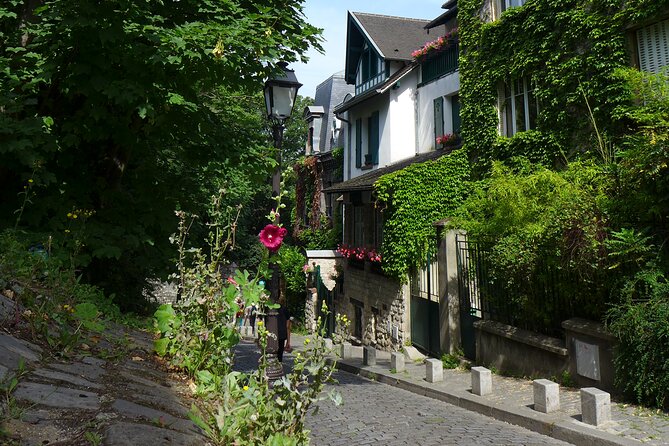
At Place Dalida, you get to see the view of Rue de l’Abreuvoir, noted as one of Paris’s prettiest streets. The stop time is about 5 minutes.
This is the kind of quick pause that works well if you are timing other plans. You get your photo moment and a sense of direction for where the street network opens up, but you are not stuck too long. And it is useful after the heavier art stops, because it lets you switch from stories to scenery.
If you like to photograph streets, this is one of the spots worth being ready. The brief duration means you should have your camera and phone accessible.
Maison Rose since 1920: an artist model story and a famous photo spot
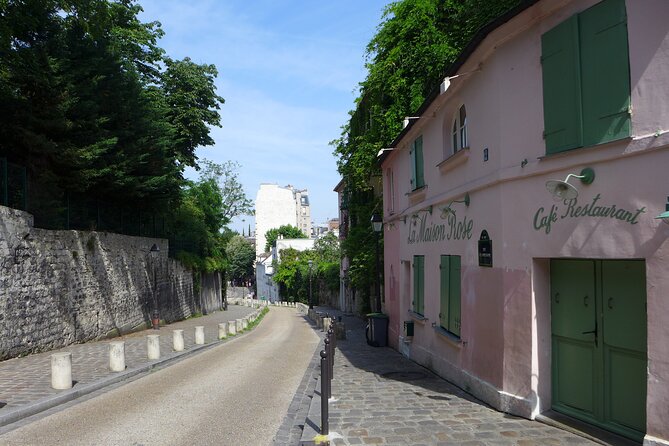
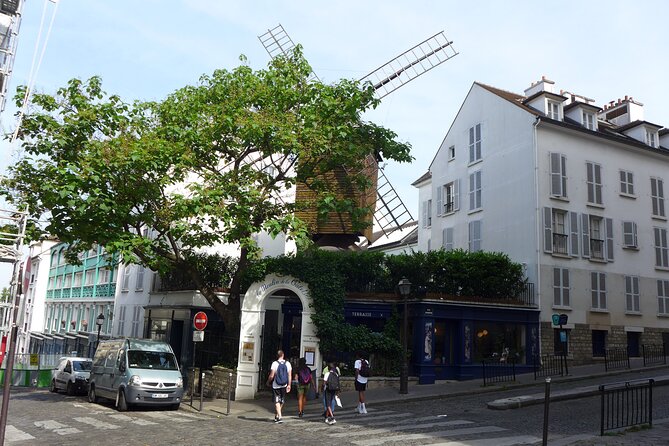
Next you pass La Petite Maison Rose de Montmartre, connected to its restaurant identity since 1920. The tour frames it as a place created by an artist model at the beginning of the 20th century, and it is called out as a very famous picture spot.
Two things make this stop valuable. First, it explains why the building has a look that people seek out today, not only because it is pretty, but because it is tied to creative-era storytelling. Second, it is quick, about 5 minutes, so you do not lose momentum.
Photo-wise, treat it as a “get it and go” stop. You will likely want one or two pictures from street level, then move on.
Clos Montmartre vineyard: one of the city’s remaining vineyards
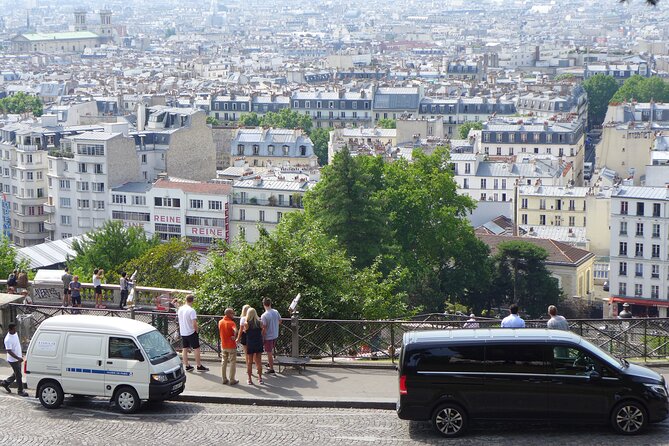
Then you step into something more unusual for Paris, the Vigne du Clos Montmartre. This is noted as one of the two remaining vineyards in Paris, and you get about 5 minutes to take it in.
This stop gives you a different side of Montmartre. It is not just art, nightlife, and famous facades. It is also a reminder that Paris has pockets of old land-use history that survived modern development.
Because the stop is short, I recommend you look first for the vineyard setting, then listen for the story about what makes it rare. That order helps you remember the stop later when you are back home planning your next city walk.
Au Lapin Agile cabaret: oldest still-active, plus a human artistic angle
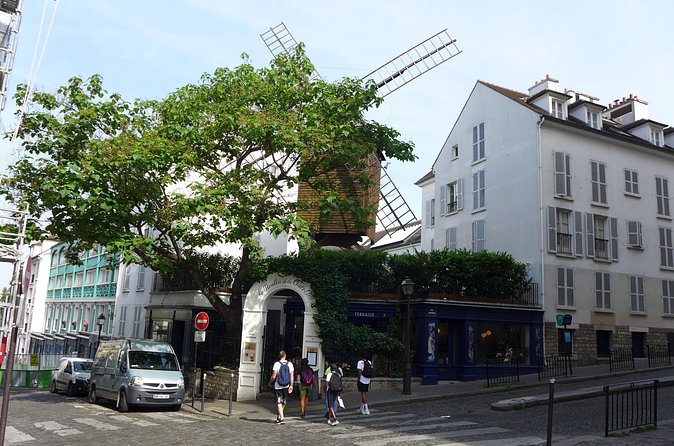
You then stop by Au Lapin Agile, described as the oldest cabaret of Paris still in activity. The stop is about 10 minutes.
This is a strong contrast to the more “fine art” stops. Cabaret spaces have always fed creativity, and Montmartre’s identity depends on that mixture. You get to connect artists, audiences, and performances, not just paintings and studios.
If you like the idea of art as something made for people to enjoy in real time, this part of the tour fits your taste. It also gives you a chance to picture what the neighborhood felt like during the artistic eras being discussed.
Musée de Montmartre area: Renoir links and the Belle-Epoque focus
After that, you pass the Musée de Montmartre, with a story line that includes Pierre-Auguste Renoir having lived there and a focus on the female artists of the Belle-Epoque.
Even though you are passing the museum rather than spending a long time inside during this tour, the context matters. It gives you a direction if you decide to return later on your own, and it helps you connect the neighborhood’s creative scenes to broader art themes, including the role of women in that era.
This is one of those stops where the guide’s storytelling quality really matters. If your guide is using visuals and examples, this is a good place to absorb them, since it is about artists and cultural roles, not just architecture.
Finishing at the back of Sacré-Cœur: architecture and a tragic origin story
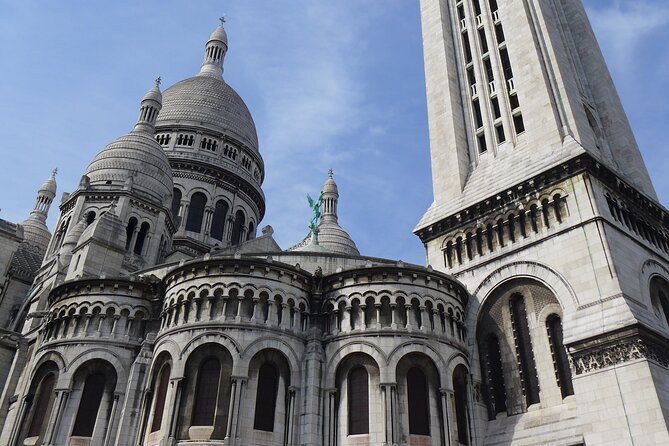
The tour ends at the back of Sacré-Cœur Basilica, about 15 minutes. Here, the guide talks about its architecture and the tragic story of its creation.
This ending works because it ties the tour together with a major landmark while still keeping the focus on meaning. You are not just seeing a famous building, you are getting a story for why it exists and what shaped it.
Also, by the end, you have already walked through multiple art-linked stops around Montmartre. That makes it easier to appreciate how the neighborhood’s identity keeps expressing itself through buildings, not only through artwork.
When you finish, you can keep exploring or head to the metro or cab. You are not forced into a strict schedule right after.
Price and value: $34.55 for 2.5 hours of guided street-level art
At $34.55 per person for about 2 hours 30 minutes, this tour is priced like a straightforward, guided walking experience. The value comes from the combination of:
- A small group size (maximum 10), which improves the actual quality of interaction
- Multiple art-linked stops that would take you longer to figure out on your own
- The fact that the scheduled stops are admission ticket free, so you are not stacking extra costs onto your day
You also get a clean structure: a series of short stops that keep you from waiting around, plus a clear start and end. That matters if you are juggling other plans in Paris.
If you want a low-stress introduction to Montmartre that still feels specific, this is a good fit. If you are looking for a deep museum day, this is not that. It is a walking tour built for context, not for long interior time.
Practical tips so the tour feels easy, not exhausting
This is designed for people with moderate physical fitness. That does not mean it is brutal, but Montmartre’s streets are not flat, and you should plan for steady walking.
Because stops are short and the group is small, you will get more out of the tour if you:
- Wear comfortable shoes before you leave the hotel
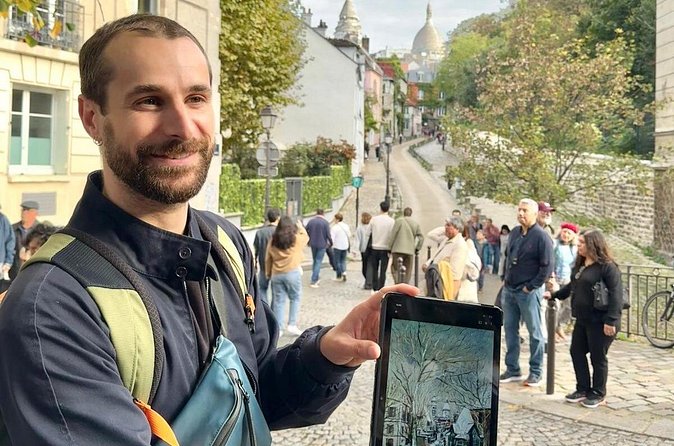
- Keep your phone charged, since the guide may use visuals during the walk
- Bring a light layer, even in mild weather, since the area can feel cooler at different elevations
- Be ready at each stop, especially for the quick photo spots like Place Dalida and Maison Rose
Also, service animals are allowed, and the route is near public transportation, so you can usually build the day around transit without too much hassle.
Should you book this Montmartre walking tour?
I think you should book it if you want a guided Montmartre that feels personal, not crowded. The small-group size, the short, well-paced stops, and the art-and-history connections make it a strong introduction, especially if you are not sure where to start on your own.
Skip it only if you want a long, museum-style visit or if weather and walking are deal-breakers. This tour depends on good weather, and the experience assumes you can handle a moderate walking pace.
If you are trying to learn Montmartre in a single chunk of time, this one gives you a smart mix of famous landmarks and the kinds of street-level places that make the neighborhood click.
FAQ
How long is the Montmartre walking tour?
It lasts about 2 hours 30 minutes.
What is the group size?
The tour has a maximum of 10 travelers.
Is the tour offered in English?
Yes, it is offered in English.
Where does the tour start and where does it end?
It starts at 3 Pl. Blanche, 75009 Paris, France and ends at 1 Rue de la Bonne, 75018 Paris, France near the back of Sacré-Cœur Basilica.
Do you need tickets for the stops?
The scheduled stops are listed as admission ticket free.
Will I get a mobile ticket?
Yes, the tour uses a mobile ticket.
Does the tour run in bad weather?
This experience requires good weather. If it is canceled due to poor weather, you will be offered a different date or a full refund.
What is the cancellation policy?
You can cancel for free up to 24 hours in advance for a full refund. Cancel less than 24 hours before the start time and the amount paid will not be refunded.
More Historical Tours in Paris
- Paris: Dark History and Ghostly Guided Walking Tour
★ 4.7 · 1,000 reviews - Le Marais/Paris – The Historic, Trendy, Jewish, LGBT district
★ 5.0 · 341 reviews - Paris City of Fashion History Private Guided Walking Tour
★ 5.0 · 221 reviews - History of Paris City Center w/ Notre Dame Semi-Private 12ppl Max
★ 5.0 · 194 reviews
Newest write-ups from Paris




Montmartre Hill Tours, compared.

Montmartre Hidden Gems and Scenic Highlights Walking Tour
Read our review →
Montmartre Hill French Gourmet Food and Wine Tasting Walking Tour
Read our review →
Montmartre Highlights Walking Tour with a Local Guide
Read our review →
Montmartre Cheese, Wine & Pastry Guided Walking Tour
Read our review →
Sacré-Coeur and Montmartre Tour with Expert Guide
Read our review →
Private Montmartre Food Tour with Wine, Cheese & Pastries
Read our review →
Paris Montmartre Food Tour – A Full French Meal by Do Eat Better
Read our review →Browse the lists this tour appears in