

Reviewed · ORSAY MUSEUM ENTRY TICKETS
Musée d’Orsay: Impressionists with skip-the-line ticket
Your museum ticket starts inside a train station. I love how the building itself counts as part of the show, and I especially like the skip-the-line entry that gives you more gallery time. The Orsay station architecture also gets tied directly to what you’re seeing, but the elephant statue meeting point can be a little tricky if it’s not in place.
In a small group capped at 6, your licensed guide wears headsets so you can hear clearly without craning your neck. You’ll cover key works and themes, from Monet and Manet to Cézanne, Degas, Rodin, and Courbet, all while the 19th-century story stays focused and easy to follow.
If you’re short on time and want a smart route through one of Paris’s biggest art stops, this format makes sense. One caution, it is not suitable for wheelchair users.
In This Review
- Key things to know before you go
- An old station becomes the point, not just the setting
- Skip-the-line entry and a 2-hour route that stays usable
- Inside Orsay: the Impressionists, plus the artists in conversation
- How your guide turns 19th-century styles into something you can spot
- 19th-century Paris beyond the canvases: trains, opera, and city planning
- Tech shocks of the 1800s: Liberty Statue models and Lumière film
- What you get for the money: value in small group, guide, ticket, and headsets
- Who this Musée d’Orsay skip-the-line tour fits best
- Should you book this Musée d’Orsay tour?
- FAQ
- How long is the Musée d’Orsay skip-the-line tour?
- What is included in the ticket price?
- How does the skip-the-line work?
- Where do we meet the guide?
- What languages are available on this tour?
- What is the group size?
- Is this tour suitable for wheelchair users?
- Is free cancellation available?
- Is reserve now and pay later available?
Key things to know before you go

- Skip-the-line, separate entrance means less queue time and more time looking
- A museum inside a former electrified railway station changes how you experience the art
- Headsets for hearing the guide help the tour stay relaxed, even in crowded rooms
- A guided sweep across Impressionism, Realism, Symbolism, and more keeps the big picture clear
- Modern tech meets fine art with highlights tied to early photography and Lumière film
Other ways into the Orsay:
- Paris: Orsay Museum Entry Ticket
★ 4.7 · 25,647 reviews - Paris: Orsay Museum Entry Ticket and Digital Audio Guide App
★ 4.4 · 3,170 reviews - Paris in a Day: Louvre or Orsay, Eiffel Tower, City Walk & Cruise
★ 5.0 · 1,956 reviews - Paris: Musée d’Orsay Skip-the-Line Tour with Expert Guide
★ 4.5 · 1,145 reviews
An old station becomes the point, not just the setting
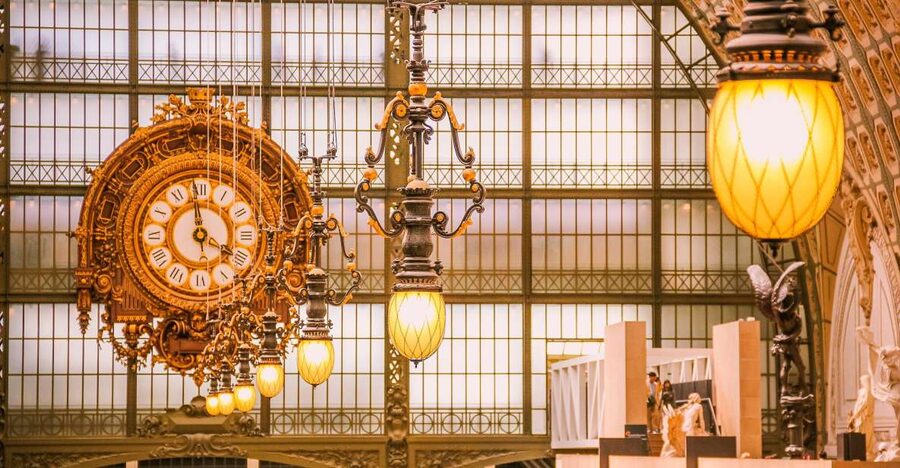
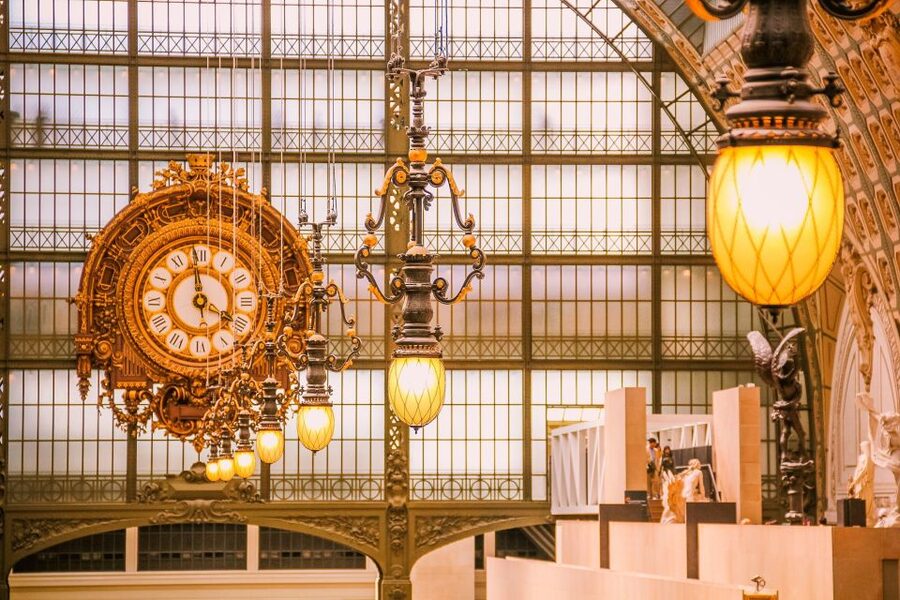
Musée d’Orsay is one of the rare Paris museums where the architecture is not background. The building is part of the exhibition, which is a fancy way of saying you keep looking at art and space at the same time.
This was the first railway station in Paris made for electrical trains, and it’s described as the first electrified urban terminal station in the world. The station was later transformed into a museum in 1986, and you feel that shift immediately when you walk in. The station’s volume, clockwork feel, and long lines help explain why so many 19th-century artists were obsessed with modern life and modern light.
That also shapes how a good guide can teach the collection. Instead of treating Impressionism like a standalone style, you see it as part of a century that was inventing faster transit, new visual tech, and new ways to capture movement. When your guide points out links between art and the built environment, Orsay stops being only a gallery and becomes a lesson in how a city changes.
And yes, the grand interiors can overwhelm you if you wander alone. A tour like this is basically a way to keep your eyes moving in the right direction, while you learn what you’re looking at.
Skip-the-line entry and a 2-hour route that stays usable
The biggest practical win here is simple: you skip the waiting line through a separate entrance. At Orsay, lines can steal half your energy, so removing that friction matters even if you love museums.
You’re also working with a tight time window, about 2 hours. That’s not enough to slow-read every canvas, but it is ideal for getting a strong overview of what’s where and what matters. Think of it as learning the museum’s logic, then you can choose what to revisit later.
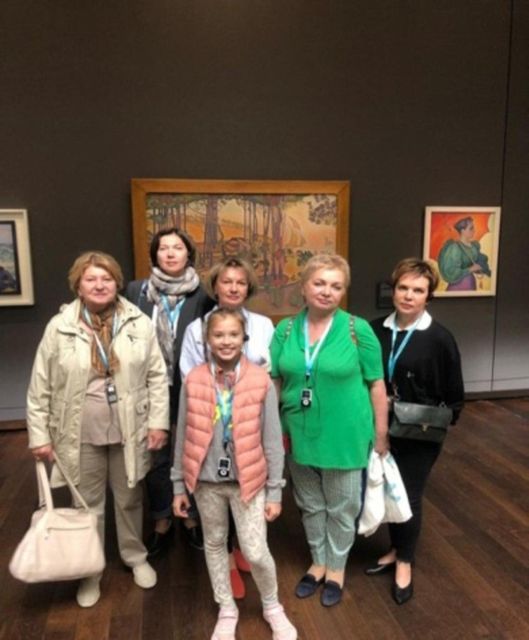
Small group size helps a lot. When you’re limited to 6 participants, you get more chance to ask questions and more chance to hear the guide without competing with everyone’s elbows. The included headsets are a real quality-of-life feature, too. Paris museum rooms can get noisy, and hearing the story is part of what you’re paying for.
One small thing to plan for: the meeting point is under a statue of an elephant in front of the main entrance, and you look for the guide with the yellow sign My Super Tour. One traveler note I found useful is that the elephants at the entrance can be temporarily moved, so arriving a few minutes early is smart. If you’re unsure, you’ll want to confirm with the provider rather than wandering in circles.
Inside Orsay: the Impressionists, plus the artists in conversation
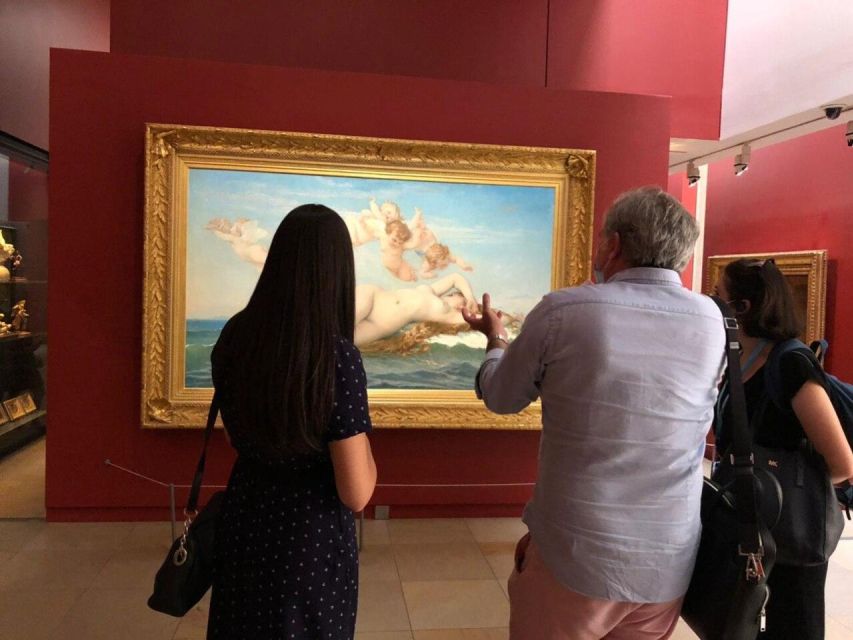
This tour is built around the best-known names, but it goes beyond name-dropping. You’ll walk through rooms that connect artists to each other, and that connection is what helps the works stick in your memory.
You’ll see major Impressionist paintings, including works by Monet, Manet, Renoir, and others. The key for you is not just spotting loose brushwork or bright color. Your guide should help you notice how these artists were responding to changing life in 19th-century cities, including light, weather, and the look of everyday scenes. Impressionism here is treated as a way of seeing, not just a style.
You’ll also encounter Cézanne still lives. That matters because Cézanne is a bridge figure. You get a sense that something is tightening, structuring, and reorganizing the world. If Impressionism is about the instant, Cézanne often makes you feel like the instant is being constructed.
Degas is represented with ballet dancers. Degas is a good stop for learning what made 19th-century art feel new. The way movement is framed, cropped, or staged can look almost modern, even though it’s rooted in a century’s taste for performance, practice, and observation.
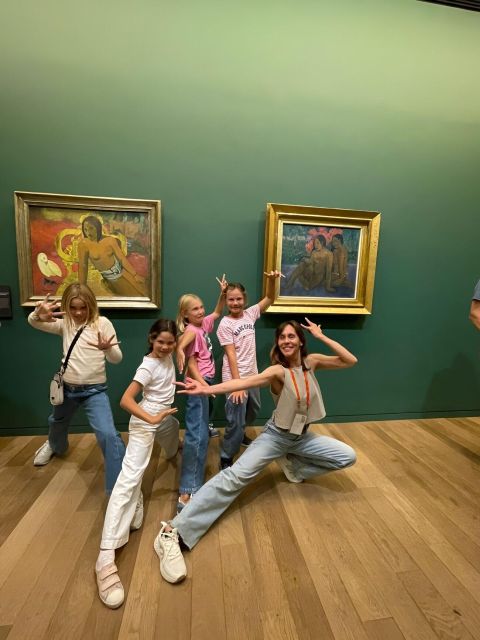
One particularly fun pairing on this route is the concurrence between Van Gogh and Gauguin. You get two distinct voices who were both exploring emotion and color, but in very different ways. For you, that means you can compare without needing a whole art history lecture. A strong guide helps you see what each painter is prioritizing, whether it’s color tension, pattern, or expression.
Rodin sculptures round out the experience in a way that stops it from being all paintings. Sculpture is perfect at Orsay because of the building’s dramatic scale. If you pause where a guide suggests, you’ll often notice how the light shifts across surfaces, which is also part of how Rodin communicates form.
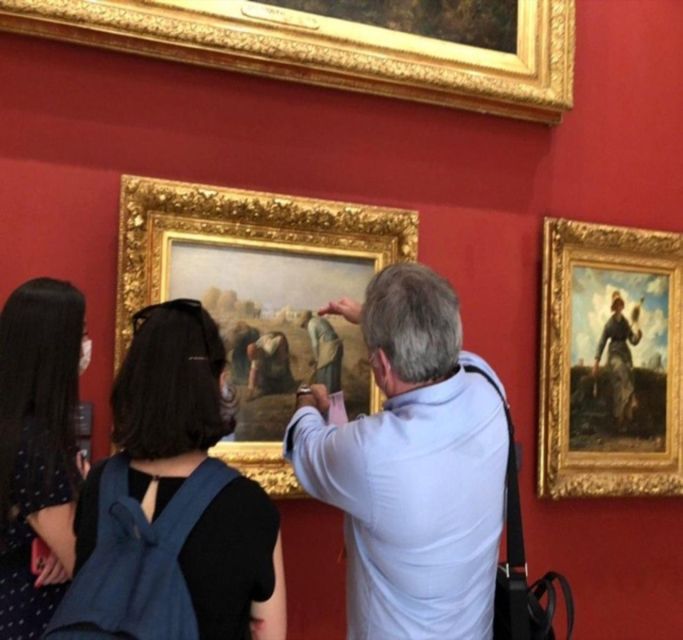
Then there’s Courbet, including the realists like Millet and Courbet, plus the provocative Origin of the World. Even if you already know the painting’s reputation, the guide’s framing helps you see why it was shocking. It’s not just subject matter, it’s also about what realism was allowed to show and how bold art could be when society’s rules were strict.
If you’re the type who usually gets lost in museum rooms, this section is where the tour earns its price. You’re not stuck guessing what to look for. You get a guided set of “start here, notice this, now compare it” moments.
How your guide turns 19th-century styles into something you can spot
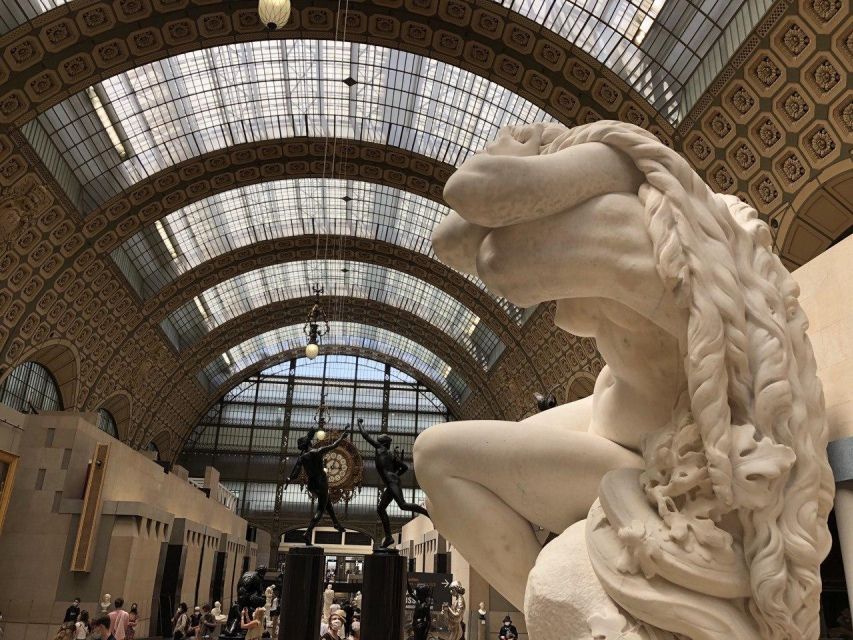
Orsay is known for holding a lot of art directions in one place, and that can make you feel like you’re wading through labels. This tour handles that by showing how different styles overlap in the same century.
You’ll cover a mix of major movements connected to the broader 19th century, including neoclassicism, neo-Gothic, romanticism, eclecticism, Arts & Crafts, academism, realism, symbolism, and then, of course, impressionism. The value is in learning the differences without memorizing an exam.
Here’s what you should watch for as you move room to room: changes in how people are depicted, how stories are staged, and how surfaces are handled. A guide can point out where academism tries to look ideal and controlled, where realism pushes toward blunt truth, and where symbolism turns meaning into mood. Once you know what to compare, the museum stops feeling like random highlights and starts feeling like a map of artistic choices.
This is also where architecture and urbanism matter. When you learn how Paris’s built world was changing, you understand why artists broke rules or borrowed old ones. The museum becomes a visual timeline, not just a collection of famous works.
Other Paris galleries with a shorter queue:
- Louvre Museum Masterpieces Guided Tour with Access★ 4.5 · 12,023 reviews
- Paris: Louvre Museum Entry Ticket With Host and River Cruise★ 4.6 · 9,926 reviews
- Les Invalides: Napoleon’s Tomb & Army Museum Entry★ 4.6 · 9,185 reviews
- Louvre Museum – Exclusive Guided Tour (Entry Included)★ 5.0 · 6,296 reviews
19th-century Paris beyond the canvases: trains, opera, and city planning
Orsay is not just a museum about art. It’s also a museum about the city that produced the art. Your guide connects what you see here with other major Paris landmarks, including Palais Garnier, the opera house, and the surrounding area.
Even if you are not walking the streets in an extended neighborhood tour, you can still learn the logic. For the 19th century, the city was performing. Big buildings, new transit, and carefully designed public spaces were the stage for modern life. Artists responded to that stage, and your tour helps you read it.
What this means for you: you’ll leave with an easier time connecting the art to the Paris you’ll see outside. Later, when you pass grand facades or grand theater spaces, you’ll remember why the century built like that. You can start making your own links instead of treating landmarks as separate stops.
This kind of context is especially helpful for first-timers. Paris has too much to absorb on your own in a few days, so a guided explanation gives you handles to grab. It’s also helpful if you love art but don’t want a heavy textbook approach.
Tech shocks of the 1800s: Liberty Statue models and Lumière film
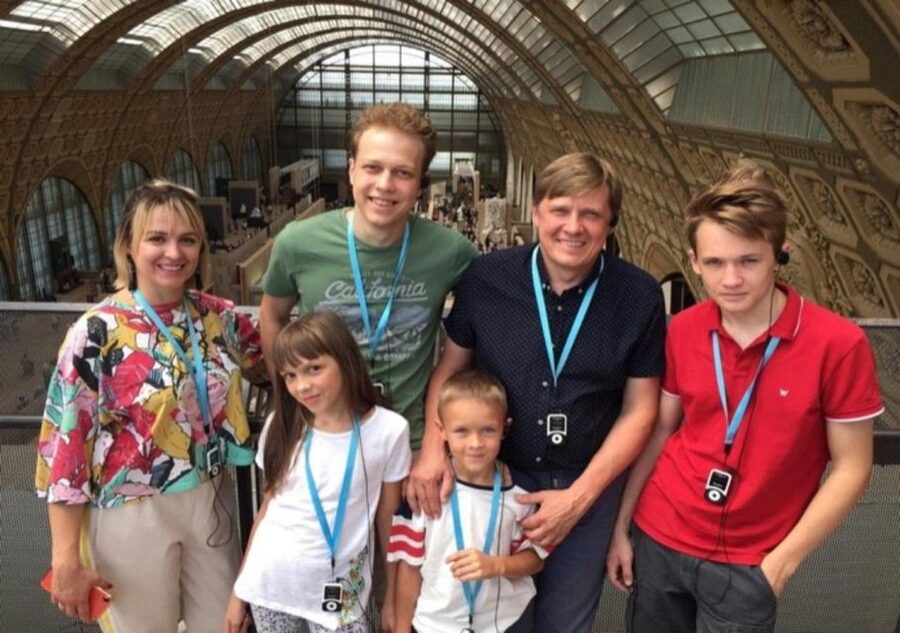
One of the most distinctive angles of this tour is that it doesn’t lock you into painting only. The 19th century was when industrial and technical development exploded, and Orsay reflects that shift.
You’ll see a first model of the Liberty Statue, along with early photographs and early movies created by the brothers Lumière. This is a reminder that new art was not only made with new styles. It was also made with new tools for capturing reality and motion.
If you’ve ever wondered why Impressionism feels like it’s about light and instant effects, you can connect it here. Photography and film changed what people expected images to do. They pushed artists to ask new questions about what counts as truth, how movement can be shown, and how modern life can be framed.
For you, this tech layer adds texture. It turns Orsay from a “look at famous paintings” outing into a story about how innovation reshaped culture. That’s also why the tour feels more complete in 2 hours than you might expect.
What you get for the money: value in small group, guide, ticket, and headsets
At $104 per person for a 2-hour experience, you’re paying for more than entry. You’re paying for a professional licensed guide, the entrance ticket, skip-the-line access, and headsets so you can actually hear.
The real value is the way these pieces work together. Skip-the-line saves time and reduces stress. The headset makes the guide’s explanation accessible, even if you’re in a busy room. A small group means less waiting to move and more chance to follow the guide’s thread.
You might even notice a pattern in the guides people mention, like Sacha, Maria, and Deli, who are described as enthusiastic and focused on practical, clear explanations. Names aside, the goal is the same: you want a guide who helps you look, not someone who just lists facts.
If you’re considering going alone, here’s a practical way to compare: with a guide, you trade freedom for direction. Since Orsay is large and 19th-century art spans many movements, direction is what saves you. If you like independent roaming, you can still use the tour as a first pass and then return on your own.
Who this Musée d’Orsay skip-the-line tour fits best
You’ll likely love this tour if you:
- Want a well-paced overview of Impressionism and major adjacent styles in a short time
- Prefer guided looking over reading labels for hours
- Care about context, like how architecture and tech shaped the art
- Like small group tours where you can hear and move comfortably
It might not be the best match if you:
- Need wheelchair accessibility, since it is not suitable for wheelchair users
- Want to spend a long time on one single masterpiece with no structure
- Don’t enjoy hearing a lot of explanation while you walk
Language options are English and Russian. The tour is designed for a live guided experience, not a silent walk-through.
Should you book this Musée d’Orsay tour?
Yes, if you want an organized way to see one of Paris’s biggest Impressionist collections without losing your morning or afternoon to lines. The building, the art, and the 19th-century story are tightly connected here, and the guide format helps you feel that connection instead of missing it.
If $104 feels steep, treat it as a time-saving and clarity bundle: skip-the-line ticket plus guide plus headsets, all in a small group for about 2 hours. That’s a sensible value trade when you’re visiting during peak times.
My practical call: book it if your priority is understanding what you’re seeing and you want to make the most of limited time at Orsay. Skip it if mobility needs make you unable to do the tour route, or if you prefer to wander the museum on your own pace with no guide thread.
FAQ
How long is the Musée d’Orsay skip-the-line tour?
The duration is 2 hours.
What is included in the ticket price?
You get a professional licensed guide, an entrance ticket, skip-the-line entry, and headsets to hear the guide’s comments better.
How does the skip-the-line work?
You skip the waiting line through a separate entrance.
Where do we meet the guide?
Meet under the statue of an elephant in front of the main entrance of the Musée d’Orsay, and look for the guide holding a yellow sign that says My Super Tour.
What languages are available on this tour?
The tour is offered in English and Russian.
What is the group size?
It is a small group limited to 6 participants.
Is this tour suitable for wheelchair users?
No, it is not suitable for wheelchair users.
Is free cancellation available?
Yes. You can cancel up to 24 hours in advance for a full refund.
Is reserve now and pay later available?
Yes. You can reserve your spot and pay nothing today.
Newest write-ups from Paris






Orsay Museum Entry Tickets, compared.


Orsay Museum Entry Ticket and Digital Audio Guide App
Read our review →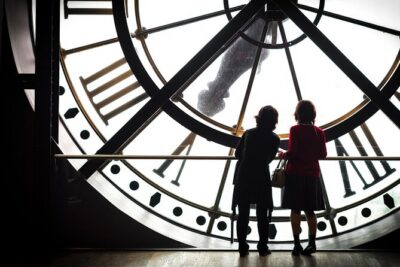
Paris in a Day: Louvre or Orsay, Eiffel Tower, City Walk & Cruise
Read our review →
Musée d’Orsay Skip-the-Line Tour with Expert Guide
Read our review →
Musée d’Orsay Skip-the-Line Tour with Expert Guide
Read our review →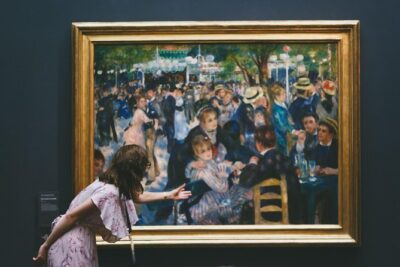
The Musée d’Orsay Guided Tour Orsay Museum Semi-Private 6ppl Max
Read our review →
Louvre & Musée d’Orsay Guided Museum Tour Semi-Private 6ppl Max
Read our review →
Browse the lists this tour appears in