
Reviewed · ORSAY MUSEUM ENTRY TICKETS
Musée d’Orsay & Montmartre Tour Semi-Private Guided Tour 8ppl Max
Art meets neighborhoods in one tight day. This semi-private Musée d’Orsay and Montmartre tour connects the story of Impressionism to the hill where many artists worked and lived, capped at 8 people max. You get a guide who explains not just what you’re seeing, but why it changed art.
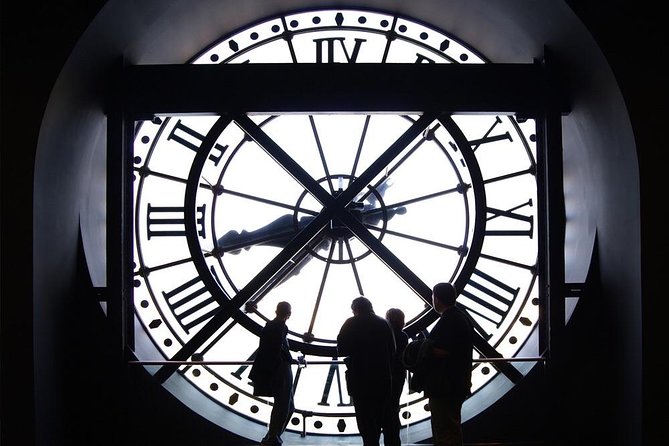
I love that the day starts in the Musée d’Orsay, an old Beaux-Arts train station, so your first “wow” is the setting as much as the paintings. I also like the way the route links big-name works like Manet’s Luncheon on the Grass and Renoir’s Dance at Le Moulin de la Galette with Montmartre landmarks, so the art has a real address. The one drawback to plan for is physical effort, because Montmartre involves climbing cobbled streets up to Sacré-Cœur.
In This Review
- Key things to know before you go
- A 5.5-hour Orsay plus Montmartre plan that actually fits together
- Musée d’Orsay: from the old train station to the roots of Impressionism
- The techniques you learn: why “simple” paintings looked radical
- Private transit to Montmartre: saves time and sanity
- Montmartre climb: Moulin Rouge base to Sacré-Cœur summit
- Photo and film stop strategy that does not waste your time
- Moulin Rouge and the extra-ticket sights: plan for optional spending
- Timing and pacing: what your 1:30 pm start means for the day
- Guide quality makes a big difference here
- Small logistics that matter: bags, security, quiet rooms, and dress
- Value for money: where the $259.59 per person price makes sense
- Who should book this tour, and who should pass
- Should you book the Musée d’Orsay & Montmartre semi-private tour?
Key things to know before you go
- Max 8 people max for a more manageable pace across both areas
- Reserved entry to Musée d’Orsay plus guided context from pre-Impressionists to Post-Impressionists
- Private car transit from Orsay to Montmartre so you start the hill without wasting time
- Focused Montmartre stops from Moulin Rouge base to Sacré-Cœur, with photo viewpoints built in
- Ticket rules are mixed on purpose: Orsay is included, while some sights (like Moulin Rouge) are not
Other ways into the Orsay:
- Paris: Orsay Museum Entry Ticket
★ 4.7 · 25,647 reviews - Paris: Orsay Museum Entry Ticket and Digital Audio Guide App
★ 4.4 · 3,170 reviews - Paris in a Day: Louvre or Orsay, Eiffel Tower, City Walk & Cruise
★ 5.0 · 1,956 reviews - Paris: Musée d’Orsay Skip-the-Line Tour with Expert Guide
★ 4.5 · 1,145 reviews
A 5.5-hour Orsay plus Montmartre plan that actually fits together
This tour is built as a “story loop.” You begin at Musée d’Orsay, where you trace the road to Impressionism. Then you move to Montmartre, the neighborhood that helped shape the artistic life behind those paintings. It’s the kind of pairing that makes the whole day feel coherent, not like two separate checklists.
The format matters. It’s semi-private with a maximum of eight, and that usually means you spend more time listening and less time craning your neck. You also get private transit between Orsay and Montmartre, which is a big deal once you factor in time and tired legs.
You’re looking at about 5 hours 30 minutes total. The start time is 1:30 pm, meeting at Musée d’Orsay (75007), and the tour ends in Montmartre (75018). Plan your evening around that, because you’ll finish up high and ready to keep exploring.
Musée d’Orsay: from the old train station to the roots of Impressionism
Your first 2 hours 30 minutes are inside Musée d’Orsay. Expect to start in a converted station, where the architecture does part of the work for you. It’s not a random museum box. The building itself signals that this is a serious, time-layered place.
From there, your guide sets up the art timeline. You move through artistic movements that led up to Impressionism, and you see work that helps you understand why the “new style” wasn’t just random color experiments. The tour points you toward key artists who show the transition in a clear chain.
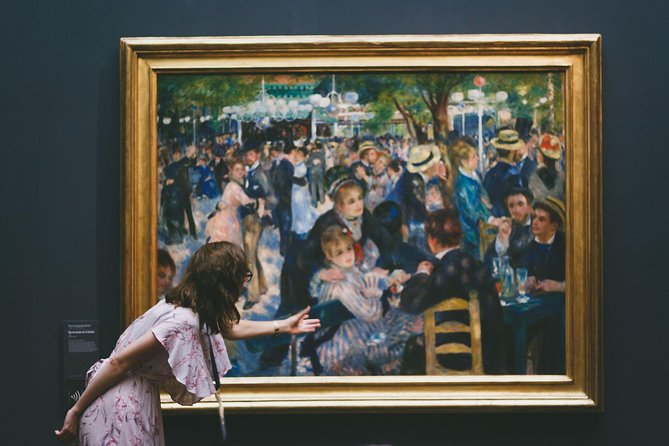
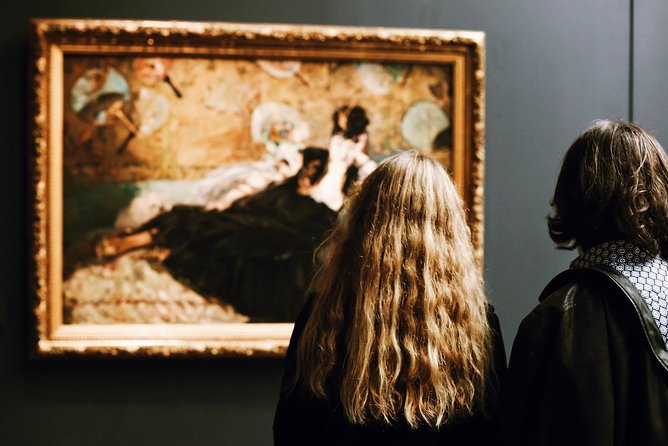
Two standout painting stops anchor this part of the day. You’ll see Manet’s Luncheon on the Grass, a work that’s famous partly because it caused real outrage in its time. You’ll also get Renoir’s Dance at Le Moulin de la Galette, which helps you see how Impressionists captured modern life with lively light and brushwork.
Then you go beyond the headline names. You talk about earlier figures like Millet and The Gleaners, which is a useful contrast when you’re thinking about social subjects and changing tastes. You also cover what came after Impressionism, including Post-Impressionist work such as Van Gogh’s Bedroom in Arles.
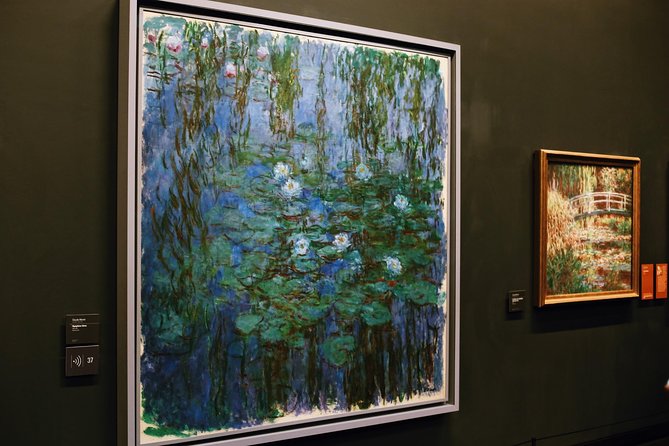
Monet is part of the story too. Since he’s presented as the father of Impressionism on this route, you’ll likely see his famous poppy paintings that show how color, light, and texture become the subject. The tour’s goal is to make those paintings feel less like isolated masterpieces and more like steps in a cultural shift.
The techniques you learn: why “simple” paintings looked radical
One of the best values of a guide-led art tour is that you stop seeing paintings as wallpaper. This one aims to explain the mechanics behind the look.
You’ll talk about why the work felt revolutionary even when it appears everyday. Impressionism often focuses on fleeting moments, changing light, and visible brushwork. On this tour, you get that context so you can spot what you might otherwise miss in a fast museum wander.
I like how the tour also frames artists as personalities, not just names in captions. That approach makes it easier to remember what you saw. You leave Orsay with a mental map, not just a list of titles.
If you’re the type who likes to ask questions, this format helps. With a small group and reserved museum entry, you’re less likely to feel rushed at every turn. And if you’re not a museum person, the timeline style can still work, because it gives you a clear way to follow along.
Private transit to Montmartre: saves time and sanity
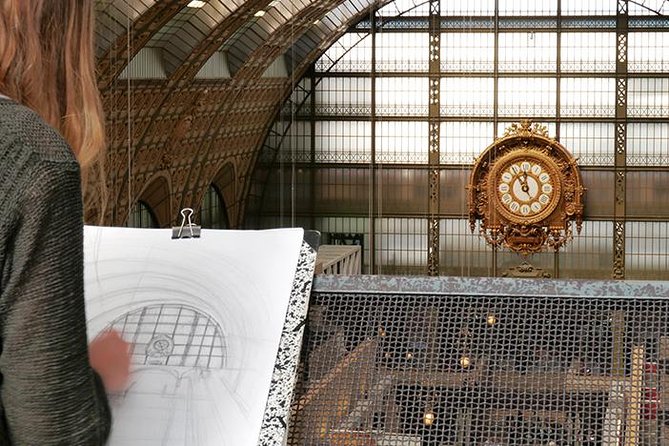
After Orsay, the tour uses private transport to move you toward Montmartre. The timing includes a short break, which matters more than it sounds. It gives your body a reset before the cobbled streets and the uphill climb.
You’re going from a curated museum experience to a neighborhood you walk through. Without that transit, you’d be spending energy on logistics instead of scenes. With the car included, you start the hill when you’re still able to enjoy it, not just survive it.
This is also where you feel the “semi-private” advantage. The day is structured for one group size, not a crowd stampede. That often translates into fewer stop-start moments.
Other climbs up the Butte:
- Montmartre Hidden Gems and Scenic Highlights Walking Tour★ 5.0 · 2,684 reviews
- Montmartre Hill French Gourmet Food and Wine Tasting Walking Tour★ 5.0 · 2,588 reviews
- Paris: Montmartre Highlights Walking Tour with a Local Guide★ 4.9 · 2,318 reviews
- Paris: Montmartre Cheese, Wine & Pastry Guided Walking Tour★ 4.8 · 2,255 reviews
Montmartre climb: Moulin Rouge base to Sacré-Cœur summit
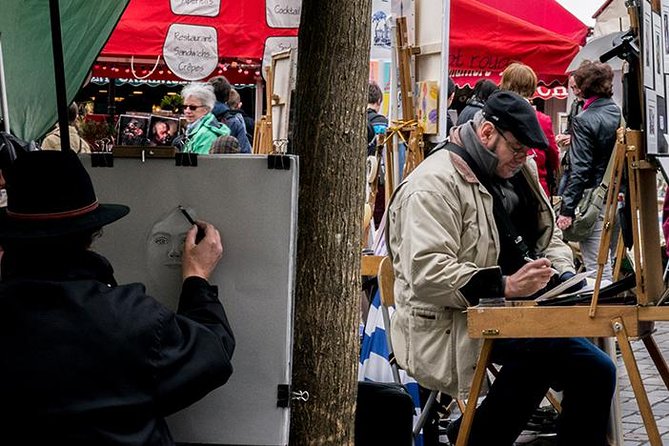
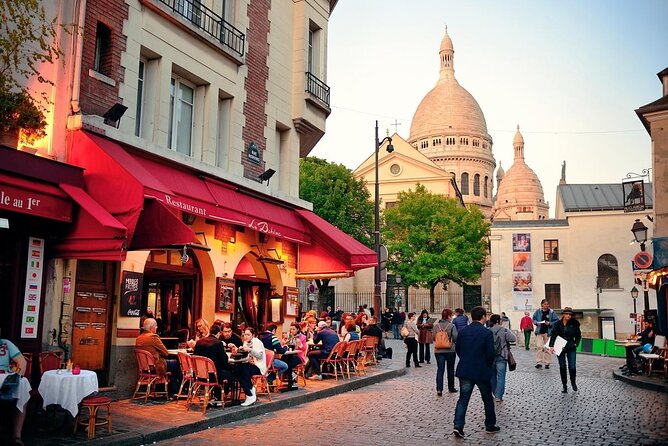
Montmartre is where you shift from art on walls to art in streets. The tour starts the story at the base of the hill, near the windmill at Moulin Rouge, which is described as still spinning slowly. That detail sets the tone right away: this is the Belle Époque world, but in real space.
You then wind up the hill through cobbled streets. The pace is meant to be reasonable, but you should still treat this as a physical activity day. The tour notes a moderate fitness level, and the Montmartre portion involves climbing.
As you rise, the route aims to keep you connected to artists you associate with this area. You’ll see places tied to Van Gogh and Picasso, and you’ll also hit a cluster of Montmartre landmarks that make the neighborhood feel like a living museum.
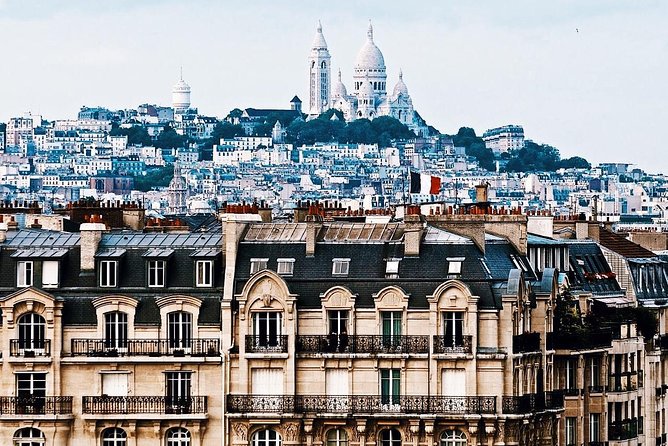
At the summit, you enter Sacré-Cœur. The plan allows time inside, which is a smart move. The basilica is the headline view, but going in adds weight to the experience because you see the atmosphere beyond the postcard angle. It’s also one of the best places for that “Paris high point” feeling, with spectacular views available from the upper area.
Photo and film stop strategy that does not waste your time
Montmartre is famous for two things: views and stories. This tour leans into both, with stops designed for quick context and easy sightseeing.
You’ll visit or pass by Moulin Rouge, Place Dalida, Moulin de la Galette, and areas linked to Vincent Van Gogh’s house. Some of these are listed as ticket not included, so think of them as either exterior time or short visits on your own terms if you choose to pay separately. Either way, they help you understand why this neighborhood attracted artists.
The tour also includes stops like The Artists’ Square and an Amélie Café area. If you’re a fan of the film, these are the kind of moments that make you look up from your phone and actually enjoy the setting. Even if you’re not, the stops help you read Montmartre as a place that has always had a creative “stage” quality.
You’ll also find smaller stops built in, such as:
- Dalida statue (free)
- Jardin Sauvage de St-Vincent (free)
- Le Bateau-Lavoir (ticket not included)
- Place du Tertre (free)
- Au Lapin Agile (ticket not included)
These help break up the climb and give variety. Instead of only visiting the big-ticket scenes, you get a mix of quiet corners, famous spots, and street-level landmarks.
Moulin Rouge and the extra-ticket sights: plan for optional spending
Not every stop has admission included. That’s normal for Montmartre, where some famous venues require separate tickets even during a guided walk.
In this itinerary, Moulin Rouge is marked as ticket not included. Van Gogh’s house is also ticket not included. Dali Museum Paris, La Maison de Dalida, and Le Bateau-Lavoir are marked as ticket not included too.
On the other hand, Sacré-Cœur is listed as free for admission on the tour schedule, and several other spots are also listed as free, like Dalida statue, Jardin Sauvage de St-Vincent, and Place du Tertre.
So how should you handle this? Use the tour as the map and context. If you want to pay for interior access at a specific site, you can decide based on how your legs feel and what you’re most curious about. The structure keeps you from missing the major landmarks, while still letting you control extra costs.
Timing and pacing: what your 1:30 pm start means for the day
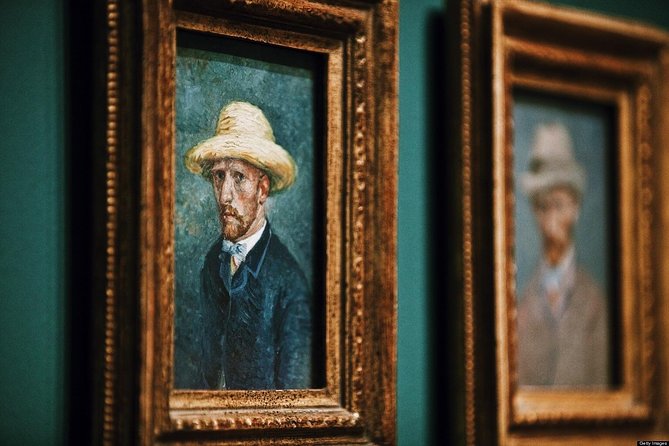
Starting at 1:30 pm is a useful timing choice. It gives you a late morning and early afternoon buffer before Orsay. Then you get the museum-heavy part done before Montmartre gets too late in the day.
Orsay first means you’re better positioned to enjoy the paintings while your energy is still high. Montmartre is physically harder, and you want that momentum behind you. Finishing in Montmartre means you can continue exploring afterward, especially around Place du Tertre and the surrounding lanes.
The schedule also includes multiple short segments through Montmartre. You should expect quick stops that are designed to keep you oriented, not a long sit-down for every single location. With a small group, that kind of pace often feels lively, not exhausting.
Guide quality makes a big difference here
A tour like this lives or dies by the guide. In the best cases, you leave with stories that stick and art details you can actually explain later.
On this tour, guides are described as very strong at art history explanation, especially at Orsay. Names that come up include Marcel, Nancy, Mathew, Belen, Lily, and Christofer. The common thread is that they connect the evolution of styles to the personalities and the larger movement.
Marcel, for example, is praised for passion and for organizing the art forms as they progressed. Nancy is praised for flexibility with weather, like snow, and for keeping the walking part workable. Guides like Belen and Lily are described as informative with a meaningful pace, and Christofer is noted for being well prepared and answering questions.
You do not need to know art already. What you want is someone who can translate Impressionism into plain language and keep the day moving without turning it into a lecture sprint.
Small logistics that matter: bags, security, quiet rooms, and dress
This is one area where I always tell people to take the notes seriously, because Paris museums can be strict.
At Musée d’Orsay, you should be ready for security rules. The tour notes that no large bags or suitcases are allowed inside, and only handbags or small thin bag packs can go through security. If you’re coming from a hotel with a bigger bag, you may want to plan a locker stop nearby before the tour start.
Appropriate dress is required for entry into some sites on the tour. That’s not about fancy clothing, it’s about shoulders and basic respect for places of worship like Sacré-Cœur.
One more museum detail that many people ignore: some rooms can have very quiet or restricted rules for speaking. The guide will provide information before entering those spaces. You’ll feel like you’re in a museum that’s being handled carefully, which usually leads to a calmer, smoother experience.
Also note that even with reserved entry, security lines can still form at many attractions. The tour mentions that lines may appear due to security measures. So if you’re the kind of person who hates any waiting at all, it helps to keep your expectations realistic.
Value for money: where the $259.59 per person price makes sense
At $259.59 per person, this is not a budget stroll. But it’s also not “just pay for a guide.” The value comes from what’s included and what you’re buying with that guide time.
You’re paying for:
- A guided museum visit at Musée d’Orsay with reserved entry included
- A semi-private group experience limited to eight people
- Private transit from Orsay to Montmartre
- Entrance fees handled for the parts that are included
Montmartre locations are mostly walkable, but the “hard part” is making it feel meaningful. The Orsay portion alone can become overwhelming if you wander without a plan. A guide who helps you track the evolution from pre-Impressionists to Impressionists and on to Post-Impressionists can save you from museum confusion.
The private transit also reduces wasted time. That’s a real cost in Paris, because waiting, transfers, and getting back to the right point of the hill can quietly eat hours.
So, for this price, I see it as a good value if you:
- Want the art explained in context
- Prefer small groups
- Don’t want to figure out the timing between Orsay and a hilly neighborhood
If you’re the type who loves to roam museums on your own with a guidebook, you might skip this. But if you want your day to feel guided and efficient, the structure earns its cost.
Who should book this tour, and who should pass
This fits best if you:
- Like art history, and you want the Impressionism story in a clear line
- Want to connect paintings to real places in Montmartre
- Prefer small groups and a smoother pace than a big bus tour
- Are ready for stairs and hills, but still want a guided approach that keeps things manageable
It might be a rough fit if you use a wheelchair or have walking disabilities. The tour explicitly notes it is not available for those needs. It’s also less ideal if you hate uphill walking or you want minimal physical effort.
One practical heads-up: Musée d’Orsay can have occasional closures. If the museum opening is delayed more than one hour from the tour start, the tour provider says they will provide an appropriate alternative, but they cannot provide refunds or discounts for that situation. That’s rare, but it’s worth knowing.
Should you book the Musée d’Orsay & Montmartre semi-private tour?
Book it if you want a small-group, guided art-and-neighborhood day where the Impressionism storyline continues outside the museum. The value is in the pairing: Orsay first, then Montmartre, with private transit and a route that hits both major landmarks and meaningful side stops.
Skip it if you plan to do Montmartre mostly for wandering with no structure, or if hills are a deal-breaker for you. Also, if you hate any chance of extra ticket spending at famous venues, review the stops marked ticket not included and decide what you want to pay for in advance.
If your goal is to leave Paris with both paintings you can name and streets you can picture, this is the kind of tour that makes that happen.
Galleries With a Shorter Queue
- Louvre Museum Masterpieces Guided Tour with Access
★ 4.5 · 12,023 reviews - Paris: Louvre Museum Entry Ticket With Host and River Cruise
★ 4.6 · 9,926 reviews - Les Invalides: Napoleon’s Tomb & Army Museum Entry
★ 4.6 · 9,185 reviews - Louvre Museum – Exclusive Guided Tour (Entry Included)
★ 5.0 · 6,296 reviews
Newest write-ups from Paris




Orsay Museum Entry Tickets, compared.

Orsay Museum Entry Ticket and Digital Audio Guide App
Read our review →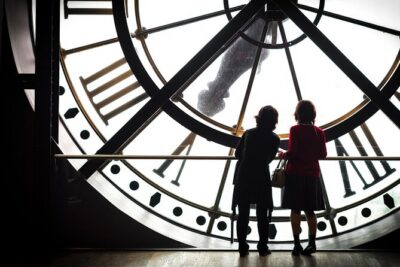
Paris in a Day: Louvre or Orsay, Eiffel Tower, City Walk & Cruise
Read our review →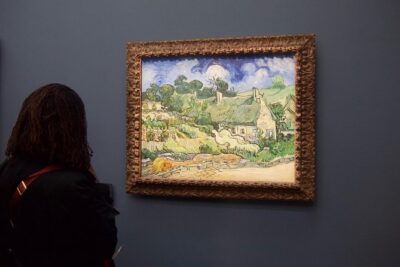
Musée d’Orsay Skip-the-Line Tour with Expert Guide
Read our review →
Musée d’Orsay Skip-the-Line Tour with Expert Guide
Read our review →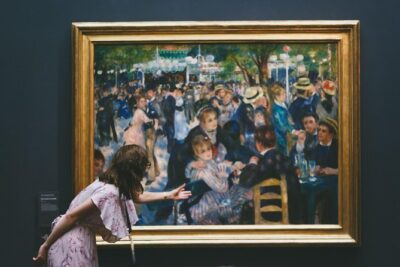
The Musée d’Orsay Guided Tour Orsay Museum Semi-Private 6ppl Max
Read our review →
Louvre & Musée d’Orsay Guided Museum Tour Semi-Private 6ppl Max
Read our review →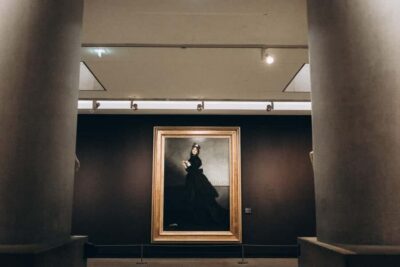
Browse the lists this tour appears in