
Reviewed · LE MARAIS WALKING TOURS
Paris: Jewish Heritage & Hidden Gems of Le Marais
Jewish Paris history walks right through your shoes. This 2-hour walk in Le Marais strings together baroque architecture, everyday street life, and the stories of resistance and cultural rebirth that shaped the neighborhood. You start with Saint-Paul-Saint-Louis and then move into the Jewish Quarter, where Rue des Rosiers keeps living traditions right at sidewalk level.
I especially love the stop-and-stretch mix of famous squares and quieter spaces, like Village Saint-Paul with its courtyards and artisan shops. The other standout for me is the human scale of the storytelling on the Jewish Quarter streets, from faith to endurance, tied to specific places you can actually see. One possible drawback: it is a mostly walking route, so it is not a great fit if you have mobility issues or use a wheelchair.
In This Review
- Key highlights you’ll notice right away
- Why Le Marais is the perfect frame for Jewish heritage in Paris
- Getting started at Quai de Gesvres, outside Trattoria Marguerite
- Saint-Paul-Saint-Louis Church and Louis XIII baroque, why it sets the tone
- Village Saint-Paul courtyards and artisan shops, Paris you only see by slowing down
- Rue des Rosiers, the Jewish Quarter streets you can taste and see
- Place des Vosges and Hôtel de Sully, where elegance meets memory
- Rue des Francs-Bourgeois and Hôtel Carnavalet, Paris history in the streets outside
- Les Archives, connecting institutions to lived experience
- Ending at Hôtel de Ville and the 1944 Liberation, a powerful way to close
- How the 2-hour format fits real sightseeing, and what to wear
- Price and value: what you get for about $23 per person
- Who should book this Le Marais Jewish heritage walk
- Should you book this tour or pass?
- FAQ
- How long is the Paris Jewish Heritage & Hidden Gems of Le Marais tour?
- Where does the tour start?
- What’s included in the price?
- Are monument or museum entries included?
- Which languages are available for the live guide?
- Is this a private tour or a group tour?
- Is the tour suitable for wheelchair users or mobility impairments?
- What should I bring with me?
- Can I cancel and get a full refund?
- Can I reserve without paying now?
Key highlights you’ll notice right away
- Saint-Paul-Saint-Louis and Louis XIII context, setting the tone for faith, community, and centuries of change
- Village Saint-Paul courtyards, where you slow down and see Paris from behind the main streets
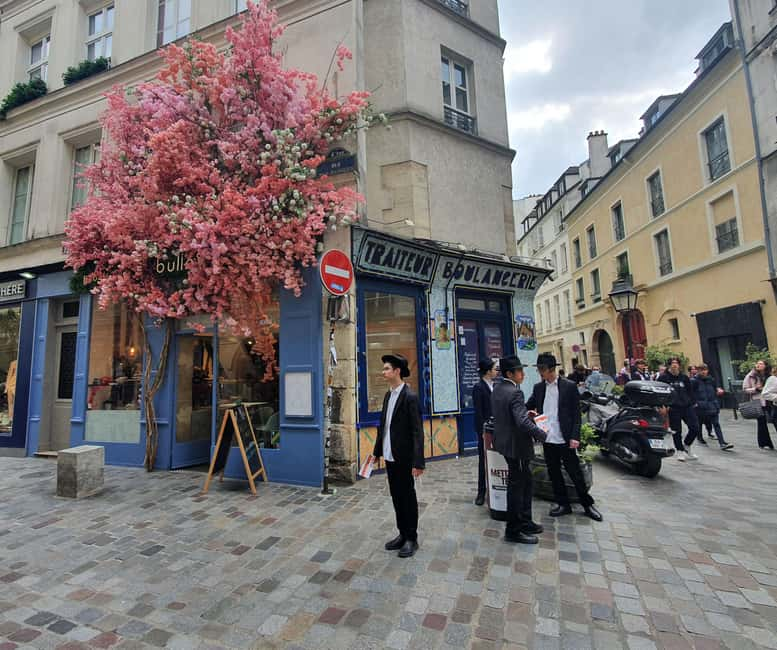
- Rue des Rosiers street life, with bakeries, kosher delis, and historic synagogues shaping what you see
- Place des Vosges and Hôtel de Sully, a quick hit of elegant architecture and the district’s older power centers
- Exterior views around Hôtel Carnavalet and Rue des Francs-Bourgeois, tying Paris history to the streets around it
- Hôtel de Ville and 1944 Liberation reflection, a strong ending point for thinking about survival and transformation
Other walks through the Marais:
- Award-Winning Paris French Bakery Experience — Le Marais, 4th Arr
★ 4.5 · 1,186 reviews - Paris Le Marais Food Tour With 10+ Tastings, Cheese, Wine & More
★ 5.0 · 985 reviews - Paris Le Marais District Original Food and Wine Tasting Tour
★ 4.5 · 880 reviews - Paris Bike Tour Hidden Secrets in the Latin Quarter & Le Marais neighborhoods
★ 5.0 · 766 reviews
Why Le Marais is the perfect frame for Jewish heritage in Paris
Le Marais is the kind of Paris neighborhood where you do not need to picture the past too hard. The district is old, compact, and full of corners where religion, daily life, and politics all brushed up against each other. On this tour, that matters because Jewish heritage here is not treated like a museum topic. It is presented as something that continued, adapted, and kept being visible through the years.
You’ll walk a clear line through key areas rather than bouncing randomly. That structure helps you connect the dots between places of worship, neighborhood streets, and public squares. And because you’re walking, the experience feels personal, not like you’re standing back and reading plaques.
The tour also has a strong storytelling emphasis: resilience, faith, and cultural rebirth. You’re not just shown pretty streets. You’re asked to understand why these streets, and this neighborhood, mattered.
Getting started at Quai de Gesvres, outside Trattoria Marguerite
The tour meets at Quai de Gesvres, with your guide waiting outside Trattoria Marguerite. It’s a simple setup, but it does have one practical benefit: you start in a real working part of central Paris, not a remote pickup zone.
From this first moment, plan to think “walk and look.” Bring your eyes as much as your camera. Le Marais rewards slow attention, and your guide will likely point out details you would miss if you were just speed-walking for photos.
Also, keep your footwear in mind. Comfortable shoes are a must here because you’ll cover multiple streets and courtyard areas in a short 2-hour window.
Saint-Paul-Saint-Louis Church and Louis XIII baroque, why it sets the tone
Your guided walk begins at Saint-Paul-Saint-Louis Church, described as a baroque masterpiece built under Louis XIII. That early stop is more than an architectural flex. It gives you a baseline for what the district has been for centuries: a place where communities formed, worshipped, and interacted in visible, public ways.
When you hear the story behind the neighborhood as a crossroads of faith and community, the baroque church acts like an anchor point. You can look at the building and immediately understand that Le Marais did not just happen in modern times. This was already a meaningful stage long before you arrived.
One practical tip: arrive ready to stand for a few minutes. Even if you’re eager to keep moving, the church moment is meant to orient you.
Village Saint-Paul courtyards and artisan shops, Paris you only see by slowing down
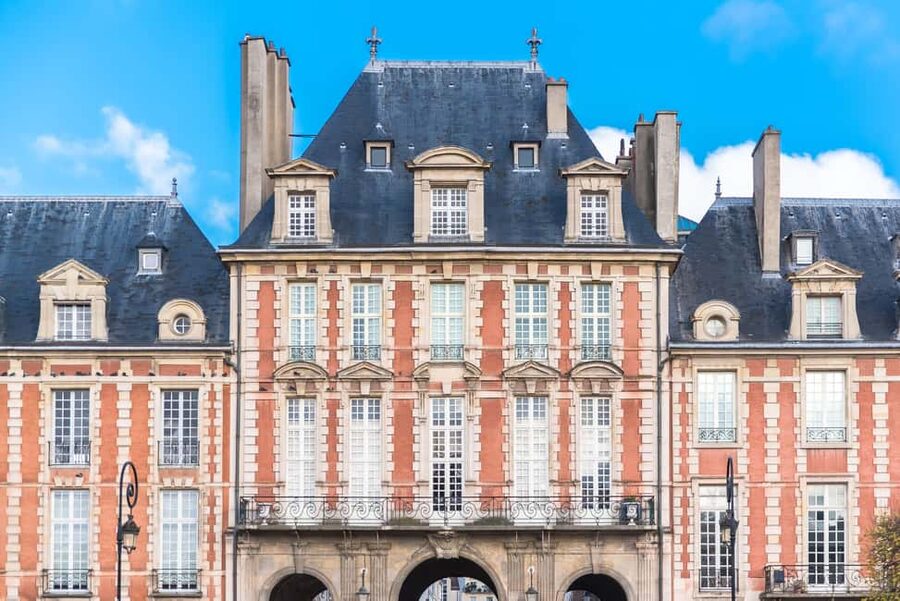
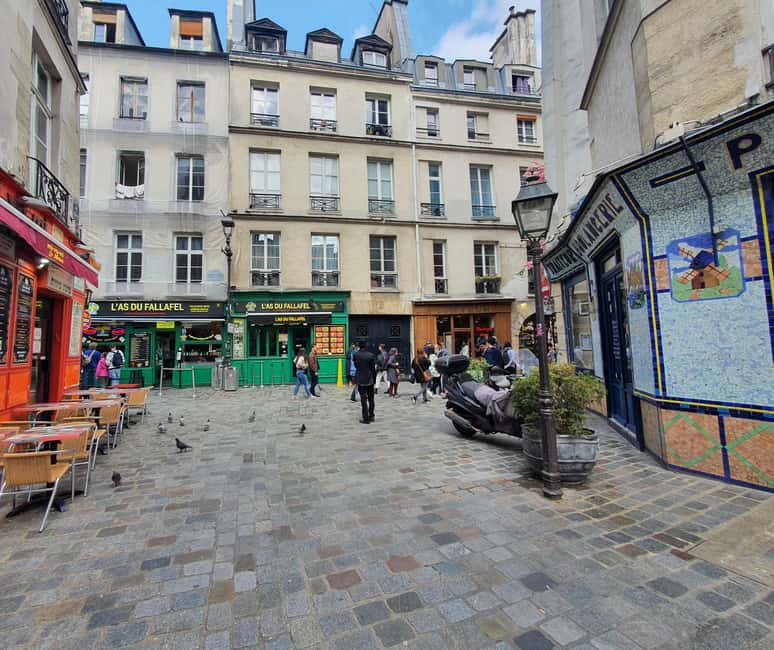
Next comes Village Saint-Paul, a peaceful maze of courtyards and artisan shops. This is where the tour changes pace in a good way. The streets around Le Marais can feel busy, but the courtyards inside this area let you see a calmer side of Paris life.
What I like about this part is how it balances the heavier themes with something quieter. You’re not only learning about struggle and survival. You’re also seeing how everyday life continued, with trades, small businesses, and community spaces that feel sheltered from the main thoroughfares.
Because it is a courtyard-and-passage style stop, you’ll want to keep your head up for sight lines. Courtyard Paris can hide small details in plain view, and your guide’s job is to help you notice them without turning it into a scavenger hunt.
A handful more Paris options to weigh up
- Paris: Dark History and Ghostly Guided Walking Tour★ 4.7 · 1,000 reviews
- Le Marais/Paris – The Historic, Trendy, Jewish, LGBT district★ 5.0 · 341 reviews
- Paris City of Fashion History Private Guided Walking Tour★ 5.0 · 221 reviews
- History of Paris City Center w/ Notre Dame Semi-Private 12ppl Max★ 5.0 · 194 reviews
Rue des Rosiers, the Jewish Quarter streets you can taste and see
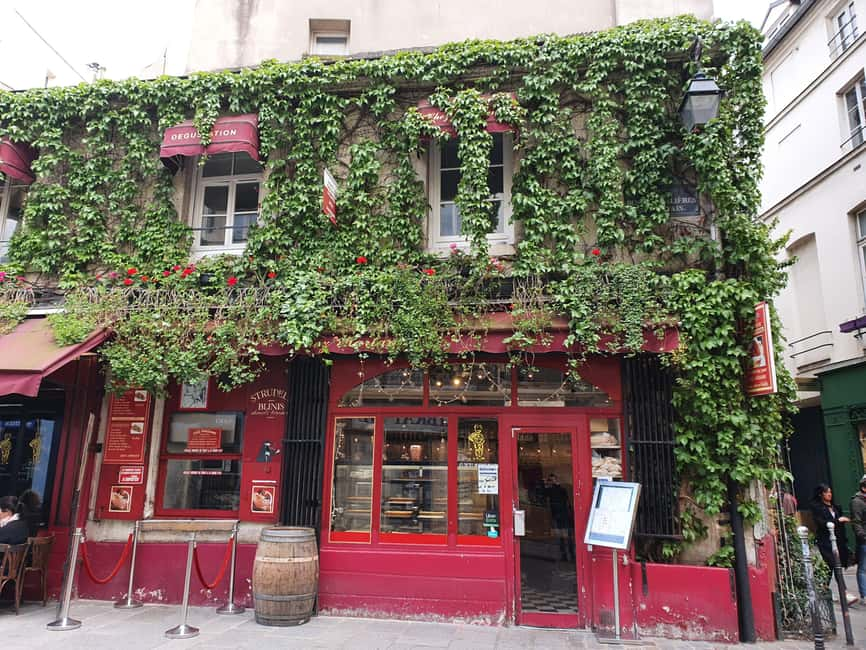
Then the walk enters the heart of the Jewish Quarter along Rue des Rosiers. This is the most immediately sensory stretch of the tour: bakeries, kosher delis, and historic synagogues all show up as part of the neighborhood’s living heritage.
This part of the tour works because it connects culture to daily rhythms. You’re not only hearing about history in the abstract. You’re walking through a street where community identity is still visible in storefront life and religious landmarks.
The guide also shares moving stories of resistance and revival that shaped the neighborhood through the centuries. The best way to take this in is to stay present. Look at what surrounds you, then let the story attach to it. It turns a street you might otherwise treat like a shopping corridor into something more meaningful.
If you’re hoping to stop for snacks, keep it realistic. The tour is built for walking. You might be able to pick up something quick on your own time, but the main focus stays on the guided flow.
Place des Vosges and Hôtel de Sully, where elegance meets memory
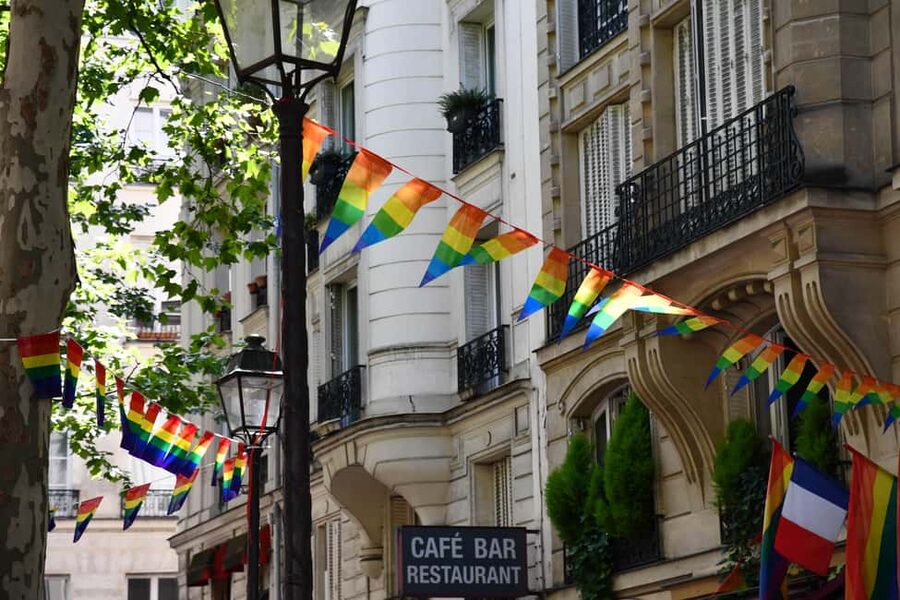
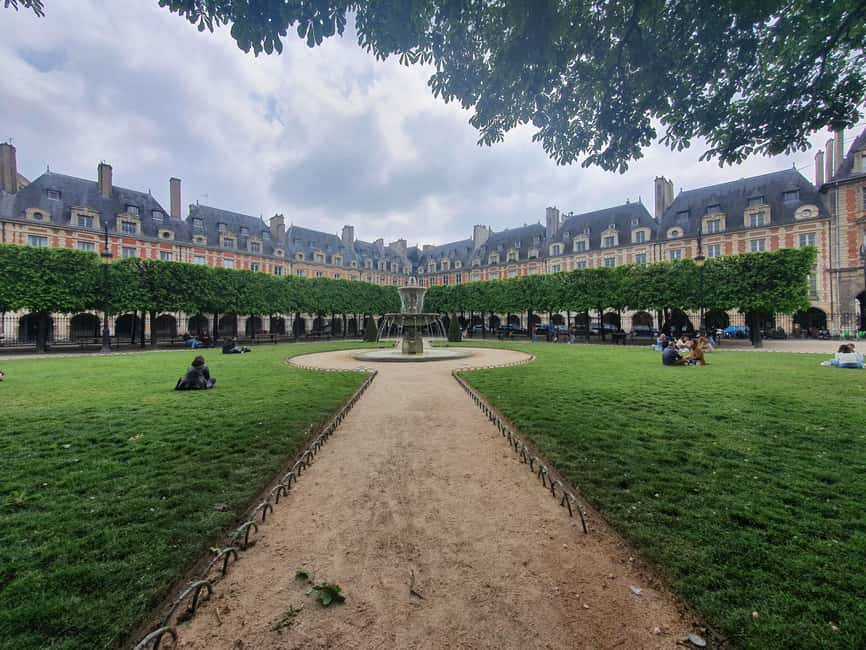
Place des Vosges is one of the oldest squares in Paris, and the tour uses it well. You’ll admire the mansions that once housed nobles and artists, which helps you see how power and creativity shaped the district, not just religion.
For me, this stop provides contrast in the best way. You can understand that Le Marais has always attracted different kinds of people and influences. That diversity does not cancel out the Jewish Quarter stories. It provides context, because neighborhoods like this usually hold multiple layers at once.
After Place des Vosges, you pass by Hôtel de Sully, a jewel of 17th-century architecture. The reason this belongs in the tour is simple: architecture is visible proof of how long the city has invested in certain areas. It helps you feel the time depth as you move.
Rue des Francs-Bourgeois and Hôtel Carnavalet, Paris history in the streets outside
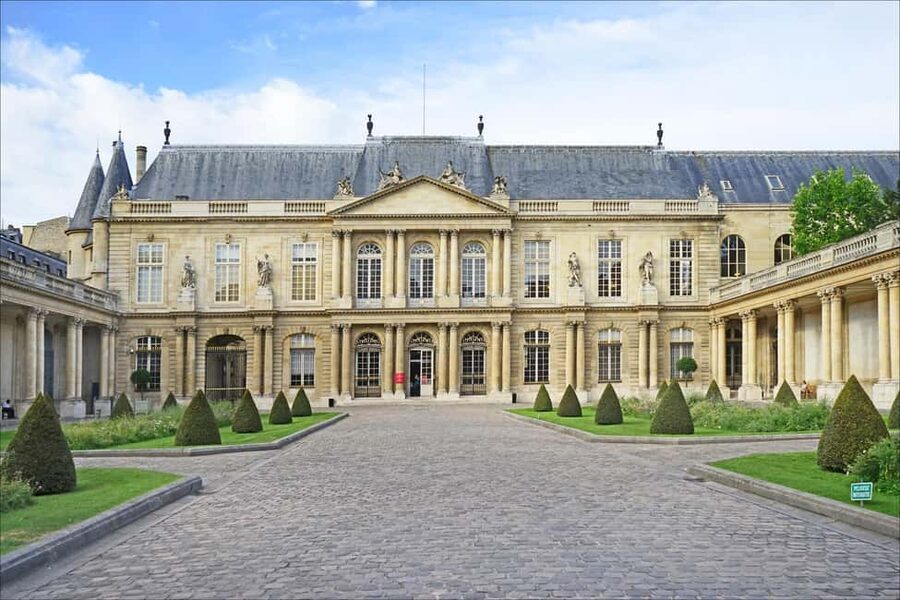
From there you walk along Rue des Francs-Bourgeois, a street tied to Musée Carnavalet, the museum of Paris’s history. Importantly, entry to monuments is not included, so plan on exterior views rather than museum time.
That said, the value here is context. Even if you skip the museum interior, the route gives you a stronger sense of what the museum represents. You’re seeing the district where Paris history feels close, because it is literally part of the streetscape.
This segment also helps you transition from neighborhood-level stories to broader civic identity. The tour keeps weaving the themes into place: community life, endurance, and how Paris reshaped itself after hard chapters.
If you want museum entry later, you can decide based on your interests. This tour is built to keep momentum and keep the focus on Jewish heritage and the Le Marais core.
Les Archives, connecting institutions to lived experience
The itinerary includes Les Archives as a guided stop. Even without museum entry, this kind of stop tends to matter because archives symbolize what gets saved and remembered.
I treat this portion as a “think for a minute” moment. When you hear stories of resilience and cultural rebirth, you start to understand that memories survive in documents and in public-facing places. The guide’s narration here is likely meant to bridge the personal stories you heard on Rue des Rosiers with the bigger idea of how cities keep their records and identities.
If you tend to get tired on walking tours, this is a good point to slow down, re-center, and pay attention to what the guide is connecting, not just where you’re walking next.
Ending at Hôtel de Ville and the 1944 Liberation, a powerful way to close
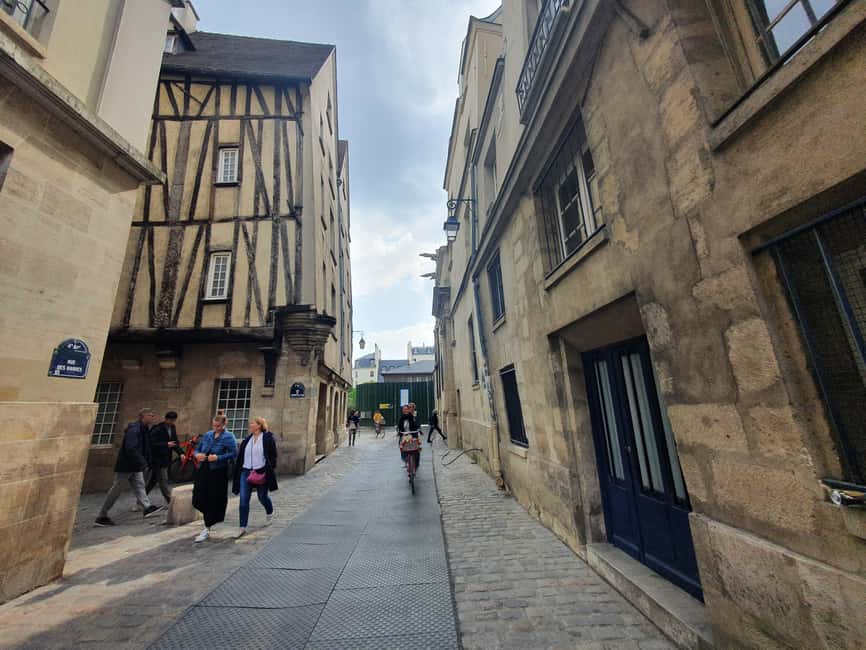
You finish at Hôtel de Ville. The tour frames this stop around the Liberation of Paris celebrated in 1944, which makes for a reflective ending point.
This matters because the tour’s theme is endurance and transformation. By ending at a civic landmark tied to Liberation, the story goes from neighborhood-level survival to city-wide rebirth. You’re standing in a place that represents public memory, not just private or religious remembrance.
Take a minute here even if you’re tempted to leave right away. The last stop is designed to give the themes emotional weight before you scatter off to your next plan.
How the 2-hour format fits real sightseeing, and what to wear
Two hours is short enough that you’ll still feel energetic after. It’s also long enough to move through several distinct Le Marais zones without feeling like you’re just doing photo stops.
That “short but structured” format is ideal if you want Jewish heritage context without turning your day into a full itinerary marathon. You’ll cover: the Saint-Paul-Saint-Louis Church area, Village Saint-Paul courtyards, the Jewish Quarter along Rue des Rosiers, Place des Vosges, Hôtel de Sully, Musée Carnavalet area by way of Rue des Francs-Bourgeois, Les Archives, and then Hôtel de Ville.
What to bring is simple: comfortable shoes. Since the route is not suited for wheelchair users or people with mobility impairments, plan for a steady walking pace and a few standing moments for storytelling and orientation.
Also remember that the itinerary may change on the day due to local conditions, access restrictions, weather, or unexpected events. If that happens, it usually means the guide is adjusting to keep the tour flowing safely and accessibly.
Price and value: what you get for about $23 per person
At about $23 per person for a 2-hour walking tour, the value comes from three things you can feel in real life.
First, you’re not paying for museum tickets. Entry to monuments is not included, so your money goes to the guided route and the time you spend learning. Second, you get a qualified guide, and the tour is structured around specific Le Marais locations tied to Jewish heritage and broader Paris themes. Third, the pace is built for street-level understanding. You’re not just reading about the Jewish Quarter, you’re walking through it in the time you have.
You’ll also see some practical value in the group format. The tour offers private or small groups available, which can make questions easier and the pacing more comfortable.
One extra detail worth noting: the tour has an overall rating of 4.5 based on 6 reviews. That’s not a massive sample size, but it does suggest consistent satisfaction, especially with guide performance.
Who should book this Le Marais Jewish heritage walk
I’d book this if you want:
- Jewish heritage in Paris explained through real streets and real landmarks
- A guided route that balances major sights with courtyards and passages
- A short, focused option that fits into a day in central Paris
- Storytelling that connects resistance, faith, and cultural rebirth to places you can see
It is also a good choice for people who like architecture and city context, because you’ll touch baroque church work, older squares like Place des Vosges, and 17th-century Hôtel de Sully.
Skip it if you:
- Need wheelchair-friendly access, because it is not suitable for wheelchair users
- Want mostly indoor time or museum entry, since entry to monuments is not included
Should you book this tour or pass?
Book it if you want a compact, meaningful Le Marais experience that centers Jewish heritage and ends with a powerful 1944 Liberation reflection. The $23 price feels fair for a guided, place-based storytelling walk, especially if you like learning as you move.
Pass if your priority is museum entry or if walking will be difficult for you. In that case, you might do better with a more accessible, more indoor option, or by planning separate visits for specific sites after you’ve gotten your bearings.
FAQ
How long is the Paris Jewish Heritage & Hidden Gems of Le Marais tour?
The duration is 2 hours.
Where does the tour start?
The meeting point is in front of Trattoria Marguerite, outside on Quai de Gesvres.
What’s included in the price?
It includes a walking tour, a qualified guide, and a walk through the Marais exploring Jewish heritage and historic streets.
Are monument or museum entries included?
No. Entry to monuments is not included, and the tour is an exterior visit only.
Which languages are available for the live guide?
The tour offers English, French, Italian, Russian, and Spanish.
Is this a private tour or a group tour?
It can be private or in small groups.
Is the tour suitable for wheelchair users or mobility impairments?
No. It is not suitable for people with mobility impairments or for wheelchair users.
What should I bring with me?
Wear comfortable shoes.
Can I cancel and get a full refund?
Yes. Free cancellation is available up to 24 hours in advance for a full refund.
Can I reserve without paying now?
Yes. There is a reserve now & pay later option, so you can book your spot and pay nothing today.
Newest write-ups from Paris





Le Marais Walking Tours, compared.

Award-Winning Paris French Bakery Experience — Le Marais, 4th Arr
Read our review →
Paris Le Marais Food Tour With 10+ Tastings, Cheese, Wine & More
Read our review →
Paris Le Marais District Original Food and Wine Tasting Tour
Read our review →
Paris Bike Tour Hidden Secrets in the Latin Quarter & Le Marais neighborhoods
Read our review →
Paris Culinary Tour: 11 Tastings & 2 Wines in Le Marais
Read our review →

Le Marais District Food Tour with 10+ Tastings & Wine
Read our review →
Browse the lists this tour appears in