
Reviewed · HISTORICAL TOURS
Jazz, Art and History: A Black American Legacy Private Tour
Paris changes when you follow Black American stories. I loved how the walk braids jazz with literature, and I liked that the guide, Louise, keeps the stops grounded in real people and real places like Sidney Bechet and James Baldwin. The only drawback is that each location is brief, so this is not a sit-and-study history marathon.
You get a private, English-language walking tour that lasts about 3 hours, starting at Café de Flore and ending near Edgar Quinet. It’s built around quick, high-impact scenes, mostly with admission that is free, plus coffee or tea to keep you moving. I also appreciated that it’s designed for both curious beginners and people who already know some of the names.
One more practical note: almost everything you’ll see is ticket-free, but Pantheon de Paris does not include admission, so plan for that if you want to go inside. If you are the type who likes time to linger in museums, you may feel a little rushed at a few stops.
In This Review
- Key things I’d focus on before you go
- Walking Paris by names, not just streets
- Saint-Germain-des-Prés: where art-talk and community happened
- 33 Rue de Seine and the gallery layer of Paris
- 13 Rue Saint-Benoît: jazz history that changed nightlife
- Shakespeare and Company: the American literary connection
- Cour du Commerce Saint-André and the Society of the Friends of the Blacks
- La Sorbonne and the 1955 Congress of Black Writers and Artists
- Café de Flore: where James Baldwin lived and wrote
- Luxembourg and the slavery memorial that forces a hard look
- Theatre Bobino: the closing scene, Josephine Baker, and nearby legacy
- Panthéon de Paris: when the country honors names
- Price, pacing, and value at $176.26 per person
- Who should book this Black American legacy tour
- Should you book it?
- FAQ
- How long is the Jazz, Art and History private tour in Paris?
- What is the price per person?
- Where does the tour start and what is the end point?
- Is the tour offered in English, and is it private?
- What’s included in the experience?
- Do I need tickets for the stops?
- Is there a mobile ticket?
- Is there a group discount and can I cancel for a refund?
Key things I’d focus on before you go
- Saint-Germain-des-Prés as the starting point for community and creative talk
- African art influences discussed in the gallery streets near Rue de Seine
- Jazz at 13 Rue Saint-Benoît, tied to performers like Sidney Bechet and Josephine Baker
- Café de Flore and James Baldwin’s Paris writing life
- Theatre Bobino as a closing scene for Josephine Baker’s last performances and nearby legacy
- Panthéon de Paris for national recognition of Black figures
A handful more Paris options to weigh up
- Paris: Dark History and Ghostly Guided Walking Tour
★ 4.7 · 1,000 reviews - Le Marais/Paris – The Historic, Trendy, Jewish, LGBT district
★ 5.0 · 341 reviews - Paris City of Fashion History Private Guided Walking Tour
★ 5.0 · 221 reviews - History of Paris City Center w/ Notre Dame Semi-Private 12ppl Max
★ 5.0 · 194 reviews
Walking Paris by names, not just streets
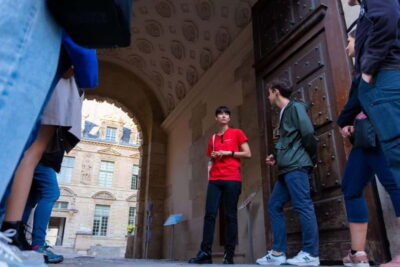
What makes this tour feel different right away is the idea of using people as your map. You are not just walking from one landmark to another. You are moving through Paris as Black American artists, writers, and activists moved through it, found friends, argued about identity, and shaped culture back home too.
I like routes like this because they force you to notice details you would normally rush past. A café isn’t just a café. A theater isn’t just a theater. In this tour, each place becomes a time capsule with a specific story attached. When the guide, Louise, points out the who and the why, it changes the whole street-level experience.
And because it’s private, you can ask questions without feeling like you’re competing with a crowd. The tour runs about 3 hours, so it’s long enough to build momentum, but short enough to fit easily into a Paris day.
Saint-Germain-des-Prés: where art-talk and community happened
You start in Saint-Germain-des-Prés, a neighborhood long associated with bohemian life and intellectual exchange. It’s a smart place to begin because it sets the emotional tone: creativity, debate, and friendships forming in real time.
This stop is short, so don’t expect a full lecture. What you should expect is orientation and context. You learn how many Black American artists found community here, which matters later when you hear the stories connect across literature, jazz, and activism. Saint-Germain is the springboard. Once you grasp that, the rest of the walk feels like a chain of linked moments.
Practical tip: wear shoes you can walk in for hours. Even with short stops, the “between places” part is still real walking.
33 Rue de Seine and the gallery layer of Paris
Next, you spend time near 33 Rue de Seine, stopping by select galleries that highlight the influence of African art on French avant-garde movements. This is where the tour broadens your lens beyond performance and literature.
The value here is the conversation about colonial history. The influence of African art was not created in a vacuum, and this stop helps you connect aesthetics to power. It also sets up an important theme: Paris did not simply “receive” Black and African culture. It responded, translated, and often complicated that influence through its own colonial era thinking.
One drawback to consider: if you are looking for a museum-style deep dive inside one specific gallery collection, you may feel the time is too limited. But for street-level understanding and perspective, this stop does the job.
13 Rue Saint-Benoît: jazz history that changed nightlife
At 13 Rue Saint-Benoît, the focus shifts to the legendary jazz scene. This is the part of the tour where you can almost feel the energy of older Paris nightlife, because the story connects you to musicians who performed here and helped transform local music culture.
The names matter. Sidney Bechet and Josephine Baker come up as key figures, and the tour explains how their presence in Paris wasn’t only entertainment. It was cultural change in motion.
You’ll also notice how this stop fits the tour’s wider theme: Black American creativity reshaped Paris in visible ways, then echoed back across the Atlantic. If jazz is a big part of your travel interests, this stop is a strong reason to book.
If jazz history is new to you, you’ll still get plenty to hold onto, since the tour uses specific performer names rather than vague references.
If this one is booked out, Paris has these too:
- Paris: 1-Hour Seine Cruise departing from the Eiffel Tower★ 4.4 · 77,472 reviews
- Disneyland® Paris 1-Day Ticket★ 4.6 · 49,412 reviews
- Paris: Versailles Palace and Gardens Full Access Ticket★ 4.6 · 41,579 reviews
- Paris: Arc de Triomphe Rooftop Tickets★ 4.6 · 34,264 reviews
Shakespeare and Company: the American literary connection
After jazz, you make a quick stop at Shakespeare and Company. The tour frames this as an American literary hub that welcomed Black American writers, creating creative exchange between Paris and Harlem Renaissance figures.
This is a brief stop, but it’s a good reminder that culture travels in networks. Paris becomes more than scenery. It becomes a meeting place where writers traded ideas and made identity work through words.
If you love literature, you’ll probably want to spend extra time here on your own after the tour ends. The tour is built to point you in the right direction, not to trap you in a single location for an hour.
Cour du Commerce Saint-André and the Society of the Friends of the Blacks
One of the more surprising stops is near Cour du Commerce Saint-André, with a story tied to 1788 and the Society of the Friends of the Blacks. The tour connects the society to future Revolutionaries Brissot and Clavière and places the conversation in the broader French Revolution atmosphere.
You learn that the Procope Café served as an epicenter of Revolutionary ferment, which helps you understand why this matters. Abolition was not only a distant moral debate. It was tied to political thinking in the French world, even if recognition and results took a long time.
Short stop length is both a blessing and a limit. It’s efficient, but it also means you should be ready to absorb names and themes quickly. If you enjoy research afterward, this stop gives you solid starting points.
La Sorbonne and the 1955 Congress of Black Writers and Artists
Then you reach La Sorbonne, a key site tied to Negritude and pan-African movements. This is where the tour becomes more explicitly political and philosophical.
The guide connects the Sorbonne to the First Congress of Black Writers and Artists in 1955, showing how Paris could empower Black identity while also complicating it for Africans and African Americans alike. That balance is exactly what makes the tour feel fair. It refuses the idea that Paris was only a savior or only a problem. It was both, depending on power, politics, and context.
This stop is longer than some of the others, about 25 minutes, which helps you actually process what you’re hearing. Still, it is not a classroom. You won’t get a textbook answer. You’ll get a framework to read the rest of Paris with sharper eyes.
Café de Flore: where James Baldwin lived and wrote
At Café de Flore, the story narrows to one person: James Baldwin. The tour explains that Baldwin lived and wrote here, and it ties his work to conversations about race and literature across Europe and America.
This stop is short, but it’s powerful because it makes the writer feel present, not distant. You aren’t just hearing that Baldwin was important. You are hearing where, in Paris, his writing life took shape. That turns a famous name into a street-level experience.
If you’re a slow-walker type, pause for a moment and look around. Even if you do not sit, you’ll feel the point of the stop: writers need time, routine, and the right kind of place to think.
Luxembourg and the slavery memorial that forces a hard look
In the 6th Arrondissement, you pause in Luxembourg, where the tour points you toward a contemporary slavery memorial sculpture. This is one of the more reflective parts of the walk.
The guide explains France’s complex relationship with its colonial past and the long struggle toward abolition and recognition. This matters because the tour otherwise spends much of its time on artists and creativity, which can accidentally make history feel soft. The Luxembourg stop pulls the story back toward accountability.
Because it’s about a 25-minute pause, you get more time than the quick photo-stop rhythm of some cities. Still, you will leave wanting to read more, which is not a problem. It’s a prompt.
Theatre Bobino: the closing scene, Josephine Baker, and nearby legacy
The tour finishes at Theatre Bobino, a historic venue where Josephine Baker captivated audiences and performed her final show. Ending here works because it gives you a clear emotional arc. You start in creative conversation and arrive at performance as legacy.
The tour also includes an extra layer by mentioning Beaford Delaney, a less widely known artist who largely inspired Baldwin, with Delaney connected to the Bobino area. That kind of linkage is a big part of why this tour feels “well-crafted.” It helps you see influence as a chain, not a single moment.
There is also mention of Josephine Baker’s Square a few steps away, honoring her life in Paris. Even if you don’t go far beyond the main stop, knowing it’s there makes the area feel intentional, not random.
Panthéon de Paris: when the country honors names
At the end, you reflect at Pantheon de Paris, where Black figures are honored in this national monument, including Josephine Baker, Félix Éboué, and Alexandre Dumas.
This final reflection works because it changes the scale. Earlier stops focus on venues and neighborhoods where culture was made. Pantheon is about how a country chooses to remember.
Important practical detail: the admission ticket for Pantheon is not included, so you’ll need to plan separately if you want to enter. If you skip the interior, you can still get the meaning from the external reflection, but entry is the only way to see how the monument frames these stories inside.
Price, pacing, and value at $176.26 per person
At $176.26 per person for about 3 hours, you’re paying for a thematic, guided route that stitches together art, jazz, literature, and political history across central Paris.
What makes the price feel reasonable for me is the structure:
- Most stops are admission ticket free, which keeps you from stacking extra costs every few blocks.
- Coffee or tea is included, so you get a small refresh without hunting mid-walk.
- It’s private, so the guide can set the pace and answer questions for your group.
- The route is English-language, which matters if you want accurate storytelling around history.
What keeps it from being a bargain for everyone is the pacing. Each stop is short, usually 5 to 25 minutes. If you love museums or want long Q and A sessions at each location, you might feel like you’re getting summaries rather than deep immersion.
Still, for a first-time or second-time Paris visit, this is a strong value because it gives you a map of connections you can build on later.
Who should book this Black American legacy tour
This tour is a good fit if you want:
- A walking route built around specific names, not generic “Paris culture” talk
- Jazz history tied to places, including Sidney Bechet and Josephine Baker
- Literature connections, including James Baldwin and the American writing scene tied to Harlem Renaissance figures
- Political and cultural context, including Negritude, pan-African movements, and the First Congress of Black Writers and Artists in 1955
You might consider something else if:
- You prefer long museum visits and you want to stay inside spaces longer than 25 minutes
- You need more time for personal exploration at each stop before moving on
One more note: the starting point at Café de Flore means it’s easy to connect this tour with other Saint-Germain plans before or after, and ending near Edgar Quinet helps you reposition for dinner or a museum visit.
Should you book it?
Yes, I’d book this if you want an intelligent, place-based Paris experience focused on Black American legacy. The route connects art, jazz, literature, and activism in a way that feels specific, not vague, and the guide Louise brings that storytelling with real care. The focus on names like Sidney Bechet, Josephine Baker, James Baldwin, Brissot, Clavière, and the 1955 Congress gives you more to remember than a standard sightseeing walk.
I would not book it only if you know you hate short stops or you want hands-on time inside major institutions every day. Otherwise, this is exactly the kind of tour that leaves you with “I see Paris differently now” energy, plus a list of places you can return to on your own.
FAQ
How long is the Jazz, Art and History private tour in Paris?
It runs for about 3 hours.
What is the price per person?
The price is $176.26 per person.
Where does the tour start and what is the end point?
The tour starts at Café de Flore, 172 Bd Saint-Germain, 75006 Paris. It ends near Edgar Quinet, 75014 Paris.
Is the tour offered in English, and is it private?
Yes, it is offered in English. It is also a private tour, meaning only your group participates.
What’s included in the experience?
Coffee and/or tea are included.
Do I need tickets for the stops?
Most stops list admission as free. Pantheon de Paris is noted as admission ticket not included.
Is there a mobile ticket?
Yes, the tour includes a mobile ticket.
Is there a group discount and can I cancel for a refund?
Group discounts are offered. Free cancellation is available, and you can cancel up to 24 hours in advance for a full refund.
Newest write-ups from Paris


Historical Tours, compared.
Le Marais/Paris – The Historic, Trendy, Jewish, LGBT district
Read our review →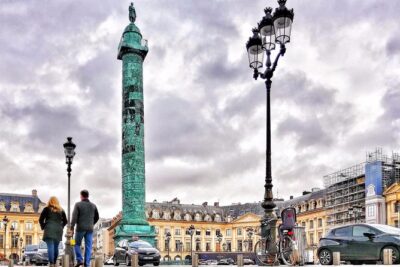
Paris City of Fashion History Private Guided Walking Tour
Read our review →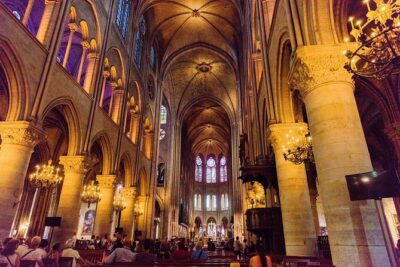
History of Paris City Center w/ Notre Dame Semi-Private 12ppl Max
Read our review →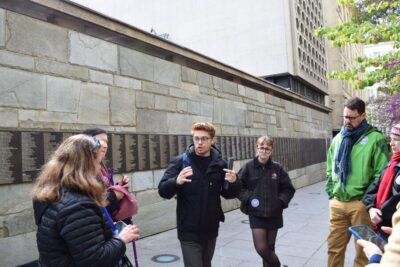
Le Marais & Montmartre Jewish History Walking Tour
Read our review →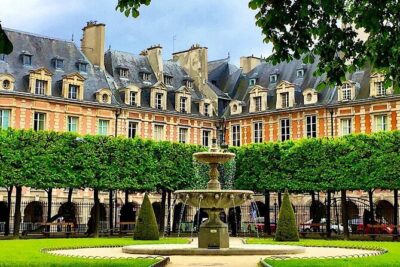

Explore the Marais: History, Art & Local Culture
Read our review →Browse the lists this tour appears in