
Reviewed · WORLD WAR TWO HISTORY TOURS
WWII Paris Under the Occupation Walking Tour Limited to 6 Guests
History hides in plain stone. In 2 to 3 hours, you walk Paris’s oldest districts while the guide explains how daily life shifted under Nazi occupation.
I love that it is limited to 6 guests, which keeps the pace human and the Q&A real. I also like how the route links major landmarks like Notre-Dame with neighborhood stories in Le Marais and the Latin Quarter.
One possible drawback: the tour moves briskly, and if your group asks lots of extra questions, not every detail from the overview may come up.
In This Review
- Key things to notice
- Why this WWII walk works in Paris’s oldest districts
- Price, time, and the small-group advantage
- Before you go: pacing, footwear, and expectations
- Meeting point in the 7th, ending in the Marais
- Notre-Dame de Paris: architecture and occupation-era control
- Le Marais Jewish quarter: what happened and why the streets matter
- Latin Quarter and the Sorbonne story of higher education under occupation
- Saint-Germain-des-Prés: requisitioned homes and the resistance network
- Palais de Justice: why the courts became a stronghold
- Memorial de la Shoah: a respectful stop with a clear next step
- The guide matters, and small groups make it easier
- What to expect in 2 to 3 hours, stop by stop
- Who should book this WWII Paris occupation walk?
- Should you book this WWII Paris Under the Occupation Walking Tour?
- FAQ
- How many people are on this WWII Paris walking tour?
- How long is the walking tour?
- Is the tour offered in English?
- Where do I meet the guide?
- Where does the tour end?
- Do I need to pay for entry tickets at the stops?
- Can I visit the Memorial de la Shoah during the tour?
- Will I receive my ticket or confirmation on booking?
- Is the tour suitable for someone with moderate mobility needs?
- Are service animals allowed?
Key things to notice
- Maximum 6-person group means you get more back-and-forth than on big walks
- Four or more historic districts on foot keeps the story anchored to real streets and buildings
- Multiple “control points” in the itinerary: church life, higher education, and the justice system
- Le Marais focus includes both the Jewish quarter context and a stop at the Memorial de la Shoah entrance
- No paid entries required at stops listed as free admission ticket
- English mobile ticket makes day-of logistics simple
More wartime Paris on foot:
- Paris WW2 The German Occupation Small group or Private tour
★ 4.5 · 128 reviews - Normandy D-Day Beaches and World War II Sites Day Trip from Paris
★ 4.5 · 56 reviews - Invalides Museum – WWI & WWII – Guided Tour up to 8 guests
★ 5.0 · 32 reviews - Skip-the-line Les Invalides World War Museum Guided Tour – Semi-Private 8ppl Max
★ 5.0 · 30 reviews
Why this WWII walk works in Paris’s oldest districts
WWII in Paris can feel like a wall of dates. This tour makes it concrete by doing something simple: walking the places where power and fear had to operate in public.
You start in central Paris and stay inside the city’s older core. That matters because these buildings were not built as museum props, they were living spaces where religion, education, housing, and law all affected what people could do day to day. As you move, you are shown how occupation changed the rules of the city, not just the headlines.
The small-group format also changes the feel. With up to 6 people, the guide can slow down when someone has a question, without turning the whole walk into a lecture.
Price, time, and the small-group advantage
At about $188.17 per person for roughly 2 to 3 hours, this is not a bargain-basement stroll. But you are paying for an English-speaking expert guide plus a route that packs several meaningful locations into one walk.
The best value here is not the number of stops. It is the way the guide connects each place to a specific theme: religious control at Notre-Dame, the impact on families in the Marais, how occupiers treated higher education in the Latin Quarter, and how institutions like the Palais de Justice became useful strongholds.
Also, this is priced like an experience where you will ask questions. In one recent group, conversation with the guide helped people get a better sense of what life under occupation felt like, not just what happened in history books.
Before you go: pacing, footwear, and expectations
This is a walking tour, and the listing calls for moderate physical fitness. Plan on steady movement through older streets, with a pace that fits short stops rather than long stays.
Bring sensible shoes. Even if the tour is only a couple of hours, the cobblestones and tight sidewalks in historic areas can add up quickly.
A small timing note: each stop is designed as a brief chapter, not a museum-length visit. If you want to linger at details on your own, you will likely do that after the tour, especially around the memorial area.
Meeting point in the 7th, ending in the Marais
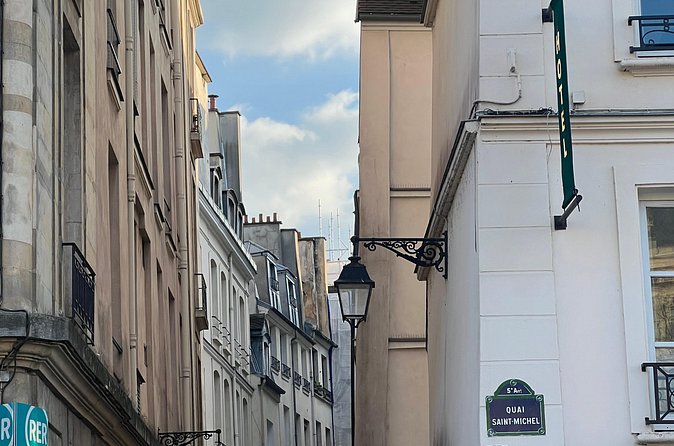
You meet at 18 Rue de Sèvres, 75007 Paris. The tour ends at Rosiers Joseph Migneret Garden, 10 Rue des Rosiers, 75004 Paris, putting you right where Le Marais starts to feel most alive.
Since the entire route is planned around central, older parts of Paris, you probably will not need complicated transfers during the experience. If you are coordinating with another plan afterward, the Marais ending is convenient, because you can keep exploring immediately.
The tour also uses a mobile ticket, and it runs in English. Confirmation is sent at booking time, so you should have what you need before you arrive.
Other arrondissements taken at walking pace:
- Paris Top Sights Half Day Walking Tour with a Fun Guide★ 5.0 · 2,893 reviews
- Montmartre Hidden Gems and Scenic Highlights Walking Tour★ 5.0 · 2,684 reviews
- Montmartre Hill French Gourmet Food and Wine Tasting Walking Tour★ 5.0 · 2,588 reviews
- Paris: Montmartre Highlights Walking Tour with a Local Guide★ 4.9 · 2,318 reviews
Notre-Dame de Paris: architecture and occupation-era control
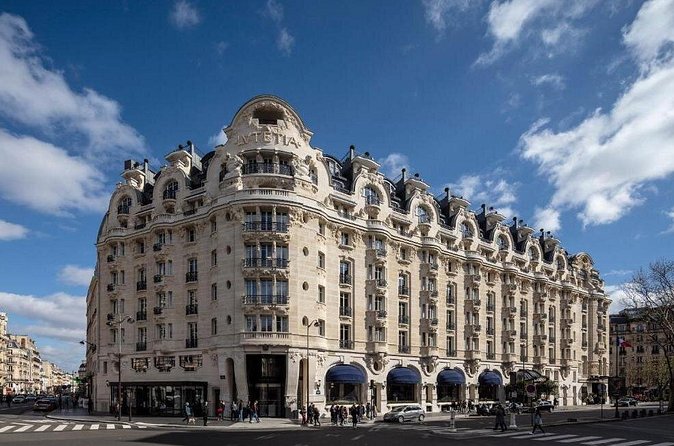
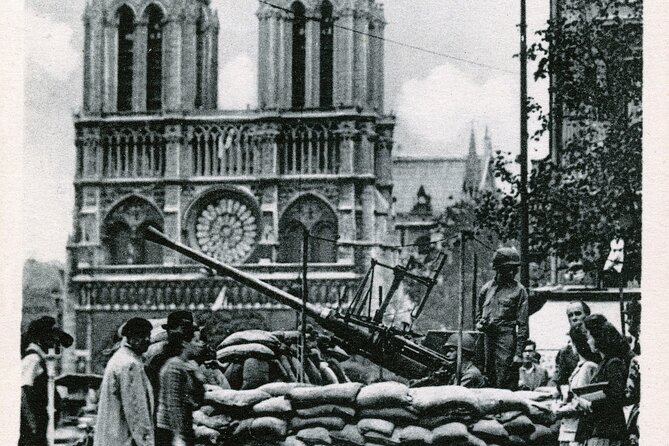
Notre-Dame de Paris is your first major stop, and the tour uses it in two ways. First, you look at the big picture: the cathedral was finished in 1363 and built in Gothic style. Then the guide connects the building to the question of control, explaining how religion was handled during the occupation of Paris.
This is a smart opening. The cathedral is famous, so you can focus on the less-obvious angle, how the occupiers and the system of authority shaped what religious life meant in practice. Even if you have seen Notre-Dame before, you are not here just to admire stonework.
Practical note: the stop is listed at about 30 minutes. That is enough time to orient yourself and learn what to look for, but you will not get a full cathedral tour on this schedule.
Le Marais Jewish quarter: what happened and why the streets matter
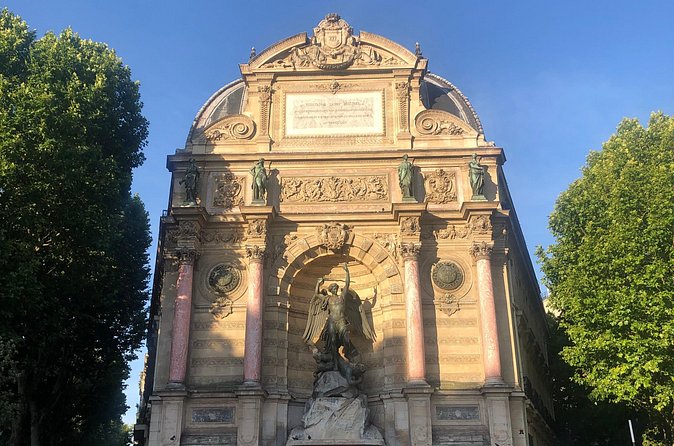
Le Marais is where the story turns from institutions to people. You spend about 40 minutes here, starting with how the area functioned historically as the Jewish ghetto outside the city walls of Paris.
During WWII, the description focuses on the human consequence: thousands of Jewish families were arrested and sent to camps in France and beyond. The guide also draws a line to the present, helping you understand how the area’s meaning has shifted over time while the memory remains part of the neighborhood.
This stop is powerful, and it also works for first-time visitors because Le Marais is easy to recognize once you are there. Tight streets, historic facades, and that distinctly Paris layering of old and new makes it easier to picture how occupation-era life unfolded in a real place.
One thing to consider: this portion can feel heavy. If you know you want a slower pace emotionally, give yourself space for a breath during transitions between streets.
Latin Quarter and the Sorbonne story of higher education under occupation
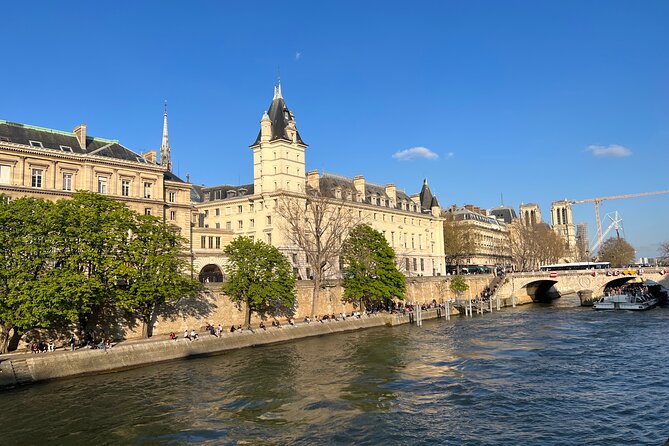
Next you move to the Latin Quarter, with about 40 minutes here. The guide explains why it is called the Latin Quarter, tied to the founding of the University of Paris, the Sorbonne.
Then the theme changes again, from religious control to academic control. You learn about how occupiers controlled higher education under their regime, and you also see narrow streets that, in the occupation era, became dark and deserted rather than vibrant and busy.
This stop is one of the best examples of how a city tour can teach you to read a place. You are not just hearing about restrictions, you are walking the geometry of older streets and thinking about what it means when a neighborhood that once gathered students becomes quiet and watched.
As with the earlier stops, it is a chapter, not a long immersion. If you love the academic angle, you might want to pair this walk with additional self-guided time in the area after.
Saint-Germain-des-Prés: requisitioned homes and the resistance network
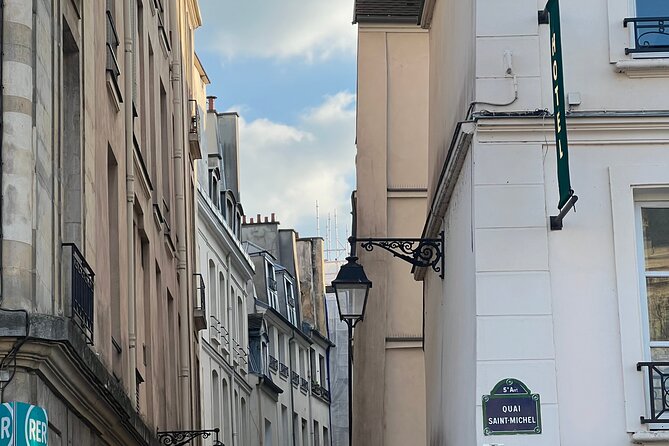
Saint-Germain-des-Prés is both picturesque and complicated, and that is exactly how the tour frames it. You spend about 30 minutes here learning that when the Nazis arrived in 1940, they pillaged the district and requisitioned hotels and mansions.
The guide also connects those actions to dissent. The description is clear that occupiers tried to suppress resistance and shut down forms of pushback. At the same time, the tour points out that French Resistance used this district as part of how it fought back.
What I like about this stop is the contrast. You see beautiful corners and you are given the historical explanation for why ordinary buildings and neighborhoods became part of the resistance story. It is not just a list of events, it is a sense of where people had room to act, even under pressure.
If you are the type who likes human stories, this is likely to be one of the most memorable parts of the walk.
Palais de Justice: why the courts became a stronghold
Your stop at the Palais de Justice de Paris takes you into the theme of power through institutions. The building is described as the center of law and justice in Paris for over 1000 years, surviving many regime changes.
You learn its origin as the Hall of the King where royal council met, then you get the occupation-era twist. The Nazis chose it as one of their strongholds in the center of town, and the guide explains why and how this location worked for their rule. You also hear how the Allies managed to rid them from it.
This portion is shorter, about 20 minutes. That is enough time to understand the key idea: when a regime takes over, it does not only take over streets, it takes over systems that decide what is allowed.
It is also a good stop to watch your guide’s explanation style. One thing that stood out in recent groups was how guides could make the policy-level story feel personal and real without getting lost in too many details.
Memorial de la Shoah: a respectful stop with a clear next step
The tour includes a 20-minute stop at the Memorial de La Shoah in Le Marais. The memorial is described as moving and focused on the Holocaust.
Important practical detail: tours are not allowed inside during this stop, but the guide will show you the entrance. That means you can visit after the walk if you want more time than the tour schedule allows.
This is a good compromise. You get a guided moment that frames what you are seeing, and you also keep control over how long you stay at a solemn site. If you want quiet time, you can plan to return on your own.
If you are sensitive to heavy topics, it may help to have a plan afterward, a café break or a longer walk out of the Marais, so you do not go straight from grief into noise.
The guide matters, and small groups make it easier
A big reason this tour gets strong marks is how the guide handles the walk. People have enjoyed conversations with guides such as Boris and Abbie, and that matters because the content is intense.
The best moments on this kind of tour are when you do not just hear facts. You get explanation that helps you understand why a street or building matters. In one case, a guide’s engaging style helped people connect the dots between the neighborhoods and what occupation did to daily life.
Also, with a max group size, you can ask questions without feeling like you are interrupting a train of thought. In at least one recent experience, off-topic questions were handled as part of the flow, and the group ended up feeling like they learned something broader than the formal route.
What to expect in 2 to 3 hours, stop by stop
Here is the practical rhythm of the walk as it is described.
You start at Notre-Dame for about 30 minutes, then head into Le Marais for 40 minutes. After that, you go to the Latin Quarter for another 40 minutes, then shift to Saint-Germain-des-Prés for 30 minutes. The route wraps with the Palais de Justice for 20 minutes, followed by the Memorial de la Shoah entrance for 20 minutes.
That adds up to a full story arc, but it does not try to do everything in one day. The structure keeps you moving, while each district focuses on a clear theme.
If you are short on time in Paris and want a focused WWII angle without museum lines, this pacing can be a good fit.
Who should book this WWII Paris occupation walk?
This tour fits best if you want history tied to real streets and if you like guided explanations that connect architecture and institutions to human consequences.
It is also a good choice if you appreciate small-group energy. With up to 6 people, you get a better chance of hearing your own interests answered. If you are the type who asks questions, you will likely enjoy how the guide responds.
Practical fit notes from the tour information: it is offered in English, uses a mobile ticket, and is accessible for people with moderate physical fitness. Service animals are allowed.
If you hate walking or prefer long indoor time, this might feel too short per stop. But if you want a compact, thoughtful route with context, it is built for that.
Should you book this WWII Paris Under the Occupation Walking Tour?
Book it if you want a structured WWII story that actually uses the city as your classroom. The combination of Notre-Dame, the Le Marais Jewish quarter, the Latin Quarter, Saint-Germain-des-Prés, the Palais de Justice, and the Memorial de la Shoah entrance creates a route that connects religion, education, housing, and law under occupation.
Consider it less if you expect the tour to cover every detail listed in the overview with slow, museum-level pacing. In a smaller setting, group questions can also shape what gets emphasized in the moment.
My practical bottom line: if you like walking tours that teach you how to look at Paris differently, this one is a strong choice, especially because the group size keeps the experience focused and human.
FAQ
How many people are on this WWII Paris walking tour?
The tour is limited to a maximum of 6 travelers.
How long is the walking tour?
It runs about 2 to 3 hours.
Is the tour offered in English?
Yes, the tour is offered in English.
Where do I meet the guide?
The meeting point is 18 Rue de Sèvres, 75007 Paris, France.
Where does the tour end?
The tour ends at Rosiers Joseph Migneret Garden, 10 Rue des Rosiers, 75004 Paris, France.
Do I need to pay for entry tickets at the stops?
The tour description lists the stops as admission ticket free.
Can I visit the Memorial de la Shoah during the tour?
Tours are not allowed inside during the tour, but the guide will show you the entrance so you can enter afterward if you wish.
Will I receive my ticket or confirmation on booking?
You receive confirmation at the time of booking, and the tour uses a mobile ticket.
Is the tour suitable for someone with moderate mobility needs?
The tour requires a moderate physical fitness level, and it is described as near public transportation.
Are service animals allowed?
Yes, service animals are allowed.
Newest write-ups from Paris







World War Two History Tours, compared.

Paris WW2 The German Occupation Small group or Private tour
Read our review →
Normandy D-Day Beaches and World War II Sites Day Trip from Paris
Read our review →
Invalides Museum – WWI & WWII – Guided Tour up to 8 guests
Read our review →
Skip-the-line Les Invalides World War Museum Guided Tour – Semi-Private 8ppl Max
Read our review →Paris 2-hour WWII Walking Tour: Occupation history
Read our review →
Skip-the-line Les Invalides World War Museum Guided Tour – Exclusive Guided Tour
Read our review →
WWII American Landing Beaches Discovery Private Tour
Read our review →Browse the lists this tour appears in