
Reviewed · VIP
Covered passages: secrets, luxury and modernity
Paris has roofed secrets you can walk into.
This is a short, guided stroll built around covered passages and secret streets, with Matteo Allavena bringing real depth to the history and everyday life you see along the way. I especially love the way the route jumps between social layers, from student and popular life around the Porte Saint Denis area to the more formal, finance plus ideas vibe near Richelieu Library. One thing to plan around, though: the experience requires good weather, and you do need a moderate fitness level for a city walking route.
What makes it feel different is the contrast. You start in the 10th arrondissement, where the mood is more lived-in than postcard, tucked behind major landmarks like the arch area at Porte Saint Denis. Then you move to the main boulevards, where big-name entertainment and shopping sit side by side with the covered passages that make Paris feel like it has indoor back roads.
The pacing works well for a first-timer or a return visit. It is about 2 hours, capped at 20 people, and you will finish back at the meeting point after ending the walk toward the Louvre area. The only real drawback is simple: if you are hoping for a slow, sit-and-stare tour, this is more of a walking story, and comfortable shoes help.
In This Review
- Quick hits
- Start at Porte Saint Denis, then watch Paris change gear
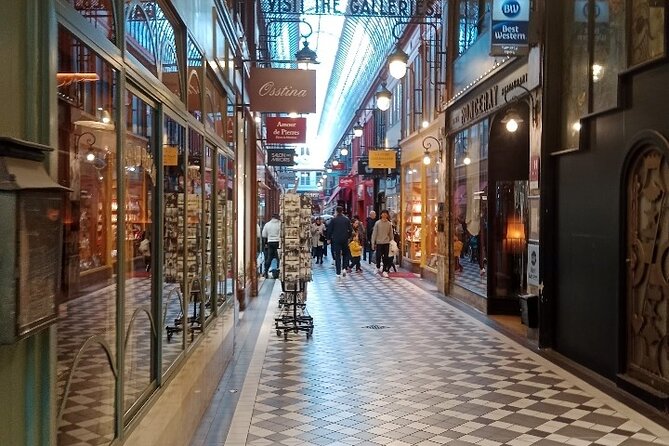
- Passage Brady: the first roofed corridor sets the tone
- Passage Jouffroy: variety matters, and you can feel it
- Passage des Panoramas and the main boulevards connection
- Passage Verdeau: a 19th century feeling in a small footprint
- Jardin du Palais Royal: a calm reset before the big institutions
- Richelieu Library research site: finance and ideas in the same frame
- Ending toward the Louvre area, then back to where you started
- Price, group size, and why this is good value
- What to wear, what to bring, and how to make the most of 2 hours
- Who should book this Paris passages walk
- Should you book?
- FAQ
- How long is the Paris covered passages walk?
- What is the meeting point for the tour?
- Where does the tour end?
- What language is the tour offered in?
- How much does the tour cost?
- Is there a mobile ticket?
- What group size is this tour limited to?
- Is the tour suitable for people with moderate physical fitness?
- Are service animals allowed?
- What is the weather requirement and what happens if it is canceled?
- Can I cancel for a full refund?
Quick hits

- Matteo Allavena guides the walk with real enthusiasm and strong local context
- Passages couverts like Brady, Jouffroy, des Panoramas, and Verdeau keep you sheltered and focused
- Boulevards with big institutions along the route connect old passage culture to modern Paris life
- Palais Royal garden stop gives you a breather between busy streets and grand buildings
- Richelieu research library visit spotlights the mix of finance nearby and intellectual life
More of the covered passages:
- Paris: Covered Passages Walking Tour
★ 4.6 · 128 reviews - Paris Covered Passages Walking Tour plus Seine Cruise Option
★ 5.0 · 118 reviews - Discover Secret Passages in Paris
★ 4.7 · 26 reviews
Start at Porte Saint Denis, then watch Paris change gear
Your walk begins at Métro Strasbourg St Denis, lines 4, 8, and 9, on Bd de Bonne Nouvelle, in the 2nd arrondissement area. That matters because the meeting point drops you into a busy transport node fast, and you get moving right away. You are starting where Paris feels practical and public, not museum-quiet.
From there, the tour leans into one of my favorite ways to understand a city: follow the path of people. The route is designed to show another image of Paris, where behind monuments and arches you can see the everyday student and popular life. That contrast is not just scenic. It changes how you interpret everything that comes later, including the grand boulevards and the “beautiful era” passages.
If you are coming on a tight schedule, the timing helps too. At roughly two hours, you get a focused sampler without committing to a half-day or all-day crawl. Just be ready for walking and a bit of back-and-forth movement through central streets.
Passage Brady: the first roofed corridor sets the tone
The first stop is Passage Brady. This is where the whole concept clicks: you are in a covered, passage-style space that feels both enclosed and surprisingly connected to the city outside. It is a clever way to kick off the tour because it frames everything else you will see as part of one story about how Paris moves commerce and culture through different kinds of spaces.
A practical tip here: treat the first passage like your orientation moment. Look for how the roof changes the light and the noise, and how quickly the city shifts from open street energy to a more contained corridor feel. Matteo Allavena’s strength, based on the comments you can count on, is taking what sounds like a simple list of passages and turning it into a real understanding of how each one signals a different social flavor of Paris.
The main drawback for Passage Brady is the same you will feel later in passages too: you want to slow down. If you rush, you will miss the subtle cues that make each stop feel distinct. Give yourself a few seconds to look around before you move on.
Passage Jouffroy: variety matters, and you can feel it
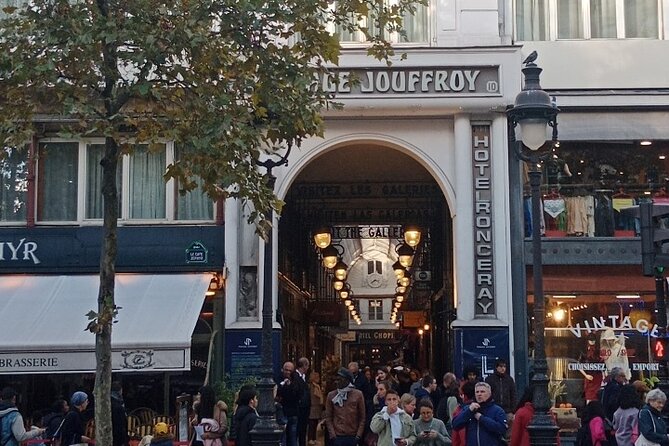
Next up is Passage Jouffroy. This stop keeps the momentum while reinforcing the point that these passages are not identical clones. The tour is built around the idea that different passages show different social and cultural diversity in Paris, and Jouffroy is one of the key steps in that progression.
Here is what I recommend you do during this part: compare the vibe, not just the architecture. Ask yourself what feels more commercial, what feels more local, and what feels more like a sheltered street. The point is to train your eye so that by the time you reach the later boulevards and the Louvre area, you understand why these covered corridors played such a role in everyday city life.
If you like street-level contrasts, this is a great match. If you want only big monuments and famous landmarks, passages can feel more like “small spaces.” In that case, lean into the tour’s promise of variety, because it is the differences that are doing the work.
Passage des Panoramas and the main boulevards connection
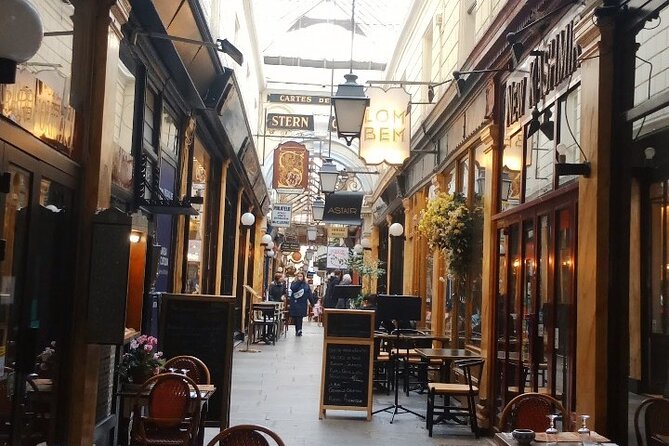
The itinerary then moves to Passage des Panoramas, and this is where the tour starts to link passage culture to the bigger Paris stage. This stretch connects to the main boulevards, which the route specifically calls out for commercial and festive energy. Big landmarks come into view as reference points, including the Rex cinema and the department store Lafayette, plus a theatre presence on the boulevard side.
Why this connection is valuable: the boulevards show modern Paris patterns, while the passages show older ways of organizing city life under cover. When you walk from one to the other, you can feel the shift between grand public spaces and smaller, more intimate corridors.
One practical consideration: boulevards can be noisier and busier than the passage interiors. So if your plan is to take photos, do it in bursts. Take a quick shot in the passages, then enjoy the street walk without constantly looking down at your phone.
A handful more Paris options to weigh up
- Seine River Dinner Cruise with Live Singer by VIP Yacht de Paris★ 4.0 · 604 reviews
- Versailles: Entry ticket & Private Apartments VIP Tour★ 4.4 · 298 reviews
- Design Luxury and Personalized Jewelry in Paris le Marais★ 5.0 · 160 reviews
- La Vallee Village Shopping Outlet by Luxury Transport from Paris★ 3.5 · 111 reviews
Passage Verdeau: a 19th century feeling in a small footprint

After the boulevards angle, the tour brings you to Passage Verdeau. The route is set up to give an impression of reliving the 19th century in Paris, and Verdeau is part of that “beautiful era” string.
What I like about placing passages like this in the middle of a walk is that you do not feel stuck in one style. You experience the roofed corridor format repeatedly, and each one adds another piece to the overall picture. By the time you reach Verdeau, you are not just seeing a passage, you are reading it.
Just don’t over-plan your expectations. The tour does not promise a long slow museum experience inside these spaces. It is a guided walk, so you will get an explained snapshot rather than a deep, extended detour.
Jardin du Palais Royal: a calm reset before the big institutions
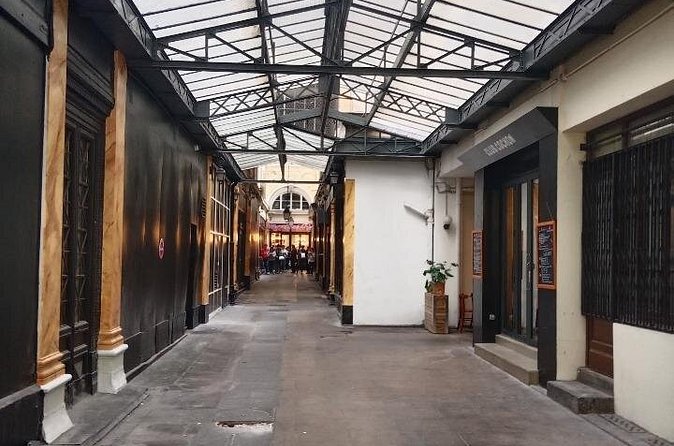
Then the walk turns toward the Jardin du Palais Royal. This stop changes the rhythm. After corridors and city traffic intensity, a garden space is a useful reset for your body and your focus.
Even without getting too precious about it, this is a smart choice for a short 2 hour tour. It gives you a moment of stillness so the earlier street story can land. It also helps you avoid the common problem with city walking tours, where everything blurs together because you are always surrounded by movement.
If you are the kind of traveler who likes taking a breather, you will appreciate that the route includes a green pause. If you do not, still use it as a mental waypoint. You will be heading into the finance and intellectual mix portion of the walk soon.
Richelieu Library research site: finance and ideas in the same frame
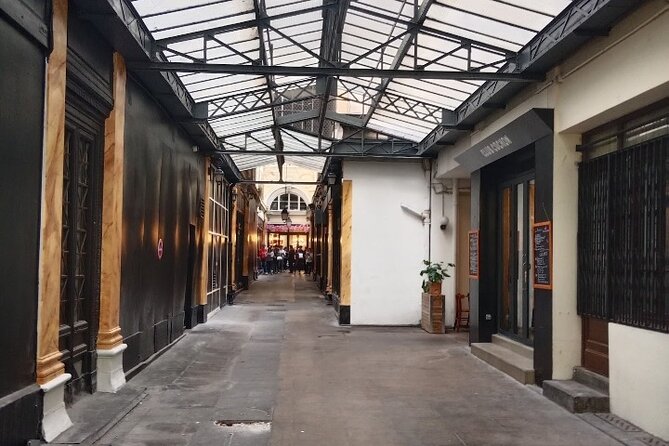
The next highlight is the Bibliothèque de recherche, Site Richelieu. This is where the tour shifts gears in a very deliberate way. The description emphasizes that finance and intellectual life mix here, and that big banks adjoin the Richelieu library. That idea makes the stop more than a name drop. It is a theme: Paris is not just romantic streets, it is also systems, institutions, and the work behind ideas.
The tour also notes that Richelieu library is the oldest and one of the most beautiful in Paris. You should approach this stop with a respectful mindset, because it is an institutional setting tied to scholarship rather than a retail corridor.
Practical advice: slow down and stay alert to what your guide points out. For many people, this is the part of the walk that feels most different from the passages. If you are the type who loves how cities function, you will probably find it satisfying.
Ending toward the Louvre area, then back to where you started
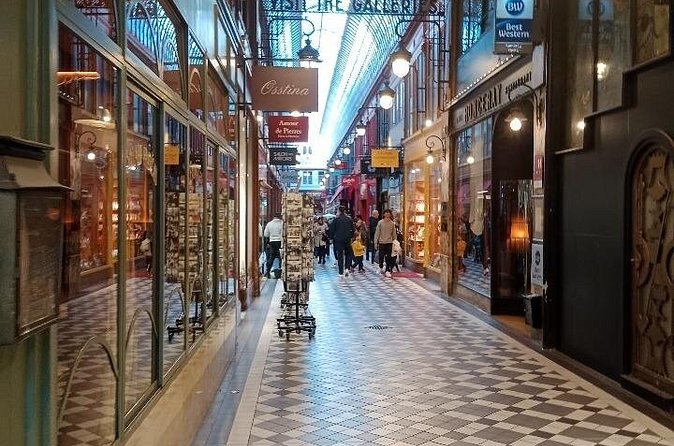
The route ends at the Louvre. At the same time, you are told the activity ends back at the meeting point, so plan for a return portion after the Louvre area. Either way, the value of the final positioning is that you close the loop from “small covered Paris” toward one of the city’s biggest symbols.
If you have museums on your agenda, this can help you build bearings fast. You will have walked through multiple layers of Paris before you decide what to prioritize next.
Price, group size, and why this is good value
At $24.08 per person, this is priced like a practical, well-run guided walking experience rather than a pricey museum add-on. The value comes from the mix: multiple named covered passages, time on the main boulevards, a garden stop at Palais Royal, and the Richelieu Library research site. In other words, you are not paying for one single landmark. You are paying for a guided route that strings together different types of Paris space.
Group size is capped at 20 travelers, which usually means you can actually hear the guide and not feel swallowed by the crowd. That matters in a walking tour, because your ability to process what you see depends on staying close to the guide’s explanations.
Booking happens on average about 34 days in advance, which suggests this is a popular format. If your dates are fixed, I would not wait too long. Short walking tours like this can fill up, especially when they run in English and when they keep the group small.
What to wear, what to bring, and how to make the most of 2 hours
This is a walking tour with a moderate fitness level requirement. You should treat it like a city stroll with stops, not a fully seated sightseeing program. Comfortable shoes make the biggest difference, especially because passage spaces and main boulevards can mean uneven pavement and lots of turning corners.
Bring a light layer. Passage interiors can feel cooler or dimmer than the bright streets outside. Also, you will likely want your phone ready for quick orientation photos, but keep it tucked away between stops so you can actually listen.
One more planning detail: good weather is required, and if it is canceled due to poor weather, you are offered a different date or a full refund. So if you are traveling in a season with frequent showers, keep a bit of flexibility in your schedule.
Who should book this Paris passages walk
Book it if you want:
- A guided way to see multiple passages in a short time
- A guide who connects the spaces to how Paris people live and work
- A route that mixes classic 19th century feeling with modern boulevard energy
It may not be ideal if you want nonstop major monuments and long indoor time. The emphasis here is the “in between” Paris. That is exactly the point. You are getting a story that feels more lived-in than a checklist.
Should you book?
Yes, I think you should book this tour if you like cities that reveal themselves through everyday spaces. For the price, you get a smart sequence: covered passages like Brady, Jouffroy, des Panoramas, and Verdeau, plus Palais Royal garden calm, then the Richelieu Library research site where finance and intellectual life share the same view. You also get an English speaking guide, Matteo Allavena, who comes through strongly in the way he explains the differences between the stops.
Just make sure you are comfortable walking for about two hours, and check the weather before you count on it. If you can match those basics, this is an efficient way to learn how Paris works at street level, not just from the outside of famous buildings.
FAQ
How long is the Paris covered passages walk?
It is approximately 2 hours.
What is the meeting point for the tour?
The start is at Métro Strasbourg St Denis, lines 4, 8 and 9, Bd de Bonne Nouvelle, 75002 Paris, France.
Where does the tour end?
It ends back at the meeting point.
What language is the tour offered in?
The tour is offered in English.
How much does the tour cost?
The price is $24.08 per person.
Is there a mobile ticket?
Yes, the tour includes a mobile ticket.
What group size is this tour limited to?
The tour has a maximum of 20 travelers.
Is the tour suitable for people with moderate physical fitness?
Yes, travelers should have a moderate physical fitness level.
Are service animals allowed?
Yes, service animals are allowed.
What is the weather requirement and what happens if it is canceled?
The experience requires good weather. If it is canceled due to poor weather, you will be offered a different date or a full refund.
Can I cancel for a full refund?
Yes. You can cancel up to 24 hours in advance for a full refund.
Newest write-ups from Paris

VIP, compared.

Seine River Dinner Cruise with Live Singer by VIP Yacht de Paris
Read our review →
Design Luxury and Personalized Jewelry in Paris le Marais
Read our review →
La Vallee Village Shopping Outlet by Luxury Transport from Paris
Read our review →

The Original Pub Crawl + Free Shots + VIP Club Entry
Read our review →
Small Group VIP Versailles Bike Tour w/ King’s Apartments Access
Read our review →Browse the lists this tour appears in