
Reviewed · COVERED PASSAGE WALKS
Secret Covered Passages Tour in Paris
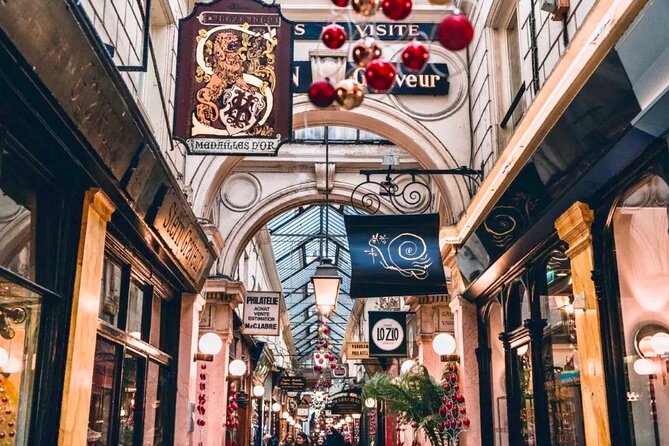
Paris has a talent for hiding beauty in plain sight. This Secret Covered Passages Tour strings together that magic in a tight 1.5 hour loop. You walk from one historic arcade to the next, and your guide fills in the stories behind the glass roofs, old shopfronts, and oddball food stops.
I especially love the small-group pace and the way the tour feels laidback, not rushed. I also like that you get real “stop and look” time in places like Passage Verdeau and Passage Jouffroy, where details matter.
One consideration: timing can affect what you can see inside the passages. There can be days when some shops are closed, so build in flexibility on your schedule.
In This Review
- Key things to know before you go
- Why Paris covered passages feel like a side door to the city
- Tour price, timing, and what $33.29 really buys you
- Meeting near Cadet, ending by the Louvre, and planning your route
- A la Mère de Famille: the oldest chocolate shop start
- Passage Verdeau and its fishbone-shaped glass roof
- Passage Jouffroy: iron and glass, plus a toy shop story
- Passage des Panoramas: Paris’ first, plus stamps and a sushi burger
- Bouillon Chartier’s Belle Époque room and stock trading history
- Galerie Colbert: when the arcade is culture, not shops
- Galerie Vivienne: Paris elite strolling through a designed world
- Palais-Royal: royal history that still shapes the street
- The guide matters: Alexandra’s history, Niko’s timing, and why stories stick
- The one drawback to plan for, and how to protect your time
- Who should book this Secret Covered Passages Tour
- Should you book this covered passages tour?
- FAQ
- How long is the Secret Covered Passages Tour in Paris?
- What is the price per person?
- What language is the tour offered in?
- Are admission tickets included for the stops?
- What is the group size limit?
- Where does the tour start and end?
- Do I get a mobile ticket?
- Can I cancel for a full refund?
- Are service animals allowed?
Key things to know before you go
- Small group, up to 12 people, so you can actually hear the guide and ask questions.
- Free admission tickets at key stops, so you spend on snacks and souvenirs instead of entry fees.
- Arcade highlights include Passage Verdeau, Passage Jouffroy, and the older Passage des Panoramas.
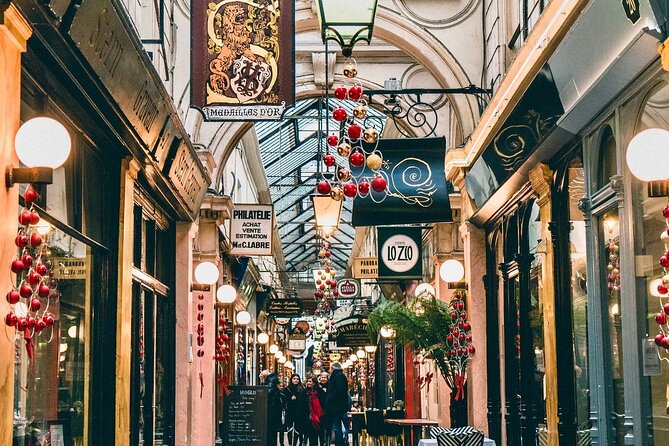
- Shop and photo friendly: these places were built for strolling, window-gazing, and architecture spotting.
- A history-forward guide shares stories tied to specific shops, like a famous early toy shop in Passage Jouffroy.
- Ends near the Louvre, which is handy if you plan to keep exploring after the tour.
More of the covered passages:
- Paris: Covered Passages Walking Tour
★ 4.6 · 128 reviews - Paris Covered Passages Walking Tour plus Seine Cruise Option
★ 5.0 · 118 reviews - Discover Secret Passages in Paris
★ 4.7 · 26 reviews - Covered passages: secrets, luxury and modernity
★ 5.0 · 11 reviews
Why Paris covered passages feel like a side door to the city
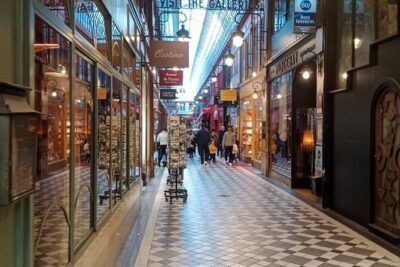
Covered passages in Paris are a very specific kind of street. They are narrow, glass-roofed, and designed for strolling, shopping, and lingering. Instead of seeing the city from big boulevards, you get a closer view of textures, signage, ironwork, and shop windows.
What makes this tour worth your time is the focus. You do not just walk past pretty corridors, you get a guide who points out what is historically important and what is fun to spot. That means you leave with names, dates, and a better sense of why these arcades became such magnets for everyday Parisian life.
And yes, there is a practical upside. These passages give you a natural route that is calmer than the open streets, especially if the weather turns. Even on a bright day, the covered light makes the architecture easier to photograph.
Tour price, timing, and what $33.29 really buys you
The price is $33.29 per person for about 1 hour 30 minutes. That sounds simple, but the value is the combination: a guided route plus free entry at multiple stops. When you compare it to paying for multiple attractions or spending your own time hunting down locations, the structure makes it efficient.
This is also not a giant bus tour. It caps at 12 travelers, and that matters for two reasons. First, you can hear the guide. Second, the pacing feels relaxed enough that you can actually enjoy the shops and details, not just rush through photo stops.
One more thing to know: this tour is typically booked about 67 days in advance on average. If you are traveling in a popular week or want a specific day, lock it in early so you are not left with awkward timing.
Meeting near Cadet, ending by the Louvre, and planning your route
You start at Cadet 75009 and finish at the Louvre Museum 75001. That end point is convenient because it drops you near a major transportation hub, and you can keep going with museums, cafés, or a stroll through the central area.
Because the meeting area is described as near public transportation, you usually can connect easily from multiple lines. Still, I suggest you check your exact start point on the map the day before. “Cadet” can cover a couple of nearby streets, and arriving 10 minutes early saves stress.
Also plan your shoes. You will be walking through multiple covered galleries, which is not extreme, but it adds up. If you want to photograph, wear something comfortable because you will likely stop often.
A la Mère de Famille: the oldest chocolate shop start
Your tour opens inside A la Mère de Famille, a chocolate shop with roots in 1761. The building is protected, so you are not just buying sweets, you are stepping into a piece of Paris retail history.
The ticket here is free, so your money stays for the important part: chocolate. This is one of those stops where the tour makes sense even if you are not a big “food tour” person. It sets the tone early, a classic Paris brand, then you move from shop history into arcade history.
Practical tip: if you plan to buy chocolate as a gift, ask about packaging needs. Covered passages are great for browsing, but you will still want to carry your purchases comfortably for the rest of the walk.
If this one is booked out, Paris has these too:
- Paris: 1-Hour Seine Cruise departing from the Eiffel Tower★ 4.4 · 77,472 reviews
- Disneyland® Paris 1-Day Ticket★ 4.6 · 49,412 reviews
- Paris: Versailles Palace and Gardens Full Access Ticket★ 4.6 · 41,579 reviews
- Paris: Arc de Triomphe Rooftop Tickets★ 4.6 · 34,264 reviews
Passage Verdeau and its fishbone-shaped glass roof
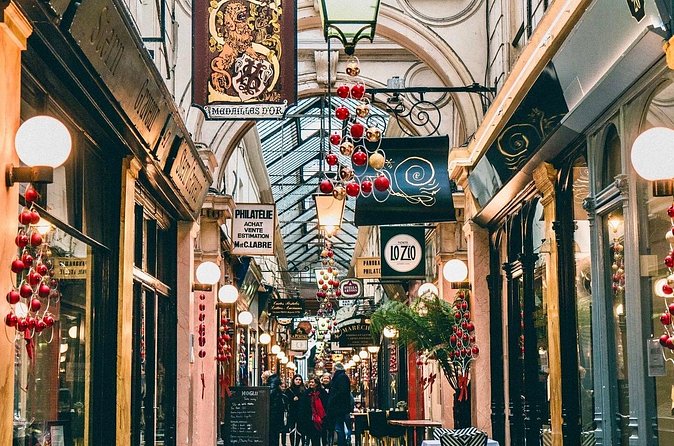
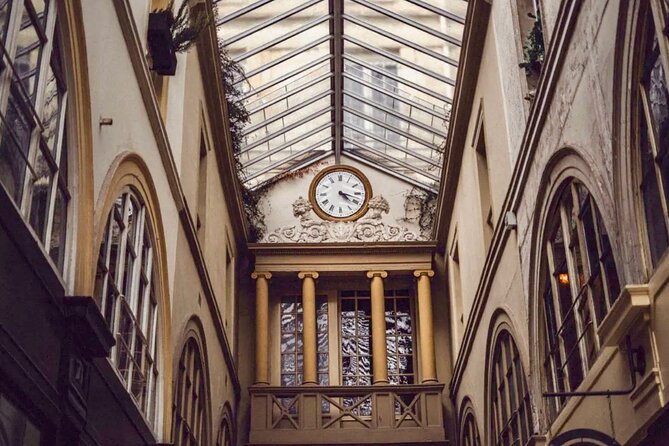
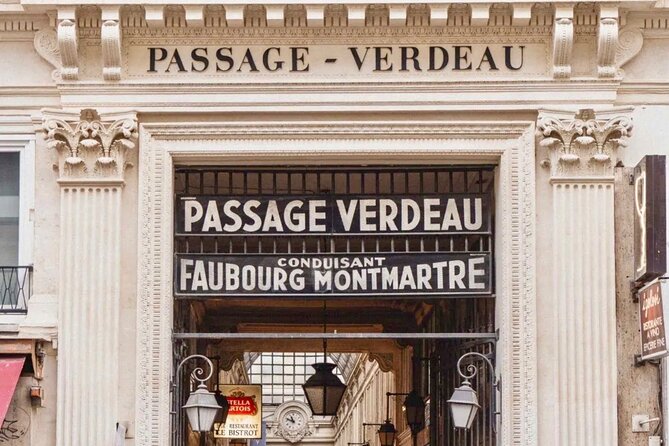
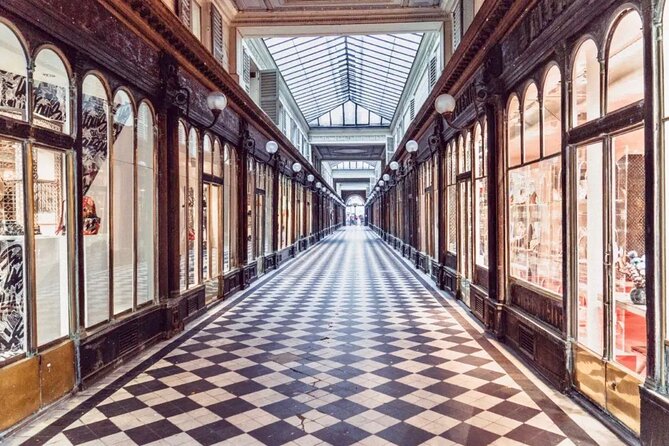
Next you hit Passage Verdeau, named after Jean-Baptiste-Ossian Verdeau. It opened in 1846 as an extension connected to Passage des Panoramas and Passage Jouffroy. This passage is famous for its high, fishbone-shaped glass roof, a design you really notice once you are inside it.
This is a strong stop for photography. The roof structure creates repeating lines that guide your eye deeper into the passage. Even if you are not a “camera person,” you will probably pause just to take in the light and the symmetry.
It also works for shoppers because you get more than one kind of browsing. A few steps away, you can stop at Ausmane, an elegant perfume house founded by Choukk Ausmane. Then there is Keopi, where French and Korean ideas show up in the café and gourmet offerings. That mix feels very modern inside a very old setting.
Passage Jouffroy: iron and glass, plus a toy shop story
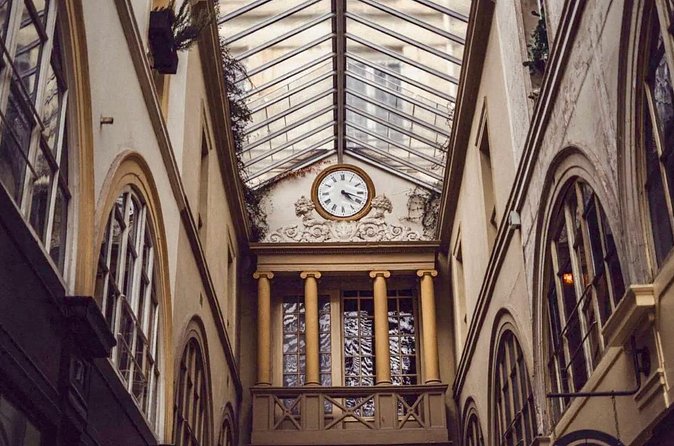
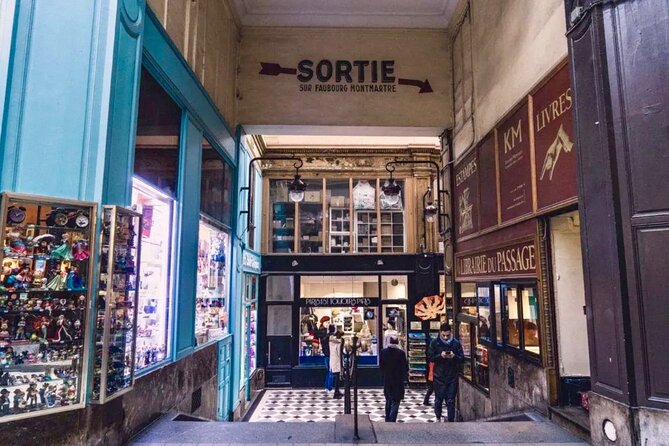
Passage Jouffroy is where the tour leans into architecture and themed history at the same time. It dates to 1847, and it is described as the first built entirely with iron and glass. If you like seeing how engineering supports beauty, this is a great place to slow down.
It is also adjacent to Musée Grévin, so the area has a built-in “Paris entertainment” vibe. The passage itself was renovated in 1987, and the old details still show through.
One of the most memorable storytelling elements here is the Pain d’Épices, and especially the idea of a very first toy shop in Paris dating to 1849. Even if you do not buy anything, hearing why those shops existed helps you read the space differently, like it is not random retail. It is designed to attract families and curious passersby.
After the toy-shop story, I like that you can switch moods to adult style. Opposite this children-focused area, you can find Galerie Fayet, described as the last French manufacturer of high-quality walking sticks. It is retro elegance in a small, practical form, and it is the kind of shop you would miss if you were just speed-walking.
Passage des Panoramas: Paris’ first, plus stamps and a sushi burger
Passage des Panoramas is built in 1799 by Jean-Louis Girard, and it is considered the first covered passage in Paris. It is listed as protected in 1974, which helps explain why it has kept so much of its “this place matters” feeling.
You also get variety here. The passage includes eight stamp shops, which is oddly charming. If you collect anything, you might find something you did not know you were looking for.
There is also Caffe Stern, described as an Italian restaurant since 2014, converted from a former 19th-century engraving workshop. That’s a nice detail because it shows how Paris reuses space. A place built for one kind of craft becomes another kind of experience.
And then there is the oddball food stop: Kimochi’s sushi burger, described as the only one in France. Whether you try it or just enjoy spotting it, it gives the tour a playful edge. This is not a museum route, it is a living shopping corridor.
Bouillon Chartier’s Belle Époque room and stock trading history
Between passages, you also get a historical stop connected to Bouillon Chartier Grands Boulevards. The Belle Époque dining room includes an imposing painting by Germond, and it has been enthroned since 1929. The room is listed as a historical monument, so this is the kind of detail your guide can point out quickly, then move on without turning it into a long detour.
Your guide also ties in street-level financial history. The tour notes that stock trading happened in different Paris spots, including rue Quincampoix, rue Vivienne near Palais-Royal, and the back of Opéra Garnier. The practical value here is that it gives you a mental map. Instead of seeing these areas as only “scenery,” you start to understand what roles they played.
This is also where a confident guide helps most. The best tours do not just list facts, they connect them. Here, you connect commerce, shopping, and everyday life.
Galerie Colbert: when the arcade is culture, not shops
Galerie Colbert brings a quieter contrast. It was built in 1823 and is located near its rival, Galerie Vivienne. This passage is property of the National Library, and it is described as a gallery with no shops.
That sounds restrictive until you experience it. The lack of storefront chaos means you notice the architecture and the purpose behind the space. It also houses the National Institute of Art History. So if you like arts and research vibes, this part gives you a different texture from the shopping-heavy stops.
Admission here is also free, which is a nice bonus. You are not paying extra just to walk through a calmer section of the arcade network.
Galerie Vivienne: Paris elite strolling through a designed world
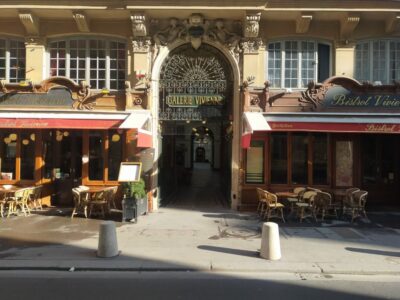
Galerie Vivienne starts with a business-and-beauty mission. It traces back to Maître MARCHOUX, president of the Chamber of Notaries, who wanted to create the most beautiful and attractive gallery in Paris. The idea was a place where the Parisian elite could stroll and have fun.
That gives you a way to read what you see. When you look at the design and the flow of the arcade, it starts to feel like a planned social space, not just a corridor. You are seeing the physical shape of status and leisure.
This stop pairs well with the earlier passages because you can compare how each arcade “markets” itself. Some are about commerce and window displays, while this one feels more like a refined promenade.
Palais-Royal: royal history that still shapes the street
The tour ends at Palais-Royal, which has deep ties to French royalty. The Palais-Royal became the property of the Orleans family, the youngest branch of the Kingdom of France, in February 1692, when Louis XIV offered it to his brother, Monsieur. The palace garden was then open to the city.
That detail matters because it helps you understand why the place feels public even when it is tied to power. It is one of those Paris locations where layers pile up: royal decisions, then daily movement, then later tourism.
I like this finish because it is a change in pace. After glass-roof arcades and shopfront stories, the open palace setting gives you a breather. It is also a smart landing spot since you end near major sights and transport.
The guide matters: Alexandra’s history, Niko’s timing, and why stories stick
The tour experience is strongly guided by the person leading it. In particular, Alexandra has been highlighted for giving excellent and insightful history and for introducing hidden parts of Paris. Niko has also been praised as a great guide, even when timing was less than ideal due to closures around holidays.
Why does this matter? Because the passages are full of details that can look random if you are on your own. A good guide turns those details into a story you can remember. Here, that includes specifics like the early toy shop timing, the logic behind iron-and-glass construction, and the dates tied to opening and renovation.
If you care about history but you do not want a lecture, this format tends to work. You stop, you look, you learn, then you move on before it becomes too heavy.
The one drawback to plan for, and how to protect your time
The main potential snag is that some shops and passage areas can be closed on certain days, especially around holidays. The result is you may still enjoy the architecture, but some of the “shop moments” might be limited.
To handle that, I recommend a flexible mindset. If you go expecting perfect access to every storefront every time, you might feel disappointed. If you go expecting a guided route through historic covered spaces with great photo opportunities, you will be fine even when one stop is quiet.
Also, check your day-of schedule. Your tour is about 1 hour 30 minutes, so you want your other plans not to rely on this timing. If you pair it with lunch or a museum visit, keep a buffer so you are not rushing.
Who should book this Secret Covered Passages Tour
This is a great match if you are:
- Shopping-minded, but you prefer elegant browsing over crowded malls.
- Photographers, especially people who like architectural lines, glass roofs, and repeating patterns.
- History buffs who want dates and stories tied to real storefronts.
- Couples and solo travelers who want a structured route without a strict museum feel.
It can also fit families and most travelers since it is described as accessible for most people and keeps the day moving at a relaxed pace. Service animals are allowed, which is a helpful detail if that applies to your group.
If you only want one or two famous sites and you do not care about arcades, you might find it too “special interest.” But if you like the idea of Paris as a maze of designer passages, this tour clicks.
Should you book this covered passages tour?
I think you should book it if you want a high-value walk with guidance. For the money, you get free entry at multiple stops, a small-group setting, and a guide who can explain why these arcades became central to Paris life. Ending near the Louvre also makes it easy to stitch the tour into a larger day.
Skip it or adjust expectations if you are visiting during a peak holiday week and you hate the idea of storefronts being closed. You can still enjoy the architecture and the overall route, but the retail experience may be less active.
If you are deciding between doing this on your own and taking the tour, I would pick the tour. Not because you cannot find these places, but because the stories give you a reason to care while you are standing in the spaces.
FAQ
How long is the Secret Covered Passages Tour in Paris?
The tour lasts about 1 hour 30 minutes.
What is the price per person?
The price is $33.29 per person.
What language is the tour offered in?
The tour is offered in English.
Are admission tickets included for the stops?
Admission tickets are listed as free for the stops included in the itinerary.
What is the group size limit?
The tour has a maximum of 12 travelers.
Where does the tour start and end?
It starts at Cadet 75009 Paris and ends at the Louvre Museum 75001 Paris.
Do I get a mobile ticket?
Yes, the tour includes a mobile ticket.
Can I cancel for a full refund?
Yes. You can cancel up to 24 hours in advance for a full refund.
Are service animals allowed?
Service animals are allowed.
Newest write-ups from Paris



Covered Passage Walks, compared.
Paris Covered Passages Walking Tour plus Seine Cruise Option
Read our review →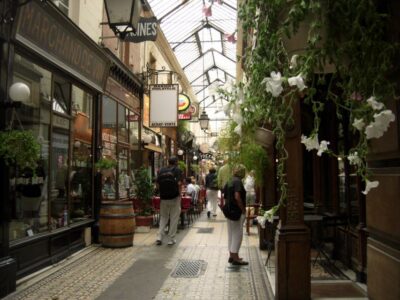
Covered passages: secrets, luxury and modernity
Read our review →
Paris Covered Passages Small-Group Walking Tour with Wine Tasting
Read our review →
Paris Covered Passages Treasure Hunt — Self-guided Game
Read our review →Treasure Hunt in Paris: “Under the Covered Passages”
Read our review →Browse the lists this tour appears in