
Reviewed · COVERED PASSAGE WALKS
The covered passages of Paris
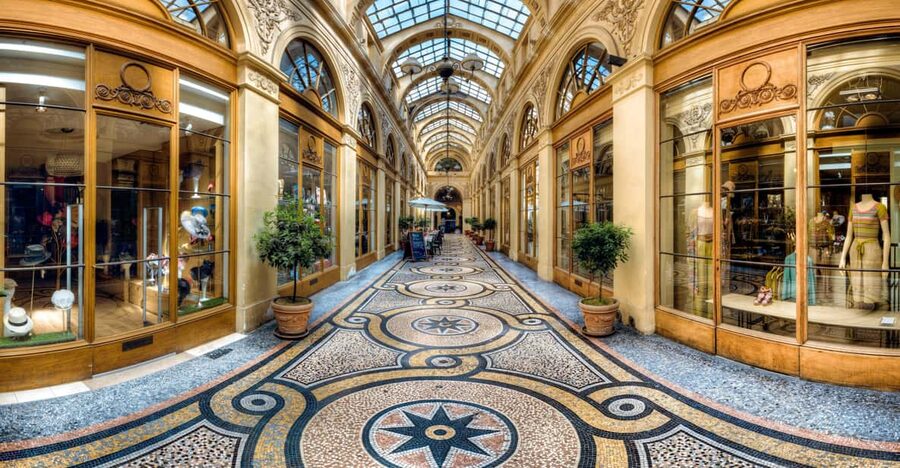
Paris’s covered passages feel like a secret deal with time. In 90 minutes, you’ll move from Palais Royal into a chain of passages couverts, where glass roofs, shop windows, and old-style strolling keep pulling you along.
What I love most is how the route mixes atmosphere with specifics you can see right away. I also like that the guide connects each stop to the bigger story of how these places worked, not just what they look like. If you get a guide like Loïc, named in one French review as especially friendly and well-informed, you’ll probably leave with extra anecdotes in your head.
One heads-up: the visit includes time around Palais Royal and the surrounding streets, so if you want wall-to-wall details inside the galleries only, you may find the pacing a bit heavy on general history outside the passages.
In This Review
- Key things to know before you go
- Entering Place Colette by Comédie-Française
- Palais Royal to Galerie Vero Dodat: art bookshops in a corridor
- Galerie Vivienne: the glass roof moment you’ll remember
- Galerie Colbert: where exhibitions keep the passage alive
- Passage des Panoramas and the pull toward the Grands Boulevards
- Why only 30 roofed passages remain (and why that matters)
- Pacing, language, and weather: how to plan so you enjoy it
- Price and value for $17 in 90 minutes
- Should you book the Covered Passages of Paris tour?
- FAQ
- How long is the guided tour?
- What language is the tour guide using?
- Where do I meet the group?
- How much does the tour cost?
- What parts of Paris will the tour cover?
- Is transportation or a transfer included?
- What should I look for at Galerie Vivienne?
- Are all galleries always open?
- What happens if the weather is bad?
- Is it refundable if I cancel?
Key things to know before you go
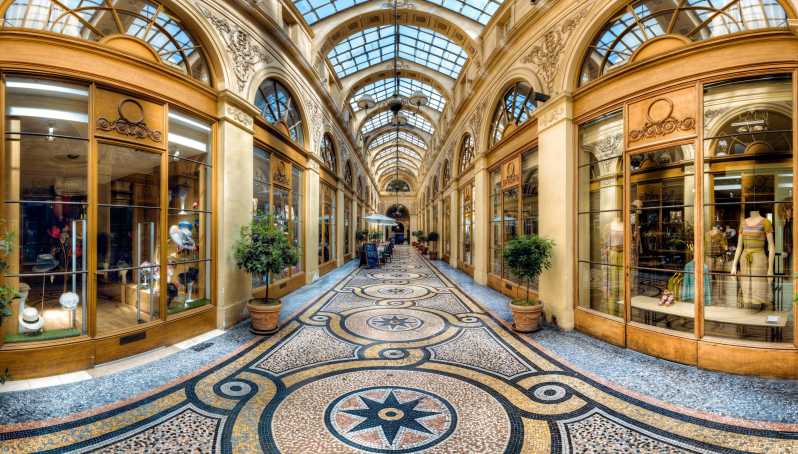
- Galerie Vivienne’s Italian mosaic floor and glass roof are the big visual payoff
- Galerie Vero Dodat is known for art bookshops, so book lovers have fun
- Galerie Colbert is tied to regular exhibitions, so it feels active, not frozen
- Passage des Panoramas earns points with philatelists and stamp-focused visitors
- You’re walking through the last survivors of an era, with 30 roofed passages remaining from about 140
More of the covered passages:
- Paris: Covered Passages Walking Tour
★ 4.6 · 128 reviews - Paris Covered Passages Walking Tour plus Seine Cruise Option
★ 5.0 · 118 reviews - Discover Secret Passages in Paris
★ 4.7 · 26 reviews - Covered passages: secrets, luxury and modernity
★ 5.0 · 11 reviews
Entering Place Colette by Comédie-Française
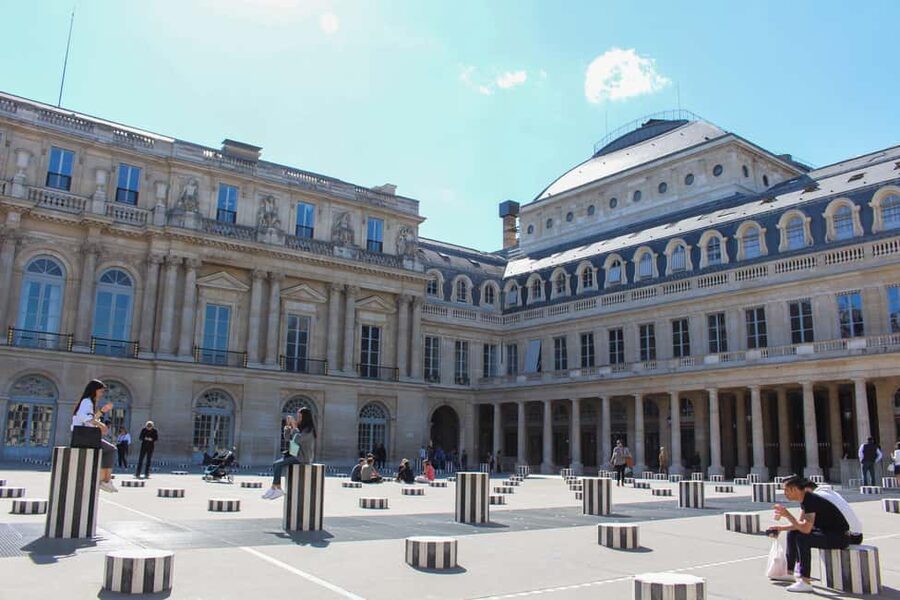
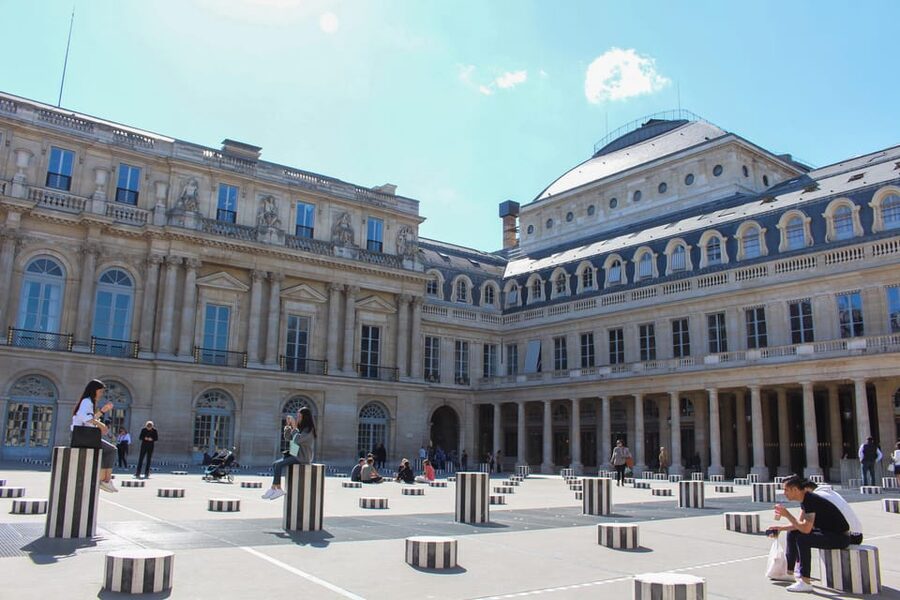
Your tour starts at Place Colette, right in front of the Comédie-Française, near the metro Palais Royal – Musée du Louvre. Look for the nearby public art made of glass beads by Jean-Michel Othoniel, it’s an easy landmark when you’re trying not to get turned around in central Paris.
This matters because the meeting point puts you close to the whole Palais Royal vibe, which is part of why the day works. You’re not just “hopping” between interiors, you’re getting the logic of how the passages connect back to main streets and grand boulevards.
The tour runs 90 minutes at a price of $17 per person, so think of it as a focused guided stroll. There’s no transfer included, so you will rely on the metro and your own feet for getting there and back.
Palais Royal to Galerie Vero Dodat: art bookshops in a corridor
From the Palais Royal area, your guide walks you toward Galerie Vero Dodat, a passage known for beautiful art bookshops. Even if you don’t buy anything, this is the kind of stop where you can pause and read covers, leaf through titles, and feel how these covered spaces were built for browsing and lingering.
What I like here is the contrast. You start with open Paris street energy, then step into a narrower world where the pace slows down almost instantly. It’s a good warm-up, because it tells you what to look for in the passages: lighting, shopfronts, and the way movement funnels you deeper.
The one practical thing to remember is that you’re in a walking tour format, so comfy shoes help. Some parts are smooth and easy, but you’re still doing a proper stroll between spots rather than a quick photo stop.
Galerie Vivienne: the glass roof moment you’ll remember
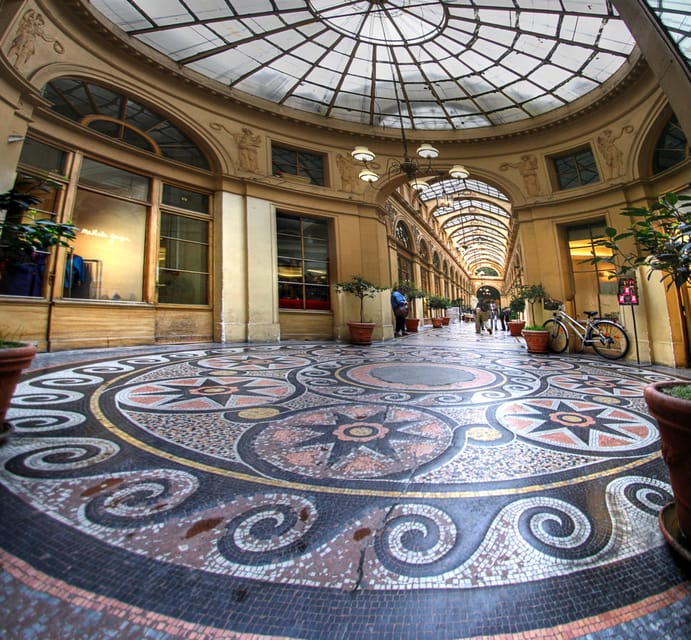
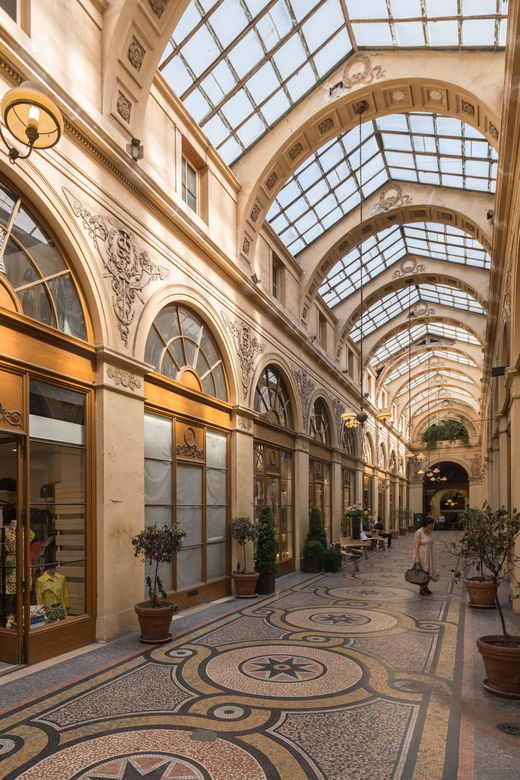
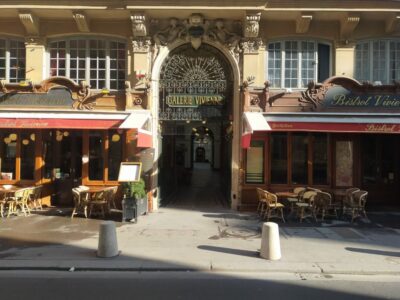
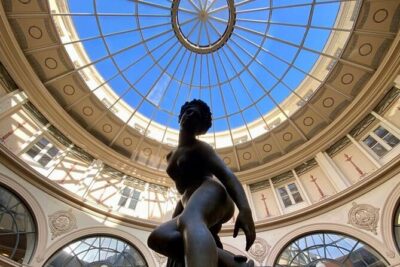
Then comes the star, Galerie Vivienne. This passage is known for a striking combination of Italian mosaics on the floor and a glass roof overhead, and it shows why visitors keep returning even when they’ve already “seen Paris.”
Here’s what you’ll notice fast. The mosaic floor gives you texture underfoot, and the glass roof turns the space into a kind of indoor theater for everyday life. Shops line the sides, but the roof makes the whole place feel taller and brighter than you’d expect for a covered corridor.
This is also where the time-warp feeling becomes real. These passages were designed so you could move from place to place without being fully exposed to street bustle. So you’re not just admiring architecture, you’re experiencing how people once used these spaces for a daily rhythm of wandering, shopping, and showing themselves off.
If you’re the type who likes details, don’t rush. Look down at the mosaics for a second, then look up at the roof, and you’ll understand why this stop is the visual anchor of the route.
Galerie Colbert: where exhibitions keep the passage alive
After Vivienne, the walk continues to Galerie Colbert, a passage where exhibitions are regularly organized. That small detail changes how the passage feels. Instead of feeling like a preserved set, it can feel like a living indoor venue with something fresh going on at different times.
Even without a promised “special exhibition” stop, you’ll still benefit from having a guide here. A guide can point out what makes the space suited to displays and how the passage’s design works for visitors moving through. In other words, you’re not only seeing a pretty corridor, you’re learning why this kind of architecture became a practical stage for arts and culture.
For me, this is the value of doing the tour with interpretation in French. The route nudges you to watch the passage as a system, not just as scenery. You’ll come out with a better sense of how covered spaces supported urban life in 19th-century Paris and how they keep fitting into modern strolling.
If this one is booked out, Paris has these too:
- Paris: 1-Hour Seine Cruise departing from the Eiffel Tower★ 4.4 · 77,472 reviews
- Disneyland® Paris 1-Day Ticket★ 4.6 · 49,412 reviews
- Paris: Versailles Palace and Gardens Full Access Ticket★ 4.6 · 41,579 reviews
- Paris: Arc de Triomphe Rooftop Tickets★ 4.6 · 34,264 reviews
Passage des Panoramas and the pull toward the Grands Boulevards
From Galerie Colbert, you head onward to Passage des Panoramas, a passage that’s especially appreciated by philatelists. That gives you a fun target if you collect stamps or just enjoy niche corners of culture, because it’s a reminder that passages attracted all kinds of specialized shops, not only mainstream retail.
Passage des Panoramas then leads toward the Grands Boulevards, the boulevard stretch made famous by Yves Montand songs. This connection is more than trivia. It helps you understand what the passages were doing in the larger city layout: shortcuts and sheltered access routes between major public streets, while also supporting the act of strolling itself.
So you end the walk with your sense of place sharpened. You’re not only leaving the passages, you’re linking them back to the Paris people recognized in music, nightlife, and boulevard culture. That’s the kind of mental map that pays off later when you explore on your own.
Why only 30 roofed passages remain (and why that matters)
A big part of the experience is the bigger picture. The covered passages were extremely popular in the 19th century, and Paris once had around 140 such roofed passageways. Today, only 30 remain, and walking through them feels like stepping into a curated pocket of the past.
What I find useful, and you’ll likely feel too, is how the guide frames the “time warp” effect. These passages didn’t just shelter shoppers from weather. They were engineered for movement that felt smoother, calmer, and more continuous than open streets. You got quiet compared to the open boulevards, but you didn’t lose the city’s momentum.
You’ll also see the modern layer. Today you can find shops, and you’ll spot cafés too. The spaces keep that old strolling-and-parading energy, even if the reason you’re here is different. Instead of a social ritual, you’re doing a walking tour and browsing. The effect is still the same: you get to pause, look around, and feel like you’re in an alternate Paris for a while.
And honestly, that’s the best reason to book. Paris has plenty of grand sights. This is a chance to experience a smaller scale that still feels undeniably Parisian.
Pacing, language, and weather: how to plan so you enjoy it
This tour is guided in French only, so if French is not your strong suit, you’ll want to be comfortable with listening and picking up key words. The upside is that the guide is sharing story and context, not just reading placards. You’ll likely enjoy it more if you can follow the narration, even at a basic level.
Pacing is another planning factor. One review flagged that the tour can include a fair amount of discussion outside the passages, especially around Palais Royal, which might feel like less time inside the galleries than you expected. If that matters to you, go in ready to enjoy the route as a whole, not just the interiors.
Timing can also depend on the calendar. Some galleries are closed on Sundays and public holidays, so you may want to pick a weekday if you want maximum passage access. And if weather turns rough, Cultival may postpone the visit, so keep some flexibility.
Lastly, wear shoes you trust. You’re on a walking route with multiple stops, and the whole point is that you’re moving through the passages, not just staring through a doorway.
Price and value for $17 in 90 minutes
At $17 per person for 90 minutes, you’re paying for a guided walking experience that gets you inside several of the most famous covered passages in central Paris. There’s no transfer included, so the cost is really about the guide and the structured route.
This is good value if you like practical guidance. Knowing which galleries matter, what to look for, and what stories connect them makes the passages far more than a pretty detour. You also get a clear sequence: Palais Royal area, Galerie Vero Dodat, Galerie Vivienne, Galerie Colbert, then Passage des Panoramas toward the Grands Boulevards.
It’s not the best deal if you only want independent browsing. If you’re the type who wants to wander freely with no narration, you might spend a similar amount on shopping snacks and create your own loop. But if you want interpretation and you like walking, $17 for 90 minutes of focused city storytelling is a strong setup.
Should you book the Covered Passages of Paris tour?
I’d book this if you want an easy, well-paced way to see multiple passages couverts in one go, with Galerie Vivienne as your visual highlight. It’s especially worth it if you care about bookshops, exhibitions, mosaics, and the smaller-scale Paris that isn’t just about major museums.
I’d skip or rethink it if you’re counting on the entire time being spent only inside the galleries. The tour includes street context near Palais Royal, and French-only narration means you’ll get the most out of it when you can follow the guide.
If you’re happy to put on good walking shoes and let a guide steer the story in French, this is one of those Paris experiences that feels specific, memorable, and surprisingly fun for 90 minutes.
FAQ
How long is the guided tour?
The tour lasts 90 minutes.
What language is the tour guide using?
The tour is guided in French only.
Where do I meet the group?
Meet at Place Colette, in front of the Comédie-Française, near the metro Palais Royal – Musée du Louvre. There is glass beads artwork by Jean-Michel Othoniel nearby.
How much does the tour cost?
The price is $17 per person.
What parts of Paris will the tour cover?
You’ll walk from the Palais Royal area through Galerie Vero Dodat, Galerie Vivienne, Galerie Colbert, and Passage des Panoramas, heading toward the Grands Boulevards.
Is transportation or a transfer included?
No, transfer is not included.
What should I look for at Galerie Vivienne?
Galerie Vivienne is known for Italian mosaic flooring and a glass roof.
Are all galleries always open?
No. Some galleries are closed on Sundays and public holidays.
What happens if the weather is bad?
Cultival may postpone the visit in case of bad weather.
Is it refundable if I cancel?
Yes. You can cancel up to 24 hours in advance for a full refund.
Newest write-ups from Paris



Covered Passage Walks, compared.
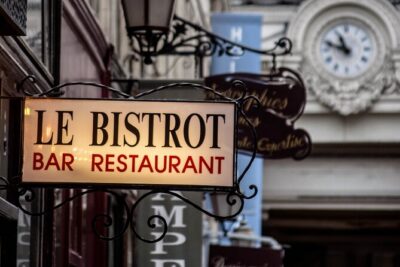
Paris Covered Passages Walking Tour plus Seine Cruise Option
Read our review →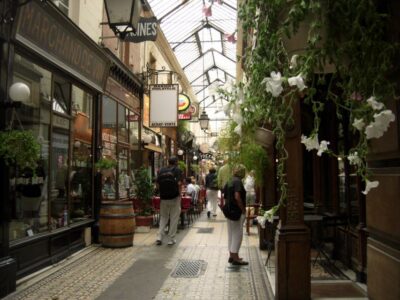
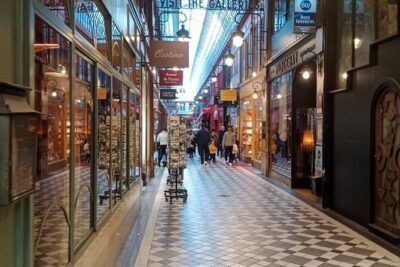
Covered passages: secrets, luxury and modernity
Read our review →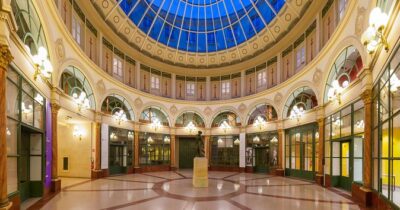
Paris Covered Passages Small-Group Walking Tour with Wine Tasting
Read our review →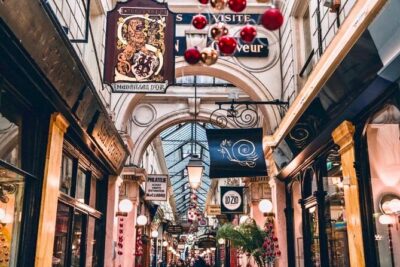
Paris Covered Passages Treasure Hunt — Self-guided Game
Read our review →Treasure Hunt in Paris: “Under the Covered Passages”
Read our review →Browse the lists this tour appears in