
Reviewed · COVERED PASSAGE WALKS
Paris Covered Passages Treasure Hunt — Self-guided Game
Paris’s covered passages are a cheat code for wandering. This self-guided treasure hunt turns them into a puzzle trail, with booklet-guided riddles that make you look up, slow down, and notice details you’d normally miss. I love how you move through classic arcades with old-shop charm at every stop, and I also like that the whole route is built for a smooth 1.5 to 2 hour walk. The one thing to watch is the built-in pacing, if you take long breaks you’ll eat into your time.
Because it’s self-guided, it’s not a sit-and-absorb kind of activity. You’re reading clues, checking architectural details, and following the route from one passage to the next, ending in the gardens at Palais Royal. You’ll be in English, with a mobile ticket and game booklet, and the route quietly encourages you to explore less obvious corners of central Paris.
One more practical note I like: Passage Colbert can be closed unexpectedly, but the game is designed so you can still complete your investigation. In other words, Paris will do Paris things, and the hunt still keeps going.
In This Review
- Key things to know before you start
- The treasure hunt setup: mobile ticket, booklet, and a real time limit
- Stop 1: Passage Verdeau, where the hunt begins under the glass roof
- Stop 2: Passage Jouffroy, mosaics and clue hunts in architectural details
- Stop 3: Passage des Panoramas, old cafés traces and Paris postal hints
- Stop 4: Galerie Vivienne, ornate ceilings where riddles feel artistic
- Stop 5: Galerie Colbert and the National Library dome, plus the closure workaround
- Stop 6: Jardin du Palais Royal, a calm finish after covered-passage clues
- Price and value: does $35.49 make sense for a 2-hour puzzle walk?
- How to pace yourself so you do not lose time
- Who this treasure hunt is best for
- Should you book the Paris Covered Passages Treasure Hunt?
- FAQ
- How long does the Paris Covered Passages Treasure Hunt take?
- Is this activity self-guided or does it include a tour guide?
- What language is the game available in?
- Where does the treasure hunt start and where does it end?
- Do I need a printed ticket or can I use my phone?
- What’s included in the price?
- What happens if Passage Colbert is closed?
- How many stops are on the route?
- Is there a time limit if I take breaks?
- Is the experience near public transportation and are service animals allowed?
Key things to know before you start
- It’s a timed self-guided game, average 2 hours, auto-ending after 3 hours
- Six covered passages and arcades, from Passage Verdeau to Jardin du Palais Royal
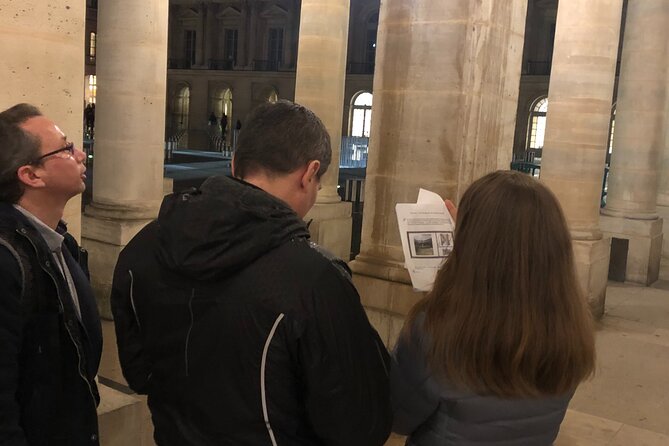
- Clues are architecture-first, with hints that can be high above or hidden in shopfront details
- English mobile ticket plus game booklet, no live tour guide needed
- Passage Colbert may close, but it won’t stop you from finishing the riddles
More of the covered passages:
- Paris: Covered Passages Walking Tour
★ 4.6 · 128 reviews - Paris Covered Passages Walking Tour plus Seine Cruise Option
★ 5.0 · 118 reviews - Discover Secret Passages in Paris
★ 4.7 · 26 reviews - Covered passages: secrets, luxury and modernity
★ 5.0 · 11 reviews
The treasure hunt setup: mobile ticket, booklet, and a real time limit
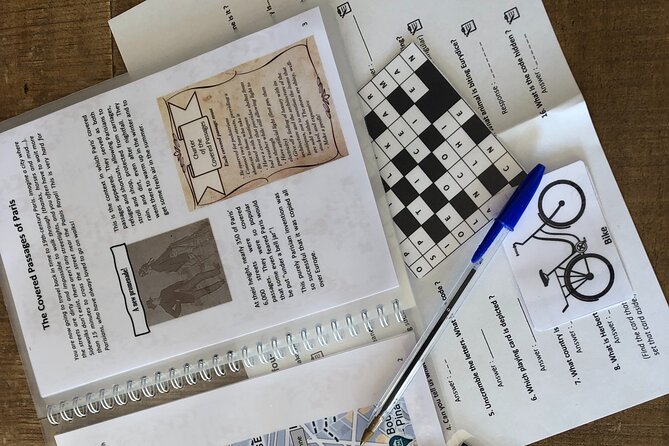
This experience is designed to be simple. You buy in advance, you get a mobile ticket, and you use a game booklet to guide your route and solve the clues as you go. There’s no tour guide walking beside you, so the “work” is reading, observing, and moving from stop to stop on your own.
The duration is listed as about 1 hour 30 minutes to 2 hours, which feels about right for a walking pace that includes occasional stops to think. The game automatically ends after 3 hours, regardless of where you are on the route. That time limit matters more than people expect. If you pause for a long coffee, browse slowly for souvenirs, or get distracted by every doorway, you can end up with less time to finish.
Group size is capped at 20, but since it’s self-guided, the cap mainly means the game is likely operated in a controlled, low-chaos way rather than a crowd-control situation. It’s also near public transportation, so you can slot it into a day that’s already packed with museums or neighborhoods.
If you’re the type who enjoys a light challenge, this is perfect. If you’re the type who wants everything handed to you, this may feel like homework.
Stop 1: Passage Verdeau, where the hunt begins under the glass roof
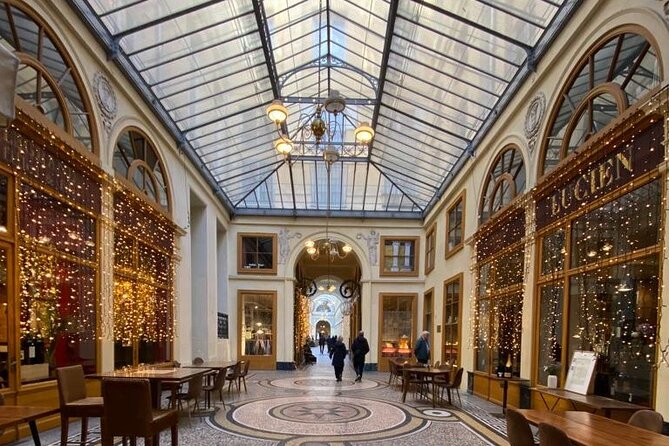
Your adventure starts at Passage Verdeau (Pass. Verdeau, 75009 Paris). The key vibe here is immediate and very Paris. Under the glass roof, you begin with your game booklet and your first riddles, surrounded by antique bookshops and vintage stores.
This is the stage where the game teaches you how to play without saying it outright. You’re encouraged to look closely at shop windows and hidden details, which is great because the covered passages reward slow attention. If you’re expecting wide open views and big monuments, you might be surprised. But that’s the point. In Paris, the good stuff is often at eye level, up high, or tucked into the corners.
Practical tip: start with a quick scan, then read the first riddle carefully. Many clues in covered passages rely on noticing small features rather than finding some obvious sign.
Time here is listed as about 15 minutes, which gives you just enough runway to get confident with the booklet before moving on.
Stop 2: Passage Jouffroy, mosaics and clue hunts in architectural details
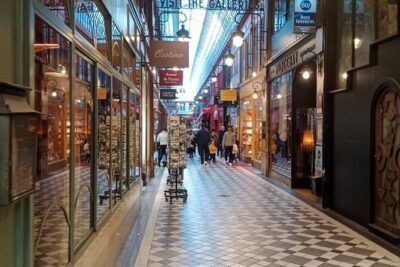
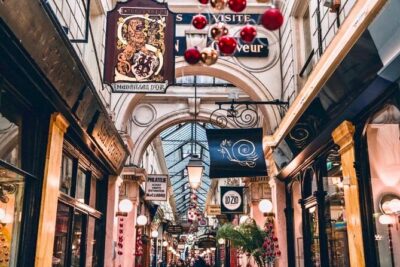
Next you cross the street to Passage Jouffroy. This passage feels like old Paris with modern life mixed in, which is exactly what makes these places so interesting. The game leans on visual details here: old-fashioned signs and mosaic floors, plus clues hidden high above or tucked into architectural elements.
One reason I like this stop is that it trains your eyes. You start to recognize the difference between “pretty decoration” and “possible clue location.” If you’re traveling with someone who rushes, Passage Jouffroy is a good place to slow them down with gentle, non-competitive puzzle work.
You’re given about 20 minutes for this section. That feels right because you need time to wander the length of the passage, then circle back to check anything you missed.
Stop 3: Passage des Panoramas, old cafés traces and Paris postal hints
Passage des Panoramas is one of the oldest covered passages in Paris, and the atmosphere tends to be more energetic than some of the quieter arcades. The game uses that energy well. Between riddles, you’ll notice restaurant life and the kind of historic shopfronts that keep these places grounded in everyday use.
The puzzle story here includes some specific thematic discoveries. You’ll find traces of the first cafés and the earliest Parisian postal system, as you work through the clue breaks along the way. Even if you don’t remember every historical fact later, it gives context to what you’re seeing, and that makes the walking more satisfying.
You’re scheduled for about 20 minutes at this stop. If you want a smoother experience, keep your thinking time reasonable and let the passage do the scenery work.
Other puzzle hunts around Paris:
- Who Killed Victor ? Escape Game at Père Lachaise Cemetery★ 4.8 · 258 reviews
- Escape Hunt Paris, Escape Game★ 4.5 · 122 reviews
- Romantic Montmartre: Paris Lost Lovers Exploration Game and Tour★ 4.5 · 107 reviews
- Louvre Museum Guided Family Treasure Hunt★ 5.0 · 78 reviews
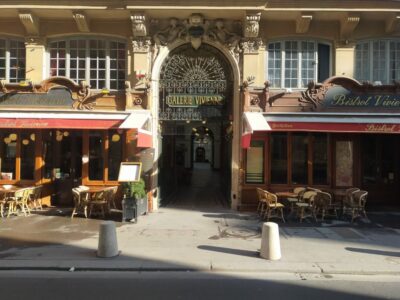
Stop 4: Galerie Vivienne, ornate ceilings where riddles feel artistic
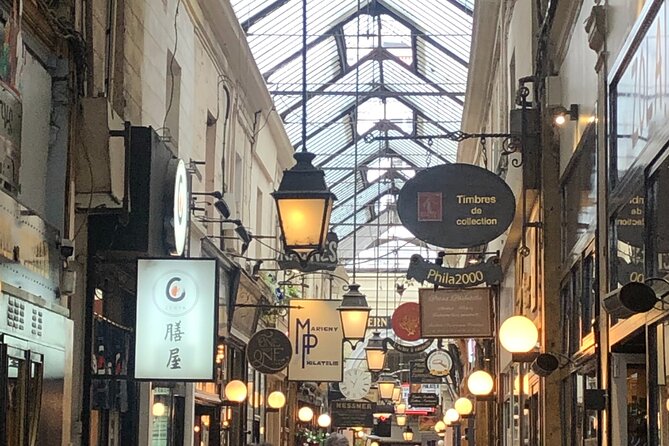
After Passage des Panoramas, the route leads you to Galerie Vivienne. This is where the game shifts tone slightly, becoming more about artful space than just detective work. Under ornate ceilings and golden mosaics, the riddles take on an artistic touch.
The booklet also provides refined context about the gallery’s past, including that it was frequented by writers, designers, and booksellers. That detail matters because it explains why places like this have an almost literary feel. The space isn’t just decorative. It’s functional for people who spent time browsing, reading, and thinking.
Time allocation is about 20 minutes here, which is ideal. You need enough time to look up, notice the craftsmanship, solve a couple of clues, and still enjoy the beauty without feeling like you’re rushing through a photo stop.
If you’re a structure-and-details traveler, Galerie Vivienne is one of your best payoff moments on the route.
Stop 5: Galerie Colbert and the National Library dome, plus the closure workaround
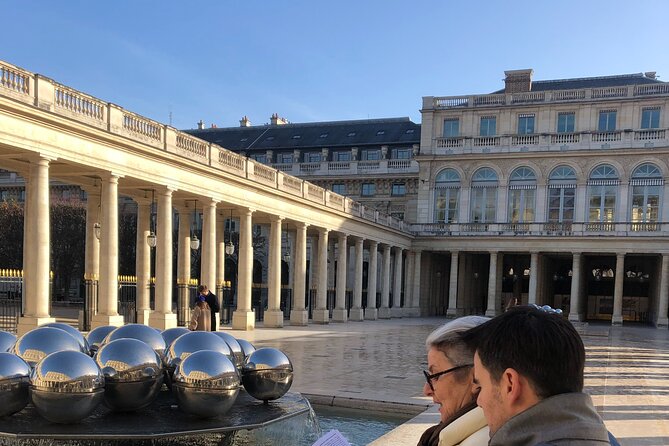
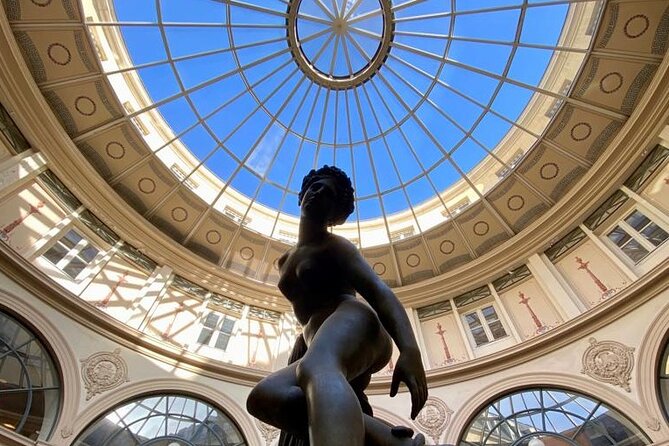
Now for Galerie Colbert, adjacent to Galerie Vivienne. This is where you’ll see grand columns and a majestic glass dome. The passage is connected to the National Library, which adds another layer to the mood. It feels formal, almost ceremonial, even while remaining accessible as a passage you can simply walk through.
There’s one important consideration: Passage Colbert is sometimes closed without notice. The good news is that it won’t stop you from solving the riddles or completing your investigation. Practically, this means you should not panic if you arrive and the passage isn’t accessible. The game is built to adapt.
The time here is around 10 minutes. That’s short, but that makes sense since closures are possible and the game doesn’t want you stuck waiting. For your sanity, keep this one moving. Check your booklet, look for clues around your accessible route, and trust that you can still finish.
Stop 6: Jardin du Palais Royal, a calm finish after covered-passage clues
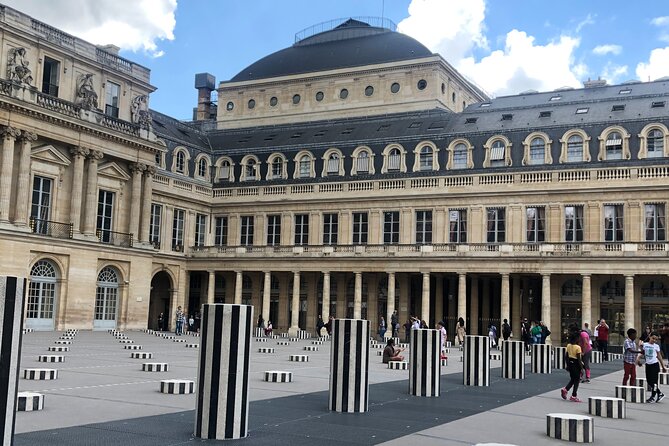
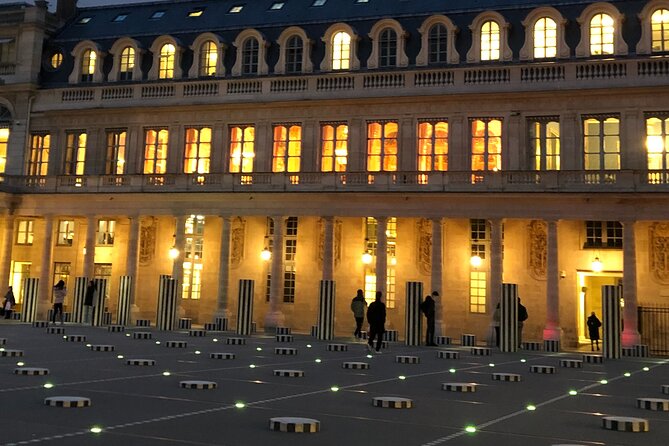
Your final leg ends outdoors at Jardin du Palais Royal (8 Rue de Montpensier, 75001). This is a smart way to end a puzzle walk. After being in enclosed covered spaces, you get open air and a calmer pace.
The game’s last riddle reveals the outcome of your investigation, giving you that satisfying close. The tone here is more poetic than detective dramatic. It’s the kind of ending where you can sit for a moment, catch your breath, and feel like you just got something out of your walking rather than simply walking.
You’re scheduled for about 15 minutes. Use it to reset, especially if you planned this as part of a larger day.
Price and value: does $35.49 make sense for a 2-hour puzzle walk?
At $35.49 per person, this is not a budget food crawl, but it also isn’t priced like a private guided tour. You’re paying for an English self-guided experience with a game booklet, a mobile ticket setup, and a route design that turns sightseeing into an activity.
Here’s how I think about the value:
- If you like walking and hate wasting time, the structured stops keep you moving efficiently through well-chosen Paris covered passages.
- If you enjoy puzzles, you’ll get repeated “payoffs” at each clue break, which makes the time feel fuller than a basic stroll.
- If you prefer a live guide to explain everything, you’re missing that layer because a tour guide is not included.
The group cap of 20 also suggests the experience is kept in a manageable flow. But since you’re self-guided, the biggest value factor is really whether you’ll enjoy the observational challenge more than you’d enjoy a narration-based tour.
For me, the price makes sense if you want something hands-on, and you’re okay with figuring things out on your own.
How to pace yourself so you do not lose time
You set your own speed, but you still have a time ceiling. The average investigation lasts about 2 hours and automatically ends after 3 hours. If you take breaks, it reduces the time available to complete the investigation.
So plan your day like this:
- Wear comfortable shoes. Covered passages are flat, but you will still walk more than you think.
- Bring a fully charged phone. You’ll have a mobile ticket, and you might use your map app to keep yourself oriented.
- When you feel stuck, switch from scanning the world to rereading the riddle. Many times the clue is there, but you’re looking for the wrong thing.
- Save the biggest browsing moments for after you finish, unless you’re confident you can maintain pace.
Also, since the clues can be high above, you should be willing to look up. That’s part of the fun, and it’s also how you avoid the frustration of missing obvious details.
Who this treasure hunt is best for
This experience is best for people who want Paris to feel interactive. If you love hands-on activities, enjoy architecture, and get a kick out of solving small mysteries, you’ll likely have a strong time.
It also suits couples and small groups who can collaborate without needing a mediator. Because you do not have a tour guide, the vibe is more “you and the city” than “listen and follow.”
It’s offered in English and is described as most travelers can participate. Service animals are allowed. If you’re sensitive to walking a bit on uneven shop-level surfaces, keep that in mind, but the route is mainly built around passages and a garden finish rather than steep sightseeing.
One more human note: the operation seems to care about player experience. In one welcome message, Marion is mentioned as being patient and welcoming, and that kind of attention tends to make the start of self-guided experiences smoother.
Should you book the Paris Covered Passages Treasure Hunt?
I’d book it if you want a low-pressure, self-guided activity that makes covered passages feel fresh. For $35.49, you’re getting a focused walking route, a clear English game format, and a chance to notice architecture like an amateur sleuth instead of a passive observer. The pacing works best if you keep breaks short and stay engaged with the riddles.
I would skip it if you hate puzzles, or if you strongly prefer a guide to explain history as you go. This is not a narration tour. It’s a game that uses the passages as the clues and the backdrop.
If you’re in Paris and you love the idea of solving something while wandering through Passage Verdeau, Galerie Vivienne, and the path toward Palais Royal, this is a fun way to see Paris differently without locking yourself into a rigid schedule.
FAQ
How long does the Paris Covered Passages Treasure Hunt take?
The investigation lasts about 1 hour 30 minutes to 2 hours on average, and it automatically ends after 3 hours wherever you are on the route.
Is this activity self-guided or does it include a tour guide?
It is self-guided. A tour guide is not included.
What language is the game available in?
The game is offered in English.
Where does the treasure hunt start and where does it end?
It starts at Passage Verdeau (Pass. Verdeau, 75009 Paris) and ends at Jardin du Palais Royal, 8 Rue de Montpensier, 75001 Paris.
Do I need a printed ticket or can I use my phone?
You use a mobile ticket.
What’s included in the price?
The game booklets are included.
What happens if Passage Colbert is closed?
Galerie Colbert can sometimes be closed unexpectedly, but you can still solve the riddles and complete your investigation.
How many stops are on the route?
There are six main stops: Passage Verdeau, Passage Jouffroy, Passage des Panoramas, Galerie Vivienne, Galerie Colbert, and the Jardin du Palais Royal.
Is there a time limit if I take breaks?
Yes. Taking breaks reduces the time available to complete the investigation, and the game ends automatically after 3 hours.
Is the experience near public transportation and are service animals allowed?
Yes, it is near public transportation, and service animals are allowed.
Walked Without a Guide Waiting
- Paris: Illuminations River Cruise with Audio Commentary
★ 4.3 · 12,340 reviews - Paris: Orsay Museum Entry Ticket and Digital Audio Guide App
★ 4.4 · 3,170 reviews - From Paris: Giverny Day Trip with Audio Guide or Live Guide
★ 4.3 · 2,372 reviews - Giverny and Monet’s House Half Day Trip from Paris Guide or Audio
★ 4.0 · 1,319 reviews
Newest write-ups from Paris





Covered Passage Walks, compared.
Paris Covered Passages Walking Tour plus Seine Cruise Option
Read our review →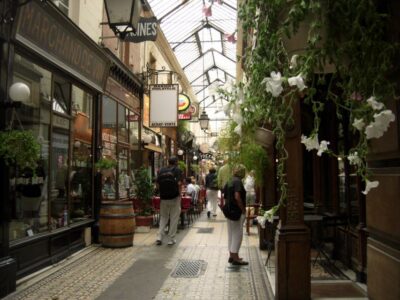
Covered passages: secrets, luxury and modernity
Read our review →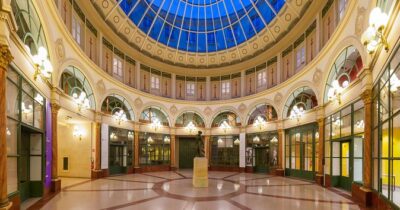
Paris Covered Passages Small-Group Walking Tour with Wine Tasting
Read our review →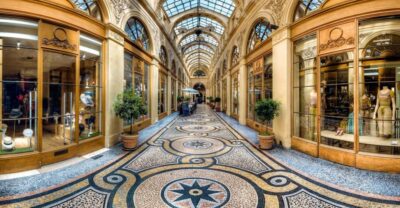
Treasure Hunt in Paris: “Under the Covered Passages”
Read our review →Browse the lists this tour appears in