
Reviewed · WORLD WAR TWO HISTORY TOURS
Half-Day Private Guided Walking Historic WW2 Tour of Paris
WWII Paris feels uncomfortably close. I like the private format and the way a WWII expert guide connects famous boulevards to real lives and resistance arrests, including Pierre Brossolette. Still, the themes are heavy, so plan for emotional stories during a 3-hour walk.
At 9:30 am you meet at Porte Dauphine and follow a straight line through occupied Paris, ending near Place de la Concorde. Expect a moderate fitness pace, mostly on the pavement, with stops timed so you can actually read the street before you move on.
In This Review
- Key highlights worth your time
- Why this WWII walk works better than a museum day
- The value of a private guide on occupied Paris
- Route overview: Porte Dauphine to Place de la Concorde in about 3 hours
- Champs-Elysées in 1940s mode: avenue Foch, the Gestapo, and propaganda
- Cafes, cinemas, and Germans on the same sidewalks
- Arc de Triomphe framing: the avenue as a political corridor
- Place de la Concorde: bullet holes and the visible cost of liberation
- Le Meurice and Von Choltitz: the day Paris was not destroyed
- Price and time: what you really pay for at $366.88 per person
- Practical tips so the walk stays comfortable
- Who should book this WWII walking tour
- Should you book this half-day WWII walk?
- FAQ
- Is this tour private?
- How long is the walking tour?
- What language is the tour offered in?
- Where do I meet and where does the tour end?
- Do I need to buy tickets for sights?
- What fitness level do I need?
- Can I cancel for a full refund?
Key highlights worth your time
- Private, English-led pacing: you can ask questions as you go, instead of “waiting your turn.”
- Champs-Elysées in occupation mode: you’ll hear why this grand avenue became a propaganda stage.
- Names tied to places: Pierre Brossolette, Carl Heinrich von Stulpnagel, and the wider resistance story land with context.
- Liberation marks you can still spot: bullet holes near Place de la Concorde are part of the walk.
- Le Meurice and Von Choltitz: the Paris decision story comes into focus where it unfolded.
More wartime Paris on foot:
- Paris WW2 The German Occupation Small group or Private tour
★ 4.5 · 128 reviews - Normandy D-Day Beaches and World War II Sites Day Trip from Paris
★ 4.5 · 56 reviews - Invalides Museum – WWI & WWII – Guided Tour up to 8 guests
★ 5.0 · 32 reviews - Skip-the-line Les Invalides World War Museum Guided Tour – Semi-Private 8ppl Max
★ 5.0 · 30 reviews
Why this WWII walk works better than a museum day
Paris has tons of WW2 plaques and photos, but this tour leans on a different method: the city as evidence. You’re not just seeing buildings, you’re learning what happened next to them, why certain streets mattered, and how everyday life changed under occupation.
I like that the tour focuses on a tight corridor of central Paris, so the stories build instead of scattering. The Champs-Elysées and Place de la Concorde are familiar on a postcard, but in 1940s terms they become something else: surveillance corridors, propaganda stages, and then, later, the route of liberation.
One practical note. This is a walking tour with a serious subject matter, so it is not a casual stroll for everyone. If you want WW2 in short, light doses, you might prefer something more layered and less direct.
The value of a private guide on occupied Paris
A private guide does something small and powerful: it adjusts to your questions. On a tour like this, that matters. You can pause when a name like Pierre Brossolette comes up, or when the story turns to Operation Walkyria and its consequences, and you can ask what to read into it.
The guides here are presented as WWII experts, and you can feel the difference in how the walk is interpreted. One of the guide names that showed up in guest feedback is Vincent Lauferon, praised for being expert in the subject and for making each stop click into place.
You also get a cleaner flow through a busy area. Central Paris can get crowded fast, especially around major landmarks. With a private group, you’re less likely to spend time getting sorted out, and more likely to spend time actually looking.
Finally, the format is a good match for the kinds of facts you’ll hear: who lived where, what offices were set up, and why an avenue gained a nickname like avenue des Boches. A small group helps those details land.
Route overview: Porte Dauphine to Place de la Concorde in about 3 hours
This is a half-day experience, about 3 hours on foot. The meeting point is Porte Dauphine (75016), and the walk ends at Place de la Concorde (75008). Start time is 9:30 am, which is smart, because you get to see daylight over the grand avenues and then finish before the evening crush.
You’ll cover a lot of ground without it feeling like a sprint, because the stops are tied to specific story beats. The tour begins by setting the occupation context, then moves along the Champs-Elysées toward the Concorde area.
Because the itinerary is linear, it helps to plan your day around the end point. Place de la Concorde is very central, so it’s easy to connect to the rest of your trip, but you should still think about how you’ll get there after the walk. A simple plan is to pair this with a late lunch nearby.
Also, you will be outside. Even a light rain can make stone streets slick, and the pace is still a walking pace. Wear shoes you trust and bring a layer you can live in for a few hours.
Champs-Elysées in 1940s mode: avenue Foch, the Gestapo, and propaganda
The tour’s main backbone is the Champs-Elysées, and it’s where the story gets sharp. In occupied Paris, avenue Foch was nicknamed avenue des Boches, and that nickname tells you a lot right away. This wasn’t a neutral “beautiful avenue,” it was a corridor connected to Nazi power.
One of the most striking details is that the Gestapo offices were located along this stretch. The guide ties that physical fact to what it meant in daily life, including the fear and repression that followed resistance activity.
From there, the tour tracks specific resistance stories. Pierre Brossolette is one of the resistance fighters highlighted, including the arrest and the tragic ending that followed. The effect is sobering. You stop looking at the boulevard as scenery and start reading it like a map of danger.
The walk also connects people to addresses. You’ll be pointed toward where Carl Heinrich von Stulpnagel lived, and you’ll hear about his involvement in Operation Walkyria and what came after. Even if you’ve heard of the broader plot before, the street-level framing makes it feel less like a headline and more like a chain of decisions.
And yes, you’ll talk about how the prestigious avenue was used for Reich propaganda purposes. It’s a brutal irony: elite culture and occupation control under the same sky.
Other arrondissements taken at walking pace:
- Paris Top Sights Half Day Walking Tour with a Fun Guide★ 5.0 · 2,893 reviews
- Montmartre Hidden Gems and Scenic Highlights Walking Tour★ 5.0 · 2,684 reviews
- Montmartre Hill French Gourmet Food and Wine Tasting Walking Tour★ 5.0 · 2,588 reviews
- Paris: Montmartre Highlights Walking Tour with a Local Guide★ 4.9 · 2,318 reviews
Cafes, cinemas, and Germans on the same sidewalks
This tour doesn’t only focus on offices and arrests. It also zooms in on the social side of occupation, because occupation is not only police work. It’s also who sits where, who frequents which venues, and how normal life got reshaped.
As you go down the Champs-Elysées area, you’ll see how certain restaurants, cafes, and cinemas were reportedly frequented by the Germans, with examples named like Fouquets and Maxim’s. Your guide uses these places to explain the push-pull of occupation. The city didn’t stop. Instead, it was re-coded, and different groups moved through it with different levels of freedom.
This is one of the most valuable parts for me, because it helps you understand why the occupation felt so invasive. It wasn’t only night raids and secret documents. It was also being a civilian in a city where the “other side” could be seen at dinner and at the movies.
If you like your history grounded in real locations, this section will be a strong match. You might also find it useful for photography, because the boulevard views are dramatic, and the story gives you a reason to look twice at what you would otherwise pass.
Arc de Triomphe framing: the avenue as a political corridor
As you work along the Champs-Elysées, you’ll reach the Arc de Triomphe end of the story line. Even though the monument is famous for its own symbolism, the tour uses it as a landmark for orientation, not a sightseeing trophy.
This matters because the Champs-Elysées is a long sightline. The walk ties the spatial layout to power, especially in the way the Nazis used the avenue for propaganda. Standing near the west end of the Champs-Elysées, you can really feel how control of a major axis could be used for spectacle.
It’s also an opportunity to reframe what you think you already know. The Arc de Triomphe sits at the end of a classic Paris promenade, but occupation Paris adds another layer. Your guide’s job here is to make that layer visible without turning the walk into an argument.
For practical reasons, this portion is also where you get big views. If you’re photographing, watch your timing. Around major monuments, it can be busy, so keep your attention on your guide’s cues and not just on getting the perfect shot.
Place de la Concorde: bullet holes and the visible cost of liberation
The walk ends at Place de la Concorde, and that’s where the tour shifts from occupation details to the moment of liberation. The tour helps you notice bullet holes dating from the liberation, which is one of those facts that changes the whole feel of a square.
When you see marks like that while standing in a place that looks calm today, history turns from abstract to physical. It’s no longer a timeline in a book. It becomes a scar you can stand beside.
This stop is also a good checkpoint for your focus. By the time you reach Concorde, you’ve heard about arrests, fear, propaganda use, and targeted people. Then you arrive at a square where the aftermath still shows.
If you’re the type who needs context before you can care, this part will help. You’re given enough background to understand why bullet holes mattered and why the liberation was not a clean “victory moment.” It was messy and costly, and the square carries that reality.
Le Meurice and Von Choltitz: the day Paris was not destroyed
A key thematic highlight of the ending stretch is Le Meurice. The guide links this area to the story of what could have happened to Paris during the final stages of the occupation.
This tour includes the account of governor Von Choltitz, focusing on his refusal to destroy Paris and his noncompliance with Hitler’s orders. The story is often tied to the question Is Paris burning? because it captures the fear that the city might be intentionally damaged.
The reason this stop is so effective is timing. You’re close enough to Place de la Concorde that the arc of events feels complete: occupation control, resistance, visible liberation damage, then a decision point about whether the city would be spared in the end.
If you only remember one thing from your WW2 day in Paris, make it this shift from inevitability to choice. At that late stage, someone could have acted one way and chose another, and the city still reflects the outcome.
Also, this portion is a reminder that history isn’t only about battles. It’s about orders, refusal, and consequences.
Price and time: what you really pay for at $366.88 per person
The price is $366.88 per person for a private walking tour lasting about 3 hours. That might sound steep if you’re comparing it to group tours or audio-guides, but private tours sell something different: direct attention and controlled pace.
You’re paying for:
- A WWII expert guide who can explain street-level details clearly
- A tour length that fits a morning without dragging all day
- A route built around landmarks where stories can be tied to real locations
The practical value is that you avoid “look and hope” sightseeing. Instead, you walk with a narrative that tells you what to notice and why. And since admission is listed as free, you’re not likely to get surprised by extra entry fees mid-walk.
One thing to consider is budgeting for a private format. If you’re traveling as a small party, per-person pricing can feel high. If you have a group, ask how pricing works with your party size so the cost matches your plans.
My advice: treat this as a high-impact experience, not a casual add-on. If you care about WW2 beyond surface facts, the guide-led structure is where the money goes.
Practical tips so the walk stays comfortable
This is a private tour, and only your group participates. That reduces waiting and makes it easier to pause when the guide points something out. It also means you’ll likely get a smoother flow around the most crowded blocks.
The tour asks for moderate physical fitness. That’s typical for central Paris walking, but don’t take it lightly. The ground is uneven in places, and you’ll be on foot for most of the time.
To keep it enjoyable:
- Wear comfortable shoes you’ve already tested
- Bring a light rain layer if weather looks iffy, because the walk is still the walk
- Use the morning start to your advantage, especially if you want photos with less haze
Since this is near public transportation, you can keep your plans flexible before and after. The start is Porte Dauphine, and the end is Place de la Concorde, both very connected areas.
If you’re sensitive to heavy topics, go in with a plan for yourself. Have a quiet moment afterward, and consider pairing this walk with a relaxed meal rather than rushing straight into another intense stop.
Who should book this WWII walking tour
This tour is a strong fit if you:
- Want WWII stories tied to specific Paris locations, not general lectures
- Prefer a walking format that helps you remember places with facts attached
- Like names and events explained in a clear, street-level way, including Pierre Brossolette and Carl Heinrich von Stulpnagel
It’s also a good choice for couples, friends, and small groups because the private setting makes it easier to ask questions. If you’re traveling with kids, the subject matter is very serious, so I’d think carefully about age and attention span.
If your goal is only casual sightseeing and a bit of history, you might find the focus too dark. But if you’re aiming for meaningful context, this one delivers.
Should you book this half-day WWII walk?
If you want a WW2 Paris experience that feels real because it’s anchored to places, I think this is a smart booking. The combination of Champs-Elysées context, resistance stories like Pierre Brossolette, and visible liberation clues near Place de la Concorde creates a clear emotional storyline.
The biggest reason to say yes is simple: the city stops being scenery. You start seeing the occupation as something that had addresses, offices, cafes, and consequences. And for many people, that’s the point.
I’d only hesitate if you’re not comfortable with heavy historical themes or you don’t want a walking tour. Otherwise, for a morning with depth and direction, this is a solid use of your time in Paris.
FAQ
Is this tour private?
Yes. It is a private tour, and only your group will participate.
How long is the walking tour?
The duration is about 3 hours.
What language is the tour offered in?
The tour is offered in English.
Where do I meet and where does the tour end?
You start at Porte Dauphine (75016 Paris) and end at Place de la Concorde (75008 Paris).
Do I need to buy tickets for sights?
Admission is listed as free, so you should not need to pay for entry as part of the experience.
What fitness level do I need?
You should have a moderate physical fitness level.
Can I cancel for a full refund?
You can cancel up to 24 hours in advance for a full refund. If you cancel less than 24 hours before the start time, the amount paid is not refunded.
More Historical Tours in Paris
- Paris: Dark History and Ghostly Guided Walking Tour
★ 4.7 · 1,000 reviews - Le Marais/Paris – The Historic, Trendy, Jewish, LGBT district
★ 5.0 · 341 reviews - Paris City of Fashion History Private Guided Walking Tour
★ 5.0 · 221 reviews - History of Paris City Center w/ Notre Dame Semi-Private 12ppl Max
★ 5.0 · 194 reviews
Newest write-ups from Paris




World War Two History Tours, compared.

Paris WW2 The German Occupation Small group or Private tour
Read our review →
Normandy D-Day Beaches and World War II Sites Day Trip from Paris
Read our review →
Invalides Museum – WWI & WWII – Guided Tour up to 8 guests
Read our review →
Skip-the-line Les Invalides World War Museum Guided Tour – Semi-Private 8ppl Max
Read our review →Paris 2-hour WWII Walking Tour: Occupation history
Read our review →
Skip-the-line Les Invalides World War Museum Guided Tour – Exclusive Guided Tour
Read our review →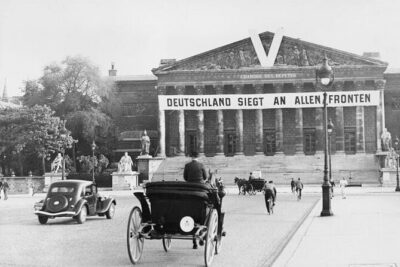
WWII American Landing Beaches Discovery Private Tour
Read our review →Browse the lists this tour appears in