
Reviewed · WORLD WAR TWO HISTORY TOURS
Paris Historic Private 3-hour Walking Tour with WWII Landmarks
WWII Paris hits hard on a city walk, and this private 3-hour route through the Jewish Quarter and Shakespeare and Company brings real names and places to the occupation story, including the Holocaust Memorial and the Museum of Jewish Art and History, plus the tale of Silvia Beech refusing the Gestapo. The drawback: expect a serious, emotional focus, not light sightseeing.
I like that the pacing is built for questions and photos, not a rush-through. And I really like the idea that your guide can steer the tour, with examples like Jo being praised for adapting to what you want to see and even linking wartime history to what Paris feels like now.
If you want a clean, upbeat “greatest hits” day, this is not that. But if you want Paris in context, this kind of private walking format pays off fast.
In This Review
- Key Things I’d Bookmark Before You Go
- Why a WWII Walking Tour Works Better Than Big-Box Sightseeing
- Meeting at Saint-Paul Saint-Louis, Then Getting Oriented Fast
- Stop 1: The Jewish Quarter in Le Marais, Holocaust Memorial, and Deportation Stories
- Stop 2: Shakespeare and Company, Silvia Beech, and Defying the Gestapo
- Stop 3: Tuileries Gardens and the Monuments Men Thread
- Stop 4: Place Vendôme, The Ritz, and Le Meurice Under Wartime Spotlight
- Stop 5: Place de la Concorde, Champs-Élysées Marches, and De Gaulle’s Statue Finale
- What a Private Format Actually Changes for You
- Price and Value: Is $220 Per Person Worth It?
- Practical Tips for Your Day on Foot
- Who This Tour Suits Best
- Should You Book This Private WWII Walking Tour?
- FAQ
- How long is the Paris Historic Private WWII Walking Tour?
- Is this tour private?
- What is the price?
- What places does the tour include?
- Is food included?
- Are any admissions included or required?
- Where do I meet, and where do I finish?
- Is there a cancellation window?
Key Things I’d Bookmark Before You Go
- Jewish Quarter focus with Holocaust Memorial and Museum of Jewish Art and History
- Shakespeare and Company stop tied to Silvia Beech and the Gestapo
- Landmarks spanning Le Marais to Le Meurice and The Ritz around Place Vendôme
- Place de la Concorde and a final view toward the Arc de Triomphe
- Private, customizable pacing with time built in for photos
- One included Paris metro ticket, with extra rides on you
More wartime Paris on foot:
- Paris WW2 The German Occupation Small group or Private tour
★ 4.5 · 128 reviews - Normandy D-Day Beaches and World War II Sites Day Trip from Paris
★ 4.5 · 56 reviews - Invalides Museum – WWI & WWII – Guided Tour up to 8 guests
★ 5.0 · 32 reviews - Skip-the-line Les Invalides World War Museum Guided Tour – Semi-Private 8ppl Max
★ 5.0 · 30 reviews
Why a WWII Walking Tour Works Better Than Big-Box Sightseeing
Paris is full of layers. With a topic like occupation and survival, the city becomes more than postcards. You walk through neighborhoods where people lived ordinary routines, then you move into the spaces where power, fear, and choices shaped daily life.
This tour is designed for that contrast. You get famous addresses, but you also spend time on wartime context: persecution and deportation themes in the Jewish Quarter, resistance-linked stories across central Paris, and civilian bravery as part of the narrative. You are not just looking at buildings, you are seeing why they mattered.
The private part matters more than you might think. In a group that is not private, one person’s pace can set the tempo for everyone. Here, the point is to let you set the rhythm, with a guide known for being adaptable and for taking questions, like Jo and Christopher in other groups.
Meeting at Saint-Paul Saint-Louis, Then Getting Oriented Fast
Your start is Paroisse Saint-Paul Saint-Louis, at 99 Rue Saint-Antoine in the Marais area. It is a practical starting point because it puts you where the Jewish Quarter stories begin, with lots of nearby walking options once you are with your guide.
You also end at a landmark area rather than back where you started. The finish is by the Charles de Gaulle statue, close to public transport and taxi links, and your guide will help you figure out how to get moving afterward.
One metro ticket is included. That is useful for transitions like getting to the Tuileries area, but you should plan on covering anything extra yourself. In a walking tour with several major hubs, that is normal.
Stop 1: The Jewish Quarter in Le Marais, Holocaust Memorial, and Deportation Stories
You begin at Metro Saint Paul and head through Le Marais into the Jewish Quarter. This is the emotional core of the route, and it has a clear purpose: you learn about daily life under Nazi Occupation, then you see how persecution escalated.
You will encounter the Holocaust Memorial, plus the Museum of Jewish Art and History. The route also includes Rue des Rosiers, which is where the tour turns from geography into lived experience. Expect the guide to connect what you see on the street with what happened to the people who had to navigate that street.
The part that stays with you is the theme of round-up and deportation of Jews to Auschwitz. This is not the kind of stop where you can skim and move on. If you are the type of person who wants context, you will probably find yourself wanting to ask questions and sit with the details for a moment longer.
Practical note: this stop can feel intense. If you are traveling with teens or with someone sensitive to heavy topics, decide ahead of time if this is the right tone for your group.
Stop 2: Shakespeare and Company, Silvia Beech, and Defying the Gestapo
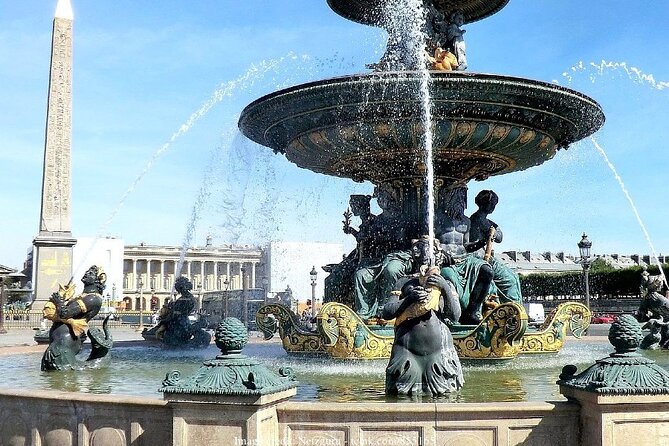
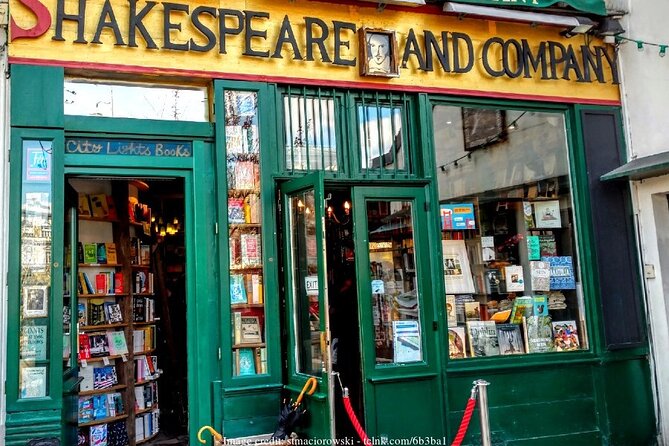
Next you head to Shakespeare and Company, the famous bookshop. This stop is shorter, but it is one of those moments where a small place becomes a symbol.
You will hear about Silvia Beech, the founder who refused to sell her books to the Gestapo. That is the kind of story I love on a walking tour: it brings you out of huge, abstract history and into a person making a choice in a specific shop.
Even if you do not buy a book, you can usually take it in like a pause point. If you want a breather after the Jewish Quarter material, this can work as a psychological reset, because it is about resistance and refusal, not just loss.
Other arrondissements taken at walking pace:
- Paris Top Sights Half Day Walking Tour with a Fun Guide★ 5.0 · 2,893 reviews
- Montmartre Hidden Gems and Scenic Highlights Walking Tour★ 5.0 · 2,684 reviews
- Montmartre Hill French Gourmet Food and Wine Tasting Walking Tour★ 5.0 · 2,588 reviews
- Paris: Montmartre Highlights Walking Tour with a Local Guide★ 4.9 · 2,318 reviews
Stop 3: Tuileries Gardens and the Monuments Men Thread
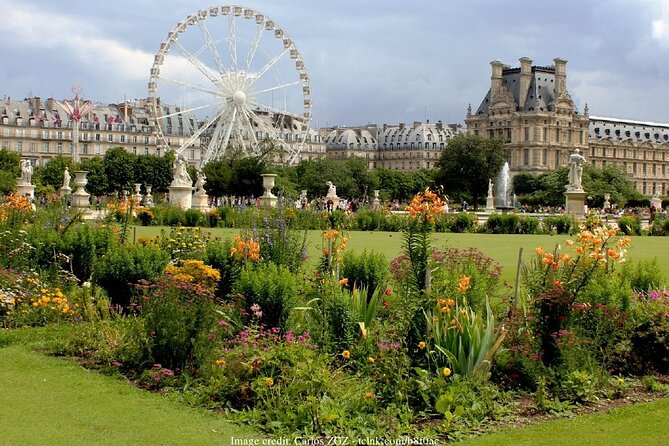
You take the metro to the Tuileries Gardens for the next segment. This part is built as a bridge: you move from stories of occupation and persecution into the question of what was protected, preserved, or rescued during the war.
Here, you will hear about the Monuments Men. The tour frames this through location, so you are meant to connect the garden setting with the broader wartime story rather than treating it like a random walk through famous greenery.
This stop is also only about 30 minutes, so I recommend you use that time actively. If you have questions about what you are hearing, this is a good spot to ask, because it is less emotionally loaded than the deportation material, and you can keep your energy.
Stop 4: Place Vendôme, The Ritz, and Le Meurice Under Wartime Spotlight
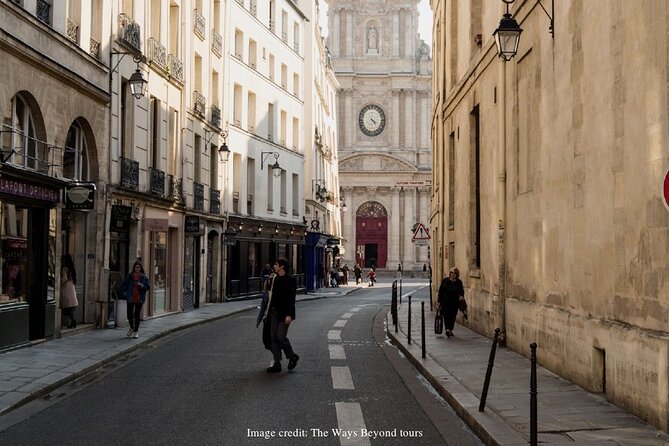
From there, you reach Place Vendôme and the nearby Rue Rivoli area. This is where Parisian glamour meets hard history.
The tour focuses on two famous hotels near Place Vendôme: The Ritz and Le Meurice. You spend time hearing how these places fit into the wartime environment, with the guide connecting the architecture and prestige to what was going on around them during the occupation period.
The tricky part with hotel stops is that they can turn into name-dropping if a guide does not bring it back to people and decisions. Based on the tour style, the point is to connect the landmark identity to wartime reality, and that is why the private format helps. If you care about how power operates, this is an efficient place to learn.
Also, if you love photos, this is usually a good zone. You get iconic façades and street views that look like postcards, but you are seeing them through a very different lens.
Stop 5: Place de la Concorde, Champs-Élysées Marches, and De Gaulle’s Statue Finale
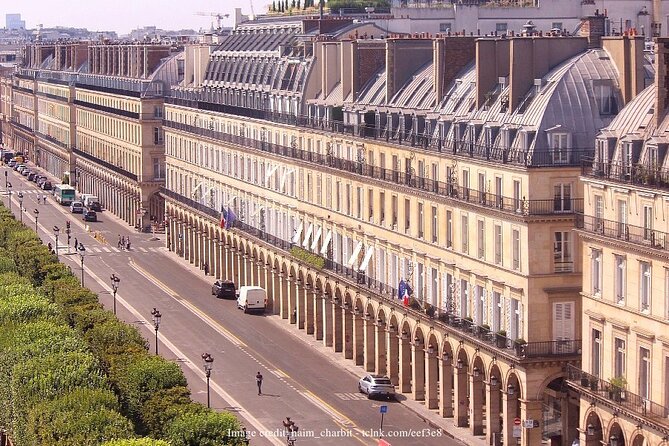
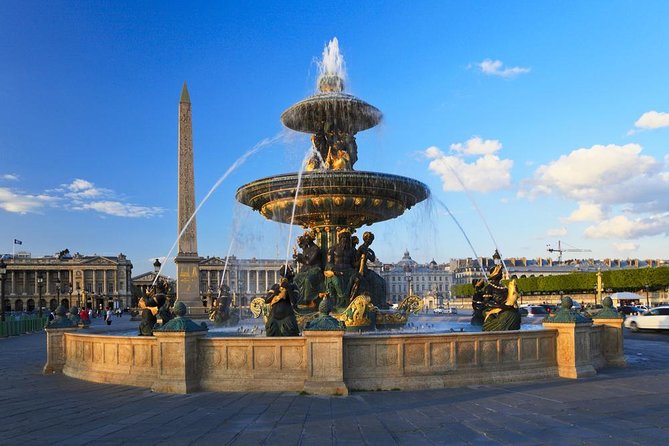
The last stretch takes you to Place de la Concorde, where peace was declared, and then you walk part way up the Champs-Élysées.
This is not a casual stroll. You will hear how both the Nazis and the Allied Forces marched along the Champs-Élysées. That detail matters because it turns a broad, famous avenue into a historical timeline in motion. One street, two sides of the war story.
You then end near the statue of General Charles de Gaulle, with a grand view stretching up toward the Arc de Triomphe. You are also next to Le Grand Palais and Le Petit Palais, which the tour notes were used as hospitals during the war.
This ending works well because it gives you something visual. You finish with a wide-angle sense of Paris, and the guide can tie the sightline to the wider story of how the city moved from occupation toward liberation.
If you are the type who likes a clear “last photo, last thought” moment, this is it.
What a Private Format Actually Changes for You
A private walking tour sounds like a sales line. In practice, it changes three things that you will feel right away.
First, the pace is yours. If you want to linger on the Holocaust Memorial area or ask more questions about the stories around Rue des Rosiers, you can do that. If you want faster transitions between landmarks, your guide can adjust.
Second, you get more direct answers. In other groups, guides like Jo and Christopher have been praised for being engaging and happy to take questions. That matters because WWII has lots of themes, and a good guide can steer you to what you need, instead of giving a generic version that fits every time slot.
Third, the guide can add local present-day color. Jo in particular was praised for sharing current events and what it is like to live in Paris now. That may sound like a tangent, but it actually helps history land. You start to understand not just what happened, but how the city lives with its layers today.
Price and Value: Is $220 Per Person Worth It?
At $220 per person for about 3 hours, this is not a casual, budget-friendly day. But it can still be value if your priorities match what the tour offers.
Here is what you are paying for, in plain terms:
- A specialized WWII theme with specific stops, including Holocaust Memorial, Museum of Jewish Art and History, Shakespeare and Company, and wartime-tied landmarks like The Ritz and Le Meurice.
- A private guide for your group, not a fixed group rhythm.
- Time built in for photos and for a paced walk rather than a sprint.
- One included Paris metro ticket, which helps with at least one key transition.
This becomes a better deal if:
- You are going as a couple or a small group who benefits from private attention.
- You care about the human stories behind major Paris landmarks.
- You prefer a guided framework that keeps you from missing the context.
It might not be worth it if you only want quick photo stops, or if you already have a strong WWII guidebook routine and you prefer self-guided walking. The tour is priced for people who want the guidance.
Practical Tips for Your Day on Foot
A few things will make your experience smoother.
Wear shoes you can trust. This is a walking tour with moderate physical fitness suggested. It is not described as strenuous, but in central Paris you will still be on uneven sidewalks and lots of turns.
Bring a charged phone. The tour uses a mobile ticket, and you will likely use your phone for photos and for navigation while you get to the start point.
Plan around transit. You include at least one metro leg, and the guide has one metro ticket included. Any extra transportation you need is not included, so if your hotel is far from the Marais, factor that into the day.
Expect serious topics. The itinerary includes deportation themes to Auschwitz and a Holocaust Memorial. If you want the emotional pacing to be manageable, you can ask your guide to adjust how long you stay on the sensitive parts.
Who This Tour Suits Best
You will probably love this tour if:
- WWII history is your kind of travel topic, especially when it is tied to real neighborhoods.
- You like a guide who takes questions and adapts the route to your interests, like the style praised for Jo and Christopher.
- You want a route that links Le Marais to central Paris landmarks, not just one district.
You might want to reconsider if:
- You want a light, entertainment-first sightseeing day.
- Your group dislikes heavy topics or cannot handle them for long stretches.
- You do not want to walk more than a typical short stroll.
Should You Book This Private WWII Walking Tour?
Book it if you want Paris with context, and you like the idea of walking from Le Marais to major central landmarks while your guide explains what occupation changed and how people responded. The combination of the Jewish Quarter stops, Shakespeare and Company with Silvia Beech, and the final Champs-Élysées and De Gaulle area gives you a focused arc rather than random history stops.
Skip it if your priority is comfort over meaning, or if a WWII theme feels too heavy for your trip style. There are plenty of Paris tours that are more upbeat, but this one is built for understanding.
If you do book, go in with one mindset: treat it like a guided walk through consequences. You will come away knowing the city in a way that photos alone cannot teach.
FAQ
How long is the Paris Historic Private WWII Walking Tour?
The tour is approximately 3 hours.
Is this tour private?
Yes. It is a private tour/activity, and only your group participates.
What is the price?
It costs $220.00 per person.
What places does the tour include?
The tour includes stops such as the Jewish Quarter area of Le Marais (with the Holocaust Memorial and the Museum of Jewish Art and History), Shakespeare and Company, the Tuileries Gardens, Place Vendôme (The Ritz and Le Meurice area), and Place de la Concorde with the end near the Charles de Gaulle statue.
Is food included?
No. Food and drink are not included, but your guide can recommend local options.
Are any admissions included or required?
The itinerary lists admission ticket free for the stops on the tour.
Where do I meet, and where do I finish?
You start at Paroisse Saint-Paul Saint-Louis, 99 Rue Saint-Antoine, 75004 Paris. You finish close to the Charles de Gaulle statue, with your guide assisting with guidance for getting to public transport or a taxi.
Is there a cancellation window?
Yes. You can cancel for a full refund up to 24 hours in advance of the experience’s start time.
More Historical Tours in Paris
- Paris: Dark History and Ghostly Guided Walking Tour
★ 4.7 · 1,000 reviews - Le Marais/Paris – The Historic, Trendy, Jewish, LGBT district
★ 5.0 · 341 reviews - Paris City of Fashion History Private Guided Walking Tour
★ 5.0 · 221 reviews - History of Paris City Center w/ Notre Dame Semi-Private 12ppl Max
★ 5.0 · 194 reviews
Newest write-ups from Paris







World War Two History Tours, compared.

Paris WW2 The German Occupation Small group or Private tour
Read our review →
Normandy D-Day Beaches and World War II Sites Day Trip from Paris
Read our review →
Invalides Museum – WWI & WWII – Guided Tour up to 8 guests
Read our review →
Skip-the-line Les Invalides World War Museum Guided Tour – Semi-Private 8ppl Max
Read our review →Paris 2-hour WWII Walking Tour: Occupation history
Read our review →
Skip-the-line Les Invalides World War Museum Guided Tour – Exclusive Guided Tour
Read our review →
WWII American Landing Beaches Discovery Private Tour
Read our review →Browse the lists this tour appears in